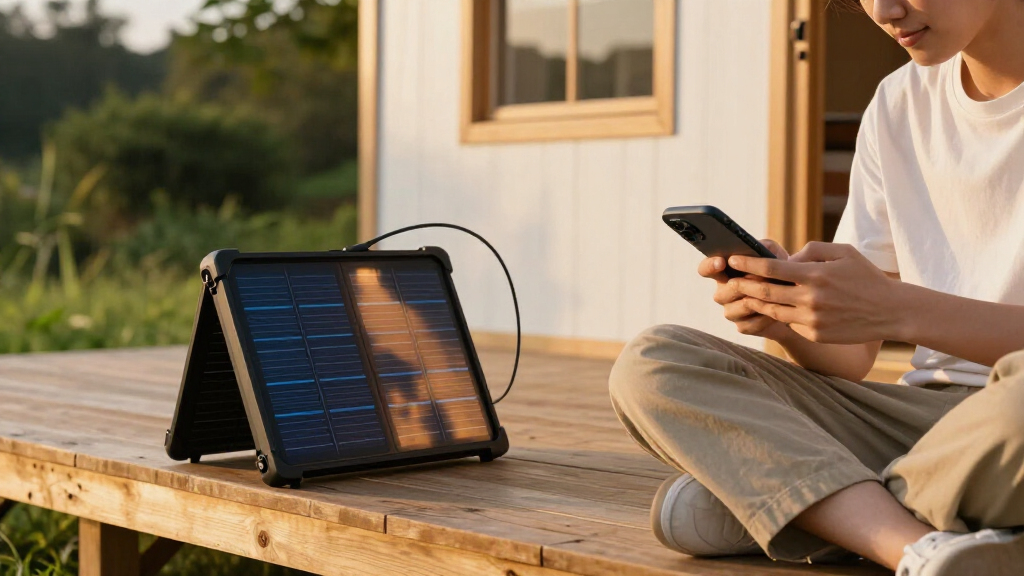

Portable solar power banks promise off-grid charging, but the reality is more complicated: solar panels on a power bank charge slowly, so the best options are the ones that pair a genuinely useful battery with realistic solar backup. My top pick is the BLAVOR Solar Power Bank 20000mAh, which balances honest capacity, wireless charging, and Apple Watch support in a package you’ll actually carry. For extended trips, the FEELLE 50000mAh with hand crank offers triple-redundancy charging, while the Durecopow 20,000mAh with 4 built-in cables is the grab-and-go choice for people who hate carrying extra cords. The main tradeoff in this category is capacity versus portability — the 50,000mAh units are heavy and often overstate their real output, while 20,000mAh models charge faster but run dry sooner. Read on for the full breakdown of all 13 models.

Get compact home essentials delivered free with Prime
- Fast, free delivery on millions of items
- Prime Video, Amazon Music and more included
- Member-only deals all year
Key Takeaways
- The BLAVOR 20000mAh won best overall because its capacity claims are the most believable in the lineup — several 49,800mAh and 50,000mAh models likely deliver far less usable charge than their labels suggest.
- Hand-crank and multi-panel options (FEELLE, the 4-panel 20000mAh model) trade weight and bulk for genuine off-grid redundancy — worth it for emergency kits, overkill for weekend camping.
- Built-in cables (BLASOUL, Durecopow) eliminate the most common failure point on the trail: forgotten or damaged charging cords, but add failure risk of their own if a cable connector breaks.
- Wireless charging appeared on 8 of 13 models but drains capacity noticeably faster than wired charging — buyers who rarely use Qi pads shouldn’t pay a premium for it.
- No model in this roundup recharges meaningfully from solar alone in a single day; solar should be treated as a slow trickle-top-up, not a primary charging method.


| portable solar power bank | Ports | Wireless Charging | Capacity | Fast Charging |
|---|---|---|---|---|
| BLAVOR Solar Power Bank 20000m | 3 (USB-C, USB-A, iOS) | Yes (phones and Apple Watch) | 20000mAh | 20W via USB-C |
| FEELLE Solar Power Bank 50000m | 3 (USB-A, USB-C) | Magnetic wireless | 50000mAh | — |
| SOARAISE 50000mAh Solar Power | 3 (USB-C, USB-A) | 15W | 50000mAh | 22.5W USB-C PD |
| Solar Power Bank 40000mAh PD20 | USB-C, USB-A, Micro USB | — | 40000mAh | 20W PD Type-C |
| SOARAISE Solar Power Bank 4800 | 2 (USB-A, USB-C) | Yes | 48000mAh | PD / QC 3.0 |
| BLASOUL Solar Power Bank 49800 | 3 | 15W max | — | 22.5W via USB-C |
| MINRISE Solar Power Bank 40000 | 10 total | — | — | 20W PD |
| SOARAISE Solar Power Bank 4800 | 3 | Yes | — | — |
| Solar Charger Power Bank | — | Yes | 49800mAh | QC 3.0 |
| Solar Charger Power Bank 49800 | — | Yes | — | — |
| Durecopow Solar Charger Power | 3 (Type-C In/Out, 2 USB-A) | — | 20,000mAh | — |
| Blavor Solar Power Bank 10,000 | — | Qi standard | — | — |
| Solar Power Bank 20000mAh with | — | — | — | — |
More Details on Our Top Picks
BLAVOR Solar Power Bank 20000mAh Wireless Charger for Phones & Apple Watch
This option stands out for its balance of usable capacity and everyday portability. While the 50,000mAh models in this roundup can recharge a phone five or six times, most campers and travelers never need that much, and the BLAVOR’s 20,000mAh cell still covers roughly four full phone charges at a fraction of the weight. The 20W USB-C fast charging and Apple Watch wireless support make it more versatile for mixed-device households than the SOARAISE 50000mAh, which skips watch charging entirely. The rugged, waterproof shell plus flashlight, compass, and carabiner justify its outdoor positioning without turning it into a brick.
The tradeoff is honest: solar input is a trickle, not a primary charging method, so this works best as a regular power bank with emergency solar backup.
Pros:- Balanced 20000mAh capacity keeps size and weight manageable for daily carry
- 20W USB-C fast charging plus wireless charging for phones and Apple Watch
- Waterproof, shockproof shell with genuinely useful extras like flashlight and carabiner
- Charges three devices at once across USB-C, USB-A, and iOS ports
Cons:- Solar charging is too slow to be a primary power source — plan on wall charging
- Capacity falls short of the 40,000–50,000mAh options for multi-day trips
Best for: Weekend campers and everyday-carry users who want a rugged power bank that charges a phone, earbuds, and Apple Watch without backpack-crushing weight
Not ideal for: Extended off-grid trips where solar is the main power source — the small panel and 20,000mAh ceiling run dry faster than the 50,000mAh alternatives
- Capacity:20000mAh
- Ports:3 (USB-C, USB-A, iOS)
- Wireless Charging:Yes (phones and Apple Watch)
- Fast Charging:20W via USB-C
- Battery Type:Lithium polymer
- Material:Flame-retardant ABS+PC with waterproof silicone
- Extra Features:Flashlight, camping light, compass, thermometer, carabiner
Our verdict“The pick for most buyers: enough power, ports, and durability for typical outdoor use without the bulk of the mega-capacity banks.”
FEELLE Solar Power Bank 50000mAh Magnetic Portable Charger with Hand Crank
What separates this model from every other entry here is the built-in hand crank. When sunlight fails and the battery dies, a few minutes of cranking generates enough charge for an emergency call — something the SOARAISE 50000mAh and the 40000mAh PD20W bank simply cannot do. Combined with magnetic wireless charging that snaps onto recent iPhones and a four-panel solar array, this is the option that makes the most sense for emergency kits, go-bags, and disaster preparedness rather than casual camping.
The compromises are real, though. At 50,000mAh with four fold-out panels, it is the heaviest and bulkiest pick in this batch, and magnetic charging weakens through thick cases. Compared with the BLAVOR, you trade pocketability for endurance and redundancy.
Pros:- Hand crank provides power when solar and stored battery are both exhausted
- Magnetic wireless charging works seamlessly with iPhone 12 through 17 series
- Four solar panels gather more sunlight than single-panel competitors
- Shockproof, dustproof, and waterproof build with built-in cable and compass
Cons:- Heavy and bulky even by high-capacity standards
- Magnetic charging loses efficiency through thicker phone cases
- Solar output remains weather-dependent despite the four panels
Best for: Emergency-preparedness builders and off-grid adventurers who want three independent charging sources — battery, solar, and hand crank
Not ideal for: Day hikers and commuters — the weight and bulk are overkill when a lighter bank like the BLAVOR 20000mAh covers a single day out
- Capacity:50000mAh
- Ports:3 (USB-A, USB-C)
- Wireless Charging:Magnetic wireless
- Solar Panels:4
- Emergency Features:Hand crank, compass
- Battery Type:Lithium polymer
- Compatibility:iPhone 12–17, Galaxy, Android phones, tablets, smartwatches
Our verdict“Buy this for the hand crank and redundancy, not for everyday portability — it is the safety net of the group.”
SOARAISE 50000mAh Solar Power Bank 22.5W Wireless Portable Solar Charger
This pick makes the most sense for families or groups who need to keep several devices alive at once. With 22.5W USB-C PD, 15W wireless charging, two built-in cables, and three ports, it can feed up to six devices simultaneously — more than any other model in this batch. The FEELLE matches its capacity but tops out at slower 5V charging and lacks the watch-friendly wireless pad speed, so the SOARAISE recharges everyone faster around camp. The bundled flashlight, compass, and thermometer echo the BLAVOR’s outdoor toolkit on a much larger frame.
Be clear-eyed about the solar claim, though: the panels are a backup, not a power plan. Treat this as a big wall-charged reservoir with a solar safety margin, and the bulk becomes easier to accept.
Pros:- Charges up to six devices at once with two built-in cables and three ports
- 22.5W USB-C PD outpaces the FEELLE’s charging speed for quick top-ups
- 15W wireless charging pad handles compatible phones without cables
- Waterproof, shockproof, dustproof construction with flashlight and compass
Cons:- Solar panels function only as emergency backup, not primary charging
- Large footprint and weight make it awkward for one-bag travel
- Wireless charging speed drops through cases and misaligned placement
Best for: Campsite groups and families who need to charge phones, tablets, and watches for multiple people over a long weekend
Not ideal for: Solo travelers counting grams — at this capacity with a rugged shell, it is one of the heavier choices in the lineup
- Capacity:50000mAh
- Fast Charging:22.5W USB-C PD
- Wireless Charging:15W
- Ports:3 (USB-C, USB-A)
- Power Source:Corded electric and solar
- Built-in Cables:2
- Durability:Waterproof, shockproof, dustproof
Our verdict“The group workhorse: maximum simultaneous charging for multiple people, as long as someone doesn’t mind carrying it.”
Solar Power Bank 40000mAh PD20W Fast Charging Portable Solar Charger
Compared with the SOARAISE and FEELLE flagships, this bank strips out the wireless pads and gadget extras to deliver big capacity at a lower price. The 40,000mAh cell covers roughly eight phone charges, 20W PD charging keeps pace with premium picks, and built-in cables mean one less thing to forget at home. At 1.2 pounds and under seven inches long, it is also one of the more packable high-capacity options here — the FEELLE gives you more mAh but noticeably more bulk. The IP67 rating is a genuine differentiator against banks with vague ‘waterproof’ claims.
The catch is the solar side: a 1.8W panel is nearly decorative, and the dual flashlights are basic. This is a value play on battery and build, not solar performance.
Pros:- Strong capacity-per-dollar ratio in the 40,000mAh class
- 20W PD Type-C charging matches more expensive competitors
- Built-in cables eliminate the need to pack extras
- Certified IP67 waterproofing plus shockproof and dustproof build
Cons:- 1.8W solar panel is emergency-only and very slow to recharge the bank
- No wireless charging despite rivals at similar capacity offering it
Best for: Budget-minded campers who want maximum stored power and durable construction without paying for wireless charging or survival gadgets
Not ideal for: Buyers who expect meaningful solar recharging — the tiny 1.8W panel cannot rescue a depleted battery in any reasonable timeframe
- Capacity:40000mAh
- Fast Charging:20W PD Type-C
- Ports:USB-C, USB-A, Micro USB
- Waterproof Rating:IP67
- Solar Panel Power:1.8W
- Weight:1.2 pounds
- Dimensions:6.77 x 3.46 x 1.42 inches
- Extras:Dual LED flashlights with 4 modes, built-in cables
Our verdict“The smart spend: nearly flagship battery and durability for less money, provided you accept solar as symbolic.”
SOARAISE Solar Power Bank 48000mAh Wireless Battery Pack with 4 Cables
Every bank in this roundup carries solar panels; very few of them actually matter. This SOARAISE is the exception, because its four dedicated solar panels give it the most credible solar-recharging capability in the batch — where the 40000mAh PD20W model’s 1.8W panel is effectively decorative, this one can meaningfully recover charge over a full sunny day strapped to a backpack. Add four built-in cables and support for up to seven devices at once, plus PD/QC 3.0 fast charging and a wireless pad, and it covers more device combinations than the FEELLE with similar emergency credibility.
The price of that solar surface area is size when folded out, and casual users will find the feature set excessive. Wireless speeds also trail its wired output by a wide margin.
Pros:- Four solar panels deliver the most usable solar recharging in this lineup
- Four built-in cables support up to seven devices simultaneously
- 48000mAh capacity handles a long weekend of mixed-device charging
- PD and QC 3.0 fast charging plus wireless pad for cable-free top-ups
Cons:- Fold-out panel design makes it bulkier to pack than single-slab banks
- Solar speed still varies dramatically with weather and panel angle
- Feature overload for buyers who just want a simple reserve battery
Best for: Multi-day backpackers and festival campers who will actually expose panels to sun for hours and want the battery to recover without an outlet
Not ideal for: Casual users who mostly wall-charge — the four-panel design adds bulk and complexity they will never use
- Capacity:48000mAh
- Solar Panels:4
- Ports:2 (USB-A, USB-C)
- Wireless Charging:Yes
- Fast Charging:PD / QC 3.0
- Battery Type:Lithium polymer
- Durability:Waterproof, shockproof, dustproof
Our verdict“The pick when solar recharging is a real requirement rather than a marketing bullet — just accept the extra bulk that comes with it.”
BLASOUL Solar Power Bank 49800mAh Wireless Portable Phone Charger
What sets the BLASOUL 49800mAh apart in a crowded field of big-capacity solar banks is that it eliminates cable clutter entirely — three built-in output cables (iOS, Type-C, Micro) plus a 15W wireless charging pad mean a family of four can top up mixed devices without anyone packing a charger brick. Compared with the MINRISE 40000mAh, which also has built-in cables, the BLASOUL adds wireless charging and slightly faster 22.5W USB-C output, making it the better pick for households with wireless-capable phones. The tradeoff is real, though: this is one of the bulkiest options in the lineup, and its IP65 rating is solid against splashes but not submersion. Solar charging works best as a trickle top-up rather than a primary power source, so plan to recharge via USB before any trip.
Pros:- Three built-in cables cover iOS, Type-C, and Micro-USB without extra accessories
- 15W wireless charging plus 22.5W fast wired output
- IP65 water, shock, and dust resistance stands up to campsite abuse
- Genuine 49800mAh capacity handles roughly 8-10 phone charges
Cons:- Bulky and heavy compared with 20000mAh rivals like the BLAVOR
- Solar charging is slow and weather-dependent
- Priced higher than comparable capacity options
Best for: Families or small groups with mixed device types (iPhones, Androids, older gadgets) who want one shared power bank without carrying cables
Not ideal for: Ultralight backpackers or everyday commuters — the size and weight make it awkward for anything smaller than a daypack
- Battery Capacity:49800mAh
- Fast Charging:22.5W via USB-C
- Wireless Charging:15W max
- Built-in Cables:3 output (iOS, Type-C, Micro), 1 input (USB-A)
- Water Resistance:IP65
- Dimensions:7 x 3.66 x 1.28 inches
- Ports:3
Our verdict“Buy this if you’re powering a mixed-device family on a multi-day trip and never want to hear ‘who took my cable’ again.”
MINRISE Solar Power Bank 40000mAh Portable Charger with PD 20W Fast Charging
The MINRISE 40000mAh earns its place as the emergency-preparedness choice because of details others skip: dual LED flashlights rated for 25 hours of illumination out to 165 feet, plus drop-proof and dust-proof construction alongside waterproofing. In a power outage or roadside breakdown, that lighting matters as much as the battery itself. Compared with the BLASOUL 49800mAh, you give up wireless charging and a bit of capacity, but the MINRISE accepts input from four different sources (solar, Type-C, Micro USB, USB-A), so you can recharge it with whatever cable or condition is available — exactly what you want in a go-bag. The honest caveat: the manufacturer itself frames solar as emergency backup only, so this shouldn’t be your off-grid primary charger. It’s also noticeably heavier than slim 20000mAh models like the Blavor 10000mAh.
Pros:- Dual LED flashlights deliver up to 25 hours of light at 165 feet
- Four input methods including solar for flexible recharging
- Waterproof, dust-proof, and drop-proof triple protection
- Built-in Type-C, iOS, and Micro USB cables
Cons:- Solar charging is slow and explicitly intended as emergency backup
- Heavy and bulky for its capacity class
Best for: Households building an emergency kit or car survival bag where long-runtime lighting and rugged reliability matter as much as raw charging
Not ideal for: Day hikers and travelers prioritizing portability — at over a pound and sized like a small paperback, it’s overkill for casual use
- Battery Capacity:40000mAh
- Fast Charging:20W PD
- Ports:10 total
- Input Methods:Solar panel, Type-C, Micro USB, USB-A
- Protection:Waterproof, dust-proof, drop-proof
- Flashlights:Dual LED, 165 ft range, up to 25 hours
- Weight:1.1 pounds / 450 g
Our verdict“This is the one to stash in your car trunk or storm kit, where its flashlight endurance and input flexibility outshine flashier rivals.”
SOARAISE Solar Power Bank 48000mAh Wireless Portable Charger with 4 Cables
Most solar power banks include a single small panel that’s more decorative than functional — the SOARAISE 48000mAh counters that with four folding solar panels, meaning it actually collects meaningful sunlight while hanging from a backpack. For anyone genuinely trying to extend a trip off the grid rather than just having solar as a checkbox feature, that’s the deciding difference. Against the BLASOUL 49800mAh, you trade a little capacity for substantially better solar throughput plus a fold-flat design that deploys like a small tablet. The hard truth is weight: four panels plus a big battery make this one of the heaviest picks here, and it rides best attached to the outside of a pack rather than inside it. Charging speed still lives and dies by cloud cover, so treat sunny forecasts as your friend.
Pros:- Four solar panels harvest far more sunlight than single-panel rivals
- 48000mAh capacity supports a full weekend of device charges
- Wireless charging plus fast wired output with built-in cables
- Waterproof, shockproof, and dustproof build survives trail conditions
Cons:- Heavy for its class due to the four-panel array
- Bulky footprint doesn’t fit comfortably in pockets
- Charging speed still varies with sun availability
Best for: Backpackers and multi-day campers who want real solar replenishment while hiking rather than symbolic solar backup
Not ideal for: Urban users or festival-goers — if you’ll recharge at a wall outlet anyway, the extra panel weight buys you nothing
- Battery Capacity:48000mAh
- Solar Panels:4
- Wireless Charging:Yes
- Ports:3
- Output Current:3A
- Protection:Waterproof, shockproof, dustproof
- Dimensions:6.38 x 3.43 x 1.57 inches
Our verdict“If actual solar collection is the reason you’re buying, this quad-panel design outperforms every single-panel option in this lineup.”
Solar Charger Power Bank – 49800mAh QC3.0 Fast Charging Portable Charger
This 49800mAh QC3.0 model is built around one idea: feeding many devices at once. With four USB-C ports, two USB-A ports, and a wireless pad, it can serve an entire campsite simultaneously — a spec sheet the BLASOUL 49800mAh (three cables) and MINRISE 40000mAh simply can’t match. For group trips where everyone’s phone, camera, and headlamp batteries drain at once, that port count is the difference between a charging queue and a charging station. The compromises follow directly from that ambition: it’s large and heavy, closer to a fixed base-camp brick than something you pocket on a summit push, and the sheer number of ports and modes can feel excessive for a solo user who just needs one phone topped up. Solar input remains a slow supplement, so plan around the wall charger before departure.
Pros:- Six wired ports plus wireless charging handle whole groups at once
- QC 3.0 fast charging across outputs
- IP65 waterproof and rugged ABS/PC construction
- Built-in LED flashlights add emergency utility
Cons:- Large and heavy even by big-bank standards
- Feature set is overkill and confusing for single-device users
- Solar charging efficiency fluctuates with weather
Best for: Group campers, van-lifers, or base-camp organizers who need to charge five or more devices simultaneously from one unit
Not ideal for: Solo travelers and minimalists — most of those six ports will sit unused while you carry the extra bulk anyway
- Capacity:49800mAh
- Fast Charging:QC 3.0
- Wireless Charging:Yes
- Output Ports:4 USB-C, 2 USB-A, wireless pad
- Waterproof Rating:IP65
- Material:ABS/PC
- Extras:Built-in LED flashlights, solar panel
Our verdict“Think of this as a portable charging station rather than a personal power bank — buy it for the group, not for yourself.”
Solar Charger Power Bank 49800mAh Wireless Portable Phone Charger with Fast Charging and Multiple Outputs
Among the 49800mAh heavyweights in this roundup, this orange unit takes the value position: it matches the BLASOUL on headline specs — 22.5W fast charging, wireless top-up, six-device simultaneous support, IP65 ruggedness — while typically undercutting it on price, and its bright orange shell is genuinely easier to find in a dim tent or pack than the black slabs everyone else ships. Compared with the QC3.0 group-charging model, you get similar multi-device output plus a multi-mode flashlight in a more conventional package. The catch is patience: full recharges can take up to 12 hours, the slowest in this batch, and like its rivals the solar panel is a trickle feeder rather than a real charger. It’s also heavy and bulky, so the savings come in dollars, not grams.
Pros:- Matches pricier rivals on capacity, fast charging, and wireless output
- Charges up to six devices simultaneously
- High-visibility orange color is easy to locate in gear bags
- Multi-mode built-in flashlight adds emergency value
Cons:- Up to 12 hours for a full recharge
- Heavy and bulky for everyday carry
- Solar charging speed depends heavily on sunlight intensity
Best for: Budget-conscious buyers who want maximum 49800mAh capacity and six-device output without paying premium-brand pricing
Not ideal for: Impatient users or frequent rechargers — the 12-hour refill time makes topping it up a planned overnight chore
- Battery Capacity:49800mAh
- Output Power:22.5W
- Charging Ports:6 (USB-A, Type-C, Micro-USB)
- Wireless Charging:Yes
- Waterproof Rating:IP65
- Material:ABS and PC
- Color:Orange
Our verdict“The smart pick if you want big-battery capability at the lowest cost and don’t mind the slowest recharge cycle in the lineup.”
Durecopow Solar Charger Power Bank 20,000mAh with 4 Cables and 3 Ports
Where most solar power banks make you bring your own cables, the Durecopow builds four of them right into the chassis — Type-C, Lightning, Micro USB, and USB-A — which means one unit can top up six devices at once without a tangle of cords in your pack. Compared with the Blavor 10,000mAh, you get double the capacity and far more charging flexibility, though you pay for it in pocket bulk. The silicone-and-ABS build shrugs off rain, drops, and dust, and the dual flashlight with SOS and strobe modes earns its keep on genuine emergencies rather than being a gimmick. The tradeoff: like nearly every solar bank in this roundup, the panel is a backup, not a primary charger — plan on outlet top-ups and treat sunlight as a slow trickle.
Pros:- Four built-in cables eliminate the need to pack or forget charging cords
- 20,000mAh capacity delivers multiple full phone charges for a group
- Water, shock, and dust resistant build stands up to rough outdoor handling
- Dual flashlight with steady, SOS, and strobe modes adds real emergency value
Cons:- Solar charging is slow and unreliable as a primary recharging method
- Bulkier and heavier than single-purpose compact power banks
- Only a 12-month warranty, shorter than many competitors offer
Best for: Group campers and families who need to charge several phones at once without carrying extra cables
Not ideal for: Ultra-light backpackers or everyday commuters who want something pocketable — the multi-cable design adds noticeable bulk
- Capacity:20,000mAh
- Cables:4 built-in (Type-C, Lightning, Micro USB, USB-A)
- Ports:3 (Type-C In/Out, 2 USB-A)
- Simultaneous Charging:Up to 6 devices
- Materials:Eco-friendly silicone rubber and ABS PC
- Waterproof / Shockproof / Dustproof:Yes / Yes / Yes
- Extras:Dual flashlight (Steady, SOS, Strobe), carabiner, compass
- Recharge Cycles:Over 1,000 cycles
- Certification:CE, FCC, RoHS
Our verdict“This pick makes the most sense for campers charging multiple people’s devices at once who would rather leave the cable pile at home.”
Blavor Solar Power Bank 10,000mAh Portable Wireless Charger for Cell Phones
Sometimes the right solar bank is simply the one you’ll actually carry, and that’s where this Blavor earns its slot. At 10,000mAh it holds half the capacity of the Durecopow 20,000mAh, but it trims weight and size to the point where it fits a jacket pocket instead of a backpack lid. The standout feature is Qi wireless charging — set a compatible phone on top and go, no cable fumbling in the dark — paired with a 3A USB-C output for faster wired top-ups. The IPX5 rating handles rain and splashes, though it’s a notch below the IP67 sealing on the 4-panel 20,000mAh model below. Real tradeoffs exist: 10,000mAh means roughly two phone charges, not four, and 9.3 ounces feels dense for its size.
Pros:- Qi wireless charging lets you power a phone without any cable
- Compact, pocket-friendly dimensions unusual among rugged solar banks
- Waterproof, dustproof, and shockproof shell handles trail abuse
- Fast 3A USB-C output speeds up wired charging
Cons:- 10,000mAh capacity limits it to roughly two phone charges
- 9.3 ounces feels heavy relative to its small size
- IPX5 water resistance is lower than fully sealed competitors
Best for: Day hikers and travelers who want wireless charging and a genuinely pocketable backup battery
Not ideal for: Multi-day off-grid trips — 10,000mAh runs dry quickly when there’s no outlet for days
- Battery Capacity:10,000mAh
- Connector Types:USB-A, USB-C, iOS
- Output Current:3A
- Wireless Charging:Qi standard
- Waterproof Rating:IPX5
- Dimensions:5.91″ L x 3.07″ W x 0.87″ D
- Weight:9.3 ounces
Our verdict“Buy this if you value carry comfort and wireless convenience over raw capacity; skip it for extended off-grid use.”
Solar Power Bank 20000mAh with 4 Panels
Most solar power banks in this category — including the Durecopow and the FEELLE 50,000mAh — carry a single small panel that’s more emergency trickle than practical charger. This model flips that equation with four fold-out solar panels, which meaningfully shortens sun-to-battery time and makes solar actually usable as a recharging strategy, not just a marketing line. The IP67 weatherproof rating outclasses the Blavor’s IPX5, so it can survive a proper downpour, and built-in USB-C, Lightning, and USB-A cables let it feed five devices at once. The catch is geometry: those extra panels make it the bulkiest of this trio when folded, and a quirk means the flashlight and camping light can’t run simultaneously — pick one light source at a time.
Pros:- Four solar panels recharge far faster than single-panel competitors
- IP67 weatherproof rating survives full water immersion and heavy rain
- Built-in USB-C, Lightning, and USB-A cables charge up to 5 devices at once
- Both a flashlight and a camping lantern cover different lighting needs
Cons:- Flashlight and camping light cannot operate at the same time
- Folded four-panel design is bulkier than single-panel rivals
- Solar output still depends heavily on direct, consistent sunlight
Best for: Off-grid campers and emergency preppers who need solar recharging to actually work over several outlet-free days
Not ideal for: Everyday carry users — the folded four-panel design is too bulky and heavy for a bag or pocket you open constantly
- Battery Capacity:20,000mAh
- Solar Panels:4 high-efficiency panels
- Number of Ports:3
- Built-in Cables:USB-C, Lightning, USB-A
- Output Current:3A
- Weatherproof Rating:IP67
- Compatible Devices:Smartphones, iPhone
- Extras:Dual flashlights, camping light
Our verdict“If genuine solar recharging is the whole reason you’re buying, this is the pick; if solar is just a nice-to-have, a slimmer model serves you better.”

How We Picked
I evaluated these portable solar power banks against five criteria that actually matter at a campsite or during an outage. Real-world capacity came first: I discounted headline mAh numbers based on cell quality signals, weight, and whether the claimed wattage matched the physical panel size, because inflated capacity claims are rampant in this category. Charging speed and port flexibility came next — 20W+ PD output, multiple simultaneous device charging, and whether the solar input was a usable supplement or pure marketing. Build quality and weather resistance separated the models built for actual outdoor use from desk-side pretenders: ruggedized shells, carabiner attachments, and honest IP ratings scored higher.
Beyond specs, I weighed portability — a 1.5-pound brick you leave at home is worse than a 12-ounce packer you carry daily — and value, meaning whether the price premium over basic models buys you real capability like hand-crank backup, detachable panels, or built-in cables. The ranking reflects a simple philosophy: a portable solar power bank is first a power bank and second a solar device, so models that nail charging fundamentals and treat solar as a bonus consistently ranked above models sold purely on giant capacity numbers.
Factors to Consider When Choosing Portable Solar Power Banks
Before picking a specific model, it helps to understand how this category actually works — because portable solar power banks are sold on specs that don’t always translate to performance. These are the factors that separated the winners from the disappointments in my comparison.Capacity Claims Versus Reality
The single biggest trap in this category is the mAh number on the box. Many budget brands advertise 49,800mAh or 50,000mAh in cells that physically cannot hold that charge at that size and weight — a genuine 50,000mAh bank should weigh well over two pounds. What matters is usable charge: how many full phone recharges you actually get, which is typically 60–70% of the true capacity after conversion losses. A more honest 20,000mAh unit will often outperform a inflated ‘49,800mAh’ one in real testing. Check the weight-to-capacity ratio as a quick sanity test: if a claimed 50,000mAh bank weighs the same as a 20,000mAh model from a reputable brand, something doesn’t add up.
How Much Solar You Can Really Expect
This is where expectations need the biggest correction. The small panels embedded in these power banks typically produce 1–5 watts under direct midday sun, which means a full solar recharge takes several days, not hours. Solar on a power bank is best understood as a trickle top-up that slows battery drain during long trips, not a replacement for a wall outlet before you leave. Models with four fold-out panels gather meaningfully more sunlight than single-slab designs, but at a real cost in bulk. If solar charging is your primary goal rather than a bonus, a separate folding 20W+ panel paired with a power bank will outperform any all-in-one unit in this roundup. Buy the solar feature as insurance, not as your plan A.
Weight, Size, and Whether You’ll Actually Carry It
A power bank left in the car because it’s too heavy is worthless, and this category spans from pocketable 12-ounce units to near-two-pound bricks. The honest tradeoff: big capacity means big weight, and most people overestimate how much battery they need. A modern phone charges 3–4 times from a true 20,000mAh bank, which covers most weekend trips. The 50,000mAh-class models make sense for base camps, group trips, or emergency kits that live in a vehicle — not backpacking. Consider buying two smaller units instead of one giant one: you can split the weight between packs, and you get redundancy if one fails.
Charging Speed and Output Ports
Input and output wattage determine both how fast your devices charge and how fast the bank itself refills — and the refill speed is the spec most buyers ignore. A bank with only a 10W input might take 10+ hours to recharge from a wall, while 20W PD input cuts that dramatically, which matters when you have one evening at a hostel or visitor center to top up. On the output side, look for at least one USB-C PD port for modern phones, and check whether the bank can charge multiple devices at full speed simultaneously — many cheap models split wattage across ports, halving speeds. Built-in cables are convenient but inspect the connector quality, since a broken integrated cable can render outputs unusable with no way to replace it.
Durability, Weather Resistance, and Emergency Features
These devices are marketed for outdoor use, but build quality varies widely, and a cracked shell or waterlogged port ends the trip’s charging plans instantly. Look for rubberized exteriors, port covers, and carabiner loops as signs of genuine outdoor design rather than cosmetic styling. True waterproofing is rare in this category — most units are splash-resistant at best, so a dry bag is still smart insurance. For emergency-preparedness buyers, features like the FEELLE’s hand crank or a built-in flashlight with SOS mode add real redundancy that pure battery capacity can’t. Ask yourself what failure scenario worries you most: running out of charge (get more capacity), breaking the device (get better build), or losing access to any power source for days (get redundancy features).
Wireless Charging: Feature or Gimmick?
Roughly two-thirds of the models in this roundup include Qi wireless charging, and it’s worth deciding whether you’d genuinely use it before paying for it. Wireless tops out around 5–10W, loses 20–30% of energy to heat and inefficiency, and requires precise phone placement — a shaky proposition on an uneven camp table. Where it earns its keep is convenience and cable reduction: plopping a phone on the pad overnight in a tent beats fumbling with a cable, and Qi works as a backup if your charging port gets wet or damaged. iPhone users with MagSafe-compatible models get the best experience from magnetic pads like the FEELLE’s. If you charge exclusively by cable today, cross wireless-only premium features off your requirements list and put the savings toward capacity or build quality.
Frequently Asked Questions
Can a portable solar power bank fully recharge itself using only its solar panels?
Not in any practical timeframe. The small panels on these units generate roughly 1–5 watts in direct sunlight, meaning a full solar recharge of a 20,000mAh bank takes multiple full days of ideal sun — and ideal sun rarely cooperates with real trip schedules. Think of the solar panel as a way to slow battery drain or partially offset daily phone usage rather than a complete recharge method. If you need days of truly off-grid power, the better approach is combining one of these banks with a dedicated folding solar panel of 20 watts or more, or choosing a redundancy-focused model like the FEELLE with its hand crank. Charge the bank fully from a wall before any trip and treat solar as a bonus, not a plan.
Are the 49,800mAh and 50,000mAh capacity claims on budget models legitimate?
Many are not, and this is the most common source of disappointment in this category. The lithium cells required for a true 50,000mAh capacity would make the bank substantially heavier than most of these products actually are — frequently these labels reflect the sum of theoretical cell ratings rather than deliverable charge. In practice, several budget ‘50,000mAh’ units deliver fewer real phone recharges than an honest 20,000mAh bank from an established brand like BLAVOR or Durecopow. Use weight as a quick filter: a genuine 50,000mAh bank should be noticeably heavy, over a pound and a half. If a model claims massive capacity but weighs under a pound, discount the number heavily before comparing it against alternatives.
Is wireless charging worth the extra cost on a solar power bank?
It depends entirely on your charging habits. If you already use a Qi pad at home or have a MagSafe-style phone, the convenience translates well to travel — dropping a phone on the bank overnight in a tent is genuinely easier than cable management, and the FEELLE’s magnetic attachment keeps phones secured while charging. The downsides are real, though: wireless charging is roughly 30% less efficient than wired, meaning fewer total recharges per full bank, and it generates heat that can slow charging in warm weather. Cable-only users should skip the feature and spend the difference on faster wired output or better build quality. Magnetic wireless charging is the one variant I’d call a meaningful upgrade rather than a checkbox feature.
What capacity do I actually need for a weekend camping trip?
For most people, a true 20,000mAh capacity covers a 2–3 day trip comfortably. A modern smartphone holds roughly a 4,500–5,000mAh battery, and after conversion losses, a 20,000mAh bank delivers about three full recharges — enough for a phone plus a headlamp or smartwatch top-up. Group trips or heavy users shooting photos and GPS all day will want the 40,000mAh-plus class, but remember those banks weigh and cost roughly double. A useful exercise: count the devices you’ll charge, estimate recharges needed per day, and multiply by trip length, then add 25% buffer. Buying twice the capacity you need just means carrying weight you’ll never use.
Are built-in cables a smart feature or a liability?
They’re a genuine convenience for the right buyer, with one caveat worth understanding. Integrated cables like those on the Durecopow and BLASOUL mean you can’t forget a cord, can’t lose one in a pack, and always have the right connector at hand — this matters most for day hikers and travelers trying to travel light. The liability is repairability: if an integrated cable frays or its connector breaks, that output is dead permanently, whereas a separate cable is a five-dollar replacement. Models with multiple built-in cables plus open ports give you the best of both worlds, since one broken cable doesn’t strand you. If you choose a built-in cable model, look for thicker, reinforced cable housing and treat the cables gently when stowing.
Conclusion
After comparing all 13 models, the right choice comes down to what kind of power user you are. For most buyers, the BLAVOR Solar Power Bank 20000mAh is the best overall pick: honest capacity, wireless and Apple Watch charging, and a size you’ll actually carry. Best value goes to the Durecopow 20,000mAh with four built-in cables — it skips gimmicks and delivers reliable charging at a lower price than most rivals. If you want maximum capability and price is secondary, the FEELLE 50000mAh with hand crank and magnetic charging offers the most redundancy in the lineup for emergencies and extended off-grid trips.
For beginners or casual users, the Blavor 10,000mAh is the easiest entry point — small, simple, and inexpensive enough to learn what you actually need before upgrading. Specific needs break down cleanly: multi-day group trips favor the SOARAISE 50000mAh 22.5W, gadget-averse minimalists will like the BLASOUL’s all-in-one cable design, and solar-priority buyers should pick the 20000mAh model with four fold-out panels, since it collects noticeably more sunlight than any single-panel competitor. Whatever you choose, charge it fully before you leave home and treat solar as your backup — that mindset will serve you better than any capacity number on the box.
Halloween Picks
halloween
As an affiliate, we earn on qualifying purchases.