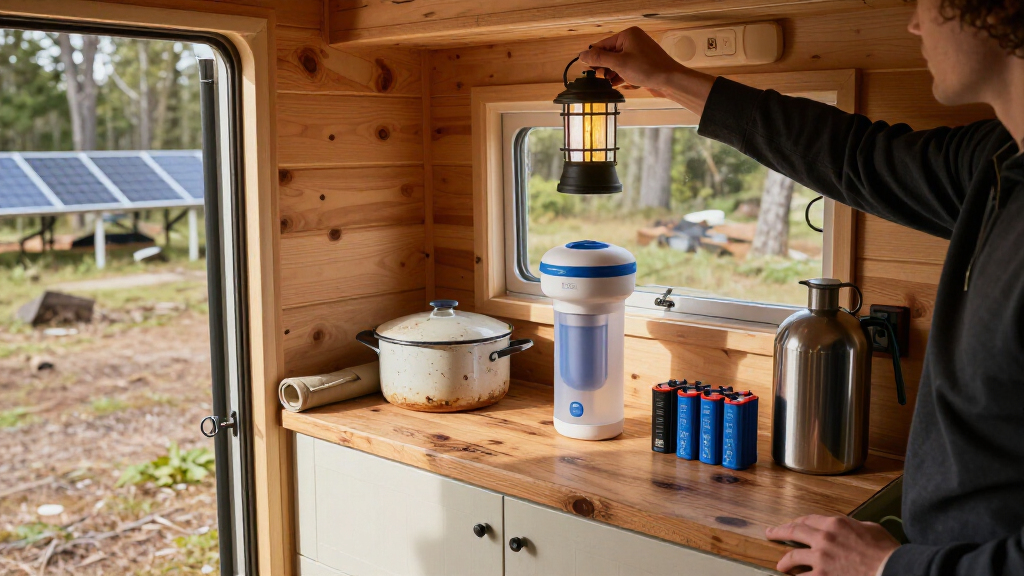

Choosing the best off-grid living supplies requires balancing theoretical knowledge with actionable, hands-on skills. The Encyclopedia of Country Living stands out as the definitive overall choice due to its unmatched depth in homesteading fundamentals, while the DIY Off-Grid Solar Power Bible offers the clearest path for those prioritizing energy independence. Buyers often struggle to distinguish between generic survival advice and specific, implementable technical guides. This roundup cuts through the noise by evaluating resources based on practical applicability and long-term sustainability. Continue reading to discover which guide aligns with your specific off-grid goals.

Get compact home essentials delivered free with Prime
- Fast, free delivery on millions of items
- Prime Video, Amazon Music and more included
- Member-only deals all year
Key Takeaways
- The Encyclopedia of Country Living remains the gold standard for holistic homesteading knowledge, covering everything from canning to animal husbandry.
- Solar-focused guides like the Off Grid Solar Power Simplified are superior for beginners who need step-by-step electrical diagrams rather than general theory.
- General survival manuals often lack the sustained lifestyle advice needed for long-term off-grid living, making specialized guides more valuable.
- Water purification resources vary widely in technical accuracy, with Prepper’s Water Purification Survival Bible offering the most comprehensive filtration protocols.
- Amish-inspired resources provide unique low-tech solutions that reduce reliance on complex, hard-to-repair modern technology.
| Prepper’s Water Purification Survival Bible |  | Best for Water-Specific Preparedness | Primary Focus: Water Find, Harvest, Filter, Purify, Store | Target Audience: Preppers and Off-Grid Residents | Format Type: Survival Guide Book | VIEW LATEST PRICE | See Our Full Breakdown |
| The DIY Off-Grid Solar Power Bible |  | Best for Energy System Design | Topic: Off-grid solar power systems | Intended Settings: Tiny homes, cabins, RVs, and boats | ASIN: 1801716900 | VIEW LATEST PRICE | See Our Full Breakdown |
| Survival Projects for Off-Grid Living |  | Best for Hands-On DIY Construction | ASIN: B0CMC5T93H | Format: Book | Topic: Survival, Off-Grid Living, DIY | VIEW LATEST PRICE | See Our Full Breakdown |
| Living Off-Grid and Prepper Survival Guide for Beginners |  | Best for Absolute Beginners | ASIN: B0F1K5S8XL | Target Audience: Beginners | Primary Goal: Self-Sufficiency and Resilience | VIEW LATEST PRICE | See Our Full Breakdown |
| The Complete Off-Grid Survival Manual |  | Best for Budget-Conscious Security | ASIN: B0FWJPPWCD | Focus: Home Protection and Supply Security | Skill Requirement: Beginner to Experienced | VIEW LATEST PRICE | See Our Full Breakdown |
| Prepper’s Long-Term Survival Guide: Food, Shelter, Security, Off-the-Grid Power, and More |  | Best Comprehensive Overview | Format: Paperback | ASIN: 1612432735 | Category: Survival & Emergency Preparedness | VIEW LATEST PRICE | See Our Full Breakdown |
| No Grid Survival Projects |  | Best for Hands-On Builders | ASIN: 173548153X | Format: Book | Focus Area: DIY Projects | VIEW LATEST PRICE | See Our Full Breakdown |
| Prepare Your Home for a Sudden Grid-Down Situation |  | Best for Families | Format: Paperback | ASIN: 0645277460 | Target Audience: Modern Families | VIEW LATEST PRICE | See Our Full Breakdown |
| The Off-Grid Living Blueprint: DIY Solutions for Self-Sufficiency |  | Best for Home Fortification | ASIN: B0F29MN91Q | Format: Book | Focus Area: Home Fortification | VIEW LATEST PRICE | See Our Full Breakdown |
| The Complete Amish Survival Manual |  | Best for Traditional Skills | ASIN: 1787935035 | Format: Paperback | Topics: Herbal Remedies, Canning, DIY | VIEW LATEST PRICE | See Our Full Breakdown |
| Off Grid Living Blueprint: Complete DIY Solutions for Total Self-Sufficiency |  | Best for Crisis Preparedness | Format: Book | Topic: Self-Sufficiency / Survival | Focus Area: Crisis Preparedness | VIEW LATEST PRICE | See Our Full Breakdown |
| Off Grid Solar Power Simplified: For RVs, Vans, Cabins, Boats, and Tiny Homes |  | Best for Mobile and Small-Scale Power | Application Focus: RVs, Vans, Cabins, Boats, Tiny Homes | Subject Matter: Solar Power Systems | Skill Level: Beginner to Intermediate | VIEW LATEST PRICE | See Our Full Breakdown |
| The All-in-One Off-Grid Survival Manual |  | Best for Project-Based Learners | Project Count: 300+ | Topics Covered: Power, Water, Food, Defense, Radio | Format: Manual | VIEW LATEST PRICE | See Our Full Breakdown |
| The Encyclopedia of Country Living, 50th Anniversary Edition |  | Best for Holistic Homesteading | Edition: 50th Anniversary Edition | Subject: Homesteading and Country Living | Content Type: Encyclopedia / Reference | VIEW LATEST PRICE | See Our Full Breakdown |
| off-grid living supplie | ASIN | Format | Focus Area |
|---|---|---|---|
| Prepper’s Water Purification S | B0BTRYB347 | — | — |
| The DIY Off-Grid Solar Power B | 1801716900 | — | — |
| Survival Projects for Off-Grid | B0CMC5T93H | Book | Construction and Preparedness |
| Living Off-Grid and Prepper Su | B0F1K5S8XL | — | — |
| The Complete Off-Grid Survival | B0FWJPPWCD | — | — |
| Prepper’s Long-Term Survival G | 1612432735 | Paperback | Long-term Preparedness |
| No Grid Survival Projects | 173548153X | Book | DIY Projects |
| Prepare Your Home for a Sudden | 0645277460 | Paperback | Household Safety |
| The Off-Grid Living Blueprint: | B0F29MN91Q | Book | Home Fortification |
| The Complete Amish Survival Ma | 1787935035 | Paperback | Traditional Skills |
| Off Grid Living Blueprint: Com | — | Book | Crisis Preparedness |
| Off Grid Solar Power Simplifie | — | Guide | — |
| The All-in-One Off-Grid Surviv | — | Manual | — |
| The Encyclopedia of Country Li | — | — | — |
More Details on Our Top Picks
Prepper’s Water Purification Survival Bible
This guide stands out by isolating the most critical survival resource: water. While The DIY Off-Grid Solar Power Bible addresses energy infrastructure, this book tackles the immediate biological need for safe hydration. It covers the full lifecycle of water management, from harvesting rain to purifying contaminated sources. The focus is narrow but deep, offering specific protocols that generalist guides often gloss over. However, the lack of detailed format information means readers cannot assess the depth of technical diagrams or step-by-step photos beforehand. It is a specialized tool for those who prioritize hydration security over broader homesteading skills. If you already have reliable water sources, this may feel redundant, but for remote or arid environments, it is indispensable.
Pros:- Covers the entire water lifecycle from harvest to storage
- Focuses exclusively on the most critical survival resource
- Provides specific protocols for self-sufficient hydration
- Ideal for remote locations with no municipal access
Cons:- No information on book length or page count
- Format details are missing, making ease of use unclear
- Lacks coverage of other essential off-grid systems
Best for: Preppers and homesteaders in arid regions or areas with unreliable municipal water access who need specialized filtration and storage protocols.
Not ideal for: Beginners looking for a broad overview of off-grid living, as this title lacks coverage of shelter, food, or energy systems.
- Primary Focus:Water Find, Harvest, Filter, Purify, Store
- Target Audience:Preppers and Off-Grid Residents
- Format Type:Survival Guide Book
- ASIN:B0BTRYB347
- Skill Level:Intermediate to Advanced
- Scope:Niche (Water Only)
Our verdict“This is the definitive choice for those who need deep, specialized knowledge on securing clean water in remote environments.”
The DIY Off-Grid Solar Power Bible
Energy independence is the backbone of modern off-grid living, and this book provides the technical blueprint to achieve it. Unlike Living Off-Grid and Prepper Survival Guide for Beginners, which offers broad lifestyle advice, this title dives into the engineering of solar systems for tiny homes, cabins, RVs, and boats. It bridges the gap between theoretical knowledge and practical installation, covering design, wiring, and maintenance. The strength here is its focus on specific mobile and stationary applications, making it highly relevant for van lifers or cabin owners. The tradeoff is that it assumes a certain level of comfort with technical concepts. Readers with no background in electrical basics may find the jump into system design steep without supplemental tutorials.
Pros:- Covers system design, installation, and long-term maintenance
- Addresses multiple off-grid settings including RVs and boats
- Provides technical guidance for energy independence
- Focuses on practical application for specific vehicle and home types
Cons:- Lacks detailed customer feedback on clarity
- May be too technical for complete novices
- No additional product specifications provided
Best for: DIY enthusiasts building solar power systems for tiny homes, RVs, or cabins who want to understand the design and maintenance process.
Not ideal for: Absolute beginners with zero interest in electrical systems or those who prefer to hire professionals for installation.
- Topic:Off-grid solar power systems
- Intended Settings:Tiny homes, cabins, RVs, and boats
- ASIN:1801716900
- Content Scope:Design, Installation, Maintenance
- Format Type:Instructional Guide
- Application:Renewable Energy Setup
Our verdict“This is the essential manual for anyone planning to build or maintain their own off-grid solar infrastructure.”
Survival Projects for Off-Grid Living
This handbook shifts the focus from theoretical survival to tangible construction. While The Complete Off-Grid Survival Manual emphasizes security and supply protection, this guide concentrates on building the physical infrastructure needed for self-sufficiency. It offers practical techniques for creating shelter, tools, and utilities from scratch. The value lies in its actionable project-based approach, which appeals to makers who learn by doing. However, without specific user feedback, the quality of the instructional diagrams and step-by-step clarity remains an unknown variable. It serves as a companion to broader lifestyle guides, filling the gap for those who need concrete plans for building rather than just advice on how to live.
Pros:- Comprehensive guide to practical survival skills
- Focuses on actionable DIY construction projects
- Useful for emergency preparedness infrastructure
- Covers a wide range of off-grid building techniques
Cons:- Content depth is unverified without user reviews
- No specific feedback on project complexity
- Lacks detailed format specifications
Best for: Hands-on builders and makers who prefer constructing their own off-grid infrastructure through detailed DIY projects.
Not ideal for: Readers seeking philosophical or lifestyle-focused advice rather than technical construction plans.
- ASIN:B0CMC5T93H
- Format:Book
- Topic:Survival, Off-Grid Living, DIY
- Focus Area:Construction and Preparedness
- Skill Type:Practical/Hands-On
- Target Outcome:Self-Sufficiency via Building
Our verdict“This book is ideal for the DIY-minded reader who wants to physically build their off-grid capabilities from the ground up.”
Living Off-Grid and Prepper Survival Guide for Beginners
This guide acts as an entry point, demystifying the transition to a self-sufficient lifestyle. Unlike The DIY Off-Grid Solar Power Bible, which assumes some technical aptitude, this book prioritizes foundational resilience and basic prepping skills. It is designed to reduce the overwhelm of leaving the grid by focusing on essential, manageable steps. The strength is its accessibility, making it suitable for those who have never considered off-grid living before. The drawback is that it likely lacks the deep technical specifics found in specialized manuals. Experienced preppers may find the content too basic, but for novices, it provides the necessary framework to start their journey without feeling intimidated by complex systems.
Pros:- Specifically tailored for beginners with no prior experience
- Covers broad off-grid living and prepping fundamentals
- Focuses on building resilience and self-sufficiency
- Reduces the intimidation factor of off-grid transition
Cons:- Lacks technical depth for advanced users
- No specific details on chapter breakdowns
- May feel redundant for experienced preppers
Best for: Novices and first-time preppers who need a broad, easy-to-understand introduction to off-grid lifestyle fundamentals.
Not ideal for: Experienced homesteaders or technical experts looking for advanced, specialized engineering or agricultural details.
- ASIN:B0F1K5S8XL
- Target Audience:Beginners
- Primary Goal:Self-Sufficiency and Resilience
- Content Focus:Off-Grid Living and Prepping
- Format Type:Survival Guide
- Skill Level:Entry-Level
Our verdict“This is the perfect starting point for anyone feeling overwhelmed by the complexity of off-grid living.”
The Complete Off-Grid Survival Manual
This manual distinguishes itself by emphasizing low-cost, high-impact strategies for home protection and supply security. While Survival Projects for Off-Grid Living focuses on building infrastructure, this title prioritizes securing what you already have without expensive tools or complex skills. It appeals to those who believe that resilience does not require a large financial investment. The step-by-step approach makes it accessible to a wide audience, though the effectiveness of the projects relies heavily on individual execution. It is less about creating new systems and more about fortifying existing ones, making it a practical companion for those looking to harden their homestead against external threats without breaking the bank.
Pros:- Accessible to beginners with no complex skills required
- Cost-effective approach using inexpensive tools
- Comprehensive coverage of home protection and supply security
- Focuses on practical, low-budget survival strategies
Cons:- No customer feedback to assess real-world effectiveness
- DIY results may vary based on individual execution
- Lacks detail on specific security technologies
Best for: Budget-conscious preppers seeking affordable, low-tech solutions for home security and supply protection.
Not ideal for: Those looking for high-tech security systems or complex engineering projects for new construction.
- ASIN:B0FWJPPWCD
- Focus:Home Protection and Supply Security
- Skill Requirement:Beginner to Experienced
- Format Type:Step-by-Step Manual
- Primary Benefit:Freedom and Security
Our verdict“This manual is the best choice for readers who want to secure their off-grid home using affordable, simple methods.”
Prepper’s Long-Term Survival Guide: Food, Shelter, Security, Off-the-Grid Power, and More
This guide stands out for its broad scope of preparedness topics, covering everything from food storage to off-grid power infrastructure. Unlike No Grid Survival Projects, which leans heavily into specific DIY builds, this book provides a holistic framework for long-term self-sufficiency. It is ideal for those who need to understand the interconnected systems of survival rather than just isolated tasks. However, the breadth means it may lack the step-by-step granularity found in specialized manuals. If you already have a solid plan for one area, like water purification, this might feel redundant. But for establishing a foundational mindset, it is hard to beat. The focus on security and shelter ensures you consider non-food dependencies that often get overlooked in other guides.
Pros:- Covers a wide range of topics including security and power
- Focuses on long-term sustainability rather than short-term fixes
- Integrates various aspects of self-sufficient living
- Accessible entry point for understanding off-grid challenges
Cons:- Lacks deep technical depth in any single specific area
- May repeat information found in specialized guides
- Generic advice can feel less actionable for specific scenarios
Best for: Preppers who need a big-picture strategy covering multiple survival domains
Not ideal for: Advanced practitioners looking for detailed technical blueprints for specific systems
- Format:Paperback
- ASIN:1612432735
- Category:Survival & Emergency Preparedness
- Focus Area:Long-term Preparedness
- Topics Covered:Food, Shelter, Security, Power
- Target Audience:General Preppers
Our verdict“This is the definitive starting point for anyone needing a structured overview of long-term off-grid survival.”
No Grid Survival Projects
This title is positioned as a project-based resource, distinct from theoretical guides like Prepper’s Long-Term Survival Guide. While the latter explains why you need systems, this book focuses on how to build them. It is best suited for readers who prefer actionable tasks over philosophical discussions on survival. The tradeoff is that without specific project details visible in the summary, the complexity level remains unclear. Compared to The Complete Amish Survival Manual, which leans on traditional methods, this likely offers modern DIY solutions. It appeals to those who want to get their hands dirty immediately. However, if you lack basic tools or materials, the prerequisite knowledge gap might be significant. This is for the maker, not the planner.
Pros:- Emphasizes practical, hands-on project execution
- Likely includes modern DIY construction methods
- Directly addresses the ‘how-to’ of building infrastructure
- Appeals to active learners who prefer doing over reading
Cons:- May assume prior knowledge of tools and materials
- Lacks the broad strategic context of comprehensive guides
- Specific project complexity is not clearly defined
Best for: DIY enthusiasts who want to build specific off-grid systems from scratch
Not ideal for: Beginners who need foundational theory before attempting physical builds
- ASIN:173548153X
- Format:Book
- Focus Area:DIY Projects
- Skill Level:Intermediate to Advanced
- Content Type:Practical Instruction
- Primary Benefit:Hands-on Building
Our verdict“Choose this if you are ready to pick up tools and start building rather than just planning.”
Prepare Your Home for a Sudden Grid-Down Situation
This guide targets a specific demographic: modern families facing sudden infrastructure failures. Unlike The Off-Grid Living Blueprint, which assumes a long-term lifestyle shift, this book focuses on continuity and safety in the immediate aftermath of a grid failure. The strategies are tailored for household management, addressing the unique needs of children and vulnerable members. The tradeoff is its narrower scope; it may not cover deep wilderness survival skills. It is less about becoming a homesteader and more about maintaining normalcy under stress. Compared to No Grid Survival Projects, the advice is likely more procedural and less construction-heavy. This is for those who need to keep a standard home running without power, not for those moving off-grid permanently.
Pros:- Tailored specifically for family household dynamics
- Focuses on sudden crisis management and continuity
- Provides proven methods for immediate self-reliance
- Prioritizes safety and household stability
Cons:- Limited scope for long-term off-grid lifestyle changes
- May lack deep technical details for major infrastructure builds
- Focused on short-to-medium term crisis response
Best for: Families seeking practical steps to maintain safety during sudden power outages
Not ideal for: Individuals planning a permanent move to a remote, self-sufficient homestead
- Format:Paperback
- ASIN:0645277460
- Target Audience:Modern Families
- Scenario:Sudden Grid-Down
- Focus Area:Household Safety
- Content Type:Strategic Planning
- Goal:Self-Reliance
Our verdict“This is the essential manual for families who need to keep their home safe and functional during a grid-down event.”
The Off-Grid Living Blueprint: DIY Solutions for Self-Sufficiency
This book distinguishes itself by focusing on securing essential resources and home fortification. While Prepper’s Long-Term Survival Guide covers broad topics, this blueprint zeroes in on the physical infrastructure of the home. It is ideal for readers who want to make their existing structure resilient and self-contained. The DIY approach means you will learn to modify your environment to withstand crises. However, it may lack the agricultural depth found in The Complete Amish Survival Manual. If your primary concern is growing food or herbal medicine, this might feel too focused on hardware and less on soft skills. It is for those who view their home as a defensible and independent unit. The tradeoff is a potential neglect of community-based survival strategies in favor of individual self-sufficiency.
Pros:- Strong focus on home fortification and security
- Practical DIY solutions for resource security
- Addresses crisis preparedness through infrastructure
- Actionable steps for making a home independent
Cons:- May overlook agricultural and food production skills
- Focuses heavily on hardware over soft survival skills
- Less emphasis on community or cooperative survival
Best for: Homeowners looking to fortify and make their current house self-sufficient
Not ideal for: Those seeking extensive agricultural or herbal medicine knowledge
- ASIN:B0F29MN91Q
- Format:Book
- Focus Area:Home Fortification
- Methodology:DIY Solutions
- Goal:Self-Sufficiency
- Key Topics:Resource Security, Crisis Prep
- Target User:Homeowners
Our verdict“This is the right choice if your priority is turning your home into a fortified, resource-independent fortress.”
The Complete Amish Survival Manual
This manual offers a unique perspective by leveraging traditional Amish wisdom for modern off-grid living. Unlike The Off-Grid Living Blueprint, which focuses on modern DIY construction, this book emphasizes low-tech, time-tested skills like canning and herbal remedies. It is perfect for those who prefer sustainable, natural methods over complex machinery. The tradeoff is that it may feel anachronistic for those who want to integrate modern technology like solar or batteries. Compared to No Grid Survival Projects, the focus here is on preservation and health rather than building infrastructure. It appeals to readers who value simplicity and community resilience. However, if you need to know how to wire a generator or purify water with chemicals, this might not provide the technical specs you need. It is for the homesteader who wants to live simply and healthily.
Pros:- Covers traditional skills like canning and herbal remedies
- Promotes sustainable, low-tech self-sufficiency
- Includes practical DIY projects for daily living
- Focuses on health and food preservation
Cons:- May lack guidance on modern technological solutions
- Specific content details are not fully disclosed
- Less focus on security or high-tech infrastructure
Best for: Homesteaders interested in traditional preservation, herbalism, and low-tech living
Not ideal for: Tech-focused preppers who want to master modern solar or electronic systems
- ASIN:1787935035
- Format:Paperback
- Topics:Herbal Remedies, Canning, DIY
- Focus Area:Traditional Skills
- Lifestyle:Amish-Inspired
- Goal:Self-Sufficiency
- Skill Set:Preservation, Herbalism
Our verdict“This is the ideal guide for those who want to embrace traditional, low-tech skills for a healthier off-grid life.”
Off Grid Living Blueprint: Complete DIY Solutions for Total Self-Sufficiency
This blueprint stands out by focusing heavily on security and resource protection alongside standard homesteading tasks. While other guides like The Encyclopedia of Country Living prioritize long-term agricultural self-reliance, this book leans into fortification and family safety during disruptions. It serves readers who view off-grid living not just as a lifestyle choice, but as a necessary contingency against grid failure. The tradeoff is that its tone is more urgent and defensive, which might feel intense for someone seeking a peaceful rural transition. If you are primarily worried about home defense and crisis management, this approach aligns better with your fears than general gardening manuals.
Pros:- Integrates home security strategies with self-sufficiency skills
- Focuses on securing essential resources during emergencies
- Provides actionable steps for family protection during crises
Cons:- Tone may feel overly alarmist for casual homesteaders
- Lacks detailed agricultural depth found in dedicated farming guides
Best for: Preppers who prioritize home security and crisis response over long-term agricultural planning
Not ideal for: Hobbyists looking for a relaxed introduction to sustainable gardening without the survivalist emphasis
- Format:Book
- Topic:Self-Sufficiency / Survival
- Focus Area:Crisis Preparedness
- Skill Type:DIY Solutions
- Target Audience:Preppers / Security-Focused Homesteaders
- Content Style:Strategic & Defensive
Our verdict“Choose this if your primary motivation is preparing for unexpected grid failures or security threats rather than just sustainable living.”
Off Grid Solar Power Simplified: For RVs, Vans, Cabins, Boats, and Tiny Homes
Where The All-in-One Off-Grid Survival Manual offers broad project variety, this guide provides the technical specificity needed for electrical systems. It excels at breaking down complex solar concepts for non-engineers, making it ideal for those working in RVs, vans, or tiny homes where space and weight are critical constraints. The book simplifies voltage calculations and wiring diagrams that often overwhelm beginners. However, it sacrifices depth on large-scale grid-tied systems or industrial applications. If you are building a stationary cabin with ample space, you might find its mobile-focused constraints limiting, but for compact living spaces, its tailored advice is invaluable.
Pros:- Simplifies complex electrical concepts for DIY beginners
- Tailored advice for space-constrained environments like vans
- Covers a wide range of mobile off-grid applications
Cons:- Lacks depth for advanced electrical engineering scenarios
- Hardware recommendations may become outdated quickly
Best for: Van lifers, RV owners, and tiny home builders needing manageable solar installation guidance
Not ideal for: Engineers or those building large, stationary off-grid homes requiring high-capacity power systems
- Application Focus:RVs, Vans, Cabins, Boats, Tiny Homes
- Subject Matter:Solar Power Systems
- Skill Level:Beginner to Intermediate
- Format:Guide
- Key Feature:Simplified Technical Concepts
- Scope:DIY Installation and Design
Our verdict“This is the go-to resource if your off-grid setup is mobile or limited in size, offering clarity where generic guides fail.”
The All-in-One Off-Grid Survival Manual
With over 300 DIY projects, this manual functions more as an idea generator than a deep-dive textbook. Compared to Off Grid Solar Power Simplified, which focuses intensely on one system, this book spreads its attention across power, water, food, and communication. It is excellent for readers who want to build specific items like rain catchers or radio setups rather than master a single discipline. The tradeoff is breadth over depth; you will get a starting point for many skills but may need additional sources for complex tasks like electrical wiring or large-scale agriculture. It suits those who learn by doing small, varied projects rather than following a single long-term plan.
Pros:- Includes more than 300 distinct DIY projects
- Covers a wide spectrum from power to radio communication
- Encourages hands-on experimentation across different domains
Cons:- Lacks deep technical detail for complex individual systems
- May require cross-referencing with specialized guides
Best for: Hands-on makers who want to tackle diverse small projects across multiple off-grid categories
Not ideal for: Those seeking master-level expertise in a single specific skill like solar engineering or water purification
- Project Count:300+
- Topics Covered:Power, Water, Food, Defense, Radio
- Format:Manual
- Approach:Project-Based
- Scope:Broad Multi-Disciplinary
- Target User:DIY Enthusiasts
Our verdict“Pick this if you enjoy variety and want a library of small, achievable projects to build your off-grid toolkit incrementally.”
The Encyclopedia of Country Living, 50th Anniversary Edition
This classic remains the gold standard for traditional homesteading, offering a depth of agricultural and domestic knowledge that modern survival guides often miss. Unlike Off Grid Living Blueprint, which emphasizes crisis security, this encyclopedia focuses on long-term sustainability and daily life skills like preserving food, raising livestock, and herbal medicine. It is less about surviving a collapse and more about thriving in a rural lifestyle. The sheer volume of information can be overwhelming for beginners who just want to install a solar panel. However, for anyone committed to a deep, self-reliant lifestyle, it provides the foundational wisdom that newer, trendier books lack.
Pros:- Unmatched depth in traditional homesteading and agriculture
- Covers comprehensive daily life skills from food to medicine
- Time-tested advice refined over 50 years
Cons:- Overwhelming volume for those seeking quick technical fixes
- Less focus on modern electronics or digital communication
Best for: Long-term homesteaders committed to mastering traditional agricultural and domestic skills
Not ideal for: Urban dwellers or preppers focused solely on short-term emergency power and security
- Edition:50th Anniversary Edition
- Subject:Homesteading and Country Living
- Content Type:Encyclopedia / Reference
- Focus:Traditional DIY Skills
- Depth:High / Comprehensive
- Timeframe:Long-Term Sustainability
Our verdict“This is the essential reference for those viewing off-grid living as a permanent, holistic lifestyle rather than a survival tactic.”

How We Picked
I evaluated these resources by prioritizing actionability over theoretical breadth. A guide’s value lies in its ability to translate complex concepts into repeatable tasks, so I favored books with clear diagrams, step-by-step instructions, and troubleshooting sections. I also assessed the longevity of the advice, preferring timeless techniques over trends that may become obsolete. This approach ensures that the recommended supplies serve readers for years, not just months.
Another key factor was specificity to off-grid constraints. Many survival books focus on short-term emergency scenarios, which differ vastly from the sustained needs of off-grid living. I selected resources that address daily maintenance, seasonal challenges, and resource management. This distinction helps readers avoid buying emergency prep guides when they actually need lifestyle manuals.
Factors to Consider When Choosing Best Off-grid Living Supplies
Selecting the right off-grid resources depends heavily on your current skill level and specific infrastructure gaps. Here are the critical factors to weigh before purchasing.Assessing Technical Depth vs. Breadth
Many buyers make the mistake of purchasing broad survival encyclopedias when they actually need deep technical expertise in one area, such as solar wiring or water filtration. Specialized guides are better suited for solving immediate infrastructure problems, whereas general manuals help with long-term lifestyle adaptation. If you are building a system, prioritize books with detailed schematics and component lists. If you are learning a lifestyle, choose resources that explain daily routines and seasonal adjustments. Mixing these types of resources prevents knowledge gaps that could lead to system failure.
Evaluating Practicality of DIY Projects
Some books promise easy DIY solutions that actually require specialized tools or rare materials. You must scrutinize the tool requirements listed in project guides to ensure they match your current inventory. Projects that require only basic hand tools are far more valuable for remote locations where specialized equipment is hard to source. Additionally, look for guides that include troubleshooting sections for common DIY errors. This practical realism saves time and money compared to idealized instructions that assume perfect conditions.
Understanding Energy Independence Realities
Solar and power guides vary significantly in their approach to energy storage and consumption. Beginners often underestimate the complexity of battery management, so choose resources that explain load calculations and system sizing clearly. Advanced guides may skip these basics, assuming prior electrical knowledge. If you are new to solar, avoid books that jump straight into installation without covering safety and planning. A good resource will help you design a system that matches your actual usage patterns, preventing costly over- or under-sizing.
Water Sourcing and Purification Standards
Water is the most critical resource off-grid, yet many guides offer superficial advice on purification. Look for resources that detail multiple filtration methods, including chemical, mechanical, and boiling techniques. Understanding the difference between filtering and purifying is vital for safety in remote areas. Guides that cover water harvesting, rain collection, and storage best practices offer a more complete solution. Ensure the book addresses local contaminants specific to your region, as generic advice may miss regional health risks.
Long-Term Sustainability and Maintenance
Off-grid living is a marathon, not a sprint. Choose resources that emphasize low-maintenance solutions and durable materials. High-tech gadgets may offer convenience but often require complex repairs that are impossible off-grid. Books that advocate for simple, repairable systems align better with long-term self-sufficiency. Look for guides that discuss seasonal maintenance routines and long-term storage of supplies. This focus on sustainability ensures your setup remains functional for years without constant intervention.
Frequently Asked Questions
Do I need a solar-specific guide if I already have a general off-grid manual?
Yes, if you plan to install or maintain your own solar system. General off-grid manuals often provide only a high-level overview of energy independence, lacking the specific electrical diagrams and component specifications needed for safe installation. A dedicated solar guide will walk you through load calculations, battery bank sizing, and inverter selection, which are critical for avoiding system failures. Relying on broad advice for complex electrical tasks can lead to dangerous wiring errors or inefficient power usage. Investing in a specialized resource ensures you understand the technical nuances of your energy infrastructure.
How do Amish-inspired guides differ from standard survival books?
Amish-inspired guides focus on low-tech, high-durability solutions that minimize reliance on manufactured goods and complex electronics. Unlike standard survival books that may emphasize gear acquisition, these resources teach skills like soap making, wood stoving, and manual tool maintenance. This approach is ideal for those seeking long-term sustainability and resilience in the face of supply chain disruptions. They often provide better advice for reducing dependency on external resources, making them valuable complements to modern technical guides. Choose these if your goal is radical self-reliance rather than just emergency preparedness.
Is water purification advice in survival bibles sufficient for long-term off-grid use?
It depends on the depth of the resource. Many survival bibles cover basic purification methods like boiling and chlorine tablets, which are adequate for short-term emergencies. However, long-term off-grid living requires understanding whole-house filtration systems, backwashing filters, and managing sediment or bacterial loads in well or rainwater systems. You need a guide that addresses continuous water management, not just one-time purification events. If the book lacks details on plumbing integration and filter maintenance, you should supplement it with a specialized water resource.
What is the difference between ‘off-grid’ and ‘prepper’ resources?
Off-grid resources focus on sustained lifestyle changes, such as daily waste management, food preservation, and community integration. Prepper resources often emphasize short-term survival during catastrophic events, focusing on stockpiling and defense. While there is overlap, a prepper guide might not teach you how to maintain a septic system or manage a vegetable garden through winter. For permanent off-grid living, prioritize guides that address daily operational routines over emergency scenarios. Understanding this distinction prevents buying resources that solve the wrong problems.
Can I rely on digital versions of these books for field use?
While digital versions are convenient for research, they pose risks in remote areas with limited connectivity or power. Paper copies ensure accessibility during power outages or device failures, which are common challenges off-grid. For critical systems like water or solar, having a physical copy allows for quick reference without booting up a device. Additionally, paper books can be annotated and marked up for quick navigation. I recommend keeping key technical guides in print, even if you use digital versions for initial browsing.
Conclusion
Selecting the best off-grid living supplies comes down to matching the resource to your specific stage of self-sufficiency. For those seeking a holistic foundation, the Encyclopedia of Country Living is the best overall choice, covering the breadth of homesteading skills. If your priority is energy independence, the DIY Off-Grid Solar Power Bible offers the technical depth needed for safe system design. Beginners should start with the Living Off-Grid and Prepper Survival Guide for Beginners to avoid overwhelm, while advanced users may prefer the specialized focus of Off Grid Solar Power Simplified. By aligning your purchase with your immediate infrastructure needs and long-term lifestyle goals, you build a library that supports true independence.
Halloween Picks
halloween
As an affiliate, we earn on qualifying purchases.