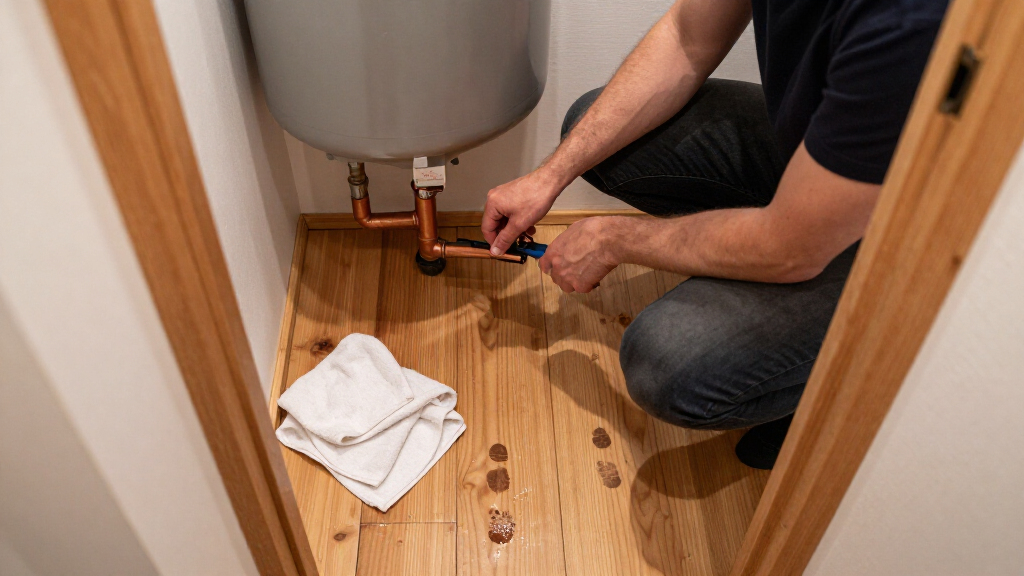

For most tiny homes with the electrical service to support it, I’d start with the Rheem 18kW 240V Tankless Electric Water Heater as the best overall balance of whole-home hot water and a compact footprint. The GE 10 Gallon Plug and Play is a simpler fit for modest demand and standard 120-volt power, while the Camplux Outdoor Tankless Propane suits off-grid setups that can vent outdoors. The main tradeoff is between tankless units’ space savings and higher electrical or fuel demands, and tanks’ simpler power needs but limited stored hot water. I compare all 15 options by capacity, installation requirements, and likely fit for tiny-home routines below.

Get compact home essentials delivered free with Prime
- Fast, free delivery on millions of items
- Prime Video, Amazon Music and more included
- Member-only deals all year
Key Takeaways
- Whole-home electric tankless models need careful service-panel planning: the 14kW and 18kW options run on 240V, so compact size does not mean low electrical demand.
- Small 120V tanks favor predictable, modest use: the GE 10-gallon, Camplux 10-gallon, and GE 18-gallon models trade endless hot water for stored capacity and simpler electrical requirements.
- Point-of-use mini tanks solve a different problem: the 1.6-gallon, Rheem 2.5-gallon, and ThermoMate 2.5-gallon models are suited to one fixture, not replacing a whole-home heater.
- Propane expands options where electric capacity is limited: the indoor VEVOR models and outdoor Camplux and portable 6L unit require fuel, combustion planning, and the right installation setting.
- Matching the heater to simultaneous use matters more than headline capacity: a shower and sink running together can change which tankless model or stored-water size makes sense.
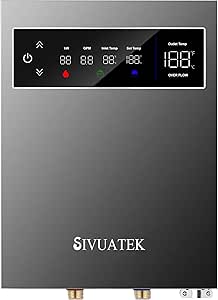


| tiny house water heater | Dimensions | Voltage | Weight | Maximum temperature |
|---|---|---|---|---|
| 14kW Electric Tankless Water H | 12.2 in W x 17.25 in H; 15.87 in deep | 240 volts | 6.85 kg | 131 °F |
| 1.6 Gallon Electric Mini Tank | 10.83 x 10.83 x 9.61 inches | 110V | — | 167°F |
| GE Appliances 18 Gallon Plug a | 19.25 in W x 25.75 in H | 120 volts | 54 pounds | — |
| Ranein 18kW Tankless Electric | 13.8 in W x 18.7 in H x 3.1 in deep | 240V | 7.9 kg | 140 °F |
| GE Appliances 10 Gallon Plug a | 14.75 in W x 24.5 in H | 120 volts | 41 pounds | 140 °F |
| 18kW Electric Tankless Water H | 11.1 in W × 19.2 in H × 4 in D | 240 V | 12 lb | 140 °F |
| Rheem Mini-Tank Electric Water | 11 in deep | 120 V | 17.6 lb | 140 °F |
| Camplux 10 Gallon Electric Wat | 14.75 in W × 24.5 in H | 120 V | 40 lb | 150 °F |
| 14kW Electric Tankless Water H | 12.2 in W × 17.25 in H | 240 V | — | — |
| VEVOR Tankless Water Heater Pr | 13.78 in W × 21.65 in H | 120 V | — | 149 °F |
| VEVOR Tankless Gas Water Heate | 13.78 in W × 21.65 in H | — | 19.8 lb | — |
| Camplux Outdoor Tankless Propa | 17.32 in W × 27.56 in H | 3 volts | 27 lb | 167°F |
| Outdoor Tankless Propane Water | 11.8 in L × 5.3 in W × 17.3 in H | — | 12 lb | — |
| Rheem 18kW 240V Tankless Elect | 14.5 in W × 18.25 in H | 240 volts | 14.8 lb | 140°F |
| ThermoMate 2.5 Gallon Electric | 12.95 in W × 16.49 in H × 11.5 in D | 120 volts | 15.4 lb | 149°F |
More Details on Our Top Picks
14kW Electric Tankless Water Heater 240V for Sink & Shower, Gray
For a tiny house that needs hot water on demand but has little room for a storage tank, this 14kW wall-mounted heater is a focused option. Its listed 3.3 GPM flow rate is intended for one or two outlets, so it suits a sink-and-shower setup better than simultaneous, high-demand use. Compared with the Ranein 18kW Tankless Electric Water Heater, it uses less power and has a smaller stated flow rate; that can make it a closer fit for modest demand, but it also leaves less headroom when fixtures run together. The LED temperature display and listed leakage and overheating protections add useful control. The main tradeoff is electrical: installation calls for a 60-amp circuit breaker and may need a qualified installer, so the compact heater itself does not guarantee a simple retrofit.
Pros:- Tankless design saves space compared with the GE 10 Gallon Plug and Play Electric Water Heater.
- Listed 3.3 GPM flow rate supports modest sink-and-shower demand.
- LED display provides temperature control at the unit.
- Listed leakage and overheating protections add safety monitoring.
Cons:- Requires a 240V supply and a 60-amp circuit breaker.
- The stated flow rate limits simultaneous use compared with the 18kW Ranein model.
- Installation may require electrical and plumbing expertise.
Best for: Tiny-house owners with a compatible 240V electrical setup who need on-demand hot water for a sink and shower, usually not at the same time.
Not ideal for: Households that regularly run several hot-water fixtures at once, or owners who cannot provide the required 60-amp circuit and installation work.
- Power:14 kW
- Voltage:240 volts
- Flow rate:3.3 GPM
- Maximum temperature:131 °F
- Mount type:Wall
- Dimensions:12.2 in W x 17.25 in H; 15.87 in deep
- Weight:6.85 kg
- Certification:ETL Certified
Our verdict“Choose this model if you want a compact, on-demand heater for limited fixture use and can support its 240V electrical requirements.”
1.6 Gallon Electric Mini Tank Water Heater – Under Sink, 1500W
This 1.6-gallon mini tank is aimed at one nearby tap, not a whole tiny house. Its small footprint can fit under a sink where a larger tank such as the GE 10 Gallon Plug and Play Electric Water Heater may take up too much room, and its 110V supply is a more modest electrical requirement than the 240V tankless units in this group. Digital temperature control and a listed maximum of 167°F give the owner control over stored water temperature, while the tank keeps a small reserve ready at the point of use. The tradeoff is capacity: 1.6 gallons can run short during extended use, and this is not a substitute for a shower-capable household heater. It also must be filled before first operation.
Pros:- Compact dimensions suit under-sink and other tight point-of-use installations.
- Operates on 110V rather than the 240V supply required by the tankless models here.
- Digital temperature control makes adjustment straightforward.
- Listed over-temperature protection and rust-resistant construction address safety and durability.
Cons:- The 1.6-gallon reserve is too small for sustained shower or multi-fixture demand.
- Must be filled with water before initial operation.
- Point-of-use design does not replace a whole-house heater.
Best for: Tiny-house owners who want a small, local hot-water reserve for one sink, an RV kitchenette, or a compact utility area.
Not ideal for: Buyers seeking a primary heater for showers, multiple fixtures, or extended hot-water use without waiting for recovery.
- Capacity:1.6 gallons
- Voltage:110V
- Maximum temperature:167°F
- Dimensions:10.83 x 10.83 x 9.61 inches
- Water connections:1/2-inch NPT
- Power:1500W
Our verdict“Pick this mini tank for one sink where a compact 110V hot-water reserve matters more than whole-house capacity.”
GE Appliances 18 Gallon Plug and Play Electric Water Heater with Adjustable Thermostat, 120 Volt
Among the listed storage models, this 18-gallon GE heater offers the largest stated reserve, making it a stronger choice for a tiny house with more than one regular hot-water task. It can serve as a standalone unit or boost hot water through a longer pipe run, while its 120V connection avoids the 240V supply needed by the Ranein and 14kW tankless models. That electrical fit may help in a small home built around standard 120V circuits, though the product data also lists 14,400 watts, so buyers should verify the required circuit and installation details before purchase. Compared with the smaller GE 10 Gallon model, this unit provides more stored water but takes up more room and weighs 54 pounds. It is a storage heater, not an endless-flow option.
Pros:- 18-gallon capacity provides more stored hot water than the GE 10 Gallon model.
- Can be used as a standalone heater or as a booster for long pipe runs.
- Adjustable thermostat allows temperature setting to match household needs.
- Stainless steel construction and listed corrosion-resistant components support durability.
Cons:- The 19.25-by-25.75-inch body and 54-pound weight demand more space and support than a mini tank.
- Stored capacity can be depleted during sustained demand, unlike an on-demand heater.
- The listed 14,400-watt specification alongside 120V merits careful circuit verification before installation.
Best for: Tiny-house owners who want a larger stored supply for kitchen and bathroom use and have suitable 120V electrical service and floor or utility space.
Not ideal for: Owners with very limited storage space or buyers who need continuous hot water for repeated, back-to-back showers.
- Capacity:18 gallons
- Voltage:120 volts
- Wattage:14,400 watts
- Maximum pressure:150 psi
- Material:Stainless steel
- Dimensions:19.25 in W x 25.75 in H
- Weight:54 pounds
- Heat output:140 °F
Our verdict“Choose this GE when a larger stored reserve and a 120V connection matter more than a small footprint or continuous on-demand output.”
Ranein 18kW Tankless Electric Water Heater, Max 4.3 GPM, 240V, Whole House
The Ranein 18kW is the higher-capacity tankless pick in this batch: its listed 4.3 GPM flow rate exceeds the 14kW model’s 3.3 GPM, giving a small household more room to run fixtures together. The wall-mounted body is only 3.1 inches deep, a useful space advantage over the GE 18 Gallon storage heater, which reserves hot water but occupies substantially more volume. That extra flow comes with a substantial electrical requirement: this unit needs a dedicated 240V circuit and appropriate installation, so it is a poor fit for an off-grid or lightly wired tiny house without a planned electrical system. Its maximum stated temperature is 140°F, and the listed warranty is just 30 days. Buyers should weigh the compact format against that limited warranty and confirm whether the flow rate suits their incoming water conditions and household demand.
Pros:- Listed 4.3 GPM flow rate is higher than the 14kW tankless model in this batch.
- Wall-mounted, 3.1-inch-deep body saves space compared with the GE 18 Gallon storage unit.
- LED display and adjustable temperature control support convenient settings.
- Listed maximum pressure is 130 psi.
Cons:- Requires a dedicated 240V circuit and suitable professional installation.
- The 4.3 GPM limit may not cover high-demand simultaneous use.
- The listed 30-day warranty is short.
Best for: Tiny-house households with a robust 240V electrical system that want tankless hot water for several modest-demand fixtures.
Not ideal for: Owners with limited electrical capacity, anyone seeking a long stated warranty, or households whose demand exceeds the listed 4.3 GPM flow rate.
- Power:18 kW
- Voltage:240V
- Maximum flow rate:4.3 GPM
- Maximum temperature:140 °F
- Mount type:Wall
- Dimensions:13.8 in W x 18.7 in H x 3.1 in deep
- Weight:7.9 kg
- Maximum pressure:130 psi
- Warranty:30 days
Our verdict“Pick the Ranein if your electrical system can support 18kW and you want more tankless flow without dedicating space to a storage tank.”
GE Appliances 10 Gallon Plug and Play Electric Water Heater with Adjustable Thermostat, 120 Volt
The GE 10 Gallon offers a middle ground for tiny houses: more stored water than the 1.6-gallon under-sink unit, without the larger 18-gallon GE’s footprint and weight. Its 120V connection and standard plumbing connections may suit a small home that favors a straightforward storage setup over the dedicated 240V circuits required by the Ranein 18kW tankless heater. It can work as a standalone heater or inline booster, so it can address either a compact household supply or a long pipe run. The limit is the reserve: ten gallons may not cover repeated showers or several hot-water tasks in succession, and the product data gives no energy-efficiency rating. At 24.5 inches tall, it also needs a planned floor location rather than disappearing beneath every sink.
Pros:- 10-gallon capacity offers more reserve than the 1.6-gallon mini tank while remaining smaller than the 18-gallon GE.
- 120V operation avoids the 240V requirement of the tankless models in this batch.
- Can function as a standalone heater or inline booster.
- Adjustable thermostat and stainless steel construction support controlled operation and durability.
Cons:- Ten gallons can run short during repeated showers or simultaneous hot-water tasks.
- Floor mounting and 24.5-inch height require a suitable installation area.
- No energy-efficiency rating is provided in the supplied product data.
Best for: Tiny-house owners who want a moderate stored hot-water reserve on 120V and have a dedicated floor or utility-space location.
Not ideal for: Households needing long or back-to-back showers, buyers with no floor space, or those prioritizing a stated efficiency rating.
- Capacity:10 gallons
- Model number:GE10P08BAW
- Voltage:120 volts
- Maximum temperature:140 °F
- Maximum pressure:150 psi
- Material:Stainless steel
- Dimensions:14.75 in W x 24.5 in H
- Weight:41 pounds
- Mount type:Floor
Our verdict“Choose this GE for a modest 120V storage setup when the 1.6-gallon mini tank is too small and an 18-gallon unit is too large.”
18kW Electric Tankless Water Heater 240V ETL Certified WiFi
For a tiny house with a suitable 240-volt electrical supply, this model brings a useful balance of compact installation and on-demand output. Its listed 4.3 gpm maximum flow rate is higher than the 14kW Electric Tankless Water Heater’s 2.3 gpm, giving it more headroom for everyday use, though actual delivery depends on incoming water temperature and conditions. WiFi control and self-modulating operation add convenient temperature adjustment and power management, while the wall-mounted body avoids dedicating floor space to a storage tank. The tradeoff is a substantial electrical load: installation may require professional work and a compatible service panel. Compared with the Camplux 10 Gallon Electric Water Heater, it avoids waiting for stored water to reheat, but it does not provide a reserve when demand exceeds its heating capacity.
Pros:- Listed 4.3 gpm maximum flow offers more headroom than the 14kW electric model in this lineup.
- Wall mounting frees floor space in a compact utility area.
- WiFi control supports remote temperature adjustments.
- Self-modulating technology is designed to adjust power use to demand.
Cons:- The 18kW, 240V load can require electrical upgrades and professional installation.
- Maximum flow may not cover simultaneous fixtures in a larger household or cold-water conditions.
- Unlike a tank model, it has no stored hot-water reserve when demand exceeds its capacity.
Best for: Tiny-house owners with a compatible 240V electrical system who want app-based control and on-demand hot water for routine household use.
Not ideal for: Off-grid or lower-capacity electrical setups, and households that regularly run several hot-water fixtures at once.
- Power:18,000 W (18 kW)
- Voltage:240 V
- Maximum flow rate:4.3 gpm
- Maximum temperature:140 °F
- Maximum pressure:130 psi
- Mounting:Wall mount
- Dimensions:11.1 in W × 19.2 in H × 4 in D
- Weight:12 lb
- Features:WiFi control, LED display, child lock, overheat protection
Our verdict“Choose this model if your tiny house has the electrical capacity and you want connected, on-demand hot water with more listed flow than the 14kW alternative.”
Rheem Mini-Tank Electric Water Heater, 2.5 Gallon
The Rheem Mini-Tank is a focused fix for a distant sink or a small washing area, not a whole-house heater. Its 2.5-gallon tank keeps a small reserve close to the tap, which can reduce the wait for hot water without drawing on the tiny house’s main system. That makes it a simpler, lower-demand alternative to the 240V tankless models in this lineup, which need dedicated electrical capacity to heat water as it flows. The tradeoff is limited supply: repeated draws can use up the tank, and recovery takes time. Compared with the Camplux 10 Gallon Electric Water Heater, this Rheem is easier to fit in a tight point-of-use spot, but its much smaller capacity is a poor match for showers or multiple users. Check for a compatible 120V outlet and mounting location before choosing it.
Pros:- Small tank suits point-of-use installations where a larger heater will not fit.
- Runs on 120V power rather than the 240V supply required by the tankless electric options.
- Adjustable temperature control ranges from 50°F to 140°F.
- Glass-lined steel tank is designed for durability.
Cons:- The 2.5-gallon capacity is limited for showers or repeated hot-water draws.
- Requires a suitable 120V outlet and installation space.
- Stored water can run out while the tank recovers.
Best for: Tiny-house owners who want a small local hot-water reserve at a remote sink, garage work area, or outdoor kitchen.
Not ideal for: Buyers seeking a primary shower or whole-house heater, since 2.5 gallons can be depleted quickly.
- Capacity:2.5 gallons
- Power:1.4 kW
- Voltage:120 V
- Maximum temperature:140 °F
- Maximum pressure:150 psi
- Tank material:Steel with glass lining
- Weight:17.6 lb
- Dimensions:11 in deep
- Installation options:Floor or wall mounting
Our verdict“Pick the Rheem for a nearby sink that needs a small hot-water reserve, not as the main heater for a tiny house.”
Camplux 10 Gallon Electric Water Heater for Small Spaces, 120V, 1500W, UL Listed
For a tiny house built around ordinary 120V power, this Camplux offers more stored hot water than the Rheem 2.5-gallon mini-tank without stepping up to a 240V tankless circuit. Its 10-gallon capacity gives users a reserve for short household draws, while insulation is listed to help maintain temperature between uses. That reserve suits buyers who prefer a tank’s predictable supply over the flow-dependent output of the 14kW Electric Tankless Water Heater. The compromise is space and recovery time: at 14.75 by 24.5 inches, it needs a dedicated mounting area, and the listed heating time is about 60 minutes. It is a more practical primary small-space tank than the Rheem for greater stored volume, but neither tank can provide endless hot water. Confirm the dimensions and installation requirements before committing.
Pros:- 10-gallon storage capacity exceeds the Rheem Mini-Tank’s 2.5 gallons.
- Operates on 120V power, avoiding the 240V supply needed by the electric tankless models.
- Insulation is specified to maintain hot water between uses.
- Adjustable thermostat and safety relief valve provide temperature control and pressure protection.
Cons:- Listed heating time of about 60 minutes means recovery is not immediate after use.
- Takes more space and weighs more than the Rheem 2.5-gallon mini-tank.
- Stored supply is finite and can be depleted during extended or back-to-back use.
Best for: Tiny-house residents with 120V power who want a compact storage heater for modest daily use and can reserve wall or floor space for a tank.
Not ideal for: Households needing continuous hot water for long showers or several simultaneous draws, or homes without room for a 24.5-inch-tall unit.
- Capacity:10 gallons
- Power:1,500 W
- Voltage:120 V
- Maximum temperature:150 °F
- Maximum pressure:150 psi
- Dimensions:14.75 in W × 24.5 in H
- Weight:40 lb
- Materials:Porcelain enamel and stainless steel
- Certification:UL Listed
Our verdict“Choose this Camplux if you want a 120V storage tank with more reserve than a mini-tank and have room to install it.”
14kW Electric Tankless Water Heater, Self-Modulating, 240V
This 14kW unit makes the most sense when a tiny house needs hot water near one shower or appliance rather than broad, simultaneous coverage. Its wall-mounted, compact body can sit close to the fixture, and on-demand heating avoids the standby storage of a tank. Compared with the 18kW WiFi Electric Tankless Water Heater in this roundup, it uses less rated power, but its listed 2.3 gpm flow rate leaves less room for multiple outlets. That makes it a better fit for careful point-of-use planning than for households expecting several hot taps at once. The 240V requirement can also call for electrical work, and the supplied temperature figures list a 110°F maximum temperature alongside 131°F heat output, so buyers should verify the intended operating range with the manufacturer. It trades capacity and convenience features for a compact, focused installation.
Pros:- Compact wall-mounted format suits installation near a point of use.
- On-demand operation supplies heated water without a storage tank.
- Self-modulating temperature regulation and a digital display support controlled operation.
- ETL certification and UL listing are specified.
Cons:- Listed 2.3 gpm flow is more limited than the 18kW model’s listed 4.3 gpm.
- Requires 240V power and may need electrical upgrades.
- Product data lists a 110°F maximum temperature and 131°F heat output, figures buyers should clarify before purchase.
Best for: Tiny-house owners who need a compact 240V heater dedicated to one shower or appliance and do not expect simultaneous hot-water use.
Not ideal for: Families or layouts where multiple fixtures commonly run at once, and homes that cannot support a 240V connection.
- Power:14 kW
- Voltage:240 V
- Listed flow rate:2.3 gpm
- Listed maximum temperature:110 °F
- Listed heat output:131 °F
- Mounting:Wall mounted
- Dimensions:12.2 in W × 17.25 in H
- Materials:Aluminum, brass, and metal
- Certifications:ETL Certified and UL Listed
Our verdict“Choose this 14kW heater for a single planned hot-water outlet when compact size matters more than multi-fixture flow.”
VEVOR Tankless Water Heater Propane, 4.3 Gallon, 100,000 BTU, Indoor Use
For a tiny house set up for propane, this VEVOR offers a different path from the electric heaters: its listed 100,000 BTU output and 16 liters-per-minute flow aim at broader household use without relying on an 18kW electric circuit. The LED display and stated ±1°F temperature control give owners direct feedback, while a wall-mounted design keeps the floor clear. Compared with the Camplux 10 Gallon Electric Water Heater, it heats on demand rather than storing a limited batch, but that flexibility brings added installation demands. The listing specifies indoor use, so venting and a suitable propane setup must be planned; the nearly 20-pound unit also needs secure mounting. Its data lists AC power and 120V, but does not explain the electrical connection’s role, so check installation instructions and local code requirements. Skip it if a simpler electric tank is the priority.
Pros:- Listed 100,000 BTU output and 16 L/min flow target household-scale demand.
- Propane heating avoids the high electrical load of the 18kW electric tankless model.
- Stated ±1°F temperature control and a large LED display aid monitoring.
- Wall mounting keeps the heater off the floor.
Cons:- Indoor installation requires a suitable venting plan and code-compliant setup.
- At 19.8 lb, it needs secure wall support.
- Listing includes 120V AC details but does not clarify the electrical connection’s function.
Best for: Tiny-house owners with propane infrastructure who need higher on-demand flow and can provide a properly vented indoor installation.
Not ideal for: Buyers without propane service, a suitable venting route, or the space and mounting support for an indoor wall unit.
- Fuel:Propane
- Heat output:100,000 BTU
- Listed capacity:4.3 gallons
- Flow rate:16 L/min
- Maximum temperature:149 °F
- Voltage:120 V
- Maximum pressure:116 psi
- Dimensions:13.78 in W × 21.65 in H
- Weight and mounting:19.8 lb; wall mount
Our verdict“Pick the VEVOR if your tiny house is propane-equipped and you can handle the venting and installation needs of an indoor tankless heater.”
VEVOR Tankless Gas Water Heater, 4.3 Gallons, 100,000 BTU, Indoor Use
For a tiny house set up for indoor gas water heating, this VEVOR pairs 100,000 BTU output with a listed 16 L/min flow rate, giving it more headroom for shared hot-water use than the small point-of-use ThermoMate 2.5 Gallon Mini Tank. Its ±1°F temperature control and LED display can make temperature adjustments more precise, while wall mounting keeps floor space available for other essentials. The tradeoff is that its 13.78-by-21.65-inch body is substantial for a compact build, and the listed 19.8-pound weight adds to installation demands. Unlike the outdoor Camplux propane model, this unit is intended for indoor installation, so buyers need to plan for suitable gas, venting, and professional installation rather than treating it as a simple DIY upgrade.
Pros:- 100,000 BTU output and a listed 16 L/min flow rate suit broader household use than a small point-of-use heater.
- ±1°F temperature control supports precise adjustment.
- Wall mounting frees up floor space.
- LED display and multiple listed safety protections aid everyday operation.
Cons:- Its dimensions and 19.8-pound weight take meaningful wall space in a tiny house.
- Professional installation and suitable indoor gas and venting arrangements may be needed.
- Gas operation is a poor fit for homes designed around electric-only utilities.
Best for: Tiny-house owners with an indoor gas-heating setup who want one heater to serve multiple hot-water outlets.
Not ideal for: Very small builds without room for a wall-mounted unit and appropriate gas and venting work, or owners seeking a straightforward DIY installation.
- Heating input:100,000 BTU
- Flow rate:16 liters per minute
- Temperature limit:149°F
- Temperature control:±1°F
- Power:AC, 120 volts
- Mounting:Wall mount
- Dimensions:13.78 in W × 21.65 in H
- Weight:19.8 lb
Our verdict“Choose this VEVOR if your tiny house already supports indoor gas heating and you need more flow than a compact point-of-use unit can provide.”
Camplux Outdoor Tankless Propane Water Heater, 4.22 GPM, 16L, 110,000 BTU
The Camplux is a strong match for a tiny house that can place its water heater outdoors: its 4.22 GPM flow rate and 110,000 BTU input offer substantially more output than the portable 1.58 GPM outdoor heater in this lineup. Moving the appliance outside can also preserve scarce indoor wall and floor space. Its LED display and safety protections add useful operating controls, but this is not a year-round, no-planning solution. The manufacturer description warns that cold-weather installations need drainage to guard against freezing, and propane connections require careful handling. Compared with the indoor VEVOR, the Camplux avoids taking up interior space but exposes the heater to outdoor conditions; buyers need to account for weather, plumbing, and seasonal protection before choosing it.
Pros:- 4.22 GPM flow rate and 110,000 BTU input provide higher stated output than the 1.58 GPM portable model.
- Outdoor placement preserves limited interior space.
- LED display supports temperature adjustments.
- Description lists safety protections and included installation accessories.
Cons:- Outdoor plumbing needs cold-weather drainage to reduce freeze-damage risk.
- Propane connections call for careful installation and handling.
- At 27 pounds and 17.32 by 27.56 inches, it is less convenient to move than a portable heater.
Best for: Owners of cabins or tiny houses with an outdoor propane installation point who want higher flow for routine household use.
Not ideal for: Cold-climate owners who cannot drain or protect outdoor plumbing, and buyers who need an indoor unit or a compact portable heater.
- Flow rate:4.22 GPM
- Capacity:16 liters
- Heating input:110,000 BTU
- Maximum temperature:167°F
- Maximum pressure:130 psi
- Power source:Liquid propane
- Voltage:3 volts
- Dimensions:17.32 in W × 27.56 in H
- Weight:27 lb
Our verdict“Pick the Camplux when outdoor propane installation and freeze protection are practical and you want more flow than a portable unit provides.”
Outdoor Tankless Propane Water Heater 1.58 GPM 6L Portable Gas Water Heater with Handle & Overheating Protection, for Camping RV Cabin Boat Barn – Black
At 12 pounds and 11.8 inches long, this portable heater is aimed at tiny-house owners who move between an off-grid cabin, RV, or outdoor wash station—not those seeking a fixed whole-house supply. Its 1.58 GPM flow rate is well below the Camplux Outdoor Tankless Propane Water Heater’s 4.22 GPM, so it makes more sense for one modest outlet or intermittent use than simultaneous showers and taps. The compact size and listed protections, including low-flow and flame-failure safeguards, make portability its clearest advantage. That flexibility comes with limits: it requires at least 2.5 PSI water pressure, and the description warns that extended rain exposure can damage internal parts. It is a specialized alternative, not a smaller substitute for a higher-flow household heater.
Pros:- 12-pound weight and compact dimensions make it easier to transport than the 27-pound Camplux.
- 1.58 GPM output suits modest, single-outlet hot-water needs.
- Listed protections include overheating, low-flow, dry-combustion, and flame-failure safeguards.
- Gas heating provides hot water without a preheating wait.
Cons:- Lower flow than the Camplux makes it a poor match for multiple simultaneous uses.
- Needs at least 2.5 PSI water pressure to operate properly.
- Prolonged exposure to rain can damage internal components.
Best for: Off-grid tiny-house owners, campers, and RV users who need a lightweight propane heater for one outdoor or low-demand outlet.
Not ideal for: Households wanting whole-house flow, installations with weak water pressure, or locations where the unit will sit exposed to rain.
- Capacity:6 liters
- Flow rate:1.58 GPM
- Heating input:40,000 BTU
- Power source:Gas
- Material:Stainless steel
- Dimensions:11.8 in L × 5.3 in W × 17.3 in H
- Weight:12 lb
- Minimum operating water pressure:2.5 PSI
Our verdict“Choose this portable unit for light, mobile hot-water needs, not as the primary heater for a busy tiny-house household.”
Rheem 18kW 240V Tankless Electric Water Heater, Gray
This Rheem suits a tiny house with a 240-volt electrical setup and no desire to use propane. Its 18 kW output and self-modulating controls make it a more space-conscious continuous-heating choice than the ThermoMate 2.5 Gallon Mini Tank, which stores only a small reserve of hot water. The listed 4.4 GPM flow rate is attractive on paper, but the product description frames it for mid-range or single-point applications and warns that flow may not meet a large household’s needs. That qualification matters in a tiny house, where cold incoming water and electrical capacity can affect usable output. At 14.8 pounds, the wall-mounted body is relatively light, yet it still needs proper installation and a circuit capable of supporting 240-volt operation.
Pros:- Tankless design avoids storing a limited batch like the ThermoMate mini tank.
- Self-modulation adjusts power use to demand.
- Compact wall-mounted format weighs 14.8 pounds.
- Copper heating elements and listed 99.8% efficiency suit buyers focused on electric operation.
Cons:- Requires 240-volt power and suitable electrical installation.
- Product data positions it for mid-range or single-point use, limiting confidence for multiple simultaneous outlets.
- The listed 4.4 GPM rate may not reflect performance under every incoming-water temperature and demand combination.
Best for: Electric-only tiny-house owners with suitable 240-volt service who want continuous hot water for a modest household or a primary outlet.
Not ideal for: Homes without adequate 240-volt electrical capacity, or households expecting strong flow at several outlets at once.
- Power:18 kW
- Voltage:240 volts
- Listed flow rate:4.4 GPM
- Maximum temperature:140°F
- Efficiency:99.8%
- Maximum pressure:150 psi
- Mounting:Wall mount
- Dimensions:14.5 in W × 18.25 in H
- Weight:14.8 lb
Our verdict“Choose this Rheem for continuous electric hot water when your tiny house has the required 240-volt capacity and modest demand.”
ThermoMate 2.5 Gallon Electric Mini Tank Water Heater, UL Listed, Point of Use, Wall or Floor Mount, 120V
The ThermoMate is the clearest fit here for a tiny house that needs hot water close to a sink without adding a 240-volt tankless system. Its 2.5-gallon storage tank and standard 120-volt supply make it a localized option, while wall-or-floor mounting gives owners more placement choices than the wall-only Rheem 18kW. The tradeoff is capacity: unlike the Rheem or the gas VEVOR, it cannot provide continuous whole-house hot water, and repeated use can draw down its small reserve. Corrosion-resistant tank lining and an Incoloy 800 heating element support durability, and the listed UL safety certification may appeal to buyers prioritizing a familiar household-style installation. Choose it for a kitchen or bathroom sink, not for multiple showers or high-demand use.
Pros:- Runs on 120 volts rather than requiring the Rheem’s 240-volt supply.
- Wall or floor mounting offers flexible placement in tight utility spaces.
- Fused porcelain-enamel glass lining and an Incoloy 800 heating element resist corrosion.
- UL listed and adjustable up to 149°F.
Cons:- The 2.5-gallon tank limits the amount of hot water available before recovery.
- Not suited to whole-house or multiple-outlet demand like the tankless gas options.
- Frequent draws can increase electricity use as the small tank reheats.
Best for: Tiny-house owners who want a compact, 120-volt hot-water reserve under a kitchen or bathroom sink.
Not ideal for: Households needing continuous hot water, multiple simultaneous outlets, or enough stored capacity for long showers.
- Capacity:2.5 gallons
- Power:1,440 watts
- Voltage:120 volts
- Maximum temperature:149°F
- Maximum pressure:150 psi
- Mounting:Wall or floor mount
- Dimensions:12.95 in W × 16.49 in H × 11.5 in D
- Weight:15.4 lb
- Warranty:3-year limited tank warranty; 1-year parts warranty
Our verdict“Pick the ThermoMate for a nearby sink and simple 120-volt installation, but choose a higher-capacity heater for showers or whole-house service.”
How We Picked
I ranked these tiny house water heaters by how well their stated format, capacity, and power source match real small-home constraints. I weighed whether each is intended for whole-home service or a single fixture, the electrical or fuel demands, stored hot-water capacity, and practical installation requirements such as indoor versus outdoor placement. A compact unit only ranks well when its output and setup are plausible for the home it is meant to serve.
The ordering favors usable fit over headline specifications: the Rheem 18kW leads among the listed electric whole-home choices, while modest 120V tanks and point-of-use units rank better for smaller demand or limited wiring. Propane units earn consideration for homes with limited electrical service, but their venting, combustion, and location requirements narrow their audience. I treat similar products as distinct only where listed capacity, controls, installation format, or intended use creates a meaningful choice; buyers should confirm exact model specifications and local code requirements before purchase.
Factors to Consider When Choosing Tiny House Water Heaters
Before choosing a heater, I’d map the home’s hot-water routine and utility limits. The right choice depends on how many fixtures may run together, the available electrical service or fuel, and where the unit can be installed—not simply on the smallest dimensions.
Match Output to How Fixtures Run Together
List the fixtures that could draw hot water at the same time, rather than counting every tap as an equal demand. A solo shower routine may work with a smaller system than a home where someone showers while dishes are being washed. For tankless heaters, compare flow needs at the incoming water temperature; colder inlet water can reduce the amount of hot water delivered at a comfortable temperature. For tank models, estimate how much hot water a typical shower uses and how long the household can wait for recovery. A common mistake is choosing by the largest advertised flow figure without checking the intended temperature rise or simultaneous demand. If use patterns vary, a tank can provide a buffer, while a tankless system avoids running out of stored water but may not serve every fixture at once.
Check Electrical Capacity Before Choosing Electric
A 240V label does not tell you whether a heater fits your tiny home’s wiring; breaker size, circuit availability, and service capacity all matter. High-demand electric tankless units can require substantial dedicated circuits, which may be impractical in a compact home or costly to add. A 120V storage heater usually places less demand on the service at once, but it heats a finite volume and may take time to recover. Ask a licensed electrician to review the unit’s installation manual and the home’s panel before ordering. Do not assume a plug-in tank can share a circuit with other appliances just because it uses a familiar outlet. The lower installation complexity of a small tank can be a better trade than tankless convenience when electrical upgrades would dominate the project.
Choose Fuel and Installation Location Together
Propane can suit a tiny home with limited electrical capacity, but it adds fuel storage, gas-line sizing, combustion air, and exhaust planning to the decision. Indoor and outdoor models are not interchangeable: the installation location and venting method must match the heater’s listing and instructions. Outdoor units also need protection from freezing, weather exposure, and unsafe exhaust recirculation near openings. For a mobile or seasonal setup, portability may be useful, but it does not remove the need for secure connections and safe operation. Check local rules for propane appliances and permitted installations before selecting a model. A fuel-source decision made early can prevent buying a heater that cannot be safely or legally installed in the available space.
Decide Whether You Need Whole-Home or Point-of-Use Hot Water
A mini tank installed near a sink can reduce the wait for hot water and avoid running a long pipe from a central heater. It is not a substitute for a shower-capable whole-home system unless its capacity and intended use support that demand. In a tiny layout, a point-of-use heater can make sense for a distant bathroom or an occasional-use sink, especially when extending hot-water plumbing would be disruptive. Multiple small heaters may simplify pipe runs but add extra connections, maintenance points, and electrical loads. Central systems keep equipment consolidated, though long pipe runs can waste water and heat. Sketch the plumbing route before buying so you can compare equipment cost and complexity with the value of getting hot water closer to the tap.
Account for Inlet Water Temperature and Seasonal Use
Incoming water temperature changes the heater’s workload, especially for tankless units that must raise water temperature as it flows. A unit that appears adequate in mild weather may deliver less flow in a cold climate or when supplied by cold groundwater. Seasonal cabins and mobile tiny homes also face freeze risk in plumbing and equipment, even when the heater itself has protective features. Check the manual for minimum operating temperatures, freeze-protection requirements, and winterization steps. Insulating exposed hot-water lines can improve comfort and reduce wasted water while waiting for heat to arrive. For year-round use in a cold region, prioritize a system and installation plan designed for those conditions rather than relying on a portable or outdoor unit’s headline capacity.
Compare Ownership Work, Not Just Purchase Format
Tank and tankless systems ask for different kinds of upkeep. Storage tanks may need periodic draining or inspection depending on water quality and manufacturer guidance, while tankless models can require descaling where mineral buildup is common. Propane systems add checks for fuel connections and exhaust paths, and outdoor equipment needs attention to weather exposure. Hard water can shorten service life or reduce performance across heater types, so learn whether treatment or regular flushing is recommended for your supply. A lower-complexity unit can be preferable if the home is remote and service access is limited. Before buying, read the maintenance schedule and confirm that the required parts and service are realistic for where the tiny house will be located.
Frequently Asked Questions
Can a 240V tankless heater run from a typical tiny-house electrical panel?
Not automatically. The heater’s circuit and current requirements must fit the panel’s capacity alongside cooking, heating, refrigeration, and other loads. Some electric tankless units need dedicated circuits or a service upgrade, so a compact body does not guarantee an easy installation. Have an electrician compare the specific model’s wiring instructions with the home’s service before purchase. If the electrical work is disproportionate to your setup, a smaller 120V tank or a correctly installed propane system may be a better fit.
Is a 10-gallon tank enough for a tiny-house shower?
It may be enough for a short, low-flow shower, but the answer depends on shower flow, tank temperature, incoming water temperature, and whether another fixture uses hot water at the same time. A tank stores a limited amount, and mixing hot water with cold can stretch that supply without making it endless. Recovery time also matters if two people shower close together. Compare the heater’s usable hot-water volume and recovery information with your actual shower habits rather than relying on the gallon figure alone. If long or back-to-back showers are routine, look at a larger tank or a properly sized tankless system.
Can I use an outdoor propane heater inside a tiny house?
No; an outdoor-only model should not be installed indoors unless its manufacturer explicitly lists it for indoor use and the installation follows those instructions. Outdoor units may not have the venting design or safety provisions required for an enclosed space, and combustion exhaust presents a serious hazard. Indoor propane heaters also need the specified venting, clearances, combustion air, and gas supply. Never adapt an outdoor model by placing it near a window or inside a shed. Check the exact model label, manual, and local code, and have the installation reviewed by a qualified professional.
When does a mini-tank heater make more sense than one central heater?
A mini tank can be a practical choice when one sink is far from the central heater or when that fixture has light, occasional demand. Placing hot water near the tap can cut the wait and reduce the water sent down the drain while the pipe warms. It usually cannot replace a shower-capable central heater unless its capacity and specifications support that job. Adding several point-of-use units can also mean more circuits, connections, and maintenance. Compare the plumbing distance and fixture use against the added equipment before deciding to distribute heating around the home.
What should I check before choosing a propane heater for an off-grid tiny home?
Confirm that the unit’s intended location matches your plan—indoor and outdoor models have different safety and venting requirements. Check fuel type, gas-line sizing, regulator requirements, and the manufacturer’s rules for clearances and combustion air. Estimate propane use from your household’s hot-water routine and plan a safe, compliant location for cylinders or a tank. In cold weather, review freeze protection and winterization instructions for both the heater and water lines. A qualified installer can verify the gas supply and exhaust setup before the heater is put into service.
Conclusion
For a small home with enough electrical capacity and whole-home demand, I’d choose the Rheem 18kW 240V Tankless Electric Water Heater as the best overall pick in this lineup. The GE 10 Gallon Plug and Play is my best value-style fit for modest use where a 120V tank is more practical, while the GE 18 Gallon suits buyers who want more stored hot water. For beginners who prefer a straightforward small-home setup, I’d start by comparing the GE 10-gallon tank with the Camplux 10 Gallon and checking the required installation details. Buyers with limited electrical service can look at the propane options: the Camplux Outdoor Tankless for an appropriate outdoor installation, or an indoor VEVOR model only when its venting and location requirements can be met. For one sink, choose a point-of-use mini tank instead of paying for a whole-home system; for a remote or mobile setup, consider the portable 6L unit only if its limited flow suits the job. The best choice is the one your utilities, layout, and daily hot-water pattern can support safely.
Halloween Picks
halloween
As an affiliate, we earn on qualifying purchases.