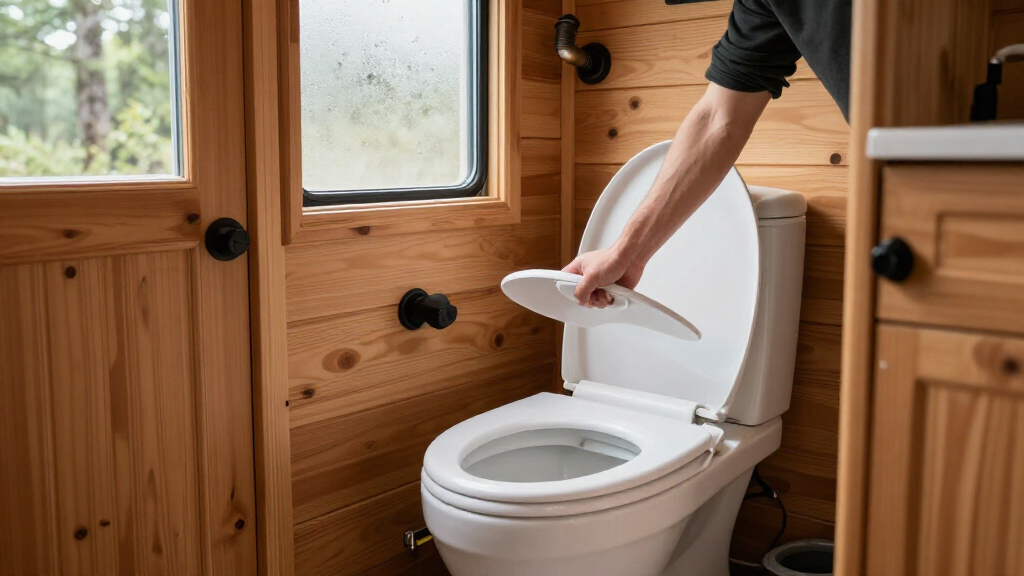
My first finding is that none of these five products is an incinerating toilet. They are waterless dry-flush toilets: each uses bags or film to contain waste, and none is described as burning it into ash. That distinction matters in a tiny house, where a true incinerating system has different power, venting, installation, and waste-handling needs. I would not buy any of these expecting incineration.

Get compact home essentials delivered free with Prime
- Fast, free delivery on millions of items
- Prime Video, Amazon Music and more included
- Member-only deals all year
For buyers open to a dry-flush alternative, the MODIWELL R1808 is my strongest fit for a tight, permanent layout because its upper unit swivels and it can be freestanding or floor-mounted. The Wrappon Sunny makes more sense when flexibility across AC and 12V power and a portable setup matter most. For a lighter, compact rechargeable option, the MODIWELL LE-310 models are worth comparing, though they depend on replacement bags and coagulant. The main tradeoff across this group is practical: compact waterless operation avoids plumbing, but it does not eliminate stored waste or consumables.
Key Takeaways
- None of these five products incinerates waste; all are waterless dry-flush systems that contain waste in bags or film.
- The MODIWELL R1808 and LOO SEAL R1808 share a swivel-top concept, but the MODIWELL listing describes both freestanding and floor-mounted installation.
- The Wrappon Sunny is the standout for AC or 12V operation and portable use, but it still requires power and removal of sealed waste bags.
- The LE-310 models are listed at 17 pounds with about 70–100 uses per charge, making them smaller alternatives to the 21-pound R1808 units.
- Every option trades plumbing and water use for recurring bag or film disposal; buyers seeking ash disposal should shop for a genuine incinerating toilet instead.
| MODIWELL R1808 Waterless Rechargeable RV Dry Flush Toilet |  | Best Overall Dry-Flush Alternative for a Fixed Tiny-House Layout | Model: R1808 | Dimensions: 17 × 14 × 18 inches | Weight: 21 lb | VIEW LATEST PRICE | See Our Full Breakdown |
| Wrappon Sunny Waterless Portable Toilet |  | Best for Portable Use and Flexible Power | Model: WRASUNNY | Operation: Waterless film-sealing system | Power: AC or 12V DC | VIEW LATEST PRICE | See Our Full Breakdown |
| MODIWELL LE-310 Compact Dry Flush Toilet, Gray |  | Best Compact Rechargeable Pick | Model: LE-310 | Dimensions: 17 × 16 × 11 inches | Weight: 17 lb | VIEW LATEST PRICE | See Our Full Breakdown |
| Modiwell LE-310 Rechargeable Dry-Flush Toilet |  | Best LE-310 Listing for Included Starter Supplies | Model: LE-310 Loo Seal Series | Dimensions: 17 × 16 × 11 inches | Weight: 17 lb | VIEW LATEST PRICE | See Our Full Breakdown |
| LOO SEAL R1808 Waterless Dry Flush RV Toilet with Swivel Top |  | Best for Buyers Prioritizing a Swivel Seat and Stated Load Limit | Model: R1808 | Dimensions: About 17 × 14 × 18 inches | Weight: About 21 lb | VIEW LATEST PRICE | See Our Full Breakdown |
| tiny house incinerating toilet | Model | Dimensions | Weight | Battery |
|---|---|---|---|---|
| MODIWELL R1808 Waterless Recha | R1808 | 17 × 14 × 18 inches | 21 lb | 55.5 Wh lithium-ion |
| Wrappon Sunny Waterless Portab | WRASUNNY | — | — | — |
| MODIWELL LE-310 Compact Dry Fl | LE-310 | 17 × 16 × 11 inches | 17 lb | 5200 mAh |
| Modiwell LE-310 Rechargeable D | LE-310 Loo Seal Series | 17 × 16 × 11 inches | 17 lb | 5200 mAh |
| LOO SEAL R1808 Waterless Dry F | R1808 | About 17 × 14 × 18 inches | About 21 lb | 55.5 Wh rechargeable lithium-ion |
More Details on Our Top Picks
MODIWELL R1808 Waterless Rechargeable RV Dry Flush Toilet
I rank this R1808 first for tiny-house use because its 180-degree swiveling upper unit gives a small bathroom more layout options than a fixed-seat design. The listing also describes both freestanding and floor-mounted installation, so it can suit a permanent nook without forcing every owner into one mounting arrangement. At 17 × 14 × 18 inches and 21 pounds, it is not the lightest pick, but its proportions and swivel feature are more relevant to a fixed compact room than to a toilet carried from place to place.
Its one-touch wrap-and-heat-seal operation and stated capacity of up to 100 sealing cycles per charge make it a practical choice for a household that wants to avoid water lines and a black tank. That is not incineration: the waste remains in refill bags and must be removed. Compared with the Wrappon Sunny, this model is described with a swiveling top and flexible mounting, while the Wrappon emphasizes AC or 12V operation and portability. Compared with the LE-310, the R1808 is heavier and larger but offers a more useful seating orientation in a tight permanent layout.
I would put this near the top of a shortlist only if dry-flush containment meets the buyer’s disposal needs. The supplied information lists 9–30V DC vehicle power or an adapter, a rechargeable battery, and included bags and coagulant. Those conveniences do not remove the need to plan for recharging and replacement supplies. I would also confirm installation and electrical requirements before committing, especially if the toilet is intended to be fixed in place. The model earns its rank for layout flexibility, not because it solves waste disposal through combustion.
Pros:- 180-degree swivel helps adapt the seat to a narrow bathroom layout.
- Can be freestanding or floor-mounted according to the listing.
- Rechargeable battery is stated to support up to 100 sealing cycles.
- Includes coagulant and refill bags to get started.
Cons:- This is a dry-flush toilet, not an incinerating toilet.
- Refill bags and coagulant remain ongoing consumables.
- At 21 pounds, it is heavier than either LE-310 listing.
Best for: Tiny-house owners who want a semi-permanent dry-flush toilet with a swivel top, flexible mounting, and no water plumbing.
Not ideal for: Buyers who require actual incineration, want to dispose of ash instead of sealed bags, or need the lightest unit for frequent carrying.
- Model:R1808
- Dimensions:17 × 14 × 18 inches
- Weight:21 lb
- Swivel:180 degrees
- Battery:55.5 Wh lithium-ion
- Cycles per charge:Up to 100
- Power options:9–30V DC vehicle connection or supplied charger adapter
- Installation:Freestanding or floor-mounted
Our verdict“I would choose this R1808 for a fixed tiny-house bathroom that needs a swiveling dry-flush unit, but not for ash-producing incineration.”
Wrappon Sunny Waterless Portable Toilet
The Wrappon Sunny is the clearest choice here for buyers who expect to move the toilet between a tiny house, vehicle, boat, or campsite. Its defining distinction is AC and 12V DC compatibility, paired with a film-sealing system that needs no water, plumbing, chemicals, or venting according to the supplied description. That combination makes it more adaptable across settings than the R1808 models, which are presented more around a swivel layout and vehicle-style DC power.
The containment method is also distinct from the LE-310 descriptions: Wrappon uses film to seal each use, with two film rolls and coagulant included. The result is still bagged waste, not incineration, and the used packages still need to be removed and disposed of. For a tiny house with occasional off-grid power, its dual power input can make planning easier; for a full-time household, I would ask how the film supply is replenished and how many uses each roll provides, since those figures are not provided here.
Compared with the MODIWELL R1808, the Sunny offers a more explicit portable, multi-setting role but does not provide a stated swivel mechanism, footprint, weight, or use count per charge in the supplied specifications. That missing detail makes it harder to judge as a permanent fixture in a particularly narrow bathroom. Compared with the LE-310, it has more clearly stated AC/DC flexibility, while the LE-310 gives a battery capacity and estimated use range. I would rank the Sunny second because its power flexibility and portable design fit varied off-grid routines, with the qualification that it still depends on electricity and film consumables.
Pros:- Works from AC or 12V DC power.
- Film-sealing operation is described as requiring no water, plumbing, chemicals, or venting.
- Portable format suits more than one location.
- Includes two film rolls, coagulants, carry bag, and AC and DC cables.
Cons:- Requires a power connection during operation.
- Sealed waste packages must still be removed and disposed of.
- Dimensions, weight, and use count per film roll are not specified here.
Best for: Tiny-house owners who also need a portable toilet for a boat, van, RV, or campsite and can supply AC or 12V power.
Not ideal for: Buyers seeking a specified battery-only cycle range, a known compact footprint, or a toilet that burns waste and leaves ash.
- Model:WRASUNNY
- Operation:Waterless film-sealing system
- Power:AC or 12V DC
- Plumbing:Not required per supplied description
- Venting:Not required per supplied description
- Included film:Two rolls
- Included coagulant:Two coagulants
- Included accessories:Carry bag, AC cable, and DC cable
Our verdict“I would choose the Wrappon Sunny when one dry-flush toilet must serve a tiny house and other travel settings, provided power and film disposal are manageable.”
MODIWELL LE-310 Compact Dry Flush Toilet, Gray
The gray LE-310 is my compact pick because its listed 17 × 16 × 11-inch body is shorter than either R1808 listing, and its 17-pound weight is four pounds below those models. That can make a difference in a tiny house where the toilet must slide under a counter, sit in a multipurpose room, or be moved aside when the space changes function. It remains a portable dry-flush unit rather than an incinerator, so the reduced footprint does not change the underlying waste-disposal routine.
The LE-310 automatically seals a waste bag at the press of a button and is listed for about 70–100 uses per charge. That range gives buyers a useful planning reference that the Wrappon Sunny listing does not provide, although the Wrappon’s AC and 12V power options may fit some installations better. Compared with the R1808, the LE-310 is smaller and lighter but gives up the swivel-top feature and the R1808’s stated 180-degree seat orientation. I would favor it when footprint matters more than adjusting the seat direction.
This listing includes garbage bags, coagulant pouches, a charging cable, and a manual. Those supplies make it a straightforward rechargeable option to assess, but the owner still needs a continuing supply of compatible bags and coagulant. Its stated 330-pound capacity matches the R1808 models, so the smaller dimensions do not imply a lower listed support limit. I rank it ahead of the nearly identical LE-310 listing as the primary compact choice only to distinguish its gray finish and product listing; the supplied specifications do not establish a meaningful performance advantage over its sibling.
Pros:- Short 11-inch listed height may suit compact or multipurpose layouts.
- At 17 pounds, it is lighter than the R1808 models.
- Rechargeable battery is listed for about 70–100 uses per charge.
- Includes bags, coagulant pouches, and a charging cable.
Cons:- It contains waste in bags rather than incinerating it.
- Replacement bags and coagulant are required.
- No swivel-top feature is listed.
Best for: A tiny-house owner who needs a shorter, lighter dry-flush toilet that can be moved or stored more easily than an R1808.
Not ideal for: People who need a swiveling seat, dislike recurring bag and coagulant supplies, or require true incineration.
- Model:LE-310
- Dimensions:17 × 16 × 11 inches
- Weight:17 lb
- Weight capacity:330 lb
- Battery:5200 mAh
- Uses per charge:About 70–100
- Operation:Electric dry flush with automatic bag sealing
- Included:Toilet, bags, coagulant pouches, charging cable, manual
Our verdict“I would pick the gray LE-310 when a low-profile, rechargeable dry-flush unit matters more than seat rotation or permanent installation features.”
Modiwell LE-310 Rechargeable Dry-Flush Toilet
This second LE-310 listing appears to share the same core toilet as the gray LE-310: both are 17 × 16 × 11 inches, weigh 17 pounds, support up to 330 pounds, and list a 5200 mAh battery with about 70–100 uses per charge. I include it separately because it is a separate product listing, but I would not treat the two as different toilet designs based on the details provided. The notable distinction is the included supply description: this version specifies two rolls of garbage bags and 60 coagulant pouches.
That supply detail may help a buyer compare what arrives in the box, but it does not make the LE-310 a low-consumable or incinerating system. It still seals waste into bags, and the owner still needs a plan for removing and disposing of them. Against the R1808 models, the LE-310 remains lighter and shorter while lacking their swivel tops and more explicit floor-mount option. Against the Wrappon Sunny, it offers a stated battery-use range and included charging cable, while the Wrappon gives clearer AC and 12V input flexibility.
I rank this listing just below its gray sibling because the provided information gives no unique size, power, or performance benefit; the listed advantage is a more explicit starter-supply count. That can be useful when comparing included contents, but buyers should verify the current package details rather than assume an identical supply bundle across listings. For a tiny-house owner who wants a compact rechargeable toilet and accepts dry-flush waste handling, it is still a sensible alternative. Anyone shopping specifically for a combustion toilet should skip both LE-310 listings and choose a product documented to incinerate waste.
Pros:- Same compact 17 × 16 × 11-inch dimensions as the other LE-310 listing.
- Stated 70–100 uses per charge and 17-pound weight.
- Listing specifies two bag rolls and 60 coagulant pouches.
- One-button sealing avoids a plumbing connection.
Cons:- The two LE-310 listings appear functionally alike in the supplied details.
- Sealed bags and coagulant remain ongoing supplies.
- No incineration or swivel feature is specified.
Best for: A buyer who wants the LE-310’s compact dimensions and rechargeable operation, with a clearly stated starter bundle of bags and coagulant.
Not ideal for: Anyone who wants a distinct upgrade over the other LE-310 listing, a swivel seat, or ash-based disposal.
- Model:LE-310 Loo Seal Series
- Dimensions:17 × 16 × 11 inches
- Weight:17 lb
- Weight capacity:330 lb
- Battery:5200 mAh
- Uses per charge:About 70–100
- Charging cable:14V/2A
- Included supplies:Two bag rolls and 60 coagulant pouches
Our verdict“I would select this LE-310 listing over its sibling only when its stated included supply bundle suits the buyer’s needs.”
LOO SEAL R1808 Waterless Dry Flush RV Toilet with Swivel Top
The LOO SEAL R1808 earns a place for buyers focused on the same space-saving feature that makes the MODIWELL R1808 attractive: a swiveling upper section. Its body can rotate to improve access in an RV-style or tiny-house bathroom, and the listing gives a 330-pound weight capacity. The supplied specifications describe a 180-degree swivel range, while the pros mention 90 degrees in either direction; I would confirm the exact movement with the seller before designing cabinetry or fixed clearances around it.
Like the MODIWELL R1808, this unit is a rechargeable dry-flush toilet rather than an incinerator. It uses a 55.5 Wh battery and is listed for about 100 uses per charge, with a sealing system that stores waste in refill bags. It also includes a urine tank, coagulant, refill bags, and charger. Compared with the LE-310 models, it is larger and heavier at about 21 pounds but provides a swivel top and more explicit R1808-style layout flexibility. Compared with the other R1808 listing, its product details give a more specific item size and identify ABS as its material, while the other listing states floor mounting as an option.
The main weakness is uncertainty around installation and fit. It is described as freestanding, yet the supplied drawbacks mention fixed installation that may require professional wiring. Those statements leave room for configuration differences, so I would check whether the exact unit needs hardwiring and what is included before planning a built-in installation. Its ongoing dependence on refill bags and coagulant also remains. I rank it fifth because it offers useful swivel and battery details but has less clear installation information than the MODIWELL R1808, which is easier to match to a fixed tiny-house layout from the listing supplied.
Pros:- Swivel top helps fit a compact bathroom orientation.
- Rechargeable 55.5 Wh battery is listed for about 100 uses.
- Includes charger, coagulant, refill bags, and urine tank.
- Stated support capacity is 330 pounds.
Cons:- This is dry-flush containment, not incineration.
- Installation details conflict between freestanding use and possible fixed wiring.
- Refill bags and coagulant must be replenished.
Best for: A buyer who wants an R1808-style swivel top, a stated 100-cycle battery range, and included urine tank and starter supplies.
Not ideal for: Buyers who need certain installation instructions before planning a built-in bathroom or who require combustion and ash disposal.
- Model:R1808
- Dimensions:About 17 × 14 × 18 inches
- Weight:About 21 lb
- Material:ABS
- Battery:55.5 Wh rechargeable lithium-ion
- Uses per charge:About 100
- Swivel range:Listed as 180 degrees
- Weight capacity:330 lb
Our verdict“I would consider the LOO SEAL R1808 for its swivel layout and included kit, but only after confirming installation and rotation details.”
How We Picked
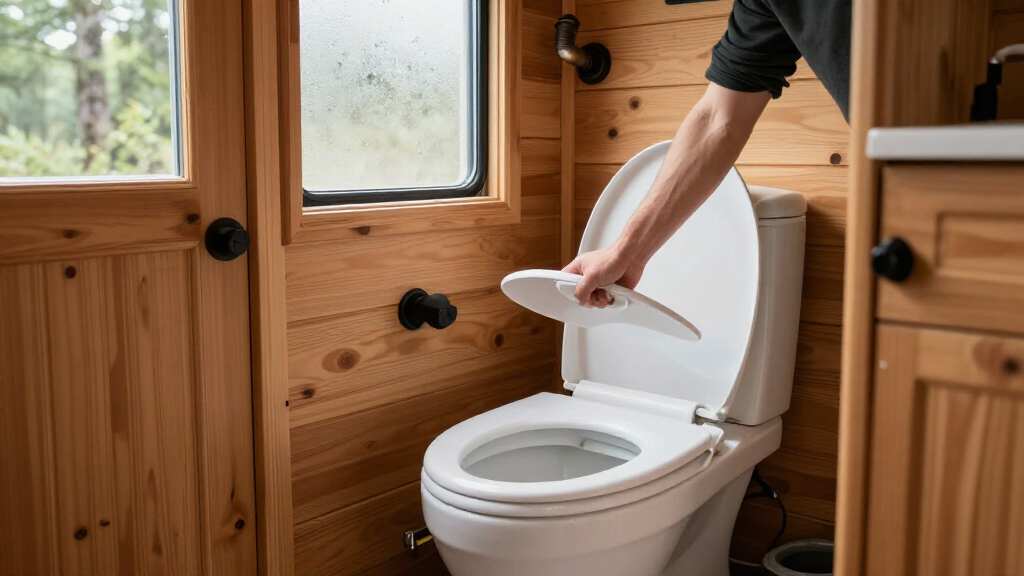
I ranked these products for tiny-house fit, not as if they were interchangeable incinerating toilets. The product information supplied describes dry-flush or film-sealing systems, so I treated that as the defining limitation: none should be represented as burning waste. My ranking favors options with useful layout flexibility, clear power choices, and enough size or installation detail to judge whether they suit a compact fixed home.
I also compared each model’s power approach, stated number of uses per charge where provided, physical footprint, carry weight, and waste-containment method. These details affect daily use in a small dwelling: a swivel mechanism can help with access around a tight bathroom, while a portable unit may be easier to move but still needs a place to store and dispose of sealed waste. I noted consumable requirements because waterless operation does not mean maintenance-free operation.
The two LE-310 listings appear to describe the same basic model and share the same dimensions, weight, battery capacity, use range, and support limit. I keep them separate because they are separate product listings, but I do not treat them as meaningfully different designs. Their included quantities differ in the supplied details. Similarly, the two R1808 listings share the same general form and claimed cycle range, while one gives more detail about swivel positioning and another specifies floor-mount flexibility. Before choosing, I would confirm the exact configuration and included supplies for the listing being purchased.
My order puts the most adaptable R1808-style option first, then the portable dual-power Wrappon, followed by the more compact rechargeable LE-310 choices. This is a ranking among dry-flush alternatives, not a ranking of true incinerating toilets. Buyers who specifically require combustion and ash disposal should use this guide to rule these models out rather than mistake them for the requested technology.
| tiny house incinerating toilet | Model | Uses per charge |
|---|---|---|
| MODIWELL R1808 Waterless Recha | R1808 | — |
| Wrappon Sunny Waterless Portab | WRASUNNY | — |
| MODIWELL LE-310 Compact Dry Fl | LE-310 | About 70–100 |
| Modiwell LE-310 Rechargeable D | LE-310 Loo Seal Series | About 70–100 |
| LOO SEAL R1808 Waterless Dry F | R1808 | About 100 |
Factors to Consider When Choosing Tiny House Incinerating Toilets
Before choosing from these options, I would settle the most important question: do you need an actual incinerating toilet, or would a dry-flush toilet meet your needs? The five listings here describe bag- or film-based waste containment. They may suit a waterless tiny house, but they do not offer the combustion and ash disposal implied by the title. The rest of this guide compares them as dry-flush alternatives so buyers can judge their fit without confusing the technologies.
First, distinguish dry flush from incineration
A dry-flush toilet seals waste in a bag or film package. An incinerating toilet uses heat to reduce waste to ash and typically has its own power, exhaust, and operating requirements. These are not equivalent disposal methods. In this group, the R1808 models wrap and seal, the LE-310 models automatically seal bags, and the Wrappon Sunny uses film sealing. None is described as heating waste into ash. I would check the manufacturer’s technical documents before ordering if combustion is non-negotiable, and I would not rely on “waterless” as evidence of incineration.
That distinction also changes the household routine. Dry-flush systems avoid water lines and black tanks, but they create packages that need to be stored, removed, and disposed of appropriately. A true incinerating model may avoid bag storage, but it brings a different set of installation and energy questions. Decide which waste-handling routine fits your property and local rules before comparing seat shape or battery capacity.
Match the power setup to the house
The Wrappon Sunny is the only one in this lineup explicitly described as running on AC or 12V DC. That can be useful if the toilet will move between a house and a vehicle or if the power arrangement changes by location. The LE-310 listings give a 5200 mAh battery and estimate 70–100 uses per charge. The R1808 listings give a 55.5 Wh lithium-ion battery and about 100 sealing cycles per charge, alongside DC or adapter options on the MODIWELL version.
These figures describe stated sealing use, not a promise that every household will get the same interval between charges. Frequency, battery condition, and operation can affect the real schedule. I would plan for a reliable charging point, check the included cable and adapter, and confirm whether a proposed built-in setup requires electrical work. If you want a toilet that operates without any electrical connection, none of these descriptions supports that expectation.
Measure the footprint and approach space
In a tiny house, dimensions are not just a bathroom-planning detail. They determine whether a person can sit comfortably, open a door, reach a sink, and remove the waste container or sealed package. The LE-310’s 11-inch listed height and 17-pound weight set it apart from the R1808 units, which are about 18 inches high and 21 pounds. The Wrappon listing does not provide dimensions or weight in the information supplied, so I would request those figures before treating it as a fixed bathroom choice.
The R1808’s swivel top may help when a seat needs to face one direction while the base sits in another. That feature does not remove the need to measure the full rotation path: a rotating seat can interfere with a wall, cabinet, or door if clearances are tight. Measure the toilet at rest and through its movement, then leave room for routine cleaning and consumable changes. A product that fits on paper but blocks access to its bags or service points may be awkward in daily use.
Compare containment and ongoing supplies
All five options rely on replacement containment supplies, though their descriptions use different terms. The R1808 models use refill bags and coagulant; the LE-310 models use garbage bags and coagulant pouches; and the Wrappon Sunny uses sealing film with coagulant. The amount included at purchase varies by listing, and only the second LE-310 description gives a specific count of two bag rolls and 60 coagulant pouches. Do not assume starter supplies indicate long-term availability or a particular number of uses.
Before selecting a dry-flush system, check how replacement supplies are ordered, stored, and disposed of where the tiny house is located. A unit can be waterless and still require regular handling of packaged waste. Ask how the system deals with liquid, what each cycle consumes, and how to respond if the sealing mechanism or battery is unavailable. If carrying bags out of the home is unacceptable, a bag-based dry-flush option is a poor match regardless of its size.
Treat similar listings as similar until proven otherwise
The two LE-310 listings share the same reported model, dimensions, weight, capacity, battery, and use range. The second listing spells out its starter supply quantity, but the descriptions do not establish a mechanical or performance difference. I would compare the seller, package contents, and warranty terms rather than pay more for an assumed design upgrade. The two R1808 products also share a broad format and cycle claim, but the supplied details differ on mounting, material, and exact fit information.
For any listing, confirm the final product configuration, whether all power accessories are included, and the exact dimensions. Product pages can describe the same family in slightly different ways, and the LOO SEAL R1808 information gives both a 90-degree-in-either-direction description and a 180-degree range. Resolve such details before building cabinetry or wiring. For fixed installations, written manufacturer guidance is more useful than relying on a broad portable-use description.
Choose for the person who will handle waste
A compact toilet is only a good fit if its waste routine works for everyone using it. Consider who will remove sealed packages, where they will be kept before disposal, and whether users are comfortable with the coagulant or film process. The R1808 and LE-310 emphasize automatic sealing, which can reduce direct contact during normal operation, while the Wrappon Sunny highlights sealed film packaging. None of these descriptions removes the need for manual disposal.
If your priorities are a tight fixed layout and seat orientation, start with the MODIWELL R1808. If you need the toilet to travel between locations and use AC or 12V power, compare the Wrappon Sunny. If you favor a shorter rechargeable unit, the LE-310 listings are the more compact choices. If none of those tradeoffs fits, expand the search to genuine incinerating toilets rather than treating a dry-flush model as a substitute.
Frequently Asked Questions
Are any of these five products actual incinerating toilets?
No. The supplied descriptions identify all five as dry-flush or film-sealing toilets that contain waste in bags or film. They do not state that any model burns waste into ash. If you require incineration, I would look for a product whose manufacturer clearly documents combustion, its exhaust requirements, and its installation instructions.
Which model is best suited to a tiny house with a narrow bathroom?
I would start with the MODIWELL R1808 if seat orientation is the main challenge, because its upper unit is described as swiveling and it can be freestanding or floor-mounted. The LE-310 is shorter and lighter, which may suit a small or multipurpose room better when seat rotation is unnecessary. Measure the complete footprint, door swing, and clearance around the toilet before choosing either style.
Which option has the clearest power flexibility?
The Wrappon Sunny has the clearest stated input flexibility because its listing specifies AC or 12V DC operation. The LE-310 listings provide a rechargeable battery and an estimated 70–100 uses per charge, while the R1808 products list rechargeable batteries and DC-related power details. I would verify included adapters and charging arrangements for the exact listing, especially if the toilet will be built into a fixed tiny-house bathroom.
Do waterless dry-flush toilets still need waste bags or film?
Yes. In this lineup, waterless operation means the toilet does not rely on a water flush, but the waste is still sealed in refill bags or film. The listings also identify coagulant or coagulant pouches for several models. Buyers need to plan for replacement supplies, removal of sealed waste, and a suitable disposal routine rather than assuming that waterless means no ongoing waste handling.
How should I choose between the two LE-310 listings?
The supplied details show the same core dimensions, weight, capacity, battery, and estimated uses per charge, so I would not assume one has better performance. The gray listing describes bags and coagulant pouches generally, while the other listing specifies two bag rolls and 60 coagulant pouches. Compare the current package contents, seller information, and any written warranty or support details before deciding between them.
Conclusion
My recommendation depends on what the buyer means by “incinerating.” If actual combustion and ash disposal are required, I would skip all five products here and shop for a documented incinerating toilet. If a dry-flush alternative is acceptable, the MODIWELL R1808 is my first choice for a fixed tiny-house bathroom that benefits from a swivel top and flexible mounting. The Wrappon Sunny suits owners who need AC and 12V power options or expect to move the unit between settings.
For a smaller rechargeable setup, I would compare the two LE-310 listings by their current included supplies; their core specifications appear alike. The LOO SEAL R1808 remains a reasonable choice for buyers drawn to its swivel mechanism and supplied kit, but I would confirm the precise rotation and installation requirements first. Across every recommendation, the deciding tradeoff is the same: these toilets avoid water plumbing, but they store waste in bags or film that still must be replenished, removed, and disposed of.