
Compact multi-function furniture has become the go-to solution for apartments, dorms, and home offices where every square foot counts, and after comparing six popular options, the Armocity Small Folding Desk with Outlets and BlackBoard stands out as the best overall pick for combining a workspace, built-in power access, and a writable surface in one fold-flat unit. The Foldable Wall Table is the strongest choice if floor space is nearly zero, since it mounts flush against the wall, while the Dripex 27.5-inch 3-Tier Desk makes the most sense for buyers who prioritize storage over portability. The main tradeoff in this category is folding flexibility versus stability and storage: pieces that collapse tend to offer less shelving, while fixed units with tiers can’t be tucked away. There’s also a real split between desks with integrated outlets and those without, which affects how you route cables in a tight room. Keep reading for the full breakdown of each pick, who each one suits, and which ones to skip.

Get compact home essentials delivered free with Prime
- Fast, free delivery on millions of items
- Prime Video, Amazon Music and more included
- Member-only deals all year
Key Takeaways
- Three of the six products are Armocity folding desks, and the BlackBoard version earned the top spot because its writable surface adds a genuine second function the outlet-only models lack.
- Only one pick (the Foldable Wall Table) requires drilling into a wall — renters should weigh that installation step against the massive floor-space savings it delivers.
- The no-assembly 35.8-inch folding desk is the fastest path from box to usable workspace, but it offers zero storage, making it the weakest choice for anyone with peripherals or paperwork.
- The Dripex 3-tier desk was the only fixed-shape option that rivaled the folding picks, because its monitor shelf and storage tiers squeeze more usable workspace into a 27.5-inch footprint.
- Integrated power outlets appeared on four of six products, but outlet placement and cord routing differ enough that buyers with multiple devices should check position before buying.


| compact multi-function furniture | Dimensions | Material | Color |
|---|---|---|---|
| Armocity Small Folding Desk wi | — | — | — |
| Dripex Small Computer Desk | 23.6 x 27.5 x 31.1 inches | Wood, Steel | Black |
| Foldable Wall Table | 80 x 60 x 1.6 cm | Solid wood | Black |
| Armocity Small Folding Desk wi | 7.9 x 20 x 61 inches | — | — |
| Folding Table Computer Desk | 35.8 x 15.7 inches | Steel frame, wood desktop | — |
| Armocity Small Folding Desk wi | — | — | White |
More Details on Our Top Picks
Armocity Small Folding Desk with Outlets and BlackBoard
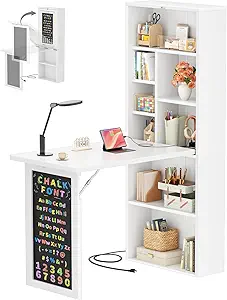
This option stands out for being the most complete multi-function package in the lineup — it folds flat, charges your devices, stores your supplies, and even gives you a blackboard surface for notes or sketches. Compared with the Dripex 27.5-inch desk, which offers shelves but no power access, the built-in outlets and USB ports mean fewer cords snaking across a small room, which matters a lot when the desk doubles as a craft corner or kids’ workspace. The tradeoff is real, though: the anti-tip design requires wall anchoring, so renters or anyone with brick or plaster walls lose some flexibility. The chalkboard panel is genuinely useful for brainstorming, but it will stain and wear with heavy use. This pick makes the most sense for someone who wants one piece of furniture to do four jobs at once.
Pros:- Folds flat for storage when the space needs to serve another purpose
- Built-in outlets and USB ports eliminate messy extension cords
- Adjustable multi-layer shelving adapts to craft supplies, books, or tech
- Blackboard panel adds a genuinely useful note-taking surface
Cons:- Requires wall anchoring for stability, limiting renters
- Blackboard surface stains and wears over time with regular use
Best for: Small-space dwellers who want a single desk that handles work, crafting, charging, and kids’ homework in one footprint
Not ideal for: Renters who can’t drill into walls — the anti-tip anchoring is required for safe, stable use
- Design:Space-saving foldable
- Power:Built-in outlets and USB ports
- Storage:Multi-layer with adjustable shelving
- Extra surface:Integrated blackboard panel
- Safety:Anti-tip construction with wall anchors
- Best use:Home office, craft corner, kids’ desk, or vanity
Our verdict“If you want one compact desk that genuinely replaces four pieces of furniture — and you can anchor it to a wall — this is the strongest all-around pick.”
Dripex Small Computer Desk, 27.5 inch, 3-Tier with Monitor Shelf and Storage, Black
For pure dollar-per-function value, this Dripex desk is hard to beat. It skips the gimmicks of the Armocracy folding desks — no outlets, no blackboard — and instead spends its budget on a sturdy wood-and-steel frame and a genuinely useful three-tier layout with a raised monitor shelf that frees up desktop space. That said, the tradeoffs are honest ones: the 27.5-inch footprint means a large ultrawide monitor or a dual-screen setup simply won’t fit, and unlike the Folding Table desk below, this one doesn’t fold at all, so it permanently claims its corner. Compared with the wall-mounted table in this guide, it’s heavier and bulkier, but it also needs no drilling and arrives with tools and instructions for straightforward assembly. This model is better suited to buyers who want a permanent, rock-solid setup rather than furniture that disappears.
Pros:- Wood-and-steel construction feels far sturdier than the price suggests
- Raised monitor shelf recovers valuable desktop space
- Three tiers of shelving keep clutter off the work surface
- Ships with tools and clear instructions for easy assembly
Cons:- Desktop too compact for large monitors or multiple devices
- Non-folding design permanently occupies floor space
Best for: Students and remote workers on a budget who need a stable, permanent desk in a dorm or bedroom corner
Not ideal for: Multi-monitor users or anyone who needs the desk to fold away between uses
- Dimensions:23.6 x 27.5 x 31.1 inches
- Weight:10.6 kg
- Shelves:3 tiers
- Tabletop thickness:1 inch
- Material:Wood, Steel
- Color:Black
- Height:31.1 inches maximum
Our verdict“The smartest spend for a permanent small-space workstation — just don’t expect it to disappear or hold a dual-monitor rig.”
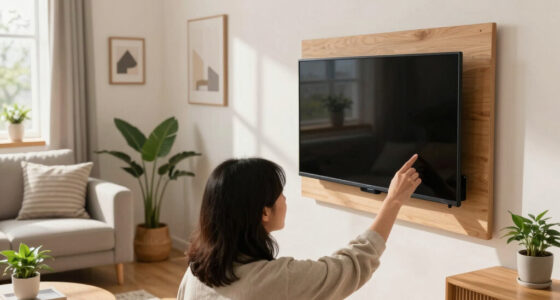
Foldable Wall Table, Wall-Mounted Desk, Compact Computer Table, Multi-Function Dining Table for Small Spaces, Black
This is the most aggressive space-saver in the roundup: when folded up, it consumes essentially no floor space at all, folding to just 1.6cm of depth against the wall. That’s a category the Dripex and the no-assembly folding desk can’t touch — both still claim floor area even at their most compact. The triangular solid-wood support structure keeps it steady for dining or laptop work, and the waterproof surface makes it a smart choice for kitchens where spills happen. The catches: an 80 x 60cm surface is tight for anything beyond a laptop and a coffee, installation depends entirely on your wall type, and drywall without proper anchors will not hold it safely. Renters and anyone in older buildings should think twice. This pick makes the most sense for studio apartments where a table only needs to exist during meals or work sessions.
Pros:- Folds to 1.6cm depth, freeing virtually all floor space
- Solid wood with triangular support holds steady for dining or work
- Waterproof and moisture-resistant surface suits kitchens
- Doubles as desk, dining table, or prep counter
Cons:- 80 x 60cm surface is too small for spreads-out projects
- Wall mounting limits where it can go and how easily it moves
Best for: Studio-apartment and kitchen-corner dwellers who need a table that vanishes completely between uses
Not ideal for: Renters or homes with weak drywall — safe mounting requires a wall that can carry the load
- Dimensions:80 x 60 x 1.6 cm
- Material:Solid wood
- Color:Black
- Foldable:Yes
- Support structure:Triangular
- Waterproof:Yes
- Moisture-resistant:Yes
Our verdict“The clear choice when floor space is the scarcest resource — as long as your walls can support it.”
Armocity Small Folding Desk with Outlets, Fold-Out Murphy Desk Craft Table
Think of this as the cabinet-plus-desk hybrid of the lineup. Unlike its sibling, the Armacity Small Folding Desk with BlackBoard, this Murphy-style model adds an enclosed cabinet and closed shelving, so craft supplies and clutter can be hidden away rather than displayed — a real advantage if the desk lives in a living room or hallway rather than a dedicated office. The built-in outlets and USB ports carry over, keeping it competitive on charging convenience. The tradeoff is depth: at just 7.9 inches deep when closed and a 21.5-inch working surface diagonal, this is a narrow work surface, and assembly involves more components than the fold-out no-assembly desk elsewhere in this guide. Compared with the wall-mounted table, it offers far more storage but demands a bigger footprint and more setup effort. This option suits makers who value concealed organization over a generous desktop.
Pros:- Enclosed cabinet hides craft supplies and clutter completely
- Built-in outlets and USB ports keep tools and devices charged
- Murphy-style fold-out design tucks away against the wall
- Adjustable shelving adapts to different supply sizes
Cons:- Very limited desktop surface area for its price
- Multi-component assembly takes noticeably more effort than rivals
Best for: Crafters and hobbyists who want supplies stored out of sight inside the desk itself, in semi-visible living spaces
Not ideal for: Anyone wanting a wide workspace for large projects or spreads — the surface is deliberately narrow
- Dimensions:7.9 x 20 x 61 inches
- Size:40 inches
- Depth (closed):7.9 inches
- Shelves:2 (1 enclosed)
- Cabinets:1
- Material / Finish:Wood, walnut finish
- Features:Folding, built-in outlets and USB, cabinet storage
- Style:Modern rectangular
Our verdict“Worth the premium only if hidden storage matters more to you than actual working surface.”
Folding Table Computer Desk – 35.8″ No Assembly Folding Desk for Small Spaces
Every other desk in this guide asks something of you first — the Armacity models need assembly and anchoring, the wall table needs drilling — but this one works straight out of the box. That alone defines its role here: it’s the zero-friction option for students, temporary setups, and anyone who dreads flat-pack furniture. The 200 lb weight capacity on a steel frame is impressive for something that folds down to just 2.9 inches thick, and it’s light enough to carry between rooms or into a closet. The compromises are predictable: the 15.7-inch depth is shallow even for a single monitor plus keyboard, the narrow legs can wobble on uneven floors, and it’s not built for heavy-duty daily pounding. Compared with the Dripex, it trades stability and shelving for portability and speed. This pick makes the most sense for flexibility over permanence.
Pros:- No assembly required — usable immediately upon delivery
- Folds to 2.9 inches thick for closet or under-bed storage
- 200 lb weight capacity on a steel frame
- Lightweight enough to move between rooms easily
Cons:- 15.7-inch depth is too shallow for comfortable all-day setups
- Can wobble on uneven flooring
Best for: Dorm residents, subletters, and anyone who needs a usable desk in under two minutes with zero tools
Not ideal for: Permanent home offices — it lacks storage, and the shallow surface frustrates all-day work
- Dimensions:35.8 x 15.7 inches
- Material:Steel frame, wood desktop
- Weight capacity:200 lbs
- Folded thickness:2.9 inches
- Assembly:None required
- Best use:Laptop work, reading, light gaming in dorms and apartments
Our verdict“The fastest path from box to working desk — ideal for temporary spaces, less so as a forever workstation.”
Armocity Small Folding Desk with Outlets, White
Not every compact multi-function desk needs to fold completely flat — some just need to work harder per square foot, and that’s where this model earns its spot. Unlike the Dripex 27.5-inch desk, which is purely a workstation, this Armocity doubles as a craft table and makeup station thanks to adjustable multi-layer shelving that adapts to whatever you’re storing that week. The built-in outlets and USB ports are the real differentiator: compared with the Foldable Wall Table, which offers zero power access, you can charge a laptop and phone without crawling under the desk for a strip. The white finish also brightens tight rooms where the black Dripex can feel heavy. The tradeoff is that the anti-tip anchors tie it to one wall, so unlike the 35.8-inch No Assembly Folding Desk, you lose the freedom to move it room to room on a whim, and the folding mechanism supports less weight than fixed alternatives.
Pros:- Built-in outlets and USB ports eliminate cord clutter and the need for a separate power strip
- Adjustable multi-layer shelving adapts between office supplies, craft materials, or beauty products
- Foldable design frees floor space when the desk isn’t in use
- Anti-tip anchors make it safer around children and pets than unanchored competitors
Cons:- Wall anchoring is effectively mandatory for safety, limiting placement flexibility
- Folding frame limits weight capacity compared with fixed desks like the Dripex
- Assembly is required, unlike the truly no-assembly 35.8-inch folding desk
Best for: Renters and small-home dwellers who want one desk that handles remote work, crafting, and a vanity routine without separate furniture
Not ideal for: Anyone who wants a fully portable desk they can relocate weekly — the required wall anchoring makes this a semi-permanent installation
- Color:White
- Foldable:Yes
- Power:Built-in outlets and USB ports
- Storage:Multi-layer shelving, adjustable
- Safety:Anti-tip wall anchors included
- Assembly:Assembly required
- Intended Use:Home office, craft room, vanity, small spaces
Our verdict“This is the pick for buyers who want one anchored, power-equipped workstation to replace three pieces of furniture — skip it if portability matters more than versatility.”
How We Picked
I evaluated each piece of compact multi-function furniture against five criteria: how small the footprint is when in use, how compact the piece becomes when stored, how many genuine functions it performs beyond holding a laptop, how sturdy it feels under daily workloads, and how much setup effort it demands. Because this category serves people in tight living spaces, I weighted foldability and multi-use value more heavily than raw desk surface area — a bigger desk that can’t be tucked away loses points in a roundup built around small spaces.
The ranking logic follows a simple hierarchy: pieces that combine three or more functions (work surface, storage, power, or a second use like a chalkboard) placed highest, followed by pieces with two strong functions, with single-purpose folding desks at the bottom despite their low prices. Price-per-function was also part of the calculation, since paying more only makes sense when the extra features are ones a small-space buyer will actually use. Where two products tied on features, ease of setup and reported stability broke the tie.
| compact multi-function furniture | Material | Color |
|---|---|---|
| Armocity Small Folding Desk wi | — | — |
| Dripex Small Computer Desk | Wood, Steel | Black |
| Foldable Wall Table | Solid wood | Black |
| Armocity Small Folding Desk wi | — | — |
| Folding Table Computer Desk | Steel frame, wood desktop | — |
| Armocity Small Folding Desk wi | — | White |
Factors to Consider When Choosing Compact Multi-function Furniture
Before picking a specific model, it helps to understand the broader patterns in this category — where the money goes, where the compromises hide, and which mistakes small-space buyers make most often.True Folded Footprint vs. Marketed Dimensions
Listed dimensions almost always describe the desk in use, not folded or wall-mounted, and that gap is where most small-space disappointment comes from. A desk that folds flat still needs somewhere to lean or lie, and a wall-mounted unit only frees floor space if the wall can actually be dedicated to it. Measure the storage spot — closet depth, gap beside a bed, space behind a door — before buying, not the work spot. Depth matters more than width for folding desks, since a 60cm-deep unit folded against a wall still juts out further than most people expect. Also check whether the folded piece can stand on its own or needs to be laid flat, because a desk that must lie on the floor eats closet space rather than saving it.
How Many Functions Do You Actually Need?
The multi-function label gets applied loosely, and paying for functions you won’t use is the most common overspend in this category. Built-in outlets are genuinely useful if you charge devices at your desk daily, but they add cost and a slightly thicker frame that can complicate folding. A chalkboard surface is great for students, planners, and parents, yet meaningless to someone who only needs a laptop perch. Storage tiers help if your workspace doubles as a homework or craft station, but they prevent the desk from folding flat entirely. My advice: list the two functions you’ll use weekly and treat anything beyond that as optional. The best-value purchase is almost always the model that nails your two functions rather than the one with four you’ll ignore.
Stability Tradeoffs in Folding Designs
Every hinge and folding joint is a potential wobble point, and stability is the first casualty when manufacturers chase a slim folded profile. Single-leg or wall-bracket designs flex more under typing pressure than fixed four-leg frames, which matters if you write by hand or use a mechanical keyboard. Wall-mounted tables are the exception: bolted into studs, they often feel sturdier than freestanding desks of the same size — but only if installed correctly, which brings drilling and landlord permission into the equation. Heavier gauge steel frames and locking hinges are worth a modest price premium if the desk is your primary workstation. If it’s a part-time surface for a laptop, flexibility matters less and the cheapest folding option is usually fine.
Assembly and Installation Reality Check
Setup effort varies more in this category than in almost any other furniture type, ranging from zero assembly to full drill-and-anchor wall installation. No-assembly folding desks arrive ready in under a minute, which is ideal for renters, students, and anyone who moves frequently. Pre-assembled folding desks with outlets typically need only the legs unfolded, but outlet models add a cord-management step the first time you position them. Wall-mounted tables demand a drill, a level, and ideally a stud finder — a 30–60 minute job that becomes a real hassle if you relocate often. Be honest about your tools and patience; a wall table you never install is the worst value of all.
When to Pay More — and When Not To
The price band in this comparison is narrow, which tells you something: you’re mostly paying for functions, not build quality. The premium models in this category justify their price through integrated power, writable surfaces, or better hinges — not through dramatically better materials. Paying more makes sense when the desk anchors your daily work routine, because you’ll feel a wobbly hinge or a missing outlet every single day. It makes less sense for a guest-room surface used a few times a month, where the cheapest folding desk performs identically. The one place I’d never economize is a wall-mounted table’s mounting hardware, since a failed anchor can damage both the wall and whatever’s beneath the table.
Renter-Friendliness and Moving Plans
If you rent or move yearly, portability should shape the entire decision, not just the final tiebreaker. Freestanding folding desks move with you in a car trunk and leave no trace behind, while wall-mounted units require patching and repainting on the way out. Outlet-equipped desks carry one extra consideration: the power cord needs to reach a wall socket from wherever you place the desk, which limits rearranging in very small rooms. Weight also matters for movers — steel-framed folding desks in this size range typically stay under 25 pounds, manageable for one person. Buyers who own their space and plan to stay put can ignore all of this and choose purely on function, which is exactly why the wall table ranks so differently for different readers.
Frequently Asked Questions
Is a wall-mounted table or a folding freestanding desk better for a small bedroom?
It depends on whether you can spare any floor space at all. A wall-mounted table like the Foldable Wall Table wins in truly tight rooms because it consumes zero floor area when folded up, and once bolted to studs it’s often sturdier than a freestanding equivalent. The catch is installation: you’ll need a drill, anchors rated for the weight, and — if you rent — permission, plus you lose the flexibility to rearrange the room later. A freestanding folding desk like the 35.8-inch No-Assembly model keeps every layout option open and requires zero tools, but it always occupies floor space even when folded. As a rough rule, if your room leaves less than a meter of walkway, go wall-mounted; if you rearrange often or move yearly, stay freestanding.
Are built-in desk outlets worth the extra cost?
For most daily desk users, yes — integrated outlets solve the single most annoying problem in small spaces, which is reaching behind furniture to plug in a charger. With four of the six products here offering outlets, the price gap has narrowed enough that the feature costs relatively little. That said, think about cable routing before committing: the desk still needs a power cord running to a wall socket, so placement near an outlet matters, and the cord can look messy in an open-layout room. If you work at the desk with a laptop, phone, and lamp every day, outlets earn their cost immediately. If the desk is an occasional homework or craft surface, skip them and put the savings toward storage or a sturdier frame.
Can these compact desks hold a monitor and a full desktop setup?
Partially, and this is where the category’s limits show. The Dripex 3-Tier handles a monitor best because its raised shelf is designed exactly for that, lifting the screen to eye level while freeing the main surface. The Armocity folding desks can hold a monitor, but a 40-inch-class folding desk gets crowded fast with a monitor, keyboard, and mouse, and folding desks in general wobble slightly more under heavy displays. Full desktop towers are a harder ask — most of these desks have no tower shelf, so the case ends up on the floor. If your setup includes a tower, dual monitors, or speakers, prioritize depth and a fixed frame over foldability, or accept that the compact desk is a laptop-first solution.
How durable are folding desks with daily use?
Reasonably durable, provided you respect the hinge as the weak point. Quality folding desks in this range use steel frames that hold up well, and the failure mode is almost never the frame — it’s the folding mechanism loosening over months of daily open-and-close cycles. If you fold and unfold the desk daily, expect some play to develop within a year or two, which is why I’d steer daily users toward models with locking hinges or toward the Dripex’s fixed frame. If the desk mostly stays open and only folds for guests or occasional deep cleans, wear is minimal. Avoid leaning body weight on the extended work surface, since sideways force stresses hinges far more than vertical weight.
Which of these works best as a dining table in a studio apartment?
The Foldable Wall Table is the clear winner for dining duty, and it’s the only pick explicitly designed for it. Its 80 x 60cm surface comfortably seats one or two people for a meal, and folding it flat against the wall after dinner frees the middle of the room — the classic studio-living rhythm. The standard 40-inch folding desks can work for solo meals, but their computer-desk proportions feel cramped for plates and elbows, and outlet models put power strips right where a spill could land. If you plan to eat at the desk regularly, avoid models with outlets on the work surface entirely. For a dual work-and-dine setup in one studio, the wall table plus a small folding chair is the most space-efficient pairing in this entire roundup.
Conclusion
Mapping these six picks to buyer types makes the decision straightforward. For best overall, the Armocity Small Folding Desk with Outlets and BlackBoard earns the top spot by stacking three functions — work surface, power access, and a writable board — into a fold-flat frame that suits daily use. The 35.8-inch No-Assembly Folding Desk is the best value: it sacrifices storage and outlets but delivers a usable workspace at the lowest cost with zero setup. The Dripex 27.5-inch 3-Tier Desk is the strongest pick for storage-focused buyers, since its monitor shelf and tiered storage rival desks twice its footprint. For the tightest rooms, the Foldable Wall Table is the best zero-floor-space option and doubles as a dining surface — the right choice for studios and renters who can drill. The Armocity Murphy Desk Craft Table suits crafters and hobbyists who need a deeper occasional work surface, while the Armocity White Folding Desk is the best match for light, airy interiors where black furniture would clash. Whichever you choose, let your two most-used functions drive the decision — that’s what separated the winners from the rest in this comparison.
Halloween Picks
halloween
As an affiliate, we earn on qualifying purchases.