Shopping for compact refrigerators for tiny homes means balancing three competing demands: enough capacity to actually store a week of food, a footprint small enough for a kitchen measured in inches, and quiet operation that will not dominate a 200-square-foot living space. My top pick is the WANAI 3.5 Cu. Ft. Two-Door Mini Fridge, which offers the largest usable capacity in this lineup with a separate freezer door that most 1.6-cubic-foot models simply cannot match. For tiny homes where every inch and every dollar counts, the EUHOMY 1.7 Cu. Ft. delivers a reversible door and quiet compressor in the smallest package here, while the Upstreman BR321 splits the difference with a smart single-door layout and a built-in freezer compartment. The core tradeoff you will face: smaller bar-fridge models are cheaper and quieter but sacrifice freezer space and fresh-food capacity. Keep reading for the full breakdown of which model fits your layout, budget, and cooking habits.

Get compact home essentials delivered free with Prime
- Fast, free delivery on millions of items
- Prime Video, Amazon Music and more included
- Member-only deals all year
Key Takeaways
- The two-door models (WANAI 3.5 and Upstreman 3.0) were the only options that offered true separate freezer access — a meaningful difference for tiny home dwellers who cook rather than reheat.
- Capacity in this lineup clustered into two camps — around 1.6-1.7 cu. ft. and 3.0-3.5 cu. ft. — and the right camp depends entirely on whether you shop weekly or cook from frozen ingredients.
- The two Electactic 1.6 models and the EUHOMY 1.7 are near-identical in footprint, so the deciding factors became door swing direction, finish, and compressor noise rather than storage space.
- Reversible doors showed up on most of the sub-2-cubic-foot picks but on fewer two-door models — a real constraint if your tiny home kitchen has a fixed wall or staircase on one side.
- The Upstreman BR321 earned the premium slot not through raw capacity but through interior flexibility and finish quality, which matters more in a tiny home where the fridge is always visible.
| WANAI 3.5 Cu. Ft. Two-Door Mini Fridge with Freezer |  | Best Overall | Capacity: 3.5 cu. ft. (1.0 cu. ft. freezer) | Dimensions: 17.7 × 17.8 × 34.7 in | Temperature range: -0.4°F to 50°F | VIEW LATEST PRICE | See Our Full Breakdown |
| Electactic 1.6 Cu.ft Compact Mini Fridge with Reversible Door and Adjustable Thermostat (Silver) |  | Best for Tiny Kitchens and Lofts | Capacity: 1.6 cu. ft. | Dimensions: 17.13 × 17.52 × 18.7 in | Temperature range: 32°F to 50°F | VIEW LATEST PRICE | See Our Full Breakdown |
| Electactic 1.6 Cu. Ft. Compact Mini Fridge with Reversible Door, Adjustable Thermostat, and Quiet Operation, Black | 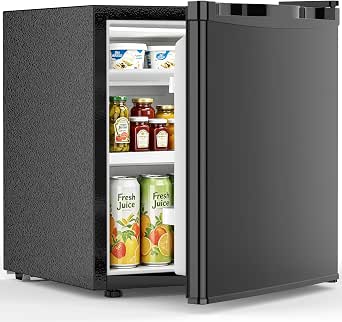 | Best Budget Starter Pick | Capacity: 1.6 cu. ft. | Dimensions: 17.52 × 17.13 × 18.70 in | Temperature range: 32°F to 50°F | VIEW LATEST PRICE | See Our Full Breakdown |
| Upstreman 3.0 Cu. Ft. Two-Door Mini Fridge with Freezer |  | Best Organized Interior | Total capacity: 3.0 cu. ft. (2.1 fridge / 0.9 freezer) | Dimensions: 19.37 × 17.32 × 34.25 in | Freezer range: -5.8°F to 14°F | VIEW LATEST PRICE | See Our Full Breakdown |
| Upstreman 3.2 Cu. Ft. Mini Fridge with Freezer, Black (BR321) |  | Best Value Two-Door | Total capacity: 3.2 cu. ft. (2.9 fridge / 0.3 freezer) | Dimensions: 18.7 × 17.4 × 33.1 in (W × D × H) | Temperature range: 32°F to 50°F | VIEW LATEST PRICE | See Our Full Breakdown |
| EUHOMY 1.7 Cu. Ft. Compact Mini Fridge with Reversible Door, Black |  | Best Ultra-Compact Pick | Total Capacity: 1.7 cu. ft. | Refrigeration Section: 1.5 cu. ft. | Compartment: 0.2 cu. ft. | VIEW LATEST PRICE | See Our Full Breakdown |
| compact refrigerators for tiny home | Dimensions | Noise level | Temperature range | Energy consumption |
|---|---|---|---|---|
| WANAI 3.5 Cu. Ft. Two-Door Min | 17.7 × 17.8 × 34.7 in | Under 40 dB | -0.4°F to 50°F | 0.87 kWh per day |
| Electactic 1.6 Cu.ft Compact M | 17.13 × 17.52 × 18.7 in | 38 dB | 32°F to 50°F | 230 kWh/year |
| Electactic 1.6 Cu. Ft. Compact | 17.52 × 17.13 × 18.70 in | 38 dB | 32°F to 50°F | — |
| Upstreman 3.0 Cu. Ft. Two-Door | 19.37 × 17.32 × 34.25 in | 39 dB | — | 0.9 kWh/day |
| Upstreman 3.2 Cu. Ft. Mini Fri | 18.7 × 17.4 × 33.1 in (W × D × H) | 38 dB | 32°F to 50°F | — |
| EUHOMY 1.7 Cu. Ft. Compact Min | 16.9 × 17.5 × 19.1 in. | Less than 38 dB | 32°F–50°F | 0.55 kWh per day |
More Details on Our Top Picks
WANAI 3.5 Cu. Ft. Two-Door Mini Fridge with Freezer
Among the two-door options here, this WANAI offers the largest total capacity with a genuinely usable 1.0 cu. ft. freezer, which matters when a tiny home fridge is your only refrigeration. Compared with the Upstreman BR321, whose freezer is a mere 0.3 cu. ft. sliver, this model can actually hold frozen meals rather than a single ice tray. Seven temperature settings and two glass shelves give it flexibility the Electactic 1.6 cu. ft. units can’t match, since those lack any freezer at all. The tradeoff is the tall 34.7-inch frame and manual defrost, and the freezer’s -0.4°F floor may not keep ice cream rock-hard. Still, for full-time tiny home living, this pick makes the most sense for balancing fresh and frozen storage in one footprint.
Pros:- Largest capacity of the lineup with a genuinely usable separate freezer
- Seven temperature settings for fine control across both compartments
- Quiet operation under 40 dB suits open-plan tiny home layouts
- Removable glass shelves make cleaning and reconfiguring easy
Cons:- Manual defrost system requires periodic maintenance
- Freezer temperature floor of -0.4°F may soften ice cream and long-term frozen goods
Best for: Full-time tiny home dwellers who need real frozen-food storage alongside everyday fresh capacity
Not ideal for: Countertop or under-desk setups — at nearly 35 inches tall it needs dedicated floor space
- Capacity:3.5 cu. ft. (1.0 cu. ft. freezer)
- Dimensions:17.7 × 17.8 × 34.7 in
- Temperature range:-0.4°F to 50°F
- Noise level:Under 40 dB
- Energy consumption:0.87 kWh per day
- Defrost system:Manual
- Warranty:1 year
Our verdict“If your tiny home needs one fridge to do everything, this is the most complete package in the group.”
Electactic 1.6 Cu.ft Compact Mini Fridge with Reversible Door and Adjustable Thermostat (Silver)
Not every tiny home needs a freezer — and if you’re supplementing with a separate chest freezer or shopping fresh, this Electactic earns its place through sheer spatial thrift. At 18.7 inches tall it tucks under a loft bed or kitchen counter where the WANAI two-door is impossible, and the reversible door means awkward corners stop being deal-breakers. The compressor pulls down to temperature quickly and runs at 38 dB, quieter than the Upstreman TM30’s 39 dB, so sleeping near it isn’t an issue. The obvious limitation: it cannot freeze anything, bottoming out at 32°F. It’s essentially a drinks-and-produce box, and buyers expecting even a mini ice compartment will be disappointed. For lofts and studio layouts where every vertical inch counts, this model is the smarter footprint.
Pros:- Ultra-compact footprint fits under counters and loft beds
- 38 dB operation is the quietest tier in this roundup
- Reversible door solves awkward placement in tight corners
- Powerful compressor cools rapidly after restocking
Cons:- No freezer capability at all
- Manual defrost requires occasional upkeep
Best for: Loft dwellers and studio tiny-home owners with separate freezer access who need under-counter chilling
Not ideal for: Anyone expecting frozen storage — the thermostat stops at 32°F
- Capacity:1.6 cu. ft.
- Dimensions:17.13 × 17.52 × 18.7 in
- Temperature range:32°F to 50°F
- Noise level:38 dB
- Door type:Reversible
- Energy consumption:230 kWh/year
- Warranty:1 year
Our verdict“A space-saving chiller for tiny homes that handle freezing elsewhere.”
Electactic 1.6 Cu. Ft. Compact Mini Fridge with Reversible Door, Adjustable Thermostat, and Quiet Operation, Black
Functionally, this black Electactic is nearly identical to its silver sibling — same 1.6 cu. ft. capacity, same 38 dB compressor, same reversible door — so the choice between them comes down to finish and which fits your interior. Where it differentiates within the roundup is as the entry point for tiny home living: if you’re just moving in and don’t yet know your refrigeration needs, this is a low-commitment way to test whether 1.6 cu. ft. works before upgrading to something like the Upstreman BR321. The seven-setting thermostat gives more adjustment granularity than the BR321’s five settings. The hard constraint remains the same as the silver model: no freezing whatsoever. Singles who cook fresh and drink a lot of beverages will be fine; couples will find it cramped within a week.
Pros:- Seven thermostat settings offer finer control than some larger picks
- Whisper-quiet 38 dB compressor suits sleeping lofts
- Reversible hinge opens placement options in cramped layouts
- Small footprint works on floors or sturdy desks
Cons:- Not capable of freezing any items
- Very limited interior space for more than one person’s groceries
Best for: Solo tiny home dwellers testing the lifestyle who prioritize a black finish and low commitment
Not ideal for: Couples or anyone storing frozen goods — capacity is tight and freezing isn’t possible
- Capacity:1.6 cu. ft.
- Dimensions:17.52 × 17.13 × 18.70 in
- Temperature range:32°F to 50°F
- Thermostat settings:7
- Noise level:38 dB
- Door:Reversible, left- or right-side hinge
- Color:Black
Our verdict“A sensible first fridge for solo tiny home living, with a clear ceiling on what it can hold.”
Upstreman 3.0 Cu. Ft. Two-Door Mini Fridge with Freezer
What separates this Upstreman from the otherwise similar WANAI two-door is interior thinking: a dedicated crisper drawer and egg tray mean produce and breakfast staples aren’t just stacked on shelves. For tiny home residents doing weekly grocery runs, that organization translates directly into less food waste. Its freezer runs colder than the WANAI’s, reaching -5.8°F, which handles ice cream better than anything else here except nothing — it’s the coldest freezer in this batch. The independent seven-setting thermostats for each compartment are a step up from the Electactic models’ single-zone design. Tradeoffs: you give up half a cubic foot of total space versus the WANAI, and manual defrost is still on the chore list. Compared with the BR321, its two-door layout means no frost bleeding between zones.
Pros:- Separate freezer reaches -5.8°F, the coldest in this lineup
- Crisper drawer and egg tray keep groceries genuinely organized
- Independent seven-setting thermostats for each compartment
- Reversible door adapts to tricky kitchen layouts
Cons:- Manual defrost system adds recurring maintenance
- Slightly less total capacity than the WANAI 3.5 cu. ft.
Best for: Meal preppers and produce-heavy tiny home households who want dedicated storage zones
Not ideal for: Buyers squeezing storage under a counter — the two-door vertical design needs full floor standing room
- Total capacity:3.0 cu. ft. (2.1 fridge / 0.9 freezer)
- Dimensions:19.37 × 17.32 × 34.25 in
- Freezer range:-5.8°F to 14°F
- Refrigerator range:33.8°F to 50°F
- Noise level:39 dB
- Energy consumption:0.9 kWh/day
- Defrost system:Manual
- Warranty:1 year
Our verdict“The best pick if food organization and a properly cold freezer top your list.”
Upstreman 3.2 Cu. Ft. Mini Fridge with Freezer, Black (BR321)
This single-door Upstreman splits the difference between the bare-bones Electactic 1.6 cu. ft. units and the full two-door setups: you get 2.9 cu. ft. of fresh space plus a small freezer pocket, all at a typically lower price point than the WANAI or Upstreman TM30. The Energy Star certification is the standout differentiator here — for off-grid or solar-powered tiny homes, that efficiency margin genuinely matters over a season. Its 38 dB rating also edges out the TM30. But be clear-eyed about the freezer: at 0.3 cu. ft. and a 32°F minimum, it’s sized for a couple of ice packs, not frozen dinners — the WANAI and TM30 handle real frozen food far better. Five temperature settings also give coarser control than the seven-step units. As a value play for fridge-first households, though, it lands well.
Pros:- Energy Star certified — the only unit here with that credential
- Generous 2.9 cu. ft. fresh section with crisper drawer
- Quiet 38 dB operation suits sleeping areas
- Reversible door and adjustable shelves add layout flexibility
Cons:- Freezer compartment is too small and warm for real frozen-food storage
- Manual defrost requires regular upkeep
Best for: Budget-minded or solar-powered tiny home owners who prioritize fresh storage and energy efficiency over freezing
Not ideal for: Households that rely on frozen meals — the tiny 0.3 cu. ft. freezer can’t hold ice cream or ice cubes
- Total capacity:3.2 cu. ft. (2.9 fridge / 0.3 freezer)
- Dimensions:18.7 × 17.4 × 33.1 in (W × D × H)
- Temperature range:32°F to 50°F
- Temperature settings:5
- Noise level:38 dB
- Energy certification:Energy Star certified
- Defrost system:Manual
- Voltage:115 V
Our verdict“The efficient, fridge-first choice for tiny homes where freezing is a nice-to-have, not a need.”
EUHOMY 1.7 Cu. Ft. Compact Mini Fridge with Reversible Door, Black
When floor space is measured in square feet rather than feet, the EUHOMY 1.7 cu. ft. earns its place by being the smallest sensible fridge on this list. Compared with the Upstreman 3.2 cu. ft. (BR321), it gives up more than half the capacity, but it tucks under a desk or onto a counter — something none of the larger two-door models here can do. The reversible door matters more at this size, since a tiny home often pins the fridge into a corner where swing direction makes or breaks the layout. A stated 0.55 kWh daily draw also keeps it friendly to off-grid or solar setups. The tradeoff is real, though: the 0.2 cu. ft. top compartment is not a true freezer like the WANAI’s dedicated one, so frozen food is off the table.
Pros:- Small footprint fits on countertops or under desks where larger models like the Upstreman BR321 cannot
- Reversible door makes corner placement workable in tight layouts
- Quiet compressor (under 38 dB) suits open-plan tiny living and sleeping lofts
- Low stated daily energy use is friendly to solar or limited power budgets
Cons:- 1.7 cu. ft. capacity limits week-long grocery storage to essentials only
- No true freezer compartment, unlike the two-door WANAI and Upstreman models
Best for: Solo tiny-home dwellers or van-lifers who need drinks, snacks, and fresh basics in a footprint under 18 inches and want low energy draw
Not ideal for: Couples or anyone wanting to store frozen meals — the tiny 0.2 cu. ft. compartment can’t replace a real freezer like the WANAI or Upstreman two-door models
- Total Capacity:1.7 cu. ft.
- Refrigeration Section:1.5 cu. ft.
- Compartment:0.2 cu. ft.
- Dimensions:16.9 × 17.5 × 19.1 in.
- Temperature Range:32°F–50°F
- Energy Consumption:0.55 kWh per day
- Noise Level:Less than 38 dB
- Door:Reversible left- or right-swing
- Warranty:One year
Our verdict“This pick makes the most sense for a single person prioritizing footprint and energy use over capacity, while anyone needing freezer space should step up to the WANAI or Upstreman two-door fridges instead.”
How We Picked
I evaluated these six models through the specific constraints of tiny home living rather than generic dorm-room or office criteria. The factors that shaped the ranking were: physical footprint and depth (whether the unit fits standard 24-inch tiny home cabinetry runs), freezer capability (separate-door freezer versus a shared-compartment ice box), compressor noise, door configuration and reversibility, and capacity relative to footprint — how much food you get per square inch of floor space.
The ranking logic follows a simple principle: in a tiny home, the refrigerator is usually the only cold storage you have, so models that support real cooking rose to the top. The WANAI 3.5 leads because it combines the largest capacity with genuine two-door freezer access. The Upstreman models follow as strong mid-size choices with different tradeoffs, and the sub-2-cubic-foot trio rounds out the list for micro-kitchens, lofts, and off-grid builds where a small compressor draw and a tight footprint outweigh raw storage volume.
Factors to Consider When Choosing Compact Refrigerators For Tiny Homes
Before settling on a specific model, it helps to understand the tradeoffs that shape this entire category. These are the factors that most often make or break a compact fridge purchase in a tiny home.Capacity: Match the Fridge to How You Actually Cook
The single most common mistake I see is buying capacity based on floor space rather than eating habits. A 1.6-cubic-foot model like the Electactic units holds roughly a few days of fresh food for one person — fine if you shop often or eat out frequently, frustrating if you meal prep. The 3.0 to 3.5-cubic-foot tier (WANAI, both Upstremans) supports a weekly shop for one or two people, which matters more in a tiny home because a remote build often means longer trips to a real grocery store. A useful rule: if your tiny home is your full-time residence, err toward the larger tier; if it is a weekend cabin or guest loft, the smaller models are rarely a compromise.
Freezer Type: Two-Door, Compartment, or None
Not all “freezers” are equal, and the difference matters more than most buyers expect. A two-door design like the WANAI 3.5 or Upstreman 3.0 gives you a separately sealed freezer section that holds temperature better and fits frozen meals. A freezer compartment inside the main door — as on the Upstreman BR321 — works for ice trays and a small bag of frozen vegetables but shares insulation with the fresh section, so everything runs a bit warmer. If you rely on frozen ingredients, a two-door model is close to mandatory. If you only need ice and the occasional pint of ice cream, the compartment style saves a surprising amount of front-to-back depth.
Footprint, Depth, and Door Swing
Measure more than width — in a tiny home, depth and door swing cause more install problems than anything else. A fridge that fits a 20-inch-wide gap can still block a walkway if its door opens into a staircase or slide-out. Reversible doors, featured on both Electactic models and the EUHOMY, let you flip the hinge side after delivery, which doubles your placement options. Two-door models typically need more clearance in front because both doors must clear cabinetry. Before ordering, map the door arc on your floor with tape and confirm the unit’s depth plus handle fits your run without protruding past your counters.
Noise and Compressor Behavior
In a 200-square-foot space, the refrigerator is often within a few feet of your bed, and a loud compressor becomes a nightly annoyance. Modern compact compressors are far quieter than older bar fridges, but there is still real variation between models — the EUHOMY and the black Electactic are specifically tuned for quiet running, which is why they suit loft bedrooms and studios. Two-door models with separate freezer compressors tend to cycle a bit more audibly because they work harder to hold two temperature zones. If your sleeping loft sits directly above the kitchen, prioritize a quiet-rated model even if it means sacrificing capacity.
Energy Draw for Off-Grid and Solar Builds
Many tiny homes run on solar or shore power with limited amperage, and refrigeration is usually the largest always-on load. Smaller single-compressor models draw less overall and are more forgiving on an inverter, which is why the sub-2-cubic-foot trio shows up so often in off-grid builds. Two-door freezer models consume more because they maintain a second, colder zone — not a dealbreaker on grid power, but a real line item on a small battery bank. Check the estimated yearly energy figure on the spec sheet and compare it against your solar budget before falling in love with a larger model.
Frequently Asked Questions
Is a 1.6-cubic-foot fridge big enough for full-time tiny home living?
For one person who shops every few days, yes — models like the Electactic 1.6 or EUHOMY 1.7 hold the essentials: condiments, drinks, dairy, and a couple of days of fresh meals. The friction shows up with produce, leftovers, and anything frozen, since the ice-box compartments in this size class are tiny and run warm. If you cook most of your meals at home or share the space with a partner, the WANAI 3.5 or Upstreman 3.0 will save you daily frustration. A common approach in tiny homes is pairing a small fridge with a separate chest freezer elsewhere on the property, which lets you keep the compact footprint without giving up frozen storage.
Do two-door mini fridges really keep ice cream frozen?
The two-door models in this lineup — the WANAI 3.5 and Upstreman 3.0 — come closest, because the freezer has its own sealed door and independent temperature control. They will reliably handle frozen vegetables, ice, and most frozen meals. Very cold items like ice cream can still soften in hot weather or if the unit is packed tightly, since these compressors are smaller than a full-size fridge’s. Single-door models with internal freezer compartments, like the Upstreman BR321, are best treated as ice-and-small-items storage rather than a true freezer. Set expectations accordingly and you will not be disappointed.
How much clearance do I need around a compact fridge in a tiny home kitchen?
Plan for at least an inch or two of ventilation space at the back and sides — compact fridges shed heat through their rear coils, and trapping that heat in a tight cabinet run makes the compressor run constantly, raising both energy use and noise. Depth is the sneaky measurement: add the handle and door thickness to the listed depth, or the unit will poke past your countertop line. In front, allow the full door width plus a few inches so the door swings past 90 degrees and crisper drawers and shelves can slide out. If your layout is tight against a wall, choose a reversible-door model like the EUHOMY or either Electactic so you can flip the hinge to suit.
Which of these models is best for an off-grid or solar tiny home?
Generally, the smallest compressor with the features you actually need wins. The EUHOMY 1.7 and the Electactic 1.6 models draw the least power and put the gentlest load on an inverter, making them the safest picks for small battery banks. The two-door freezer models consume more because they hold a second cold zone, so size your solar array and battery capacity before committing to one. That said, if frozen storage is non-negotiable, the Upstreman 3.0 balances capacity against energy use better than most in its tier. Also confirm the unit runs on a standard outlet and check its startup surge, which can briefly exceed running wattage on a small inverter.
What is the real difference between the two Electactic 1.6-cubic-foot models?
Functionally they are the same refrigerator: identical capacity, reversible door, and adjustable thermostat. The differences are cosmetic and situational — the silver finish reads more modern against light cabinetry, while the black version is tuned for quieter operation, which matters when the fridge sits near a sleeping area. Because the internals are so similar, your choice should come down to which of those two details fits your build. If noise is your top concern, lean black; if the fridge will be highly visible in an all-white kitchen, the silver blends better. Neither is a wrong choice, which is why both appear in the lineup rather than one replacing the other.
Conclusion
The right pick here depends on how you actually live in your tiny home. For best overall, the WANAI 3.5 Cu. Ft. Two-Door wins because full-time residents need real freezer access and a week of storage, and it delivers both without an oversized footprint. For best value, the EUHOMY 1.7 offers the most capability per dollar in the smallest, quietest package — ideal for studios, lofts, and secondary spaces. The Upstreman BR321 earns the premium slot for buyers who want better finish quality and interior flexibility in a unit that is always on display.
For beginners setting up a first tiny home or converting a van-adjacent space, the Electactic 1.6 in black is the low-risk entry point: cheap, quiet, and simple, with the silver version as an aesthetic alternative. For a specific need — couples who cook and want a two-door layout without stepping up to the WANAI’s size — the Upstreman 3.0 is the balanced middle path. Measure your space, be honest about your shopping habits, and the right one of these six will be obvious.