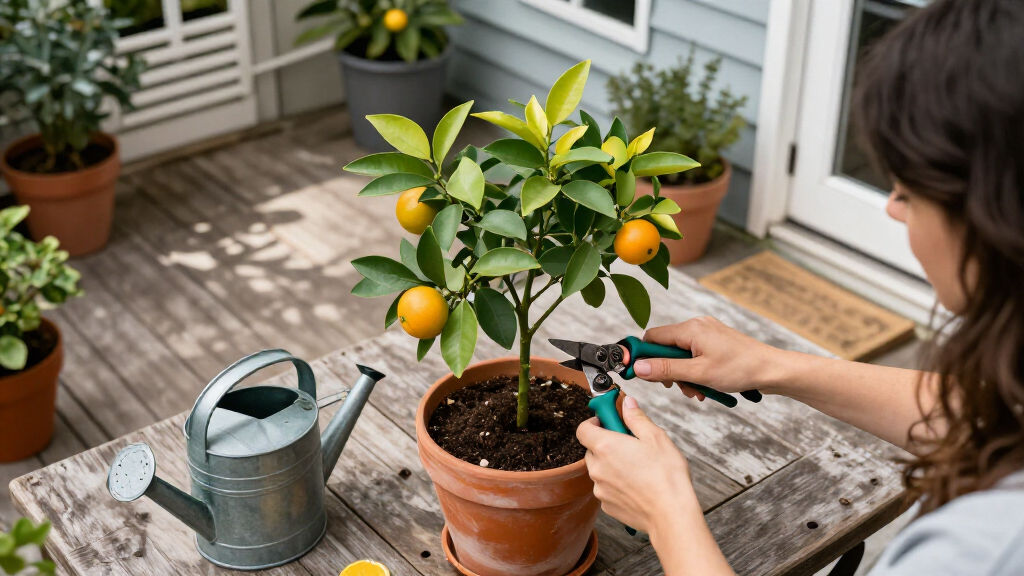

The best fruit trees for small spaces balance manageable growth with the light, climate, and care you can provide. My best overall pick is the Little Miss Figgy Dwarf Fig for its compact habit, while the Via Citrus Meyer Lemon suits growers who can offer bright indoor conditions and the Perfect Plants Chicago Hardy Fig is a better match for gardeners facing cold winters. The main tradeoffs are mature size, winter protection, pollination needs, and how much pruning or indoor care a tree demands. Some listings are single trees; others are multi-plant kits, so quantity alone does not tell you how much usable space they need. Read on for the full breakdown and help matching a pick to your growing conditions.

Get compact home essentials delivered free with Prime
- Fast, free delivery on millions of items
- Prime Video, Amazon Music and more included
- Member-only deals all year
Key Takeaways
- Dwarf figs have the clearest small-space advantage: Little Miss Figgy is the most space-focused choice, while Chicago Hardy adds a cold-climate angle but still needs room for its eventual size.
- Meyer lemons are not automatically easy patio trees: the Via Citrus and Garden State Bulb options both need strong light and a plan for bringing them indoors where winters are cold.
- The two Wonderful pomegranates share a variety name but differ in format: Perfect Plants offers a single 2-gallon plant, while Fam Plants sells a four-pack that needs more planting area and care capacity.
- The Eureka lemon and Meyer lemon listings suit different expectations: Eureka is the choice for a more traditional lemon, while Meyer is generally a better fit for container growing and its milder fruit.
- The nine-plant starter kit is not the simplest choice for a tight footprint: its mix of apples, blueberries, and blackberries adds variety, but takes more space and involves different growing needs than one compact tree.
| Perfect Plants Chicago Hardy Fig Tree, 1 Gallon |  | Best for Cold-Climate Fig Growers | Plant type: Fruit tree | Container size: 1 gallon | Pollination: Self-pollinating | VIEW LATEST PRICE | See Our Full Breakdown |
| Little Miss Figgy Dwarf Fig Tree Live Plant, 2.5-Inch Pot |  | Best Compact Fig | Scientific name: Ficus carica ‘Little Miss Figgy’ | Plant type: Dwarf fruit tree | Pot size: 2.5 inches | VIEW LATEST PRICE | See Our Full Breakdown |
| Eureka Lemon Tree Live Plant – Grafted Lemon Plant for Indoor & Outdoor |  | Best for Indoor-Outdoor Flexibility | Plant type: Grafted lemon plant | Usage: Indoor and outdoor | Sunlight exposure: Partial shade | VIEW LATEST PRICE | See Our Full Breakdown |
| Via Citrus Meyer Lemon Tree, 13–22 Inches Tall, 1-Gallon Pot |  | Best Compact Citrus for Patios | Height: 13–22 inches | Pot size: 1 gallon | Origin: Florida-grown | VIEW LATEST PRICE | See Our Full Breakdown |
| Perfect Plants Wonderful Pomegranate Tree, 2 Gallon Live Plant |  | Best Ornamental Fruit Tree | Plant type: Fruit tree | Container size: 2 gallons | Mature height: 10 feet | VIEW LATEST PRICE | See Our Full Breakdown |
| Garden State Bulb Meyer Lemon Tree, Live Citrus Plant in 1-Gallon Pot |  | Best Indoor-Outdoor Flexibility | Container size: 1 gallon | Plant type: Meyer lemon tree | Growing location: Indoor and outdoor | VIEW LATEST PRICE | See Our Full Breakdown |
| Dwarf Apple, Blueberry, and Blackberry Fruit Tree Starter Kit, 9 Plants |  | Best for a Mixed-Fruit Patio Garden | Quantity: 9 plants | Plant types: 3 apple, 3 blueberry, and 3 blackberry plants | Recommended use: Outdoor | VIEW LATEST PRICE | See Our Full Breakdown |
| Perfect Plants Russian Pomegranate Tree, 1 Gallon |  | Best Single Shrub for a Sunny Garden | Plant size: 1 gallon | Growing location: Outdoor | Mature size: About 10 feet tall and 10 feet wide | VIEW LATEST PRICE | See Our Full Breakdown |
| Fam Plants Wonderful Pomegranate Trees, 4-Pack |  | Best Multi-Plant Starter Pack | Quantity: 4 plants | Plant height: 3–7 inches | Pot size: Conflicting listing details: 1 inch in description; 2 inches in title | VIEW LATEST PRICE | See Our Full Breakdown |
| fruit trees for small space | Sunlight | Plant type |
|---|---|---|
| Perfect Plants Chicago Hardy F | Full sun | Fruit tree |
| Little Miss Figgy Dwarf Fig Tr | Full sun | Dwarf fruit tree |
| Eureka Lemon Tree Live Plant | — | Grafted lemon plant |
| Via Citrus Meyer Lemon Tree | — | — |
| Perfect Plants Wonderful Pomeg | Full sun | Fruit tree |
| Garden State Bulb Meyer Lemon | Partial shade to partial sun | Meyer lemon tree |
| Dwarf Apple | — | — |
| Perfect Plants Russian Pomegra | Full sun; partial shade tolerated | — |
| Fam Plants Wonderful Pomegrana | Full sun | — |
More Details on Our Top Picks
Perfect Plants Chicago Hardy Fig Tree, 1 Gallon
The Chicago Hardy Fig is the strongest fit here for gardeners who want a fig but face colder winters: its listed hardiness spans zones 5–10, broader than the Little Miss Figgy’s zones 7–10. It is self-pollinating, so one tree can produce fruit without a pollination partner, and it can grow in a container or in the ground. The tradeoff for that flexibility is eventual size: listed mature dimensions reach 15–30 feet tall and 15–35 feet wide, which is a poor match for a permanently tiny patio unless you are prepared to manage it in a pot. Unlike the compact Little Miss Figgy, this is not a naturally dwarf choice. It also needs full sun and cannot ship to Arizona or California.
Pros:- Self-pollinating, so a single tree can set fruit
- Listed for hardiness zones 5–10
- Can be planted in the ground or grown in a patio container
- Includes fig food and a care guide
Cons:- Listed mature width of 15–35 feet can outgrow a small-space planting
- Requires full sun for best growth
- Does not ship to Arizona or California
Best for: Gardeners in zones 5–10 who want a self-pollinating fig and can keep it in a managed container or provide room for a larger planting.
Not ideal for: Buyers with only a very small, low-sun balcony or anyone seeking a naturally dwarf tree that needs little size management.
- Plant type:Fruit tree
- Container size:1 gallon
- Pollination:Self-pollinating
- Mature height:15–30 ft
- Mature width:15–35 ft
- Hardiness zones:5–10
- Sunlight:Full sun
- Included:Fig food and care guide
Our verdict“Choose this fig if cold tolerance matters more than a naturally compact shape and you can control its eventual size.”
Little Miss Figgy Dwarf Fig Tree Live Plant, 2.5-Inch Pot
For a genuinely tight footprint, Little Miss Figgy is the clearest fig choice in this group: its expected height is about 4 feet, a much closer fit for a container or small garden than the Chicago Hardy Fig’s listed mature dimensions. It is also self-pollinating, so a single plant can produce its sweet figs without another tree nearby. The small starting 2.5-inch pot means this arrives as a starter rather than an established patio specimen, so allow time and care as it grows. Full sun and well-draining soil are requirements, not optional extras. Its zones 7–10 range is narrower than Chicago Hardy’s, making it less suitable for colder areas, but the dwarf form is a better match when available space is the deciding factor.
Pros:- Expected height of about 4 feet suits small gardens and containers
- Self-pollinating, so it does not require a second fig tree
- Produces sweet figs with dark purple skin and red interiors
- Suitable for patios, containers, and small gardens
Cons:- Hardiness is limited to zones 7–10
- Small 2.5-inch pot means it starts as a young plant
- Needs full sun and well-draining soil
Best for: Container gardeners and small-yard growers in zones 7–10 who want a fig with a listed mature height of about four feet.
Not ideal for: Gardeners in colder zones or buyers who want a larger, established tree immediately rather than a plant starting in a 2.5-inch pot.
- Scientific name:Ficus carica ‘Little Miss Figgy’
- Plant type:Dwarf fruit tree
- Pot size:2.5 inches
- Expected height:4 feet
- USDA hardiness zones:7–10
- Sunlight:Full sun
- Soil:Well-draining soil
- Pollination:Self-pollinating
Our verdict“Pick Little Miss Figgy when a compact fig matters more than broad cold hardiness or a larger starting plant.”
Eureka Lemon Tree Live Plant – Grafted Lemon Plant for Indoor & Outdoor
This grafted Eureka lemon stands out for buyers who need one plant to move between a bright indoor spot and an outdoor patio. That flexibility gives it a different small-space role from the Via Citrus Meyer Lemon Tree, which has a specified compact size and care details such as a one-gallon pot and full-sun exposure. Here, the supplied details list partial shade and year-round blooming, but do not give a mature height or pot size, so I would not choose it on the assumption that it will stay small. Its beginner-friendly positioning and indoor-outdoor use may suit a gardener who can provide adequate light, yet indoor growth still needs enough sun and room. Fruit is described as potential rather than guaranteed, making this less predictable than a purchase with more specific growing information.
Pros:- Listed for both indoor and outdoor use
- Grafted plant is positioned as beginner-friendly
- Year-round blooming period is specified
- Can add citrus foliage to kitchens, balconies, or patios
Cons:- No mature height or pot size is supplied to judge its long-term footprint
- Requires sufficient sunlight despite the partial-shade listing
- Fruit production is described as potential rather than guaranteed
Best for: Beginner gardeners with a bright indoor location and a patio or garden spot where they can move the tree as conditions change.
Not ideal for: Small-space buyers who need confirmed mature dimensions, or growers whose indoor area cannot provide sufficient light.
- Plant type:Grafted lemon plant
- Usage:Indoor and outdoor
- Sunlight exposure:Partial shade
- Expected blooming period:Year round
- Count:1
- Special feature:Air purification
Our verdict“Choose this Eureka lemon for flexible indoor-outdoor placement if you can accommodate its unknown mature size and provide ample light.”
Via Citrus Meyer Lemon Tree, 13–22 Inches Tall, 1-Gallon Pot
The Via Citrus Meyer Lemon is the most clearly sized citrus option here for a small-space buyer: it arrives at 13–22 inches tall in a one-gallon pot, and its compact description suits patios, balconies, and bright indoor spots. Compared with the Eureka lemon, it offers more concrete guidance on its starting footprint and winter care, though the Eureka listing explicitly gives indoor-outdoor use and partial shade. This Meyer lemon needs full sun and should be brought indoors during winter, so it suits someone willing to move and place a container carefully rather than a low-light room. Blooms and fruit depend on growing conditions, and shipping is unavailable to five states. Its container format helps manage space, but does not guarantee a permanent miniature size.
Pros:- Arrives 13–22 inches tall in a one-gallon pot
- Compact format suits patios, balconies, and bright indoor spaces
- Can produce fragrant blooms and sweet-tart lemons
- Indoor and outdoor use offers seasonal placement flexibility
Cons:- Needs full sun and winter protection indoors
- Blooming and fruiting can vary with growing conditions
- Cannot ship to California, Alabama, Arizona, Texas, or Louisiana
Best for: Container growers who want a specifically sized young citrus tree for a sunny patio, balcony, or bright indoor space with winter shelter.
Not ideal for: People without a full-sun location or a way to bring the tree indoors in winter, and residents of the listed shipping-restricted states.
- Height:13–22 inches
- Pot size:1 gallon
- Origin:Florida-grown
- Age:Approximately 9 months to 1 year
- Indoor/outdoor use:Indoor and outdoor
- Sunlight exposure:Full sun
- USDA hardiness zone:9–11
- Soil moisture:Moderate watering
- Shipping restrictions:Cannot ship to CA, AL, AZ, TX, or LA
Our verdict“Choose this Meyer lemon for a manageable young citrus tree if you have full sun and can provide indoor winter space.”
Perfect Plants Wonderful Pomegranate Tree, 2 Gallon Live Plant
The Wonderful Pomegranate earns its place for gardeners who want flowers as well as fruit: it produces showy spring blooms before its large red pomegranates ripen in mid to late September. It is self-pollinating, so a second tree is not needed for fruit production. Its listed mature dimensions—about 10 feet tall and 10 feet wide—make it less naturally compact than Little Miss Figgy, which is expected to reach about four feet, and a less straightforward fit for a narrow balcony. A large container may help contain the footprint, but the listing does not specify container-growing guidance. This tree is best suited to a sunny outdoor space in zones 8–11; its warm-climate range and shipping exclusion for Arizona and California narrow where it works.
Pros:- Self-pollinating, so one tree can produce fruit
- Showy spring flowers add ornamental interest
- Produces large red pomegranates
- Includes a care guide
Cons:- Mature size of about 10 feet by 10 feet is substantial for a small space
- Suited to hardiness zones 8–11
- Does not ship to Arizona or California
Best for: Warm-climate gardeners in zones 8–11 with a sunny yard or spacious patio who value spring flowers alongside edible fruit.
Not ideal for: Balcony gardeners with very limited floor space, growers outside zones 8–11, or residents of Arizona and California.
- Plant type:Fruit tree
- Container size:2 gallons
- Mature height:10 feet
- Mature width:10 feet
- Hardiness zones:8–11
- Sunlight:Full sun
- Pollination:Self-pollinating
- Fruit ripening:Mid to late September
- Expected bloom:Spring
Our verdict“Choose this pomegranate for a sunny, warm-climate space where its flowers and fruit justify a larger footprint.”
Garden State Bulb Meyer Lemon Tree, Live Citrus Plant in 1-Gallon Pot
For a small-space grower who wants the option to move a fruit tree indoors, this self-pollinating Meyer lemon is more adaptable than the outdoor-only pomegranates in this roundup. Its 1-gallon pot is a manageable starting size for a patio or bright indoor spot, and fruit may arrive within the first year. The listed mature height of 8–10 feet means it is not naturally tiny, so container growing and pruning will matter if floor space is limited. Compared with the grafted Eureka Lemon Tree, this pick offers the appeal of Meyer lemons and indoor use, but the listing gives no grafting detail. It also needs steady attention while getting established: water regularly for three months, then let the soil dry between waterings. Shipping is unavailable to five states.
Pros:- Can be grown indoors or outdoors, offering more placement options than the outdoor-only pomegranates
- Self-pollinating, so a second citrus tree is not required for fruit set
- May produce fruit within its first year
- Fragrant and listed as disease resistant
Cons:- Mature height of 8–10 feet calls for pruning or container management in tight quarters
- Needs regular watering during its first three months
- Cannot ship to Florida, Arizona, California, Texas, or Louisiana
Best for: Growers with a sunny patio or bright indoor space who want a self-pollinating citrus tree they can move between locations.
Not ideal for: Buyers in Florida, Arizona, California, Texas, or Louisiana, or anyone seeking a naturally compact tree that needs little watering during establishment.
- Container size:1 gallon
- Plant type:Meyer lemon tree
- Growing location:Indoor and outdoor
- Mature height:8–10 feet
- Outdoor hardiness:Zones 8–11
- Sunlight:Partial shade to partial sun
- Watering:Moderate; let soil dry between waterings
- Special features:Self-pollinating, fragrant, attracts pollinators, disease resistant
Our verdict“Choose this Meyer lemon if you want flexible indoor-outdoor placement and can manage its watering and eventual height.”
Dwarf Apple, Blueberry, and Blackberry Fruit Tree Starter Kit, 9 Plants
This kit puts three kinds of fruit into one purchase: three apple plants, three blueberries, and three blackberries. That variety makes it a better fit for someone building a small outdoor growing area than the single-tree Perfect Plants Russian Pomegranate, though it also means you need room for nine plants rather than one. The plants are described as dwarf and suited to patios or small gardens, with established root systems intended for transplanting. The listing does not provide mature dimensions or detailed care needs for each variety, so I would not treat “dwarf” as a guarantee that all nine will stay within a compact footprint. There is also confusing copy that mentions plums and pears despite identifying the included plants as apples, blueberries, and blackberries; verify the plant mix before ordering.
Pros:- Includes nine plants across apple, blueberry, and blackberry types
- Dwarf varieties are described as suited to patios, small spaces, and gardens
- Plants are described as having established root systems for transplanting
- Offers more fruit variety than single-tree options such as the Russian pomegranate
Cons:- Nine plants require more containers and growing area than a single potted tree
- No mature dimensions or plant-specific care details are provided
- Description inconsistently mentions plums and pears despite listing apple, blueberry, and blackberry
Best for: Outdoor growers with several patio containers or a small garden who want a varied harvest and are comfortable caring for multiple plants.
Not ideal for: Anyone with room for only one container, or buyers who need clear mature-size and variety details before planting.
- Quantity:9 plants
- Plant types:3 apple, 3 blueberry, and 3 blackberry plants
- Recommended use:Outdoor
- Plant form:Dwarf varieties
- Root condition:Established root systems for transplanting
- Item dimensions:14 × 2 × 3 inches (D × W × H)
- Special feature:Described as low maintenance
Our verdict“Pick this kit if you have space for several outdoor plants and value fruit variety over the simplicity of one compact tree.”
Perfect Plants Russian Pomegranate Tree, 1 Gallon
This Russian pomegranate suits a sunny outdoor corner where a grower wants flowers and edible fruit from one self-pollinating plant. It can be trained as a small tree or left as a bushy shrub, giving it more shaping flexibility than the four young starts in the Fam Plants Wonderful Pomegranate Trees 4-Pack. But flexibility does not mean a tiny footprint: the listed mature height and width are both 10 feet, so this is a better choice for a small garden bed than a narrow balcony. It is also strictly an outdoor option, unlike the Garden State Bulb Meyer Lemon, which can be grown indoors. The Russian type is listed for zones 6–9 and produces fruit that ripens in mid to late September; shipping exclusions apply in three states.
Pros:- Self-pollinating, so it does not require a second pomegranate for fruit set
- Can be grown as a bushy shrub or trained as a small tree
- Produces orange-red spring flowers and edible fruit
- Hardy outdoors in zones 6–9
Cons:- Mature dimensions of about 10 feet tall and 10 feet wide can exceed tight-space limits
- Outdoor plant that prefers full sun; it is not an indoor option like the Garden State Meyer lemon
- Cannot ship to California, Arizona, or Hawaii
Best for: Gardeners in zones 6–9 with a sunny outdoor bed who want one flowering, fruiting shrub that can be trained into a small tree.
Not ideal for: Balcony growers, indoor plant owners, or anyone without room for a plant that can reach about 10 feet in both height and width.
- Plant size:1 gallon
- Growing location:Outdoor
- Mature size:About 10 feet tall and 10 feet wide
- USDA hardiness zones:6–9
- Sunlight:Full sun; partial shade tolerated
- Pollination:Self-pollinating
- Blooming period:Spring
- Fruit ripening:Mid to late September
Our verdict“Choose this pomegranate for a sunny garden bed with room to shape a sizable shrub, not for a cramped patio or indoor growing.”
Fam Plants Wonderful Pomegranate Trees, 4-Pack
For someone who wants several pomegranates to plant or give space to as they grow, this four-plant pack offers more starts than the single 1-gallon Perfect Plants Russian Pomegranate. That quantity is useful for a garden project, but it is not automatically a space saver: the plants are only 3–7 inches tall at purchase and may reach 12 feet, so all four need room and long-term pruning plans. The listing calls for full sun and well-draining sandy soil, with regular watering until the plants establish and less frequent watering afterward. It is an outdoor choice, unlike the indoor-capable Garden State Bulb Meyer Lemon. The product details also conflict on pot size, listing both 1-inch and 2-inch pots, which makes the starting container harder to judge.
Pros:- Includes four pomegranate starter plants
- Suitable for outdoor ornamental or fruit growing
- Provides watering guidance for establishment and later care
- Listed for USDA hardiness zones 7–11
Cons:- Expected mature height of 12 feet is substantial for a small-space planting
- Requires full sun and regular watering while establishing
- Pot size is inconsistent: the title says 2 inches while the description says 1 inch
Best for: Outdoor gardeners with several sunny planting spots who want multiple young pomegranates and can manage their establishment and eventual size.
Not ideal for: Small-balcony growers or buyers who need a single ready-to-place tree, precise pot details, or an indoor fruit option.
- Quantity:4 plants
- Plant height:3–7 inches
- Pot size:Conflicting listing details: 1 inch in description; 2 inches in title
- Sunlight:Full sun
- USDA hardiness zones:7–11
- Expected mature height:12 feet
- Soil:Sandy, well-draining
- Watering:Regularly until established; infrequently afterward
Our verdict“Choose this pack only if you have room for multiple sun-loving pomegranates and are comfortable growing small starts into large plants.”
How We Picked
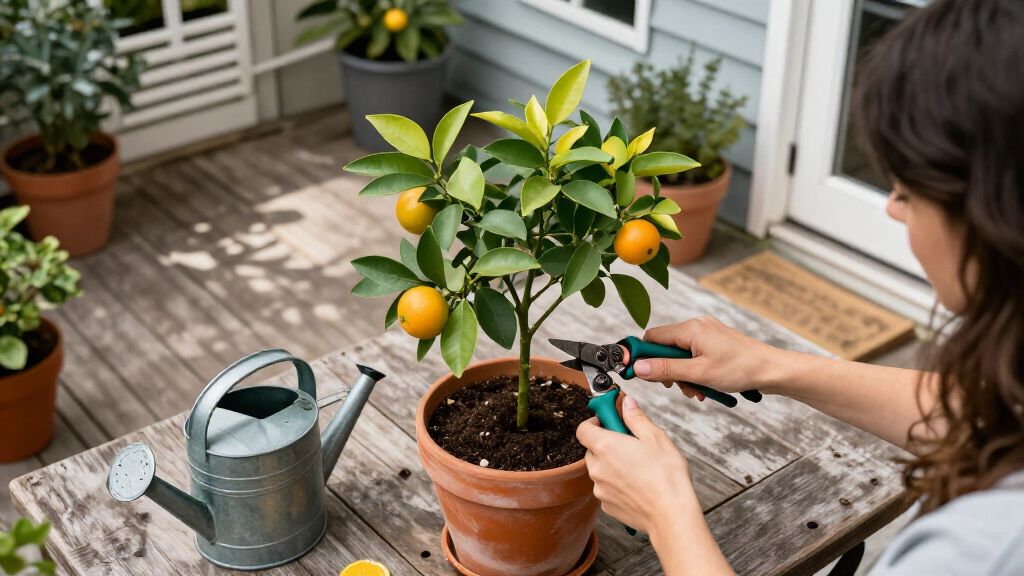
I ranked these listings around the real limits of small-space growing: available floor area, container suitability, climate fit, and the ongoing work needed to keep a plant productive. I gave more weight to a clearly compact or container-friendly option than to a listing that merely contains the word “dwarf.” I also looked at what the product format means for a buyer: one potted tree is easier to place than a nine-plant assortment or a four-pack, but a young or small-pot plant may need time and attention before it becomes established.
The ordering reflects how directly each option serves a small garden, balcony, or patio, then how specific its strengths are. Compact figs rank ahead of larger or less clearly size-focused choices; citrus picks are separated by fruit type and their light and winter-care demands. The multi-plant kit and pomegranate four-pack rank lower for limited footprints because they bring more plants and more planning, even though they may suit buyers seeking variety or several plants. Product names and formats do not provide enough detail to promise mature dimensions or fruiting timelines, so I treat those as questions to verify with the seller and local growing guidance.
| fruit trees for small space | Plant type | Sunlight |
|---|---|---|
| Perfect Plants Chicago Hardy F | Fruit tree | Full sun |
| Little Miss Figgy Dwarf Fig Tr | Dwarf fruit tree | Full sun |
| Eureka Lemon Tree Live Plant | Grafted lemon plant | — |
| Via Citrus Meyer Lemon Tree | — | — |
| Perfect Plants Wonderful Pomeg | Fruit tree | Full sun |
| Garden State Bulb Meyer Lemon | Meyer lemon tree | Partial shade to partial sun |
| Dwarf Apple | — | — |
| Perfect Plants Russian Pomegra | — | Full sun; partial shade tolerated |
| Fam Plants Wonderful Pomegrana | — | Full sun |
Factors to Consider When Choosing Best Fruit Trees For Small Spaces
Before choosing a tree, match the plant to the conditions you can reliably provide—not just the space it occupies at delivery. These broader checks can help prevent a compact purchase from turning into an oversized container, a winter-protection problem, or a plant that struggles to fruit.
Measure the mature plant and its container footprint
A small nursery pot gives little indication of the space a fruit tree will need later. Check the expected mature height and width for the exact cultivar, then account for the pot, saucer, and room to reach the plant for pruning. A container also needs enough volume to support roots without becoming so heavy that it cannot be moved for winter or sun. Avoid crowding several plants against a wall just because they fit when newly delivered; airflow and access matter as they grow. If seller information is vague, ask for the cultivar and mature dimensions before ordering.
Match the tree to your local winter conditions
Cold tolerance can decide whether a tree stays outdoors year-round or needs a protected spot. A hardy fig may suit a colder garden better than citrus, while a lemon tree in a cold-winter region usually needs a bright indoor location for part of the year. Container roots are more exposed to cold than roots in the ground, so a plant that can survive outdoors in a mild climate may still need protection in a pot. Check local climate guidance for the plant’s cultivar rather than relying on the broad fruit type alone. If you cannot provide a suitable winter location, choose a plant that fits your outdoor conditions.
Be realistic about sunlight indoors and outdoors
Fruit trees need ample light to grow well, and a bright-looking room is not always bright enough for citrus. Before buying an indoor-capable tree, note how many hours of direct sun your window or growing area receives across the year. A sunny patio may work during warmer months, but moving a tree indoors can sharply reduce its light exposure. Supplemental grow lighting may help, but it adds equipment, electricity use, and setup space. Choose citrus only if you can support its light needs through the darker season, not just during summer.
Check pollination and fruiting expectations
Some fruit trees can set fruit without a second tree nearby, while others benefit from a compatible pollination partner. Confirm the needs of the specific variety before buying, especially if you have room for only one plant. Also distinguish between a living plant and a near-term harvest: a young tree may need time to establish, and care, light, and climate all affect fruiting. A starter kit can include several types of plants, but that does not automatically mean every plant will fruit well in one small area. If harvest is the main goal, prioritize clear cultivar and pollination information over a large plant count.
Plan for pruning, watering, and seasonal moves
Containers make size easier to manage, but they also dry out faster than garden soil and may need regular watering during warm weather. Pruning can keep a tree compact, though cutting too aggressively or at the wrong time can reduce growth or fruiting. Citrus that moves indoors and outdoors also needs a stable routine to limit stress and pest problems. Before choosing a multi-plant bundle, think through whether you have time to monitor several different watering and care needs. A single tree can be the better small-space value if it is the one you can care for consistently.
Compare the plant format with your actual growing space
Product counts and pot sizes matter as much as the variety name when space is limited. A four-pack of pomegranates or a nine-plant assortment may offer more choice, but each plant needs a suitable place, light, and ongoing attention. Smaller starter plants are easier to position at first, yet they can need more time to establish and may eventually require larger pots. A larger nursery pot may take up more space on arrival but can reduce the immediate need for repotting. Decide whether you want one focal tree, several plants, or a staged collection before comparing formats.
Frequently Asked Questions
Which of these trees is the best choice if I can grow only one plant in a container?
I would start with the Little Miss Figgy Dwarf Fig because its dwarf designation aligns most directly with a limited footprint. Still, verify the cultivar’s mature size and container guidance before buying, since “dwarf” does not mean it can remain in a tiny pot indefinitely. A single Meyer lemon can also work if you have strong sunlight and a winter plan. If your space is extremely limited, skip the multi-plant starter kit and four-pack unless you have room to separate the plants.
Can I keep a Meyer lemon tree indoors all year?
You can grow a Meyer lemon indoors, but year-round indoor care is not effortless. The tree needs strong light, consistent watering, and enough room for its canopy and container as it grows. A sunny window may be insufficient during short winter days, so some growers need supplemental lighting. Watch for pests and leaf drop when moving the plant or changing its environment. If you cannot offer bright conditions through the year, a fig may be a more practical small-space choice.
Is a four-pack or starter kit a better deal for a small garden?
Not necessarily: more plants can mean more usable variety, but they also require more containers, light, water, and attention. The Fam Plants pomegranate pack makes more sense if you have room for several plants and specifically want multiple pomegranates. The nine-plant kit offers several fruit types, but its mixed plants may have different care needs and are not a one-pot solution. For a single patio corner or balcony, one well-matched tree is often easier to manage. Check the included varieties and spacing needs before choosing a bundle.
Should I choose a Chicago Hardy fig or a dwarf fig for a cold-climate patio?
Choose based on both winter exposure and available space. The Chicago Hardy listing highlights cold hardiness, which may be useful in a cooler region, but a container-grown tree can need more winter root protection than one planted in the ground. Little Miss Figgy is the more explicitly compact option, yet you should still check its cold tolerance for your area. If the pot will remain outdoors, consider how you will protect it or move it during severe weather. Local cultivar guidance should settle the choice more reliably than the variety name alone.
Do I need two fruit trees to get a harvest from these options?
It depends on the exact variety and pollination requirements, not simply whether the plant is a fruit tree. Before buying, confirm whether the cultivar is self-fruitful or needs a compatible partner, and whether nearby trees can provide pollination. The mixed starter kit includes multiple plant types, but that does not automatically guarantee compatible pollination among them. Even a self-fruitful tree may produce poorly if it lacks adequate sunlight or suitable growing conditions. For a one-tree setup, make pollination information part of your cultivar check.
Conclusion
For most tight patios and container gardens, I would choose the Little Miss Figgy Dwarf Fig as best overall because compact growth is central to its appeal. The best value for a buyer wanting one established-style option is the Perfect Plants Chicago Hardy Fig, especially where cold tolerance matters, though its size and winter care still need checking. For a premium citrus pick, the Via Citrus Meyer Lemon is a good fit for someone with strong light and room to overwinter it; beginners who want to try citrus may prefer comparing it with the Garden State Bulb Meyer Lemon listing by plant format and seller details. Choose the Eureka Lemon if traditional lemon fruit is the priority, the Perfect Plants Wonderful Pomegranate for one pomegranate rather than a bundle, and the Fam Plants four-pack or nine-plant starter kit only if you have space and time for multiple plants. My simplest recommendation is to buy one cultivar suited to your climate and light first, then add variety once you know your growing setup can support it.
Columbus Day / Indigenous Peoples' Day Picks
long weekend sales
As an affiliate, we earn on qualifying purchases.