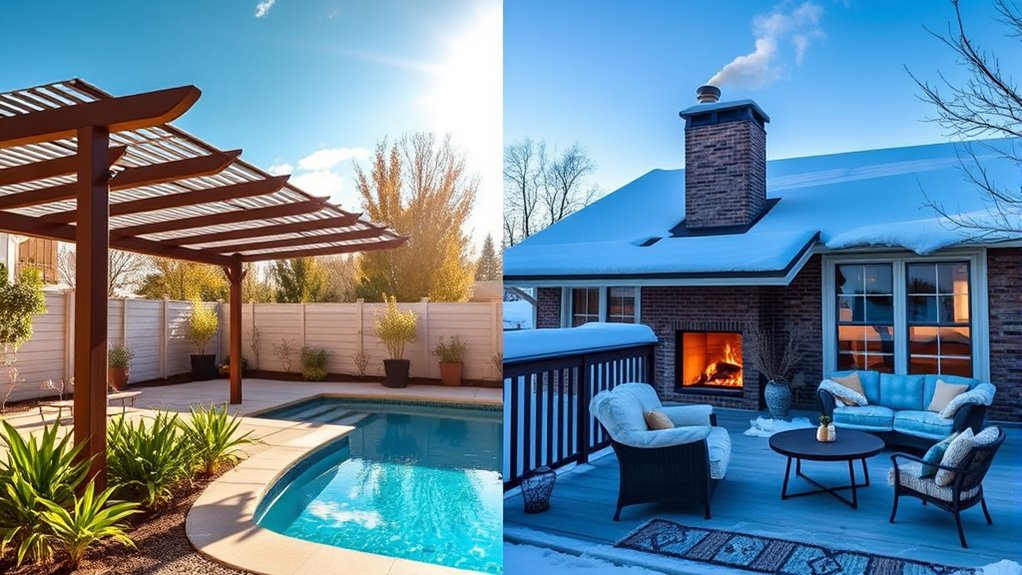

It’s no coincidence that your energy bills often fluctuate with the seasons; your approach to managing heat and cooling plays a big role. Summer tactics like shading windows and boosting fans can cut costs, while winter strategies such as sealing gaps and maximizing sunlight keep you warm efficiently. These seasonal adjustments are essential, yet many overlook the subtle differences that can profoundly impact your comfort and savings year-round. Want to learn how to optimize your energy use for both seasons?
Key Takeaways
- Use programmable thermostats to adjust temperatures seasonally, increasing efficiency in both summer and winter.
- Implement shading and reflective window treatments to reduce heat gain in summer and retain warmth in winter.
- Switch to energy-efficient appliances like LED lighting and ENERGY STAR-rated devices to lower seasonal energy consumption.
- Maximize natural ventilation during summer evenings and daytime sunlight in winter to decrease reliance on mechanical systems.
- Regularly maintain solar panels and insulation to ensure optimal performance and energy savings year-round.

As the seasons change, so do the opportunities to optimize your energy use throughout the year. Summer and winter each demand different strategies to keep your home comfortable and your energy bills manageable. By adjusting your approach seasonally, you can make the most of your resources and reduce waste. One of the most effective ways to prepare for summer is to focus on solar panel maintenance. Ensuring your solar panels are clean and free of debris allows them to operate at peak efficiency. Regular inspections help identify any damage or shading issues that could reduce energy production. Pairing this with the use of energy-efficient appliances ensures you’re using electricity wisely when sunlight is abundant. For instance, switching to LED lighting and ENERGY STAR-rated appliances minimizes unnecessary power consumption during longer, sunnier days.
Seasonal energy tips: maintain solar panels and switch to energy-efficient appliances for smarter energy use year-round.
In summer, cooling your home becomes a priority, but you can cut costs by optimizing your cooling system. Use programmable thermostats to set higher temperatures when you’re away or asleep, and consider installing ceiling fans to promote air circulation. Shade windows with reflective film or outdoor awnings to prevent heat gain. Ventilate your home during cooler evenings to let in fresh air and reduce the need for air conditioning. When it’s time to cool down, avoid overusing AC units; instead, leverage natural ventilation and strategic shading. These tactics not only save energy but also extend the lifespan of your cooling appliances. Additionally, utilizing wall organization systems can help keep your living spaces tidy, improving airflow and comfort during hot months.
Come winter, your focus shifts to heating and insulation. Proper solar panel maintenance still plays a role here, especially if you rely on solar energy for part of your power needs. Snow accumulation on panels can block sunlight, so clearing snow promptly helps maintain energy flow. Additionally, investing in energy-efficient appliances like heat pumps or high-efficiency furnaces can drastically lower heating costs. Seal gaps and reinforce insulation around doors and windows to prevent heat loss. Using thick curtains at night and during cold days keeps warmth inside, reducing the demand on your heating system. When possible, take advantage of natural sunlight during the day by opening curtains and blinds to warm your space naturally.
Throughout both seasons, being mindful of your energy consumption habits makes a significant difference. Adjusting your thermostat, upgrading to energy-efficient appliances, and maintaining your solar panels are all practical steps. These seasonal strategies ensure you’re not only saving money but also reducing your carbon footprint year-round. By tailoring your approach to the changing demands of summer and winter, you create an efficient, sustainable home environment that benefits you and the planet alike.
Conclusion
By adjusting your energy strategies seasonally, you can save significant money and reduce your environmental impact. For example, using reflective window treatments and ceiling fans in summer can cut cooling costs by up to 30%. In winter, sealing gaps and maximizing sunlight can lower heating bills by 20%. Implementing these tactics not only keeps your home comfortable year-round but also makes a noticeable difference in your energy bills and sustainability efforts.