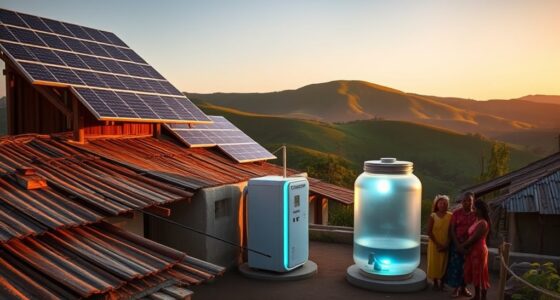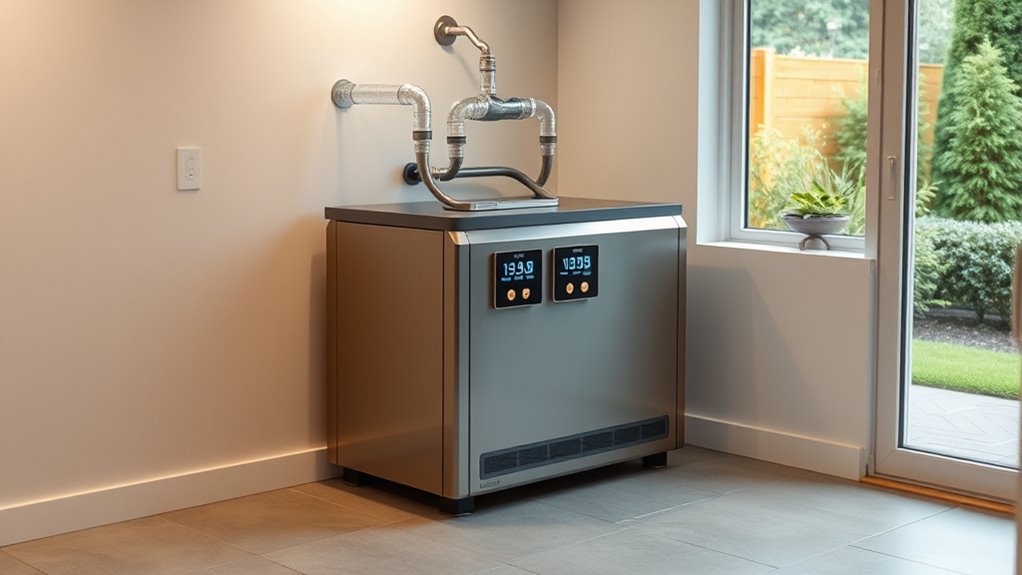

Imagine a future where your home runs on clean, quiet hydrogen fuel cells instead of traditional generators. These systems could provide reliable backup power while reducing emissions and noise. Although they’re still evolving and come with some hurdles, advancements are making them more practical and affordable. Understanding how close we are to this shift might change how you think about home energy solutions and their potential benefits.
Key Takeaways
- Hydrogen fuel cells convert fuel directly into electricity more efficiently and quietly than traditional backup generators.
- They reduce emissions and pollution, offering a cleaner alternative for home energy backup.
- Increasing technological advancements and economies of scale will lower costs, making them more affordable over time.
- Proper installation requires specialized handling, safety measures, and infrastructure, which currently limit widespread adoption.
- Future developments aim to improve affordability, infrastructure availability, and regulatory support, enhancing their viability as generator replacements.
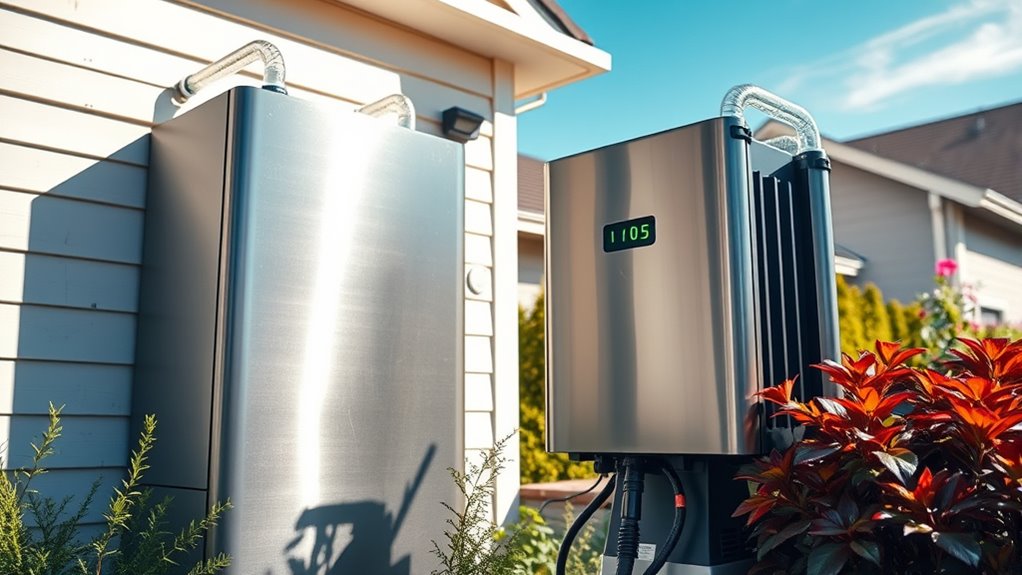
Have you ever wondered how hydrogen fuel cells could revolutionize home energy? These innovative systems offer a promising alternative to traditional backup generators, providing cleaner and more efficient power. But before they become a common sight in households, it’s essential to understand the hurdles they face, especially regarding cost efficiency and installation challenges. Hydrogen fuel cells can potentially reduce your energy costs over time by offering high efficiency and low emissions. Unlike fossil fuel generators, which burn fuel and produce significant pollution, hydrogen cells convert fuel directly into electricity with minimal waste. This process means you could save money on fuel costs and contribute to a healthier environment. However, the upfront costs of installing these systems can be steep. The technology itself is still relatively new, and manufacturing costs remain high compared to conventional generators. While prices are gradually decreasing as production scales up, the initial investment might seem intimidating. You’ll also need to think about the long-term savings, which could offset the higher installation expenses over several years. Despite the promise of cost efficiency, the installation process presents notable challenges. Setting up a hydrogen fuel cell system isn’t as straightforward as plugging in a generator. It requires a dedicated space for the unit, proper ventilation, and secure storage for hydrogen fuel, which is highly flammable. Installing such a system involves specialized knowledge, and not all contractors are equipped or trained to handle hydrogen technology safely. You might face delays or increased costs due to the need for customized installation procedures or adherence to strict safety protocols. Additionally, integrating hydrogen fuel cells with existing home energy systems can be complex. You’ll need compatible infrastructure, such as hydrogen supply lines or local refueling stations, which are not yet widespread. This can limit where you can install these systems and complicate the overall process. The regulatory landscape is also evolving, and you may encounter bureaucratic hurdles or need permits that can slow down installation. Despite these challenges, the potential benefits of hydrogen fuel cells are significant. They promise quieter operation, lower emissions, and greater energy independence. As technology advances and economies of scale improve, costs are expected to come down, making hydrogen fuel cells a more viable and attractive option for homeowners. If you’re weighing switching from traditional generators, it’s worth keeping an eye on how these challenges are addressed over time, as they could soon become a practical, efficient, and environmentally friendly energy solution for your home.
Conclusion
As you consider the future of home energy, remember that hydrogen fuel cells could cut emissions by up to 50% compared to traditional generators. With costs expected to drop as technology advances, you might soon have a cleaner, quieter backup power source that boosts your energy independence. Embracing this innovation not only benefits your home but also plays an essential role in reducing pollution and fighting climate change. The future of sustainable home power is closer than you think.