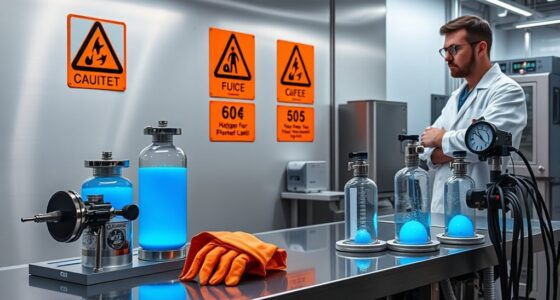
Safety myths about hydrogen storage persist, misconceptions linger, and fears remain. While these concerns may seem grounded in past experiences, advancements in technology, rigorous safety standards, and industry innovations have transformed hydrogen storage into a safe and reliable solution. But what exactly has changed, and how can you be sure of its safety today? Exploring these questions reveals the truth behind hydrogen’s true safety profile and why many worries are no longer justified.
Key Takeaways
- Modern hydrogen storage tanks are rigorously tested and certified to withstand impact, temperature fluctuations, and corrosion, ensuring safety.
- Advanced leak prevention features, including reinforced seals and sensors, effectively detect and prevent hydrogen leaks.
- Proper safety protocols, ventilation, and barriers minimize ignition risks associated with hydrogen’s flammability.
- Outdated information and misconceptions are often based on old data; current technology significantly improves safety measures.
- Industry standards and continuous innovation prioritize safety, making hydrogen storage reliably safe for various applications.

Many people believe that storing hydrogen is inherently dangerous, but these safety concerns are often based on misconceptions. Modern hydrogen storage systems have evolved considerably, with advanced tank design playing an essential role in guaranteeing safety. These tanks are engineered to withstand extreme conditions, featuring robust materials like high-strength alloys and composites that resist impact, corrosion, and temperature fluctuations. Their carefully crafted designs minimize the risk of failure, making them reliable for various applications, from fueling stations to industrial use.
Leak prevention is a primary focus when it comes to hydrogen storage safety. Engineers pay close attention to sealing mechanisms and connection points to prevent any leaks that could lead to hazards. Modern tanks incorporate multiple layers of safety features, such as reinforced seals and automatic shutoff valves. These measures are designed to detect even the smallest leak and shut down the flow immediately, preventing the accumulation of hydrogen in enclosed spaces. Additionally, sensors continuously monitor pressure and detect anomalies, alerting operators before any dangerous situation arises.
You might worry about hydrogen’s flammability, but safety protocols and tank design substantially mitigate this risk. Hydrogen’s low ignition energy means it can ignite easily, but with proper leak prevention and ventilation systems, the danger is minimized. Storage tanks are often installed with safety barriers and located in well-ventilated areas to disperse any leaked gases quickly. Safety standards like those from the ISO and SAE mandate rigorous testing and certification processes, guaranteeing that tanks meet strict criteria for durability and leak resistance before they are put into service.
Furthermore, many misconceptions stem from outdated information or high-profile incidents that don’t reflect current technology. Today’s hydrogen tanks are subject to rigorous testing, including crash tests and stress analysis, to guarantee they can handle accidents without releasing hydrogen uncontrollably. Continuous innovations in material science and engineering mean that leak prevention mechanisms are more effective than ever. These advancements give you peace of mind, knowing that the safety of hydrogen storage is a top priority and that the industry is committed to minimizing risks.

SOG PowerPint Mini Compact Stainless Steel Multi-Tool |18 Lightweight Specialty Tools & SOG Multitool Pliers Pocket Knife, Stone Wash
- Number of Tools: 18 tools in one multi-tool
- Size and Weight: 3.2-inch closed, 4.2 ounces
- Enhanced Pliers Power: Double leverage for easier use
As an affiliate, we earn on qualifying purchases.
Conclusion
You now know that modern hydrogen storage is safer than many believe. Thanks to advanced materials and strict safety standards, risks are greatly minimized. In fact, hydrogen storage tanks undergo rigorous testing, with industry regulations ensuring safety. Did you know that over 95% of hydrogen leaks are detected early, preventing accidents? With continued innovation, you can feel confident that hydrogen is a secure, reliable energy source for the future.