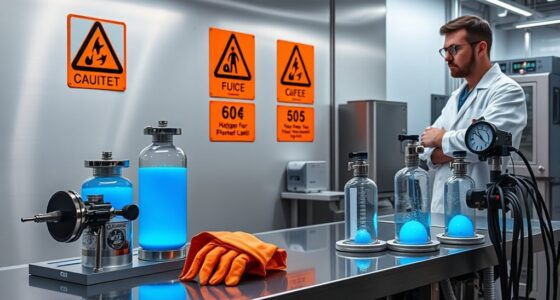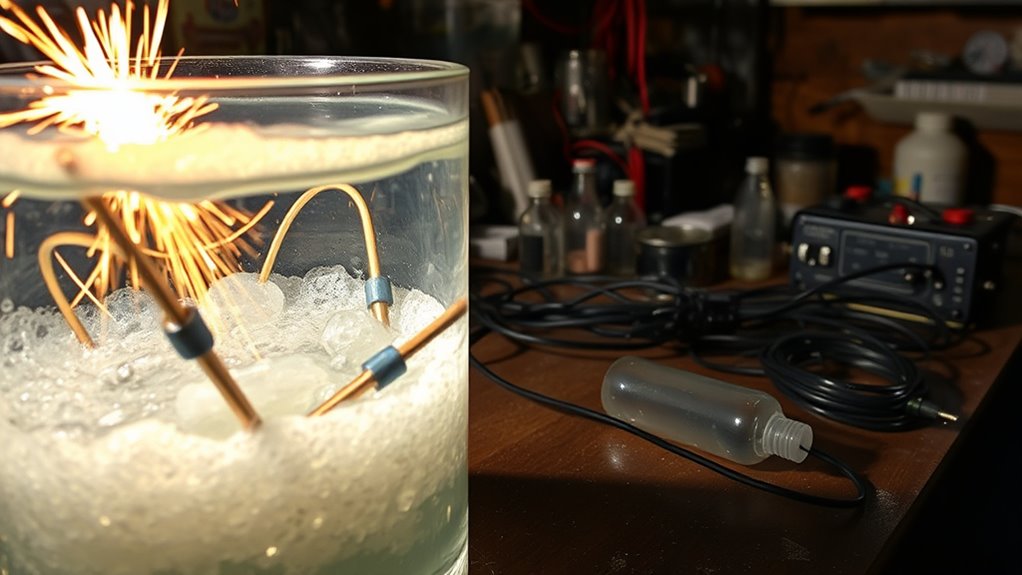

Did you know that hydrogen is flammable over a wide range of air concentrations, making accidents far more common than many realize? If you’re considering building a DIY hydrogen generator, it’s essential to understand that even small mistakes can lead to dangerous fires or explosions. Without proper safety measures and expertise, what seems like a simple project could turn into a serious hazard—so, it’s worth knowing what you might be risking.
Key Takeaways
- Hydrogen’s extreme flammability and explosive potential make DIY generators inherently dangerous without proper safety measures.
- Inadequate understanding of electrolysis processes can cause system failures, leaks, and hazardous conditions.
- DIY setups often lack essential safety features like proper ventilation, leak detection, and pressure regulation.
- Using improper materials or containers increases leak risks and chemical contamination.
- Building hydrogen generators without professional expertise significantly raises the risk of fires, explosions, and personal injury.
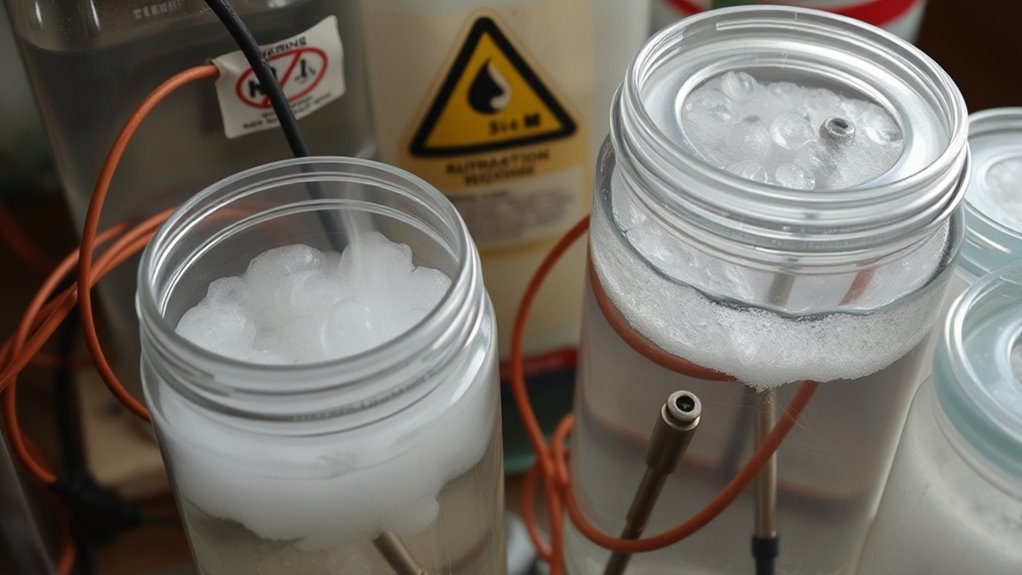
Are you interested in producing hydrogen fuel at home? If so, it’s vital to understand that DIY hydrogen generators come with significant risks you might not fully realize. Many people get caught up in the idea of creating their own fuel source, but the reality is that these projects are fraught with safety hazards and common DIY pitfalls. Without proper knowledge, you could be exposing yourself and others to dangerous situations.
One of the main safety hazards involves the handling of hydrogen gas itself. Hydrogen is highly flammable and explosive when mixed with air in certain proportions. Small leaks in homemade systems can lead to the accumulation of hydrogen, creating a risk of sudden ignition or explosion. Without specialized equipment and rigorous safety measures, these dangers are magnified. Many DIY enthusiasts underestimate how volatile hydrogen can be, assuming that their makeshift setups are safe just because they’re small or simple. Unfortunately, this false sense of security can have devastating consequences.
Another significant DIY pitfall is inadequate understanding of chemical reactions and proper control mechanisms. Producing hydrogen typically involves electrolysis, which requires precise voltage and current regulation. If you don’t have the right instruments or don’t follow correct procedures, you risk overloading your system, causing overheating, or damaging components. These mistakes can lead to gas leaks, fires, or equipment failure. Additionally, improper storage of hydrogen is a common mistake. Storing hydrogen in unapproved containers or under unsuitable conditions can cause pressure buildup or leaks, increasing the likelihood of accidents.
Many DIY projects also neglect proper ventilation and safety protocols. Without proper airflow, hydrogen can accumulate unnoticed, creating an explosive environment. Some hobbyists attempt to build their generators indoors or in enclosed spaces, unaware that even small leaks can quickly reach dangerous concentrations. Moreover, a lack of protective gear, such as gloves and eye protection, increases the risk of injury from chemical splashes or accidental ignitions.
Finally, DIY pitfalls extend beyond safety. Many people underestimate the complexity of designing a reliable and efficient hydrogen generator. Small mistakes, like using incompatible materials or ignoring corrosion issues, can lead to system failure or contamination. These errors not only waste time and money but also compromise safety. It’s also crucial to be aware of the scaling limitations of DIY setups, as small-scale projects may not be suitable for producing meaningful amounts of hydrogen safely. Overall, the combination of safety hazards and DIY pitfalls makes building a hydrogen generator at home a risky endeavor. It’s essential to recognize that these projects are best left to professionals with the proper training, equipment, and safety measures in place. Attempting to build one without this knowledge can turn a seemingly simple project into a dangerous accident waiting to happen.

Hydrogen Gas Analyzer by Forensics | USA NIST Calibration |Range: 0-1000ppm | Resolution: 1ppm | Built-in Pump & 4ft Probe |
- Detection Range: 0-1000 ppm with 1 ppm resolution
- Calibration: USA NIST traceable calibration
- Display: Color screen with graph functions
As an affiliate, we earn on qualifying purchases.
As an affiliate, we earn on qualifying purchases.
Conclusion
Think of a DIY hydrogen generator as a ticking time bomb hidden in your garage. The flicker of a spark or a small leak can ignite a fierce explosion, turning your workspace into a scene of chaos. Without proper safety measures, you’re playing with fire—literally. It’s not just about building something; it’s about protecting yourself and your loved ones. Remember, some risks are just too dangerous to take on your own.