
Like the faint glow of dawn before sunrise, the flame produced by hydrogen for cooking is surprisingly subtle yet powerful. Its pale blue hue can be difficult to see in bright kitchens, making safety and awareness essential. Understanding how this flame behaves and the precautions needed can help you harness hydrogen’s benefits safely. Curious about what makes this flame unique and how to cook efficiently with it? Keep going to find out.
Key Takeaways
- Hydrogen flames are very pale blue and faint, making them hard to see in bright lighting conditions.
- The flame heats quickly, reaching high temperatures suitable for rapid cooking.
- Recognizing safe flame behavior involves monitoring for consistent, steady combustion without flickering or irregularities.
- A blue flame indicates complete combustion, signifying safe and efficient hydrogen burning.
- Proper ventilation and safety sensors are essential due to hydrogen’s high flammability and the faint appearance of its flame.
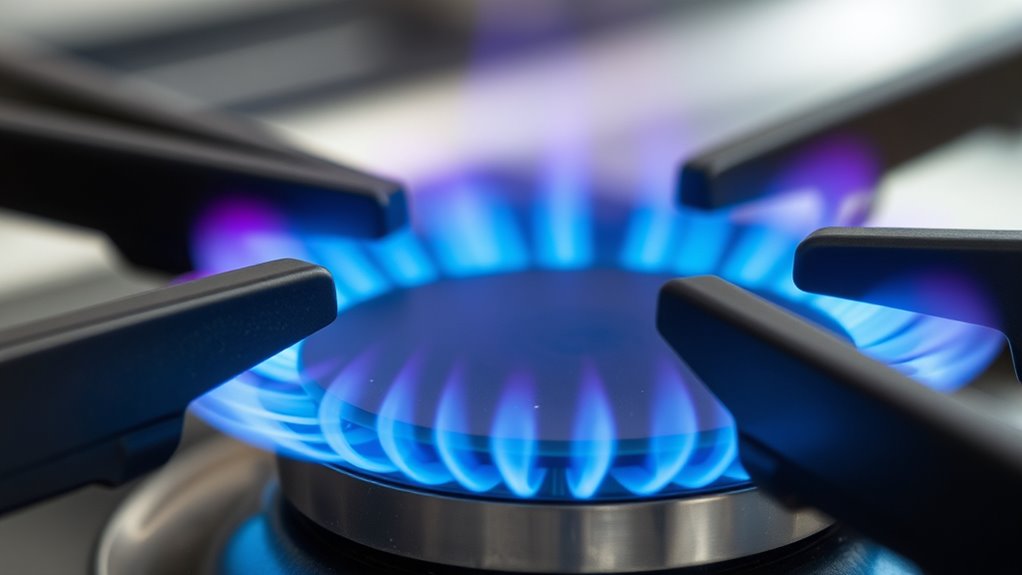
As the world seeks cleaner energy alternatives, hydrogen is emerging as a promising option for cooking. Its potential to reduce greenhouse gas emissions and improve air quality makes it an attractive choice for environmentally conscious households. However, before you start using hydrogen in your kitchen, it’s essential to understand the flame characteristics and the safety considerations involved. Hydrogen burns with a very pale blue flame, which can be hard to see in bright lighting, so you might need to pay close attention when it’s in use. The flame heats quickly and reaches high temperatures, offering rapid cooking capabilities, but this also means you need to be cautious to prevent accidents. Because hydrogen is highly flammable, ensuring proper ventilation and leak detection is crucial to avoid fire hazards. Installing sensors and following safety protocols can help mitigate risks associated with leaks, which are difficult to detect visually due to the flame’s faint color. Additionally, understanding the flame characteristics can help you better recognize safe versus unsafe conditions during use. When it comes to emission impacts, hydrogen combustion produces mainly water vapor, markedly reducing harmful pollutants compared to fossil fuels. This makes hydrogen a cleaner option, especially in terms of air quality inside your home. However, it’s important to recognize that hydrogen production methods influence its overall emission footprint. If you use renewable energy sources to produce hydrogen, the emission impacts become even more favorable. Conversely, if hydrogen is generated from fossil fuels without carbon capture, its environmental benefits diminish. Consequently, understanding the lifecycle emissions of hydrogen you utilize for cooking helps you make more sustainable choices. Handling hydrogen safely requires proper equipment, such as leak-proof storage tanks and specialized burners designed for hydrogen use. Regular maintenance and safety checks are essential to prevent leaks, which could lead to dangerous explosions if mishandled. It’s also wise to educate everyone in your household about the potential hazards and the importance of following safety guidelines. Since hydrogen burns cleanly with minimal emissions, it’s a step towards reducing your carbon footprint, but safety should always remain a top priority. By understanding the flame characteristics and emission impacts, you can enjoy the benefits of hydrogen cooking while maintaining a safe environment. Proper precautions ensure that you harness hydrogen’s clean energy potential without compromising safety, making it a smart, future-forward choice for your kitchen.
hydrogen gas stove burner
As an affiliate, we earn on qualifying purchases.
As an affiliate, we earn on qualifying purchases.
Conclusion
By understanding hydrogen’s faint, pale blue flame, you can cook safely and efficiently. Remember, hydrogen burns cleanly, producing mainly water vapor, making it an eco-friendly choice. Notably, studies show that hydrogen combustion releases about 30% less nitrogen oxides than traditional fuels, reducing harmful emissions. Just stay attentive to the flame’s subtle glow, ensure proper ventilation, and perform regular maintenance. With these precautions, you can enjoy the benefits of hydrogen-powered cooking safely and sustainably.
hydrogen leak detection sensor
As an affiliate, we earn on qualifying purchases.
As an affiliate, we earn on qualifying purchases.
hydrogen safe cooking equipment
As an affiliate, we earn on qualifying purchases.
As an affiliate, we earn on qualifying purchases.
hydrogen fuel kitchen appliances
As an affiliate, we earn on qualifying purchases.
As an affiliate, we earn on qualifying purchases.