
If you’re dealing with high humidity levels, you might wonder if a heat-pump dryer is truly worth the investment. These appliances promise energy savings and effective moisture removal, but do they perform well enough to justify the higher upfront cost? Understanding how they work and the benefits they offer in challenging environments could change your perspective—yet, there are factors to weigh before making a decision. So, what makes heat-pump dryers stand out in humid regions?
Key Takeaways
- Heat-pump dryers are highly efficient in humid regions due to internal moisture condensation, eliminating the need for external venting.
- They reduce indoor humidity levels, improving air quality and comfort in high-humidity environments.
- Despite higher upfront costs, long-term energy savings make them cost-effective over time.
- Their durable design and lower maintenance requirements increase longevity in challenging climates.
- Compact and ventless, they simplify installation in areas with limited space or venting options.

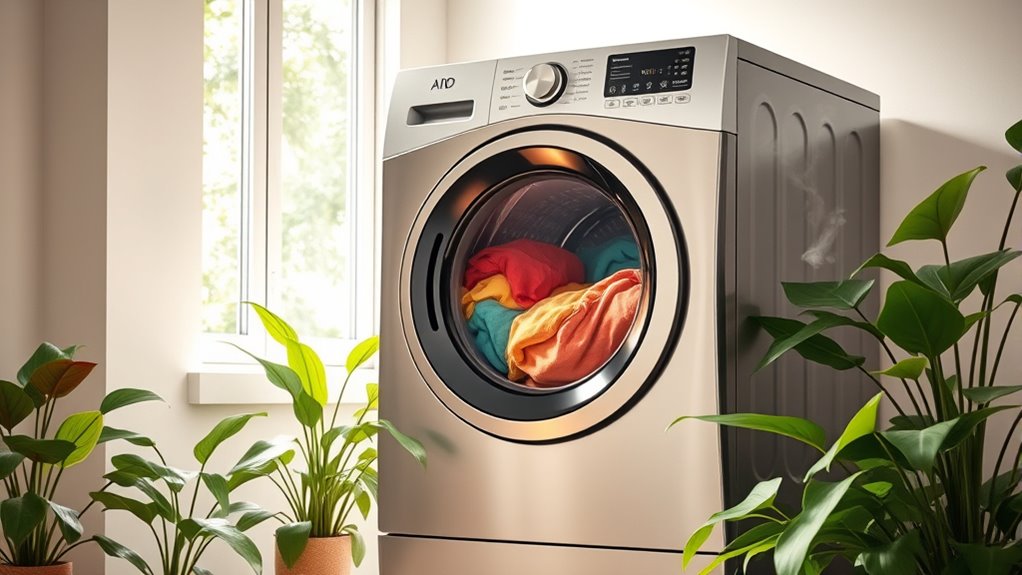
Have you ever wondered if there’s a more energy-efficient way to dry your clothes? If so, heat-pump dryers might be worth considering, especially if you live in a humid region. Traditional vented or condenser dryers use a lot of energy, mainly because they heat air and then vent moist air outside. Heat-pump dryers, on the other hand, operate differently. They recycle the same air, cooling it to extract moisture and then reheating it, which makes them considerably more energy-efficient. This process reduces the amount of electricity needed to dry your clothes because they don’t need to constantly generate new hot air. While the energy efficiency of heat-pump dryers can save you money on utility bills over time, it’s crucial to look at the initial investment. The installation costs for these units tend to be higher than conventional dryers, mainly because they are more complex and sometimes require modifications to your existing setup. However, many users find that the long-term savings on energy bills offset these upfront expenses. Additionally, their compact design makes them suitable for smaller laundry spaces, which is an advantage in many homes.
Living in a humid region, you might worry about whether a heat-pump dryer will perform well. These dryers are particularly suited for such climates because they work efficiently without venting hot, moist air outside. Instead, they condense the moisture inside the unit, which means you don’t need external venting. This setup not only helps in humid environments but also simplifies installation, especially if venting options are limited or non-existent in your home. The initial installation costs might be higher, but you gain the advantage of a more environmentally friendly appliance that can operate effectively in high-humidity settings. Plus, because they do not vent moist air outdoors, they reduce indoor humidity levels, which can improve air quality and comfort inside your home. Their durability is also a significant benefit, as fewer moving parts and less exposure to heat can lead to a longer lifespan.
Another benefit is that heat-pump dryers generally last longer and require less maintenance compared to traditional dryers. Their design minimizes the wear-and-tear caused by constantly heating and cooling air, which can extend their lifespan. Although they might take a bit longer to dry clothes, the savings on energy consumption often outweigh this minor drawback. In humid regions, this technology can be a game-changer, offering a sustainable, efficient, and convenient way to handle laundry. If you’re considering switching, weigh the higher upfront costs against your long-term savings and environmental impact. In the end, a heat-pump dryer could be a smart investment that makes laundry less of a chore and more eco-friendly, especially in challenging climates.
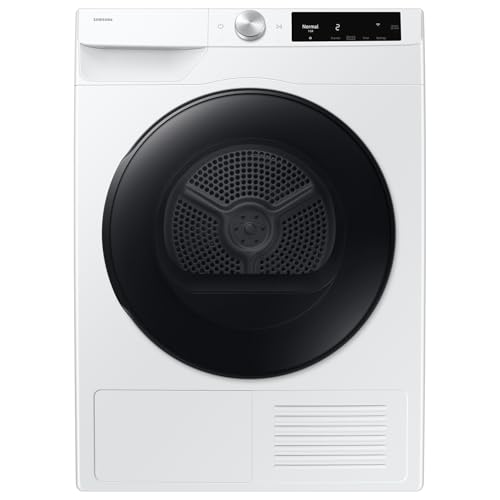
Samsung 4.0 cu. ft. Compact Ventless Heat Pump Dryer with AI Smart Dial, Wi-Fi Connected, Smart Dry Technology, Space Saving Design, White, DV25FG62B0BEA2
- Ventless Heat Pump Technology: Energy-efficient, gentle drying
- Energy Star Certified: Consumes less energy
- AI Smart Dial: Learns and recommends cycles
As an affiliate, we earn on qualifying purchases.
As an affiliate, we earn on qualifying purchases.
Conclusion
If you live in a humid region, a heat-pump dryer is like a gust of fresh air for your laundry routine. I once knew someone who struggled with mold and dampness until switching to one—her home felt lighter, like lifting a heavy weight. While the upfront cost is higher, the long-term savings and improved air quality make it a wise investment. Think of it as planting a seed today for a healthier, more comfortable tomorrow.