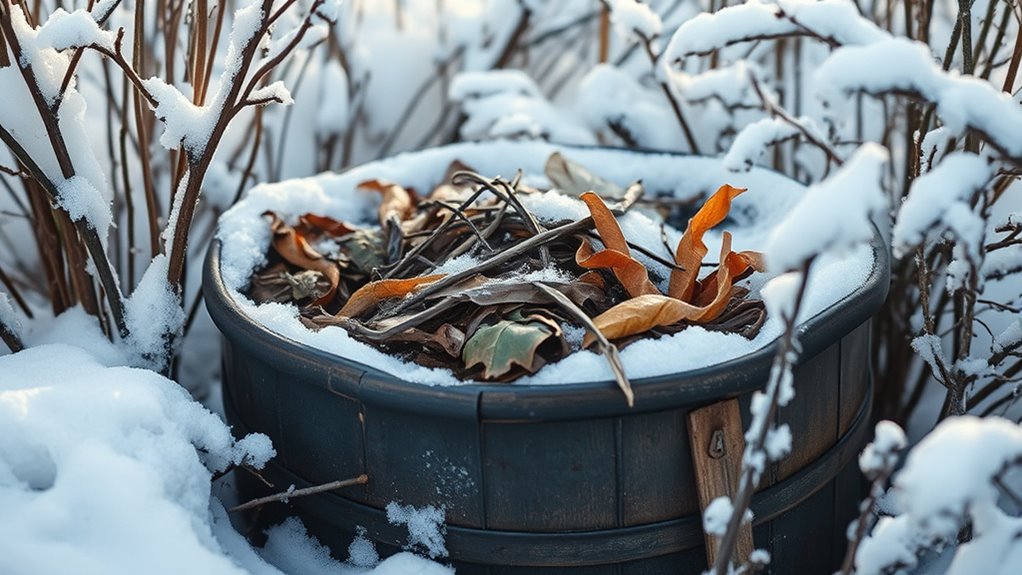

Composting in winter might seem challenging, but with the right techniques, you can keep your pile hot and active all season long. Proper insulation, strategic placement, and regular maintenance are key to maintaining microbial activity despite the cold. If you’re wondering how to turn winter waste into rich compost, understanding these strategies can make all the difference in ensuring your compost stays productive year-round.
Key Takeaways
- Use insulated or double-walled compost bins to retain heat during winter.
- Position bins in sunny, sheltered spots to maximize passive warmth and reduce heat loss.
- Cover the compost with breathable materials or insulating blankets to maintain internal temperature.
- Turn the pile infrequently but regularly to introduce oxygen and sustain microbial activity.
- Maintain proper moisture levels and add greens to support ongoing composting in cold weather.
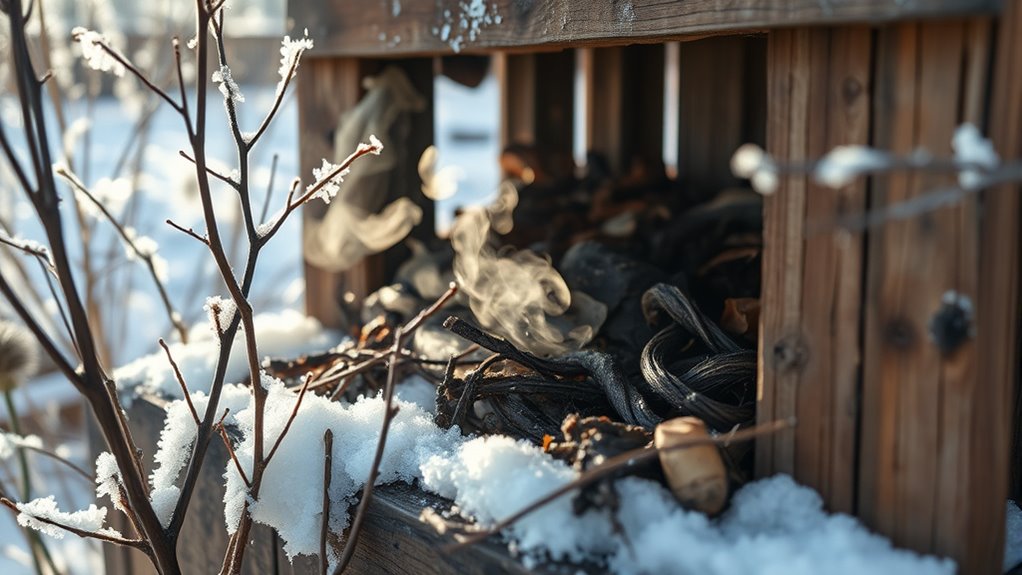
Even in winter, backyard composting remains a practical way to recycle organic waste and enrich your soil. The key to successful winter composting lies in understanding how your compost bin design influences heat retention and decomposition. Many compost bins are built with insulation or airtight lids, which help maintain the necessary heat to keep microbes active even when outdoor temperatures drop. If you’re using a simple open bin or a wire compost heap, you might notice slower breakdown and less warmth during colder months. Upgrading to a well-designed compost bin that retains heat can make a significant difference. Consider bins with thick walls, insulated lids, or double-walled construction to prevent heat loss. These design features allow your compost to stay warmer, speeding up the process and reducing the risk of compost freezing. Also, positioning your compost bin in a sunny spot, away from wind, can add passive warmth, especially if your bin design encourages heat retention. Additionally, understanding microbial activity in cold weather can help you manage your compost more effectively during winter. Many winter composting myths can discourage you from composting during the colder months. One common misconception is that composting must stop entirely because of the cold. In reality, composting doesn’t need to freeze over; it just slows down. Microbes remain active in cooler temperatures, and with proper management, you can keep the process going. Another myth is that you must add more greens or browns than usual to compensate for the cold. While adding some nitrogen-rich greens helps, the main thing is maintaining a good balance of moisture and aeration. Don’t believe that you need a special winter compost bin, either—though a well-insulated design can help, any bin that’s kept warm and moist enough will work. The truth is, with a few adjustments, you can continue composting all year round, even in the depths of winter. To really keep your compost hot during winter, focus on maintaining airflow, moisture, and insulation. Turn your pile less frequently, but still regularly enough to introduce oxygen, which promotes microbial activity. Keep your compost moist, but not soggy, by covering it with a breathable tarp or adding dry materials if it gets too wet. And, if your bin isn’t well insulated, wrap it with straw, hay, or insulating blankets to boost internal temperatures. By debunking winter composting myths and choosing the right compost bin design, you set yourself up for success year-round. Not only will you reduce waste, but you’ll also produce rich compost that benefits your garden come spring. With some effort and the right setup, winter composting becomes an achievable, even rewarding, part of your gardening routine.
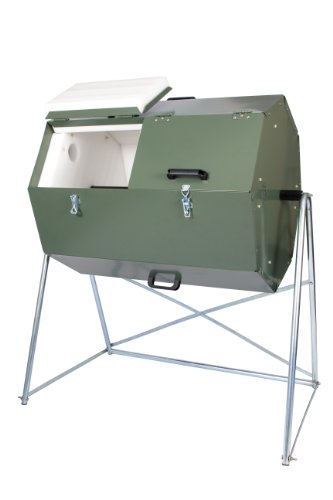
Jora Composter JK 270 – Outdoor Dual Chamber Compost Tumbler – 70 Gallon – Galvanized Steel Construction
- Easy to Turn and Use: Effortless manual rotation with dual chambers
- Durable Galvanized Steel: Sturdy, weather-resistant construction
- High Temperature Insulation: Non-toxic insulation exceeds 160°F
As an affiliate, we earn on qualifying purchases.
As an affiliate, we earn on qualifying purchases.
Conclusion
With these simple strategies, your winter compost can stay lively and warm, transforming cold scraps into rich soil. Just imagine the moment spring arrives, and you reveal a perfectly seasoned, nutrient-packed compost—ready to give your garden a head start. Keep it insulated, turn it often, and stay vigilant. Before you know it, your winter efforts will pay off in vibrant blooms and healthy plants. The secret to year-round composting is within your reach—are you ready to keep it hot?

![Bukit Bintang Hicks Flat: DBKL Orders Cleanup After Viral Video Exposes Dirty Conditions [WATCH] - NST Online](https://tinyhouse43.com/wp-content/uploads/2026/08/bukit-bintang-hicks-flat-dbkl-orders-cleanup-after-viral-video-exposes-dirty-con-featured-560x300.jpg)



![Bukit Bintang Hicks Flat: DBKL Orders Cleanup After Viral Video Exposes Dirty Conditions [WATCH] - NST Online](https://tinyhouse43.com/wp-content/uploads/2026/08/bukit-bintang-hicks-flat-dbkl-orders-cleanup-after-viral-video-exposes-dirty-con-featured-260x140.jpg)