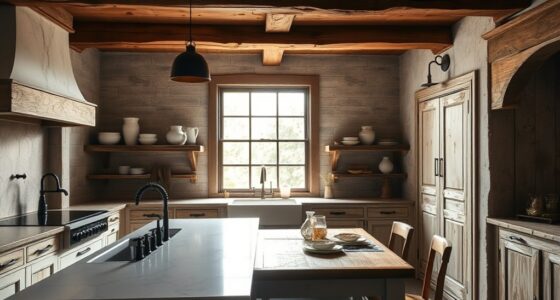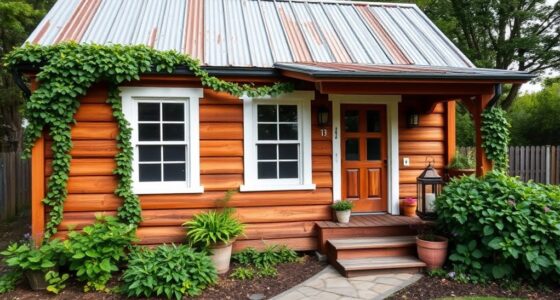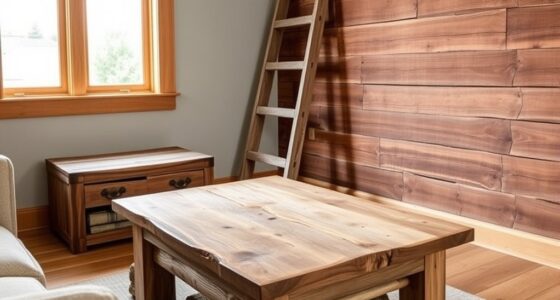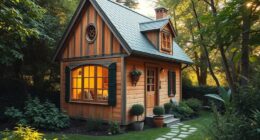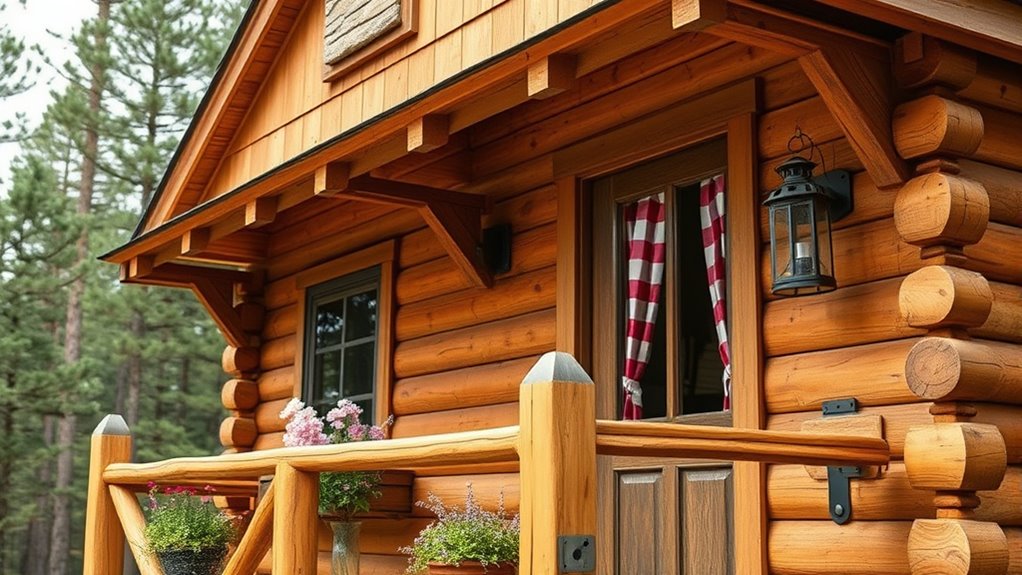

If you’re looking for design inspirations for rustic cabin tiny homes, focus on natural textures like reclaimed wood beams, vintage-inspired furniture, and earthy textiles. Incorporate eco-friendly materials such as bamboo flooring, low-VOC paints, and insulation options like sheep’s wool. Create a cozy, spacious feel with multifunctional furniture and open layouts while adding vintage touches like lanterns and handcrafted decor. Keep exploring, and you’ll discover how to balance style, function, and sustainability for your perfect rustic retreat.
Key Takeaways
- Incorporate reclaimed wood beams and vintage furniture for authentic rustic charm.
- Use natural textures like woven rugs and handmade pottery to add personality.
- Opt for eco-friendly materials such as bamboo flooring and low-VOC paints.
- Maximize space with multifunctional furniture and open, uncluttered layouts.
- Enhance cozy atmosphere with warm earthy tones, vintage lighting, and natural decor accents.
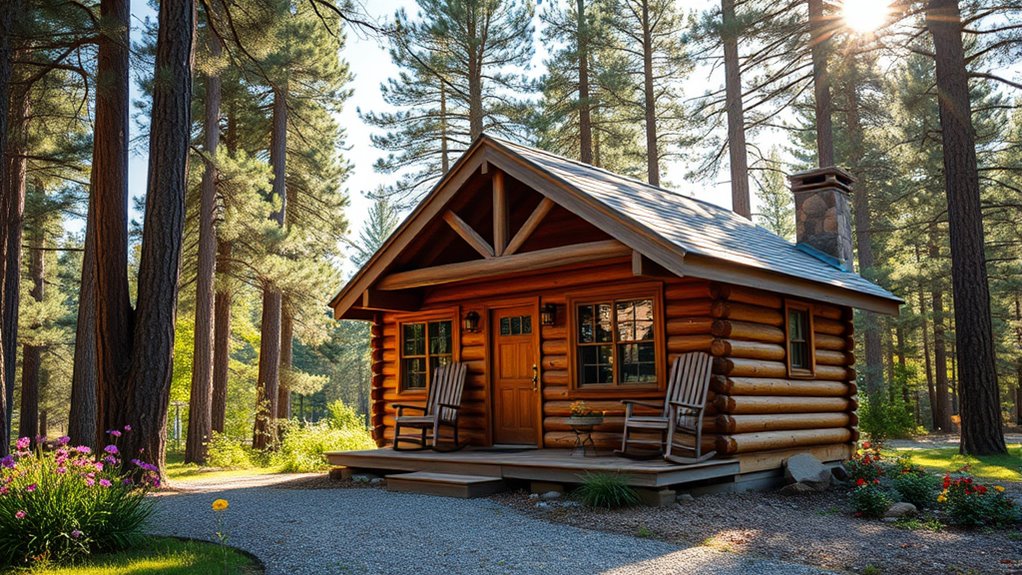
If you’re drawn to simple, cozy living, rustic cabin tiny homes offer an ideal retreat that combines charm with practicality. These compact spaces capture the essence of nature and warmth, making them perfect for those seeking a tranquil escape or a minimalist lifestyle. When designing your rustic cabin tiny home, interior decor plays a crucial role in creating a welcoming environment. Opt for natural textures like reclaimed wood beams, vintage-inspired furniture, and soft, earthy textiles. These elements enhance the rustic appeal and make the space feel inviting without overwhelming it. Keep the color palette neutral with warm browns, creamy whites, and subtle greens to evoke a sense of calm and harmony. Thoughtful decor choices, such as handmade pottery or woven rugs, add personality and authenticity, grounding your tiny home in a cozy, lived-in feel. Incorporating sustainable materials is essential to achieving an authentic rustic aesthetic while respecting the environment. Look for eco-friendly options like reclaimed wood for walls and furniture, which not only reduce waste but also add character with their unique imperfections. Bamboo flooring or cork tiles can serve as durable, sustainable alternatives to traditional hardwood, maintaining the rustic charm without sacrificing eco-consciousness. Incorporate low-VOC paints and natural finishes to ensure your interior remains healthy and non-toxic. When selecting insulation, choose natural options like sheep’s wool or cellulose, which provide excellent thermal regulation and align with sustainable principles. Every material choice should reflect a commitment to reducing your ecological footprint while enhancing the rustic charm of your tiny home. In terms of layout, prioritize multifunctional furniture that maximizes space without sacrificing comfort. Fold-away beds, extendable tables, and storage ottomans keep the interior open and uncluttered. Decorate with vintage lanterns or wrought iron fixtures to add authentic rustic character. Small touches like potted herbs or dried floral arrangements bring life and color into the space while emphasizing a connection to nature. Remember, the key to a successful rustic cabin tiny home lies in blending practicality with aesthetic charm. By carefully selecting interior decor that showcases natural materials and sustainable practices, you create a space that’s not only beautiful but also environmentally responsible. Your tiny home becomes a true reflection of rustic simplicity—warm, inviting, and perfectly suited for a peaceful, off-grid lifestyle.

Heritage Timber Reclaimed Axed Cut Faux Wood Beam, 3-Sided (U-Beam), 3 1/2"W x 3 1/2"H x 72"L, Kona Brown Finish
Item Description: Heritage Timber Reclaimed Axed Cut Faux Wood Beam, 3-Sided (U-Beam), 3 1/2"W x 3 1/2"H x…
As an affiliate, we earn on qualifying purchases.
As an affiliate, we earn on qualifying purchases.
Frequently Asked Questions
What Are the Best Materials for Rustic Cabin Tiny Home Insulation?
You should choose insulation types like spray foam, fiberglass batts, or rigid foam boards for your rustic cabin tiny home. These options provide good thermal protection and are easy to install in small spaces. Don’t forget moisture barriers, such as polyethylene sheeting, to prevent moisture buildup and mold. Combining these materials helps you maintain a cozy, energy-efficient tiny home while protecting it from the elements.
How Can I Maximize Storage in a Small Rustic Cabin?
Think of your tiny cabin as a treasure chest—you want every inch to hold something valuable. Use multi-functional furniture like beds with built-in drawers or fold-out tables to save space. Incorporate vertical storage solutions such as wall-mounted shelves or hanging racks to keep clutter off the floor. These strategies maximize your storage, turning limited space into a well-organized haven where you can enjoy every inch.
Are There Eco-Friendly Options for Tiny Cabin Building Materials?
Yes, you can choose eco-friendly options for tiny cabin building materials. Opt for sustainable forest products like reclaimed wood or bamboo, which are renewable resources. You can also use recycled building materials such as reclaimed bricks, metal, or salvaged wood, reducing waste and environmental impact. These choices help you build a environmentally conscious tiny cabin that’s both stylish and sustainable, contributing to conservation efforts while creating a cozy, rustic space.
What Are Common Challenges in Maintaining Rustic Cabin Tiny Homes?
Did you know that pests and weather can cause up to 30% of maintenance headaches in rustic cabin tiny homes? You might struggle with pest prevention, especially termites and rodents, which can damage wooden structures. Additionally, keeping the exterior in good shape requires regular upkeep to prevent weather-related issues like rot and leaks. Staying vigilant with routine inspections and repairs can help you enjoy your cozy retreat without constant worries.
How Do I Ensure Proper Ventilation in a Tiny Rustic Cabin?
To guarantee proper ventilation in your tiny rustic cabin, install effective ventilation systems like exhaust fans and vents to promote airflow. You should also optimize airflow by strategically placing windows and using ceiling fans to circulate air efficiently. Regularly check and maintain these systems to prevent moisture buildup and improve air quality. By prioritizing ventilation systems and airflow optimization, you make your cabin more comfortable and healthier to live in.
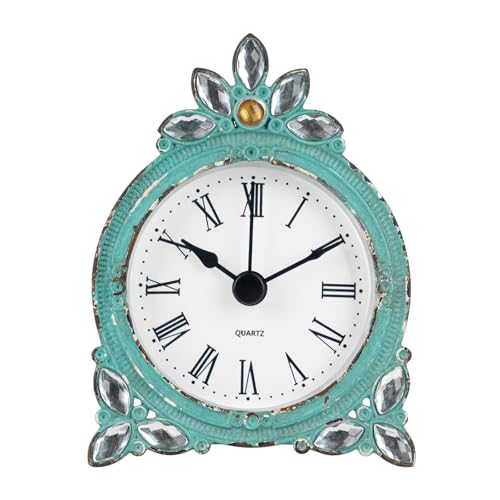
NIKKY HOME Vintage Pewter Quartz Mini Table Clock with Crystal Shining Rhinestone, 2.87 x 1.37 x 3.87 Inches, Aqua
💎【QUALITY & MEASUREMENT】- The top-grade crystal desk clock is made from durable pewter & bling rhinestone unlike cheap,…
As an affiliate, we earn on qualifying purchases.
As an affiliate, we earn on qualifying purchases.
Conclusion
Now that you’ve seen these inspiring rustic cabin tiny homes, it’s clear that big dreams can fit into small spaces. With a little creativity and a love for nature, you can craft a cozy retreat that feels just right. Remember, sometimes the best things come in tiny packages—so don’t be afraid to think outside the box. Your perfect rustic getaway is just a design away, waiting for you to take the plunge and make it real.

JEEDESON Solid Bamboo Hardwood Flooring Planks, Light Honey, 37.8" x 3.78" x 0.6" Tongue and Groove Flooring, Easy Floating Floor for Living Room Bedroom& Study Room (20 pcs Covers 20.6 Sq Ft)
Jeedeson Natural Carbonized Bamboo Flooring Jeedeson bamboo flooring is crafted from 100% natural bamboo,Each plank features slight variations…
As an affiliate, we earn on qualifying purchases.
As an affiliate, we earn on qualifying purchases.

EVOLVE Interior Paint & Primer, Eggshell (Cloud White), 1 Gallon – One-Coat Coverage, Excellent Hide, Low VOC, Low Odor, Washable Paint for Walls, Doors & Trim
PAINT + PRIMER IN ONE: Evolve’s paint-and-primer formula helps you get great coverage from the start, sealing your…
As an affiliate, we earn on qualifying purchases.
As an affiliate, we earn on qualifying purchases.