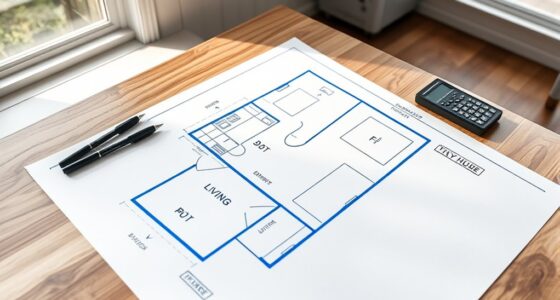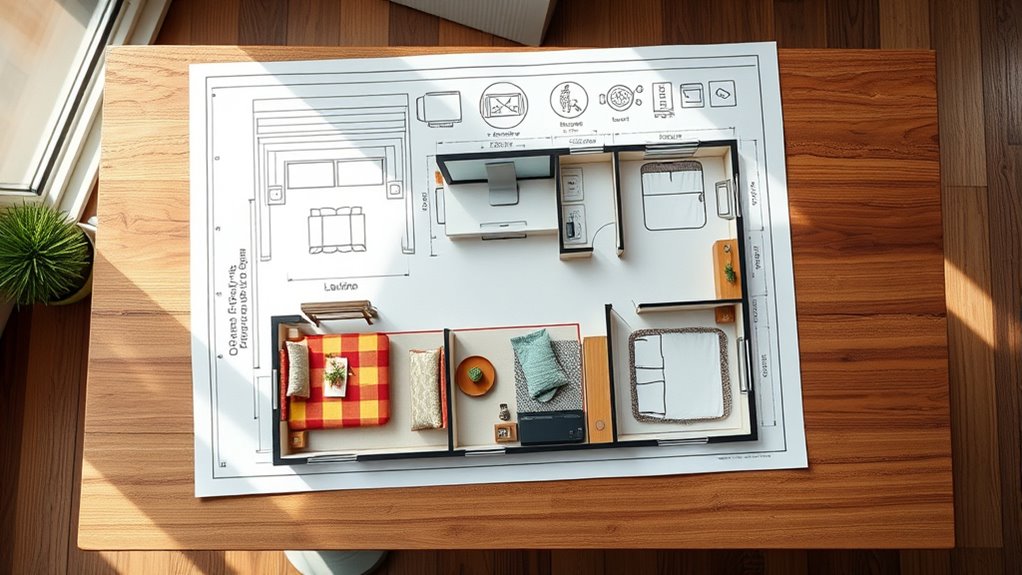
To create a floor plan for your tiny house, start by focusing on functionality and flow, choosing multi-purpose furniture to save space. Keep your layout open to maximize natural light and utilize vertical storage for organization. Be sure to check your local zoning laws to stay compliant. Balance design with your lifestyle needs, ensuring each zone serves its purpose without feeling cramped. Continue exploring for tips to optimize your tiny house layout effectively.
Key Takeaways
- Assess your lifestyle needs and prioritize essential spaces for functionality and flow.
- Use multi-purpose furniture and vertical storage to maximize limited space efficiently.
- Keep the layout open and incorporate natural light to create an airy, spacious atmosphere.
- Research local zoning laws and building codes to ensure your design complies legally.
- Balance aesthetic preferences with practical requirements and regulatory constraints for a harmonious design.

Are you wondering how to make the most of limited space in a tiny house? Crafting an effective floor plan begins with understanding how to optimize every inch of your small space. Start by considering interior design principles that focus on functionality and flow. Since space is at a premium, choose furniture and storage solutions that serve multiple purposes. For example, a sofa bed or a fold-out table can free up space during the day and provide comfort at night. Keep the layout open to maximize natural light and create an airy feel, which makes even the smallest areas seem larger. Using vertical space for shelves or hanging storage adds extra room without cluttering the floor. When planning your interior design, prioritize ease of movement and guarantee each zone has a clear purpose. This approach helps prevent your tiny house from feeling cramped or chaotic.
Another integral aspect to think about is zoning regulations. Before finalizing your floor plan, check local zoning laws and building codes. These regulations can dictate the minimum square footage, ceiling heights, or even specific design features you must include or avoid. Ignoring zoning rules can lead to costly setbacks or legal issues down the road. It’s best to research upfront so you can design a compliant space from the start. If you’re working with a builder or architect, share these regulations early in the planning process. They’ll help you craft a floor plan that maximizes your space within legal boundaries. Remember that some zones might have restrictions on certain features, such as permanent foundations or sewage hookups, so plan accordingly. Incorporating innovative design solutions like high-performance projectors can also enhance your tiny house experience without taking up additional space.
When you combine smart interior design with a thorough understanding of zoning regulations, you guarantee your tiny house is both functional and compliant. Think about how each room or zone connects to the next, maintaining a smooth progression that enhances livability. Use open-plan concepts where possible, but also consider privacy needs—perhaps a sliding door or fold-away wall can help create flexible spaces. Keep in mind your lifestyle and daily routines, making sure that the layout supports your activities comfortably. With careful planning, you can create a floor plan that feels spacious, meets legal requirements, and reflects your personal style. Remember, the key lies in balancing efficient use of space with adherence to regulations, so you can enjoy your tiny house without worry.

COMAX Futon Sofa Bed, 4‑in‑1 Convertible Sofa Bed, Folding Boneless Couches for Living Room, Fold Out Small Foldable Loveseat Floor Sleeper Comfy Mattress Lounge Space‑Saving, Black
Versatile 4-in-1 Functionality: Ingeniously designed with two connected foam seats that easily unfold into a spacious sofa bed;…
As an affiliate, we earn on qualifying purchases.
As an affiliate, we earn on qualifying purchases.
Frequently Asked Questions
What Are the Best Tools for Designing Tiny House Floor Plans?
You should consider using virtual modeling tools like SketchUp or Sweet Home 3D to design your tiny house floor plan. These programs allow you to visualize space and make adjustments easily. Additionally, they help with material selection by showing different finishes and textures. Using these tools, you can experiment with layouts, optimize space, and choose the best materials, ensuring your tiny house is both functional and stylish.
How Do I Incorporate Sustainable Features Into My Tiny House Layout?
You can incorporate sustainable features into your tiny house layout by planning for solar integration, such as placing panels where they get maximum sun exposure. Use green materials like reclaimed wood and eco-friendly insulation to reduce your environmental impact. Design windows strategically for natural lighting and ventilation, minimizing energy use. Prioritize space-efficient layouts that support these features, ensuring your tiny house is eco-friendly and energy-efficient while maximizing comfort and functionality.
What Are Common Zoning or Building Code Restrictions for Tiny Houses?
Ever wonder if your tiny house will fit within local rules? Zoning regulations and building codes are your main hurdles. You need to verify if tiny houses are permitted on your property, if there’s a minimum size requirement, or if you need special permits. Building codes cover safety standards like electrical, plumbing, and insulation. Always consult your city or county to avoid surprises and ensure your tiny home complies with all restrictions.
How Can I Optimize Storage Space in a Small Footprint?
You can optimize storage space by integrating smart storage solutions like built-in shelves, under-stair compartments, and multi-functional furniture. Focus on furniture placement that maximizes open areas and minimizes clutter, such as choosing fold-away beds or tables that double as storage. Use vertical space for hanging storage or wall-mounted cabinets, and keep frequently used items accessible. These strategies help you make the most of a small footprint without sacrificing comfort.
What Are Cost-Effective Ways to Customize My Tiny House Design?
You can customize your tiny house affordably by choosing budget-friendly materials like reclaimed wood or vinyl flooring, which save costs without sacrificing style. Embrace DIY customization by painting walls yourself, building your own furniture, and adding personal touches like decor or shelving. These affordable materials and hands-on projects help you create a unique, functional space that reflects your personality while keeping costs low.

Homaterial 5 Tier Wall Shelf Unit, Small White Vertical Floating Shelf-Narrow Decorative Wall Mount Modern Wall Decor Shelves for Bedrooms, Living Rooms
Versatile Wooden Wall Shelf: This is ideal for small space to help you stay organized and keep everything…
As an affiliate, we earn on qualifying purchases.
As an affiliate, we earn on qualifying purchases.
Conclusion
Now that you know how to create your tiny house floor plan, you’re one step closer to turning your dream into reality. Remember, a well-thought-out layout maximizes your space and makes daily living a breeze. Can you imagine waking up in your perfectly designed tiny home, feeling cozy and organized? With your newfound knowledge, you’re ready to design a space that truly fits your lifestyle—so go ahead and start sketching your ideal tiny house today!

TEMI Small Computer Desk Folding Table – 35.8" Foldable Office Desk, No Assembly, Perfect for Small Spaces in Bedroom, Dorm, or Apartment, Portable Mini Desk or Study Table with Compact Design, Brown
👍𝗡𝗢 𝗔𝗦𝗦𝗘𝗠𝗕𝗟𝗬 𝗥𝗘𝗤𝗨𝗜𝗥𝗘𝗗 – 𝗥𝗘𝗔𝗗𝗬 𝗧𝗢 𝗨𝗦𝗘 — Enjoy the convenience of a folding table that arrives fully…
As an affiliate, we earn on qualifying purchases.
As an affiliate, we earn on qualifying purchases.

ALAMEDADT 36'' x 84'' Glass Barn Door and 6.6 Ft Hardware Kit Included, MDF White Barn Door Slab with Frosted Glass, PVC Surface, Combined with Handle and Floor Guide-Assembly Required, White
[MDF Material]: With CARB P2 certification, the main component is pine wood and a small amount of other…
As an affiliate, we earn on qualifying purchases.
As an affiliate, we earn on qualifying purchases.