
Managing your money as a tiny house nomad means sticking to a clear budget, tracking all expenses, and prioritizing essentials like fuel, maintenance, and groceries. Automate savings and build an emergency fund to handle unexpected costs or income fluctuations. Use secure digital banking tools and reputable apps for real-time expense tracking. Planning ahead for taxes and safeguarding financial information keeps you protected. Keep exploring for practical tips to stay financially healthy on the road.
Key Takeaways
- Create a detailed budget prioritizing essentials, and track all expenses to stay aligned with your financial goals.
- Build and maintain an emergency fund covering 3-6 months of living expenses for unexpected costs.
- Automate savings and allocate income for taxes, especially with irregular or freelance earnings.
- Use secure digital banking tools and budgeting apps to monitor transactions and protect financial information.
- Plan for variable costs by adjusting your budget as you change locations and encounter different expenses.
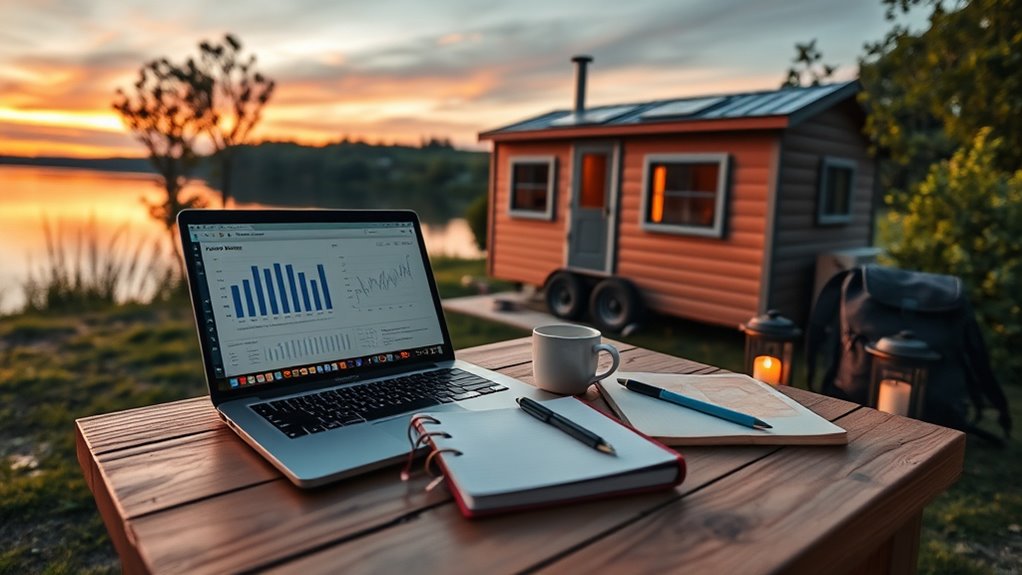
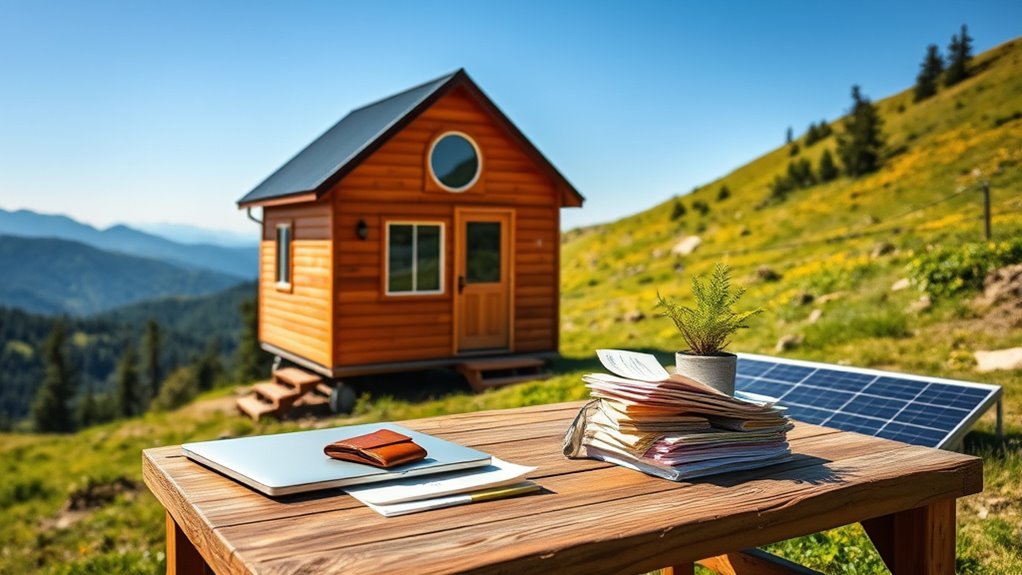
Living as a tiny house nomad offers incredible freedom, but managing your money on the move requires careful planning. To stay financially secure, you need solid financial planning that accounts for irregular income, variable expenses, and unexpected costs. Start by evaluating your current financial situation and setting clear goals. Knowing exactly how much you need monthly helps you create a realistic budget that keeps your travels sustainable. Budgeting strategies become essential when every dollar counts, especially since you won’t have a traditional paycheck or steady income. Track your expenses diligently, distinguishing between essentials like fuel, maintenance, and groceries, and discretionary spending such as entertainment or souvenirs. This awareness allows you to adjust your spending habits proactively, avoiding overspending and ensuring you always have funds for emergencies.
Since your lifestyle involves frequent changes in location, it’s also smart to maintain an emergency fund. Aim to save at least three to six months’ worth of living expenses. This safety net can cover unforeseen repairs, health issues, or sudden changes in income. Automating savings can make this easier—you can set up automatic transfers to a dedicated account whenever you receive income or at regular intervals. This way, saving becomes a consistent part of your financial routine, not an afterthought. Additionally, consider leveraging digital tools or apps designed for budgeting on the go. Many of these platforms sync with your bank accounts and credit cards, providing real-time insights into your spending and helping you stick to your financial plan.
Managing money while traveling also involves understanding your income sources. If you work remotely, freelance, or run a side business, keep detailed records of your earnings and expenses. This clarity ensures you stay on top of taxes, avoid penalties, and can plan for tax season well in advance. It’s wise to set aside a portion of your income for taxes so you’re not caught off guard later. When it comes to handling cash versus digital payments, aim to keep your financial transactions secure. Use reputable banking apps, enable two-factor authentication, and avoid carrying large amounts of cash. Keeping your financial information safe is as important as managing your spending. Additionally, understanding the importance of contrast ratio in display devices can help you appreciate the value of quality visuals when choosing portable tech for your travels.
Ultimately, your success as a tiny house nomad depends on disciplined financial planning and smart budgeting strategies. By understanding your financial landscape, tracking your expenses, and preparing for emergencies, you’ll be able to enjoy the freedom of the open road without the stress of money worries. Staying organized and proactive ensures your adventurous lifestyle remains sustainable and fulfilling without sacrificing financial stability.

Personal Finance and Budgeting for Teens: Simple strategies to develop smart spending habits, budget effectively, and invest wisely for financial independence and a confident mindset.
As an affiliate, we earn on qualifying purchases.
As an affiliate, we earn on qualifying purchases.
Frequently Asked Questions
How Do Tiny House Nomads Handle Health Insurance Costs?
You handle health insurance costs by exploring various health insurance options tailored for nomads, such as short-term plans or Medicaid in your state. You prioritize budget healthcare planning by comparing plans carefully and considering high-deductible options paired with Health Savings Accounts (HSAs). Staying flexible and researching coverage in different areas helps you minimize expenses, ensuring you’re protected without overspending while living your tiny house lifestyle on the move.
What Are the Best Ways to Save on Travel Expenses?
Think of your travel budget as a treasure chest—you want to keep it full. To do that, hunt for camping discounts, which act like hidden gems along your route. Prioritize fuel efficiency, like charting a course through calm waters, to save on fuel costs. Pack smart, plan ahead, and stay flexible with your itinerary to maximize savings and make every mile more affordable.
How Can I Build an Emergency Fund While Nomadic?
You can build an emergency fund by implementing solid budgeting strategies and tracking your expenses carefully. Set aside a fixed percentage of your income each month, even if it’s small, and automate transfers to a dedicated savings account. Keep a close eye on your spending, identify areas to cut back, and prioritize saving. Consistency and discipline are key to growing your emergency fund while living a nomadic lifestyle.
What Tax Considerations Exist for Tiny House Travelers?
As a tiny house traveler, you should consider tax deductions related to your mobile lifestyle, such as expenses for your tiny home, travel, and maintenance. Keep in mind residency requirements, which vary by state, affecting your tax obligations and filing status. Staying organized with receipts and records is essential. Consult a tax professional to make sure you comply with local laws and maximize deductions, avoiding surprises during tax season.
How Do I Manage Income Consistency on the Road?
To manage income consistency on the road, you should prioritize remote work opportunities that offer steady pay. Create flexible budgeting strategies that account for variable expenses and income fluctuations. Track your earnings regularly and set aside a savings buffer for lean months. By staying proactive with your finances, you’ll maintain stability and enjoy your nomadic lifestyle without stress, ensuring you can handle unexpected costs and keep your journey smooth.
Conclusion
Managing your money as a tiny house nomad isn’t just about saving; it’s about embracing a mindset of flexibility and intentionality. Some believe that minimalist living naturally leads to financial freedom, but others argue that without careful planning, expenses can sneak up. By staying mindful of your spending and regularly reassessing your budget, you can challenge this theory and truly make tiny living work for you—proving that financial independence requires both simplicity and strategic foresight.