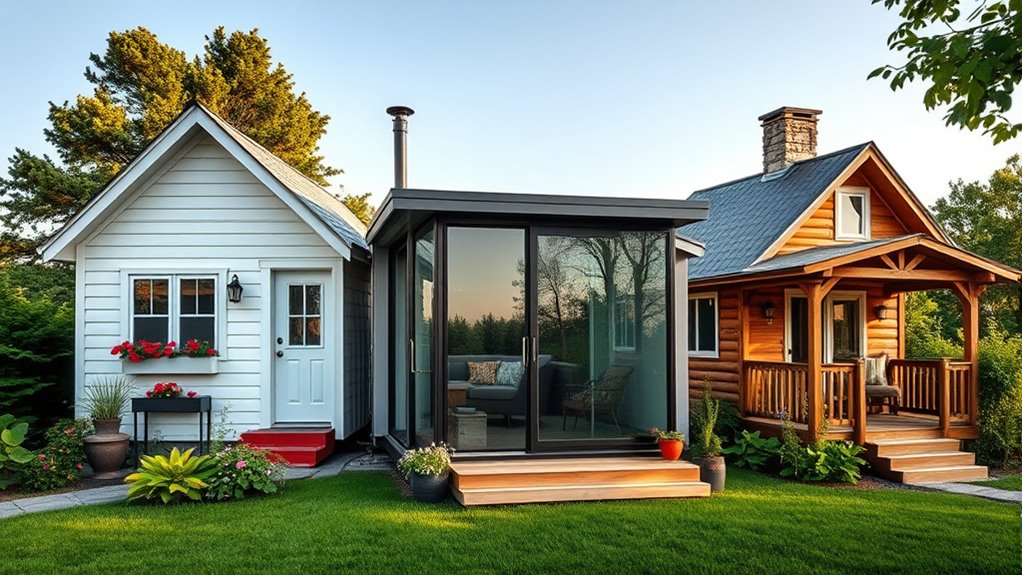
Choosing between cottage, container, and cabin tiny homes depends on your sustainability goals, climate, and style preferences. Cottage tiny homes offer cozy, traditional insulation perfect for colder areas and eco-friendly materials. Container homes are durable, modern, and easy to customize, with steel that can be eco-friendly when well-insulated. Cabin tiny homes blend rustic charm but rely heavily on insulation for energy efficiency. Keep exploring to find out how each style matches your lifestyle and eco-conscious priorities.

Get compact home essentials delivered free with Prime
- Fast, free delivery on millions of items
- Prime Video, Amazon Music and more included
- Member-only deals all year
Key Takeaways
- Cottage tiny homes excel in insulation and traditional craftsmanship, ideal for colder climates and cozy aesthetics.
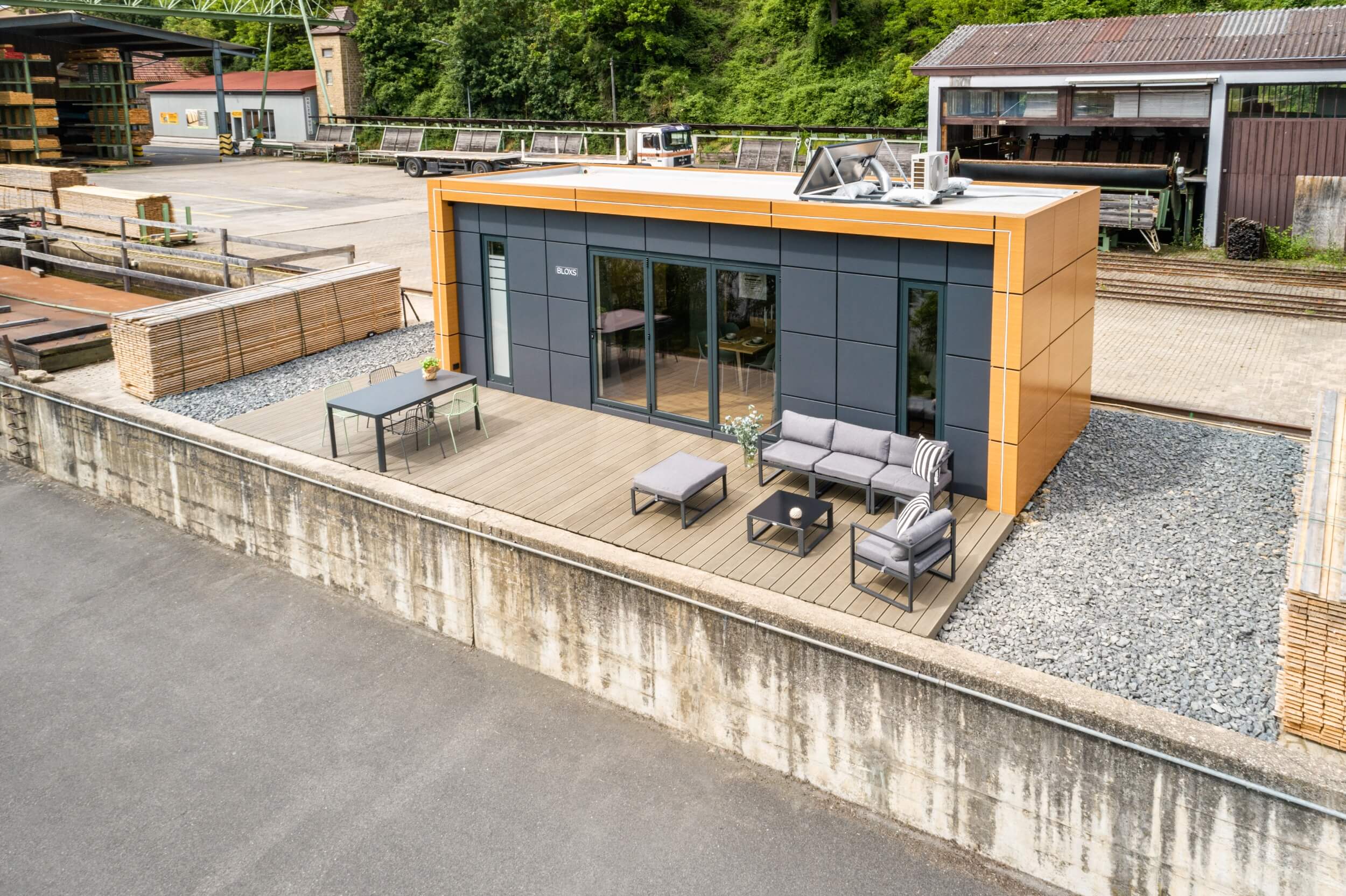
- Container tiny homes offer durability, modern design, and easier customization, with energy efficiency reliant on proper insulation.
- Cabin tiny homes blend rustic charm with natural surroundings, with energy performance depending on insulation and window quality.
- Sustainability varies across styles, with eco-friendly materials and energy-efficient features reducing environmental impact.
- Climate adaptability and insulation quality are key factors influencing energy efficiency and comfort in all tiny home types.
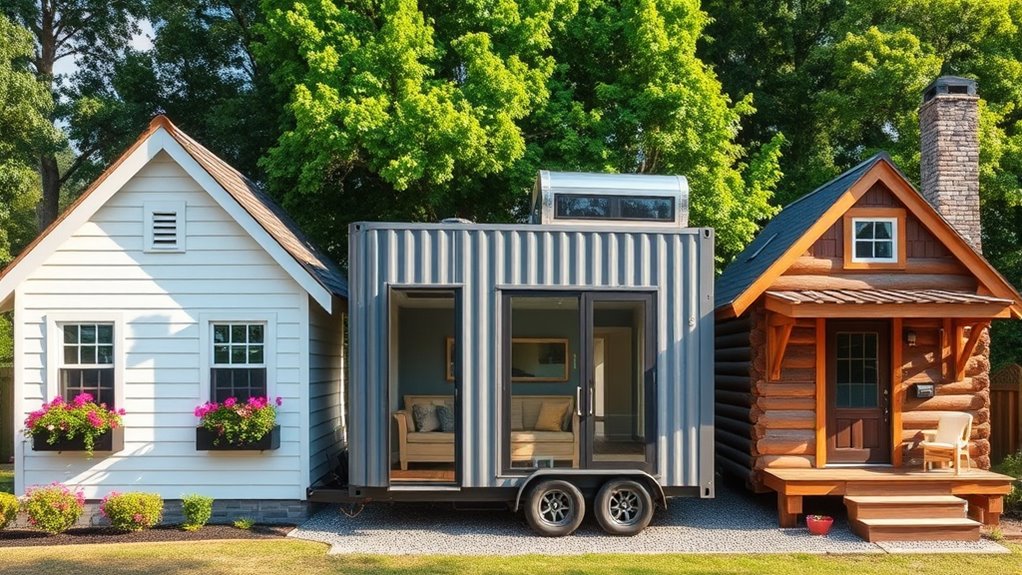
Are tiny homes the right choice for your lifestyle? If you’re considering downsizing or seeking a minimalist approach, you’ll want to explore how different tiny home styles align with your values and needs. One major factor to weigh is sustainability. Many tiny homes are built using sustainable materials, which means choosing options like reclaimed wood, recycled metal, or eco-friendly insulation can considerably reduce your environmental footprint. This focus on sustainable materials not only benefits the planet but also often results in healthier indoor air quality and lower long-term maintenance costs. When it comes to energy efficiency, each type of tiny home offers unique advantages. For instance, cottage-style tiny homes tend to have better insulation due to traditional building techniques, making them more energy-efficient in colder climates. Container tiny homes, on the other hand, leverage the inherent thermal mass of steel, which can be advantageous if properly insulated, helping you maintain consistent indoor temperatures and reduce energy bills. Cabin tiny homes often emphasize natural surroundings and rustic charm, but their energy efficiency depends largely on the quality of insulation and windows used during construction. In all cases, integrating energy-efficient appliances, LED lighting, and solar panels can further reduce your energy consumption, no matter the style. Additionally, understanding the importance of battery maintenance for off-grid solutions can enhance your energy independence and efficiency.
When comparing these options, consider how each aligns with your sustainability goals. Cottage tiny homes often feature traditional craftsmanship and the use of eco-friendly materials, making them ideal if you value a cozy, natural aesthetic. Container homes appeal to those who prioritize durability and modern design; they’re also quicker to build and can be customized more easily. Cabin tiny homes tend to evoke a rustic charm and are perfect if you want a retreat that blends seamlessly into natural surroundings. However, the construction process and insulation quality heavily influence their energy efficiency. Overall, the choice comes down to your personal priorities—whether it’s maximizing sustainability through materials, reducing energy costs, or creating a specific aesthetic. Think about how much effort you’re willing to put into insulation, heating, and cooling systems, as that will impact your overall energy efficiency. Also, consider your climate and how each tiny home type can adapt to it. In essence, selecting the right tiny home involves evaluating the sustainability of materials used and how well it conserves energy, ensuring your living space aligns with your eco-conscious lifestyle and budget.
As an affiliate, we earn on qualifying purchases.
Frequently Asked Questions
What Are the Zoning Restrictions for Each Tiny Home Type?
You need to check zoning flexibility and legal restrictions for each tiny home type. Cottage tiny homes often face stricter zoning rules, limiting where you can place them. Container homes may have more flexibility, especially if classified as modular or portable structures. Cabin tiny homes usually follow residential zoning codes, but legal restrictions vary widely depending on your location. Always consult local authorities to verify compliance before building or placement.
How Does Insulation Differ Among Cottage, Container, and Cabin Homes?
You might worry about insulation quality, but each tiny home type uses different materials for ideal thermal efficiency. Cottage homes often feature high-quality fiberglass or spray foam insulation, while container homes rely on rigid foam or spray foam, which withstands moisture and temperature swings well. Cabin homes typically use natural materials like wool or cellulose. Your choice impacts energy savings and comfort, so consider which insulation materials suit your climate and lifestyle best.
Which Tiny Home Type Offers the Best Mobility Options?
You’ll find that container tiny homes offer the best mobility options, giving you greater transportation versatility and travel flexibility. Their standardized size and lightweight design make them easier to tow or transport via truck, trailer, or ship. Unlike cottages or cabins, which are often built on permanent foundations, containers are designed for easy relocation, so you can move your home whenever you want, without much hassle or added cost.
What Are the Typical Costs Associated With Each Tiny Home Style?
Did you know that tiny homes typically cost between $30,000 and $60,000? For each style, you’ll find varying costs, with affordability often boosted by options like affordable financing and design customization. Cottages tend to be pricier due to their intricate finishes, while containers might be cheaper upfront. Cabins fall somewhere in between. Your choice depends on budget, desired features, and how much you want to personalize your tiny home.
How Do Maintenance Requirements Vary Between These Tiny Home Types?
You’ll find maintenance varies based on the tiny home style. With cottages, you’ll need to regularly care for garden landscaping and exterior paint, while interior design updates keep the space fresh. Container homes require less exterior upkeep but might need more attention to insulation and electrical systems. Cabins demand seasonal upkeep, especially around roofing and foundation. Overall, focus on routine inspections and upgrades to keep your tiny home in top shape.
Conclusion
No matter which tiny home style you choose—cottage, container, or cabin—you’re opening the door to a cozy, simplified lifestyle. Each offers a unique charm, like a hidden treasure waiting to be discovered. Whichever you pick, you’re embracing a new adventure that gently steers you toward freedom and tranquility. So, keep your heart open to the possibilities, and trust that the perfect tiny home will whisper its sweet invitation when the time is right.
Halloween Picks
halloween
As an affiliate, we earn on qualifying purchases.