To enhance mobility and comfort in your tiny house van, integrate efficient solar power to meet your energy needs, reducing reliance on external sources. Use smart storage solutions like wall-mounted shelves and multi-purpose furniture to maximize space and keep things organized. Proper insulation and ventilation improve comfort across weather conditions and prevent issues like mold. Pair these features with energy-efficient appliances to create a sustainable, cozy living space on the move—discover how to make it all work smoothly.

Get compact home essentials delivered free with Prime
- Fast, free delivery on millions of items
- Prime Video, Amazon Music and more included
- Member-only deals all year
Key Takeaways
- Incorporate lightweight, durable materials in insulation and furniture to enhance mobility and ease of transport.
- Use smart storage solutions like wall-mounted shelves and fold-out furniture to maximize space and accessibility.
- Install solar panels and energy-efficient appliances to ensure off-grid power while maintaining comfort.
- Ensure proper ventilation and insulation for temperature regulation and humidity control during travel.
- Design flexible layouts with multi-purpose furniture to adapt to different environments and optimize living space.
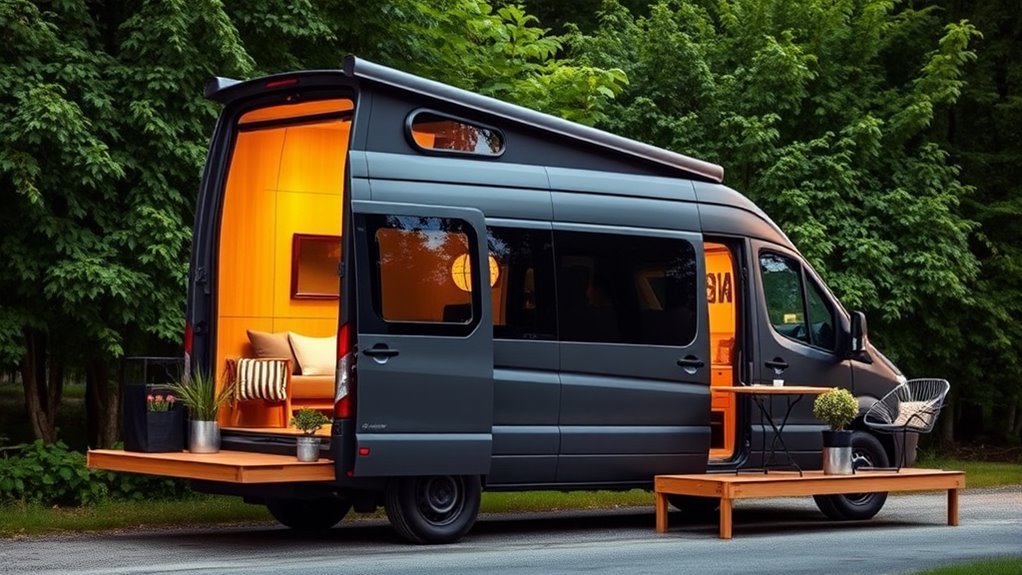
Converting a van into a tiny house offers a flexible and affordable way to embrace a mobile lifestyle. With a well-thought-out plan, you can turn a simple vehicle into a cozy, functional space that suits your needs. One of the key aspects of this transformation is incorporating alternative energy sources. Solar panels are an excellent choice, allowing you to harness the sun’s power to generate electricity for lighting, appliances, and charging devices. By installing a reliable solar setup, you reduce reliance on external power sources and increase your independence on the road. It’s vital to consider the capacity of your system to meet your energy demands and include a backup power option, like a portable generator, for cloudy days or higher energy needs.
Transform your van into a cozy, off-grid tiny home with solar power and smart energy solutions for ultimate independence.
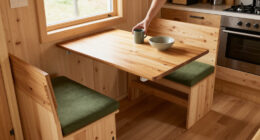
When designing your tiny house van, you’ll also need smart storage solutions to maximize space and maintain an organized environment. Vertical storage options, such as wall-mounted shelves and overhead compartments, help free up floor space and keep essentials within easy reach. Under-bed storage can hide away bulky items or seasonal gear, while multi-purpose furniture, like fold-out tables and convertible seating, offers additional storage and functionality. Using lightweight, durable materials for your storage units ensures that your conversions stay manageable and safe during transit. Remember, the key is to balance accessibility with security; everything should be secured properly to prevent shifting while driving. Incorporating proper insulation** and ventilation** is essential to enhance comfort and energy efficiency.
Another aspect to consider is integrating energy-efficient appliances and fixtures to keep your energy consumption low. Compact refrigerators, LED lighting, and low-flow water systems not only save space but also extend your energy and water supplies. When it comes to alternative energy, pairing solar power with energy-efficient devices greatly enhances your self-sufficiency. Furthermore, investing in portable or modular storage solutions allows you to customize your space over time, adapting to your evolving needs and making maintenance easier.
Your conversion should also prioritize insulation and ventilation to keep the interior comfortable regardless of weather conditions. Proper insulation reduces the load on your energy system, making your alternative energy setup more effective. Adequate ventilation ensures fresh air circulation and helps control humidity levels, preventing mold and mildew. Combining these features with thoughtful storage solutions and efficient energy use creates a tiny house van that’s both comfortable and sustainable—perfect for living on the move without sacrificing convenience or comfort.
solar panel kit for van conversion
As an affiliate, we earn on qualifying purchases.
As an affiliate, we earn on qualifying purchases.
Frequently Asked Questions
What Is the Average Cost of Converting a Van Into a Tiny House?
The average cost of converting a van into a tiny house ranges from $10,000 to $40,000. Your cost breakdown depends on materials, appliances, and customization choices. To stay within your budget, focus on essential features first and plan for upgrades later. Proper budget planning helps you avoid surprises and guarantees you cover all necessary expenses without overspending. This way, you can create a comfortable, functional tiny house van tailored to your needs.
How Long Does a Typical Tiny House Van Conversion Take?
A typical tiny house van conversion takes about 4 to 8 weeks, depending on your conversion timeline and planning phase. You’ll spend the first few weeks organizing your ideas, designing your layout, and gathering materials. Once you start the actual conversion, expect 3 to 6 weeks for construction, insulation, wiring, and finishing. Staying organized and sticking to your plan helps make certain your project stays on schedule.
What Are the Best Vans for Conversions in Terms of Size and Reliability?
For conversions, you’ll want a van with the right size and vehicle reliability. The Mercedes Sprinter offers spaciousness and durability, making it ideal for comfort and storage. The Ford Transit strikes a balance between size and dependability, perfect for various layouts. The RAM ProMaster is also dependable and provides a wide interior for customization. Choose a van that matches your space needs and guarantees long-term reliability for smooth adventures.
Are There Any Legal Restrictions for Living in a Converted Van?
You need to check local regulations before living in your converted van. Legal permits might be required, depending on where you plan to park or stay overnight. Parking restrictions can vary widely, so make sure you’re allowed to park in certain areas without fines or towing. Always research city or state laws to avoid issues, and consider designated RV or camper spots that accommodate van dwellers legally and comfortably.
How Do You Ensure Proper Insulation and Ventilation in Small Spaces?
You guarantee proper insulation and ventilation by installing high-quality thermal insulation materials like foam board or spray foam to keep your space comfortable. Manage airflow with vents, roof vents, or small fans to promote fresh air circulation. Sealing gaps around windows and doors also prevents drafts, while opening vents or windows periodically maintains good airflow management. Combining insulation with strategic ventilation keeps your small space cozy and fresh at all times.
Conclusion
Thinking about converting a van into a tiny house? It’s a perfect way to combine mobility with comfort, giving you freedom and coziness wherever you go. With a little creativity and effort, you can turn a simple van into a home on wheels that suits your lifestyle. So, why settle for less when you can have a customized, comfortable tiny house that’s always ready for your next adventure? Isn’t it time you started your journey?
Fall Picks
fall essentials
As an affiliate, we earn on qualifying purchases.