To make a permanent foundation for your tiny house, start by evaluating your soil conditions and choosing the right materials, like concrete or treated wood, that suit your climate. Proper excavation, leveling, and anchoring are key to ensuring stability and preventing shifting over time. Soil stabilization techniques can help if your ground is unstable. Investing in quality installation and following local codes will provide durability and safety. Keep exploring to learn more about creating a lasting, secure foundation for your tiny home.
Key Takeaways
- Choose durable, weather-resistant materials like concrete or treated wood suitable for local climate and soil conditions.
- Properly prepare the soil through excavation, leveling, and stabilization to ensure a firm, stable base.
- Select an appropriate foundation type, such as poured slab or pier and beam, based on site characteristics.
- Ensure correct installation techniques, including anchoring and insulation, to prevent shifting, cracking, and frost damage.
- Consult professionals to ensure compliance with local building codes and optimize foundation longevity and safety.

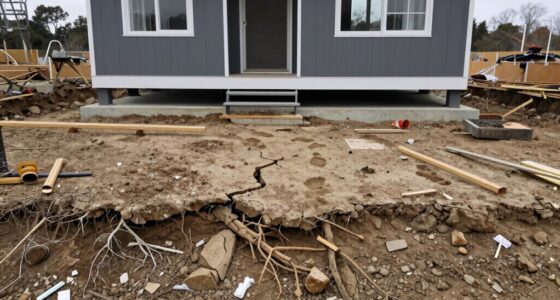
Building a permanent foundation for your tiny house guarantees stability and long-term durability. When you’re investing in a structure that you want to last for years, paying attention to soil stabilization and choosing the right foundation materials are essential steps. Soil stabilization involves enhancing the ground’s ability to support your tiny house, preventing shifting or settling over time. You might need to add lime, cement, or other stabilizing agents to improve soil strength, especially if your site has clay, loose soil, or organic matter. Proper soil preparation ensures that your foundation rests on a firm, stable base, reducing the risk of future problems like cracks or uneven settling.
Proper soil stabilization ensures a stable, long-lasting foundation for your tiny house.
Choosing the right foundation materials is equally important. You’ll want materials that are durable, weather-resistant, and suitable for your climate and soil conditions. Common foundation materials include concrete, concrete blocks, treated wood, and steel. Concrete is often the go-to choice because of its strength and longevity. If you opt for concrete, you might choose a poured slab or pier and beam foundation, depending on your site’s characteristics. Poured concrete slabs provide a solid, level base that’s excellent for stability, while pier and beam systems elevate your tiny house slightly off the ground, allowing for ventilation and easier access to plumbing.
Treated wood can also be used, especially for smaller or lightweight foundations, but it requires proper treatment against rot and pests. Steel piers or beams are another option, offering high strength and resistance to shifting. Whichever foundation materials you select, make sure they’re compatible with your soil conditions and local building codes. You should also consider insulation options to prevent frost heave and thermal bridging, which can affect your tiny house’s stability over time.
In addition to the materials themselves, pay attention to how you install your foundation. Proper excavation, leveling, and anchoring are necessary for a long-lasting result. If your soil isn’t stable or well-compacted, your foundation may shift or crack, compromising your entire tiny house. Investing in professional advice or experienced contractors can help you get it right from the start. Remember, a well-constructed foundation isn’t just about supporting your tiny house; it’s about creating a safe, secure environment that withstands the test of time and weather. When you focus on soil stabilization and selecting the right foundation materials, you’re setting your tiny house up for a future of stability and peace of mind.

As an affiliate, we earn on qualifying purchases.
Frequently Asked Questions
How Much Does a Permanent Tiny House Foundation Typically Cost?
A permanent tiny house foundation usually costs between $5,000 and $15,000. Your expenses depend on foundation materials like concrete or pier blocks and site preparation, including leveling and permits. You’ll need to budget for excavation, gravel, and reinforcement. Costs vary based on size and location, but investing in durable materials and proper site prep guarantees stability and longevity for your tiny house’s foundation.
Can I Build a Permanent Foundation Myself or Need a Contractor?
Building a permanent foundation is like planting a sturdy tree—you need the right tools and expertise. You can do it yourself if you’re comfortable with DIY considerations like grading, pouring concrete, and compliance with local codes. However, hiring a contractor ensures expert craftsmanship and saves time. Carefully select your contractor, checking references and experience, because this foundation anchors your tiny house’s future, making it a decision worth thoughtful planning.
What Permits Are Required for Installing a Permanent Foundation?
You’ll need to check your local building codes to determine what permits are required for installing a permanent foundation. The permitting process typically involves submitting plans that detail your foundation materials and construction methods. You may need permits for excavation, footings, and the foundation itself. Contact your city or county’s building department early to make certain you follow all regulations and get the necessary approvals before starting work.
How Long Does It Take to Construct a Permanent Foundation?
You can expect construction of a permanent foundation to take about 1 to 3 weeks. The timeline varies based on foundation materials like concrete pier, slab, or crawl space, and site conditions. Factors such as weather, permits, and crew size influence the process. A well-planned project guarantees your tiny house has a solid base, with most of the work focusing on excavation, pouring, and curing to secure a durable foundation.
Is a Permanent Foundation Necessary for All Tiny House Types?
A permanent foundation isn’t necessary for all tiny house types, but it depends on your location and building codes. If you plan to stay long-term or need stability, you should consider foundation materials like concrete or pier blocks that meet local building codes. These guarantee your tiny house remains compliant and secure. Evaluate your needs and local regulations to decide whether a permanent foundation suits your tiny house project.
Conclusion
Building a permanent foundation for your tiny house guarantees stability and peace of mind. Did you know that homes on permanent foundations tend to have higher resale values and better insurance options? By investing in a sturdy base now, you’re not only creating a safe space but also boosting your property’s worth in the long run. Take the time to plan and build right—you’ll thank yourself every day, knowing your tiny house is secure and lasting.