To optimize your tiny house on wheels, choose flexible parking options like RV spots, scenic areas, or private land with proper permissions. Incorporate smart storage solutions such as built-in cabinets, multi-purpose furniture, and vertical wall units to maximize space. Solar panels and insulation boost efficiency and comfort, making your home more self-sufficient. Mobility allows you to explore different locations easily. Keep exploring to discover more tips for seamless parking and clever storage that suit your lifestyle.

Get compact home essentials delivered free — and shop member deals
- Fast, free delivery on millions of items
- Access to Prime Big Deal Days deals on October 6–7
- Prime Video, Amazon Music and more included
Key Takeaways
- Utilize designated RV parking spots with hookups or scenic areas that permit overnight parking for convenience.
- Optimize space with built-in cabinets, multi-purpose furniture, and vertical storage solutions.
- Ensure proper permissions when parking on private land or community spaces to avoid legal issues.
- Incorporate solar panels and insulation to increase self-sufficiency and reduce reliance on external utilities.
- Choose mobility options to relocate easily between urban, rural, or scenic locations for lifestyle flexibility.
Have you ever wondered if you could simplify your life while still having a comfortable home? Tiny houses on wheels make that possible, especially when you consider smart parking and storage solutions. One key aspect is making your tiny home energy-efficient, which often involves integrating solar power. With solar panels, you can generate your own electricity, reducing reliance on external power sources and lowering your utility bills. Placing solar panels on your tiny house’s roof takes advantage of the limited space and sunlight exposure, helping you stay off-grid and eco-friendly. Pairing this with effective insulation techniques keeps your home comfortable year-round, no matter where you park. Proper insulation minimizes heat loss during winter and keeps things cool in summer, so you don’t have to overuse heating or cooling devices, saving energy and money. Additionally, understanding the importance of bad lemon juice storage can help you keep your supplies fresh and safe, preventing spoilage and waste.
Discover how solar power and insulation make tiny homes on wheels energy-efficient and eco-friendly.
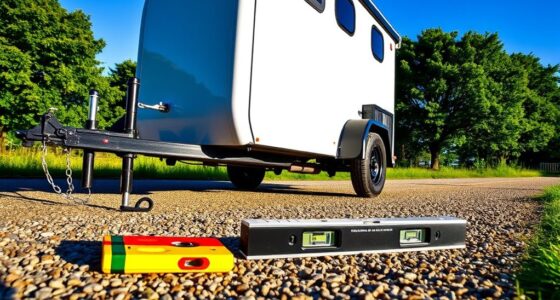
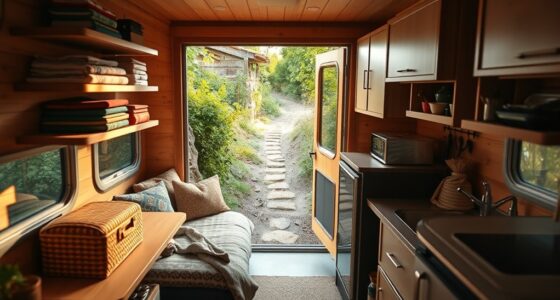
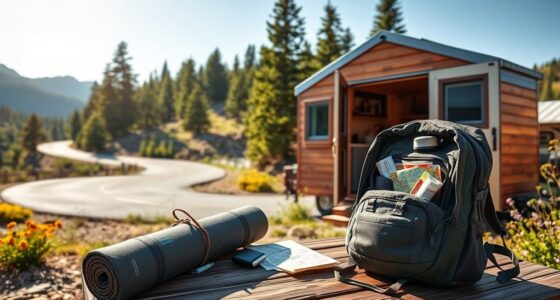
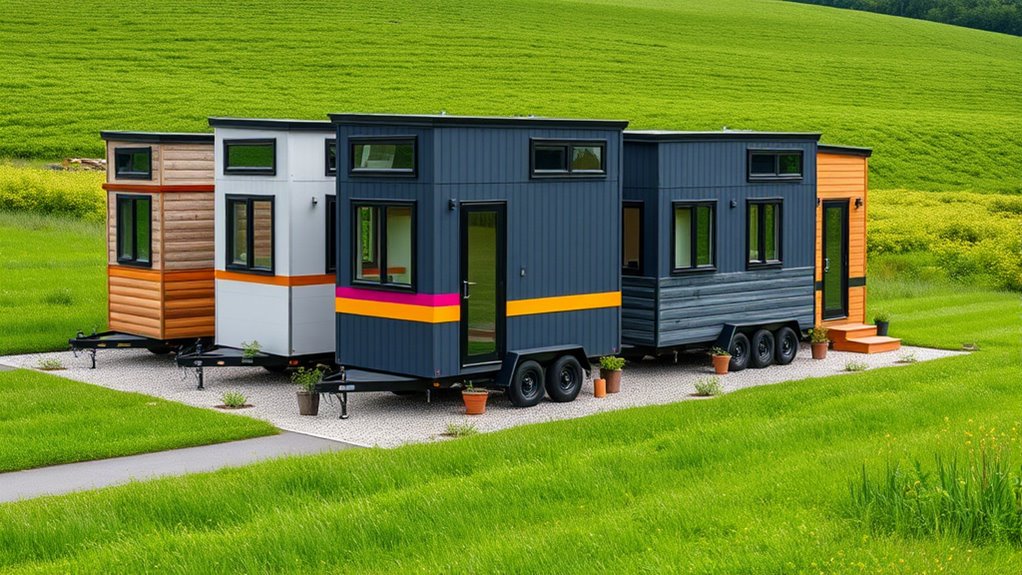
When it comes to parking your tiny house on wheels, flexibility is your best friend. You can opt for designated RV spots, which often have amenities like water and electricity hookups, or find scenic areas where overnight parking is permitted. Many tiny homeowners choose to park in community spaces or private land with permission, giving them more control over their environment. It’s important to consider local regulations and zoning laws to avoid issues down the road. Mobile tiny homes offer the advantage of moving whenever you want, so you’re not tied to one location. This mobility allows you to explore different scenic spots or urban environments without the hassle of traditional housing. Storage solutions are vital to maximize space and keep your tiny house organized. Built-in cabinets, under-bed storage, and multi-purpose furniture help you make the most of every square inch. When parking, consider portable outdoor storage options like weatherproof bins or small sheds, especially if you plan to stay in one place for a while. Some tiny homeowners use fold-away or collapsible furniture to free up space when not in use. Additionally, utilizing vertical storage on walls can free up precious floor space. By combining clever storage with insulation techniques, you can maintain a cozy and clutter-free home, even with limited space. Ultimately, parking and storage in tiny houses on wheels require careful planning and creativity. When you incorporate solar power and effective insulation, your tiny home becomes more self-sufficient and comfortable. Moving your home to new locations becomes easier, and maintaining an organized, cozy space becomes second nature. With these solutions, you can enjoy the freedom of tiny living without sacrificing comfort, convenience, or sustainability.
As an affiliate, we earn on qualifying purchases.
Frequently Asked Questions
What Are the Best Locations for Parking Tiny Houses Legally?
You should look for locations with favorable zoning laws that explicitly permit tiny houses on wheels. Avoid areas with strict community restrictions or homeowners’ association rules that ban such dwellings. Consider rural zones, designated tiny house communities, or properties with flexible zoning. Always verify local regulations and get necessary permits to guarantee you’re parking legally. Doing your homework helps you find a safe, legal spot for your tiny house on wheels.
How Can I Secure My Tiny House on Wheels From Theft?
To secure your tiny house on wheels from theft, you should install security cameras around your parking spot to monitor activity. Use sturdy lock mechanisms on doors and wheels, like hitch locks or wheel clamps, to prevent unauthorized movement. Additionally, consider anchoring your tiny house to the ground with heavy-duty anchors or chains for extra protection. These measures will help deter thieves and keep your tiny home safe.
Are There Any Height Restrictions for Parking Tiny Houses?
Did you know that most cities impose height restrictions of 13.5 to 14 feet for parking tiny houses? You must check local parking regulations because height limitations vary widely depending on the area. To avoid fines or towing, always verify the specific parking rules for your location before parking your tiny house on wheels. Staying within height limits guarantees you park legally and safely without any hassles.
How Do I Connect Utilities When Parking Temporarily?
When parking temporarily, you connect utilities by setting up temporary connections for water, electricity, and sewage. You’ll need to find nearby utility hookups or portable systems, like a water hose or generator, to supply your tiny house. Make sure to coordinate with local authorities or property owners for permission and guidelines. Using quick-connect fittings and adapters simplifies the process, ensuring you can easily disconnect when it’s time to move.
Can I Park My Tiny House on Private Property Without Permits?
You might be able to park your tiny house on private property without permits, but it depends on local zoning regulations and homeowner association rules. Always check with your city or county to guarantee you’re compliant, as some areas restrict tiny houses or require permits. Review your HOA rules carefully, since they may prohibit or limit tiny house parking. Staying informed helps you avoid fines or legal issues.
Conclusion
Now that you know the ins and outs of parking and storing tiny houses on wheels, you’re ready to conquer any challenge that comes your way. With clever solutions, your tiny home can fit into almost any space—turning even the tiniest spot into a sprawling paradise. Imagine your tiny house standing proud, like a majestic castle on wheels, ready to roll wherever life takes you. The freedom to move and park wherever you desire is truly a game-changer!
Evergreen bestsellers Picks
bestsellers
As an affiliate, we earn on qualifying purchases.