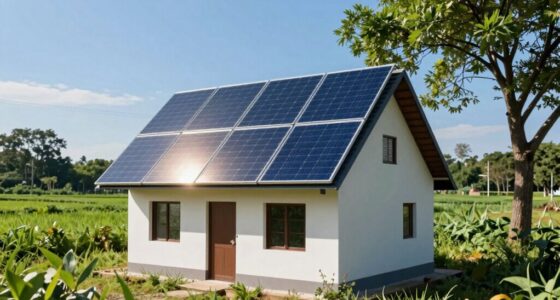
In cloudy regions, solar power still works well thanks to advances in panel tech like monocrystalline panels and improved inverters that handle diffuse light better. Proper system design, including strategic placement and shading analysis, can maximize output even on cloudy days. Battery storage helps you use excess energy during sunnier times and provides backup during darker days. Curious how to optimize your system for low-light conditions? Keep exploring for expert tips and solutions.
Key Takeaways
- Modern solar panels and inverters improve efficiency in diffuse, cloudy conditions, making solar viable in less sunny regions.
- Battery storage allows energy accumulation during sunny days for use during cloudy periods or at night.
- Proper site assessment and strategic panel placement minimize shading effects and optimize energy production in cloudy areas.
- Despite reduced efficiency, solar power can significantly lower reliance on the grid and reduce energy bills in cloudy regions.
- Regular maintenance and choosing technology suited for low-light conditions enhance system performance and longevity.

Solar power is becoming an increasingly popular way to generate clean, renewable energy for homes and businesses. If you live in a cloudy region, you might wonder how effective solar panels will be and whether investing in solar makes sense for you. One key factor to consider is battery storage. With battery storage systems, you can store excess energy generated during sunnier days and use it when the sun isn’t shining. This way, even on cloudy days or at night, you’ll have a reliable power supply. Battery storage helps smooth out the inconsistent sunlight typical of cloudy regions, ensuring you get the most from your solar investment. It also provides backup power during outages, which can be especially valuable if your area experiences frequent cloudy weather or storms.
However, shading issues are a common concern in less sunny climates. Clouds naturally reduce the amount of sunlight reaching your panels, but shading from nearby trees, buildings, or other structures can further diminish their efficiency. If shading is frequent or persistent, it can substantially cut the amount of energy your solar system produces. To address this, you’ll want to carefully plan the placement of your panels and consider using shading analysis tools during installation. Modern solar panels are designed to be more tolerant to shading, with some models capable of bypassing shaded cells, but minimizing shading remains the best way to maximize energy output. Keep in mind that even partial shading can impact the performance of the entire system, so site evaluation is an essential step before installation.
In cloudy regions, the efficiency of your solar system might be lower than in sunnier areas, but it’s still worth contemplating. Advances in panel technology, like monocrystalline panels and enhanced inverter systems, allow your system to generate electricity more efficiently under diffuse light conditions. Pairing these panels with a well-sized battery storage system ensures you can store excess energy when the sun does shine, providing power during darker days or cloudy spells. Regular maintenance and strategic placement can also mitigate some shading issues, ensuring your panels operate at their best. While you may need to adjust your expectations about energy production, a properly designed solar setup can still considerably reduce your reliance on the grid and lower your energy bills. With thoughtful planning and modern technology, solar power remains a viable option, even in regions that don’t see constant sunshine. Additionally, understanding the contrast ratio of your solar panels can help you select models that perform better in low-light conditions.
monocrystalline solar panels for cloudy regions
As an affiliate, we earn on qualifying purchases.
As an affiliate, we earn on qualifying purchases.
Frequently Asked Questions
Can Solar Panels Work Effectively During Extended Cloudy Seasons?
Yes, solar panels can still work during extended cloudy seasons, though their efficiency might decrease. You benefit from durable solar panels designed to withstand varied weather conditions, including cloud cover. To maximize energy, consider installing reliable energy storage solutions, like batteries, so you can store excess power when the sun shines. Regular maintenance guarantees durability and peak performance, helping you get the most out of your solar system even on cloudy days.
What Are the Best Solar Panel Types for Low-Light Conditions?
If you’re in a low-light area, consider solar panels made from monocrystalline silicon, which have the best solar panel materials for high low light efficiency. These panels perform better in cloudy conditions because they convert more diffuse sunlight into electricity. Look for panels specifically designed for low-light conditions, as their enhanced efficiency guarantees you generate power even during overcast days. This way, you maximize your solar system’s performance in challenging weather.
How Does Snow Affect Solar Panel Efficiency in Cloudy Regions?
Snow accumulation on your panels can reduce their efficiency by blocking sunlight. However, if you tilt your panels at a steeper angle, snow is less likely to stick, allowing it to slide off more easily. Regularly removing snow helps maintain essential performance. Keep in mind that even in cloudy regions, adjusting your panel angle is vital to maximize energy production during winter months when snow is common.
Are There Specific Maintenance Tips for Solar Panels in Cloudy Climates?
Think of your solar panels as a garden that needs regular care. To keep them shining, stick to consistent cleaning routines—gently remove dust and debris to maximize efficiency. Check panel orientation to make certain they catch every drop of diffuse sunlight on cloudy days. Regular inspections help spot dirt buildup or shading issues early, so your system continues to harness even the faintest rays, keeping your energy flow steady and reliable.
What Financing Options Are Available for Solar Installations in Cloudy Areas?
You can tap into various financing options for your solar installation in cloudy areas, like government incentives and leasing options. Government incentives often reduce your upfront costs or offer tax credits, making solar more affordable. Leasing options allow you to enjoy solar energy without high initial investments, as a third-party company owns the system and you pay a monthly fee. These options make solar accessible, even in less sunny regions.
Conclusion
Thinking about harnessing solar power in cloudy regions? Remember, even on overcast days, solar panels can generate energy, making them a smart investment. With advancements in technology, your system can perform efficiently despite the clouds. So, why settle for less sunshine when you can still benefit from solar power? Embrace the possibility—your energy needs are within reach, rain or shine. Isn’t it time you considered solar, no matter where you live?