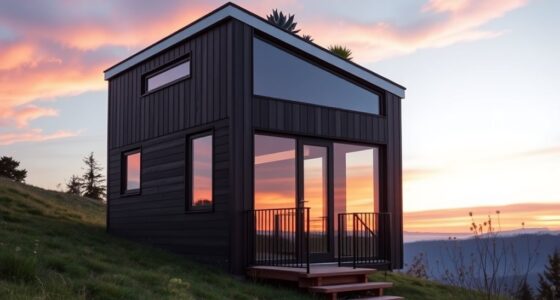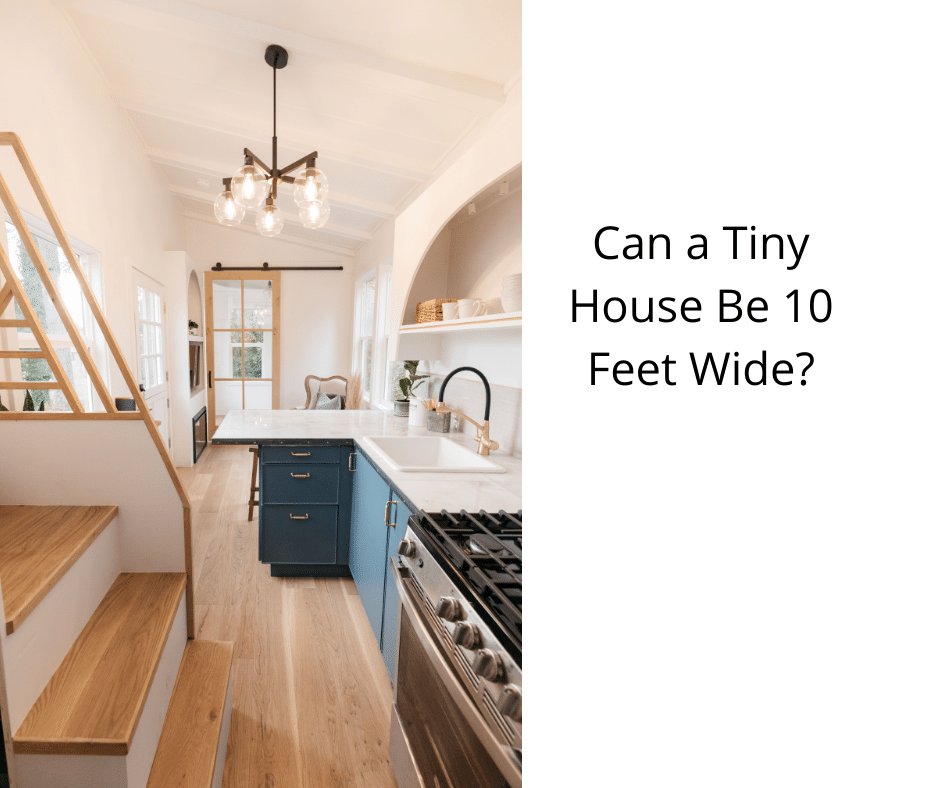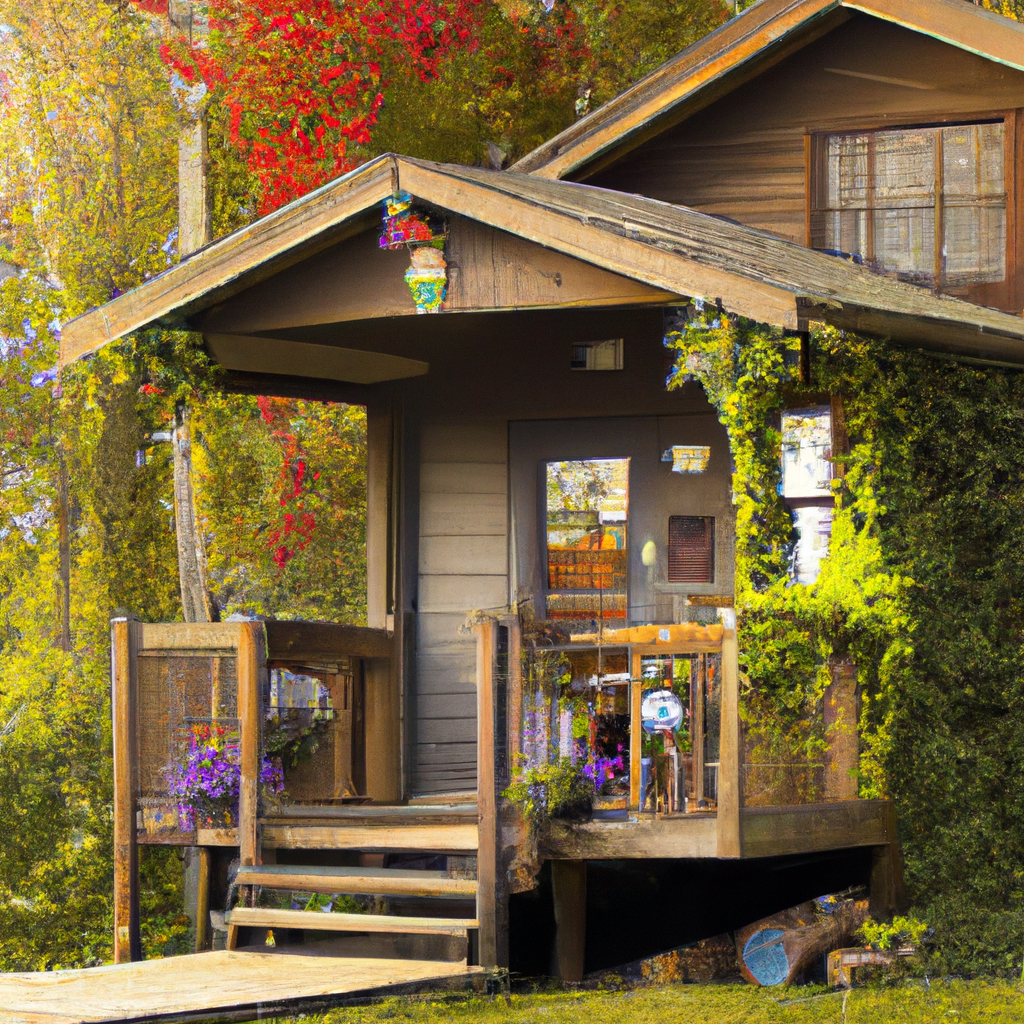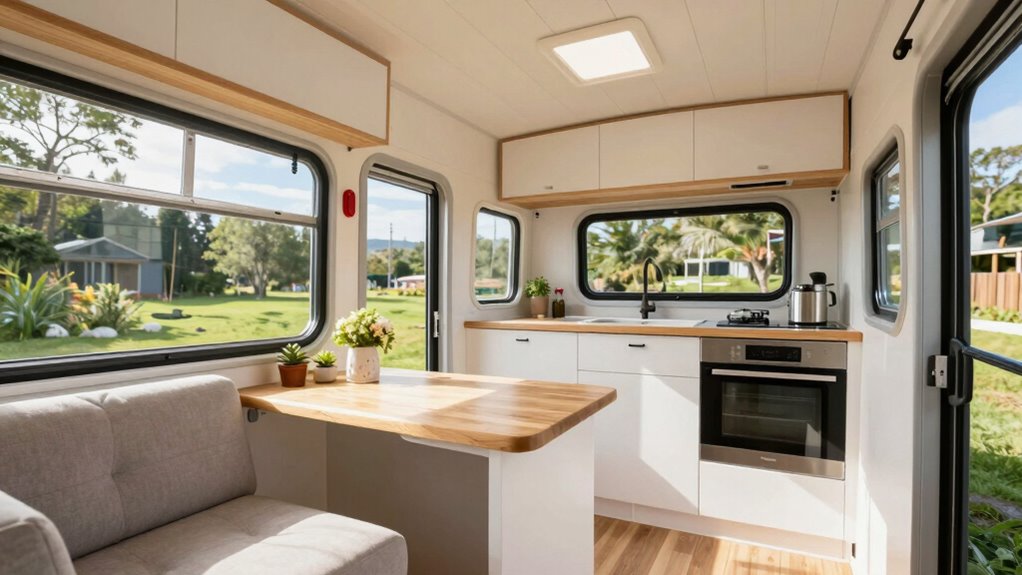
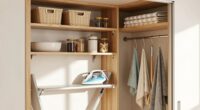
A one-level tiny house floor plan gets space optimization, accessibility, and sustainability right, ensuring every square foot works for you. Open layouts create seamless indoor-outdoor flow, while natural light floods your space for a bright, inviting atmosphere. Compact and efficient design makes daily routines easier and safer. Plus, eco-friendly materials enhance air quality and reduce your footprint. If you keep exploring, you’ll see how these thoughtful features make tiny living truly practical and enjoyable.
Key Takeaways
- Maximizes space through smart, open-floor designs that enhance functionality and flow.
- Incorporates eco-friendly materials to promote sustainability and improve indoor air quality.
- Utilizes large windows and skylights to flood interiors with natural light, creating an inviting atmosphere.
- Ensures accessibility and safety with a single-level layout suitable for all mobility needs.
- Promotes a spacious, clutter-free environment by integrating innovative storage and minimalist design.
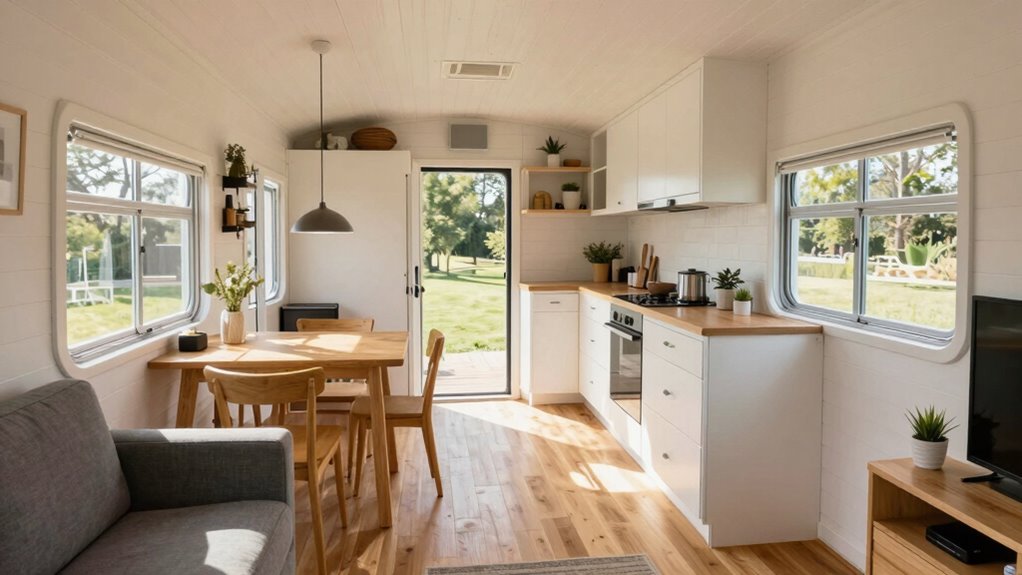
Are you considering a compact, efficient living space that maximizes comfort without sacrificing style? A one-level tiny house floor plan might be exactly what you need. These homes are designed to make every square foot count, blending simplicity with smart architecture. One of their biggest strengths is how they leverage sustainable materials, which not only reduces your ecological footprint but also enhances indoor air quality. Using eco-friendly building supplies like reclaimed wood, recycled metal, or bamboo ensures your home is both durable and environmentally conscious. This commitment to sustainability often extends to insulation and finishes, helping you save on energy costs while minimizing environmental impact.
Natural lighting plays a pivotal role in these designs, transforming small spaces into bright, welcoming environments. Large windows, skylights, and glass doors are typical features that flood the interior with sunlight, making the space feel larger and more open. When you prioritize natural lighting, you also reduce your reliance on artificial lights during the day, which cuts down energy consumption. Plus, natural light boosts your mood and well-being, making your tiny home a more pleasant place to live. The thoughtful placement of windows and open floor plans work together to maximize daylight, creating a seamless flow between indoor and outdoor living. Incorporating natural lighting techniques can further optimize this effect and create a more inviting atmosphere.
A one-level design further enhances the functionality of your tiny house. Without stairs or multiple floors, you gain easier mobility and better accessibility. This layout is especially beneficial if you’re looking for a home that adapts to different stages of life or mobility needs. Everything is within reach, which makes daily routines smoother and safer. It also simplifies cleaning and maintenance, saving you time and effort. The open floor plan fosters a sense of connection and flexibility—whether you’re cooking, relaxing, or working, you can quickly shift between activities without feeling cramped. Additionally, innovative space-saving techniques are often incorporated to optimize storage and functionality in these compact layouts. Employing such techniques not only maximizes your available space but also contributes to a more organized and clutter-free environment. Emphasizing sustainable building practices can further enhance your home’s eco-friendliness and efficiency.

PlanToys® Victorian Wooden Dollhouse | 3-Story Large Doll House with Attic, Opening Panels & Sliding Windows | Pretend Play Dollhouse Compatible with 1:12 Scale Furniture & Wooden Dolls
CLASSIC 3-STORY WOODEN VICTORIAN DOLLHOUSE: A timeless large wooden dollhouse with 3 floors including a spacious attic. Features…
As an affiliate, we earn on qualifying purchases.
As an affiliate, we earn on qualifying purchases.
Frequently Asked Questions
How Much Does a One-Level Tiny House Typically Cost?
A one-level tiny house typically costs between $30,000 and $80,000, depending on size, materials, and finishes. You’ll find that many models focus on a cost-effective design, helping you save money without sacrificing style. If you want luxury amenities, expect the price to rise accordingly. Overall, these homes are affordable options that maximize space and comfort, making them a smart investment for those seeking simplicity and convenience.
Can I Customize the Floor Plan Easily?
Yes, you can customize the floor plan easily. With a one-level tiny house, you have flexibility in adjusting the interior layout to suit your needs, whether it’s adding storage or reconfiguring the kitchen. Exterior modifications are also straightforward, allowing you to personalize the outside with different siding, porches, or awnings. This ease of customization makes your tiny house truly feel like home, tailored specifically to your lifestyle.
What Are the Best Materials for Durability?
Think of your tiny house as a ship; you want it to weather storms and stand the test of time. Durable materials like bamboo, reclaimed wood, and metal siding are your best bets. These sustainable options not only last longer but also reduce environmental impact. Choosing weather-resistant options like fiber cement or composite materials guarantees your tiny home withstands rain, wind, and sun, keeping you cozy and secure for years to come.
How Is Insulation Handled in Small Spaces?
In small spaces, you handle insulation by choosing the right insulation types to maximize thermal efficiency. Spray foam offers excellent R-value and air sealing, while rigid foam boards provide high insulation with minimal space. Fiberglass batts are budget-friendly but less efficient in tiny homes. Proper insulation guarantees your tiny house stays warm in winter and cool in summer, making the space comfortable and energy-efficient.
Are There Any Zoning Restrictions for Tiny Houses?
Did you know that over 80% of tiny house owners face zoning restrictions? Zoning laws and building codes can vary widely by location, often limiting where you can park or build your tiny house. You’ll need to research local regulations beforehand, as some areas require permits or have minimum size requirements. Staying compliant guarantees your tiny house remains legal, safe, and hassle-free, so check with local authorities to avoid surprises.

Tiny Houses Built with Recycled Materials: Inspiration for Constructing Tiny Homes Using Salvaged and Reclaimed Supplies
As an affiliate, we earn on qualifying purchases.
As an affiliate, we earn on qualifying purchases.
Conclusion
Just like the timeless simplicity of Thoreau’s cabin, a well-designed one-level tiny house offers a peaceful retreat from chaos. It’s a modern-day sanctuary where every square foot serves a purpose, proving less truly is more. Embrace the freedom of minimalist living, and remember, sometimes the greatest adventure is found in the smallest spaces. With thoughtful planning, you’ll find your own little haven—where simplicity and comfort meet, much like the whispers of Walden Pond.
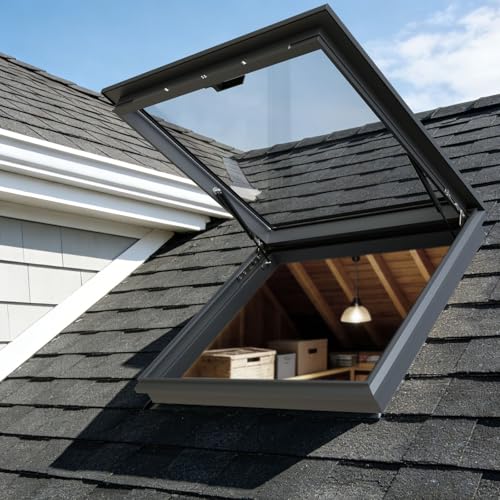
Viuseo Manual Skylight Window, Skylights for House Roof with Double Tempered Glass and Aluminum Alloy Frame, Roof Skylight for Home/Sun Room/Attic/Basement Daylighting
Seamless Welding & Rubber Seals: Creating a physical barrier through seamless welding and combining rubber seals for dual-layer…
As an affiliate, we earn on qualifying purchases.
As an affiliate, we earn on qualifying purchases.

LASZOLA 5 Drawer Narrow Dresser Slim Cabinet Skinny Storage Tower Chest, Ideal for Small Spaces Bathroom, Between Washer and Dryer, Lightweight Mobile on Wheels, Sturdy Fabric Drawers, Black
【Maximize Your Space】Transform even the tightest spaces into an organized haven. Whether in a small apartment, dorm room,…
As an affiliate, we earn on qualifying purchases.
As an affiliate, we earn on qualifying purchases.