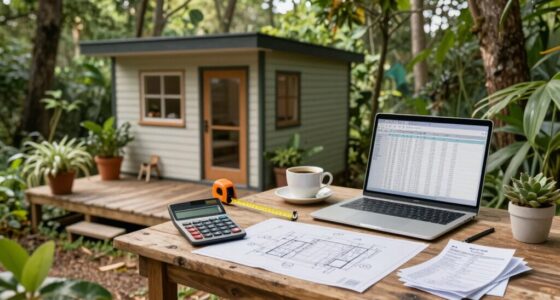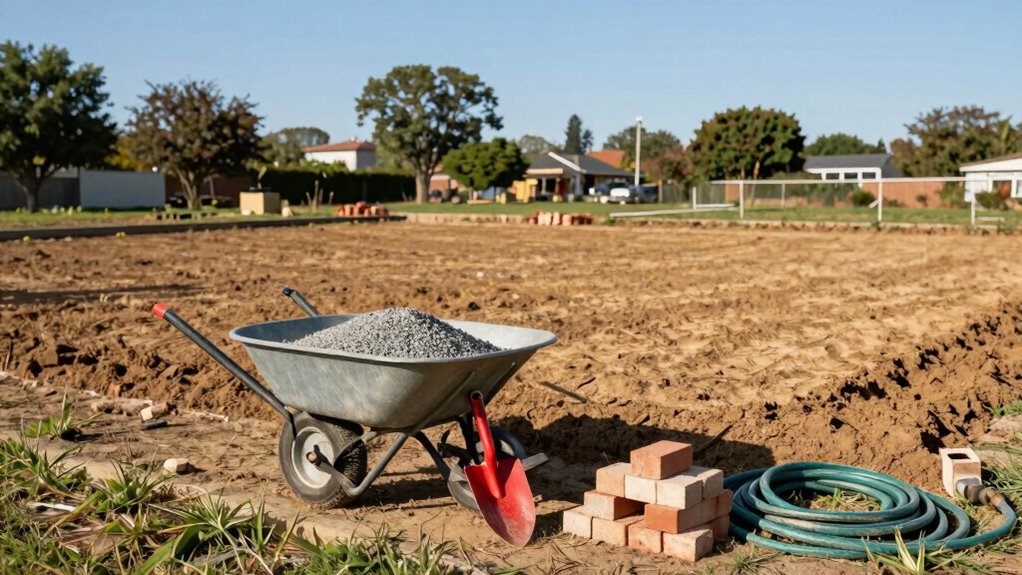

To budget for land prep before your tiny house arrives, start early by researching permit requirements and associated costs in your area. Assess your land’s accessibility, terrain, and utility options, considering potential expenses for clearing, grading, and utility connections. Include costs for soil testing, drainage, erosion control, and unexpected issues that might arise. Planning thoroughly now helps prevent delays and surprises later. Keep exploring to learn how to make your land ready for your new home.

Get compact home essentials delivered free with Prime
- Fast, free delivery on millions of items
- Prime Video, Amazon Music and more included
- Member-only deals all year
Key Takeaways
- Research local permitting requirements and include permit costs in your overall budget early.
- Assess land accessibility and terrain to identify preparation needs and potential additional expenses.
- Budget for utility connections or explore alternative solutions like solar power or composting toilets.
- Conduct soil testing and plan drainage to prevent future issues and ensure land stability.
- Allocate funds for unexpected costs such as rocky terrain, erosion control, or hidden site challenges.
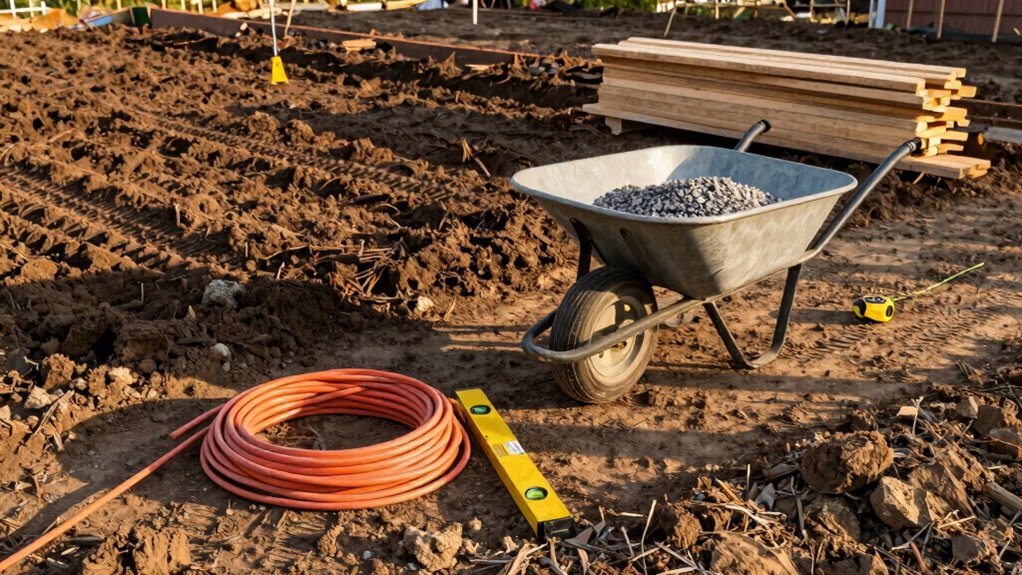
Planning ahead is essential when preparing for your tiny house, especially when it comes to budgeting for land prep. Before your tiny home arrives, you need to consider several factors that can impact your costs and timeline. One of the most vital aspects is understanding permitting costs. Local regulations often require permits for building, electrical work, sewage, or water connections. These costs can vary widely depending on your location, so it’s imperative to research the specific requirements in your area. Failing to account for permits upfront can lead to delays or unexpected expenses, which might push your project over budget. Make sure to contact your local building department early and ask about all necessary permits and associated fees to get a clear picture of what’s required.
Planning ahead and understanding local permit requirements can save time and prevent unexpected costs in your tiny house project.
Site accessibility is another key factor that influences your land prep budget. If your land is difficult to access, you may need to invest in additional equipment or labor to clear paths, level the ground, or create suitable driveway access. Steep slopes, rocky terrain, or densely wooded areas can considerably increase your prep costs. You’ll want to evaluate the land carefully and consider how accessible it is for heavy machinery and construction crews. Sometimes, simple solutions like clearing brush or grading the land can make a big difference, but always factor in these potential costs when planning your budget. Additionally, understanding land terrain can help you anticipate the necessary preparation steps and costs involved.
Additionally, think about utility connections. If your land isn’t already hooked up to water, sewer, or electricity, you’ll need to budget for installation costs. Running power lines or installing a septic system can be expensive, especially if your land is remote. Sometimes, alternative options such as solar power or composting toilets can reduce initial expenses, but these choices should be part of your overall planning.
Don’t overlook the importance of site preparation tasks like soil testing, drainage planning, and erosion control. These are often overlooked but are vital for a stable foundation and long-term sustainability. Allocate funds for these assessments early on, as they can reveal hidden issues that might otherwise lead to larger, unanticipated expenses down the line.
As an affiliate, we earn on qualifying purchases.
Frequently Asked Questions
What Permits Are Required for Land Prep?
You’ll need permits for land prep that often include zoning regulations and utility connections. Check local ordinances to see if you require a building permit, especially for grading, septic systems, or utility hookups. Contact your city or county office early to understand specific requirements. Obtaining these permits helps you avoid fines or delays and guarantees your tiny house setup complies with all safety and legal standards.
How Long Does Land Preparation Typically Take?
Land preparation typically takes anywhere from a few days to several weeks, depending on the project’s complexity. You’ll want to start with soil testing to assess stability, then implement drainage solutions to prevent future problems. Clearing, grading, and leveling can be quick or lengthy, based on land size and obstacles. Planning for delays guarantees you’re prepared, keeping your tiny house journey on track and trouble-free.
Can I Do Land Prep Myself?
Yes, you can do land prep yourself if you’re comfortable with DIY landscaping and land clearing techniques. Start by evaluating your land, then use tools like chainsaws, shovels, and bulldozers for clearing brush and leveling the ground. Be sure to research safety procedures and local regulations. Taking on this project can save money, but know your limits to avoid costly mistakes or injuries.
Are There Eco-Friendly Land Prep Options?
Yes, there are eco-friendly land prep options. You can use sustainable materials like recycled gravel or compost to improve soil without harmful chemicals. Opt for natural landscaping techniques such as native plantings and mulch to reduce water use and maintenance. These choices help protect the environment, promote biodiversity, and create a healthier space around your tiny house. By prioritizing natural methods, you guarantee your land prep aligns with eco-conscious living.
What Are Hidden Costs in Land Prep?
Imagine uncovering unexpected puddles after a rainstorm—hidden costs like soil stabilization and drainage solutions can catch you off guard. These costs often include addressing uneven terrain, installing proper drainage, and stabilizing soil to prevent shifting. You might also encounter surprises like permits or unexpected excavation needs. Planning for these hidden expenses guarantees your tiny house stays stable and dry, avoiding costly surprises down the line.
Conclusion
With your budget in hand and a clear plan, you’re ready to turn your land into a welcoming foundation for your tiny house journey. Think of it as planting the seeds for a future full of adventure and simplicity. As you prepare the land, you’re laying the groundwork for a new chapter—one where dreams take root and grow into a cozy, sustainable home. Your tiny house is just the beginning of this exciting new landscape.
Halloween Picks
halloween
As an affiliate, we earn on qualifying purchases.