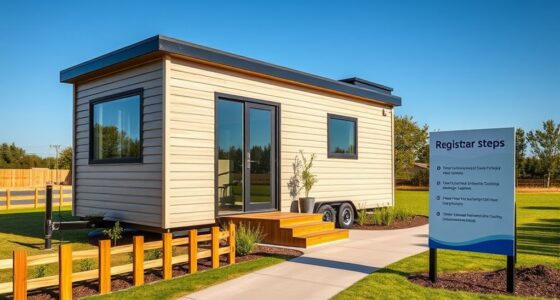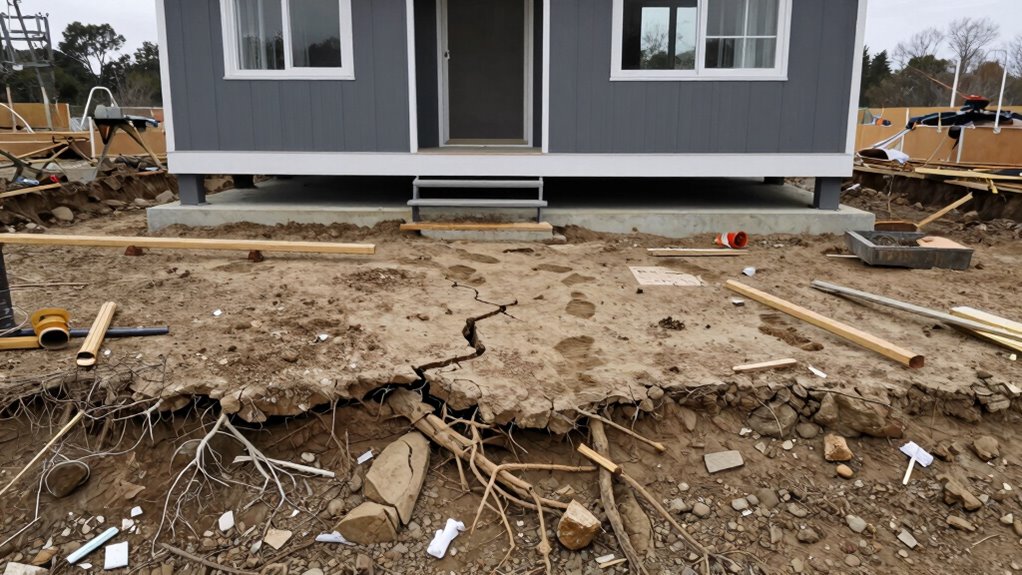

To avoid costly mistakes, don’t skip proper site assessment and leveling, as uneven ground can cause structural issues over time. Make sure to plan effective drainage solutions like slopes or French drains to prevent water pooling and foundation damage. Ignoring soil type and terrain specifics can lead to erosion or shifting foundations. Proper preparation saves you future repairs and keeps your tiny house safe and secure. Keep going to discover essential tips for a solid, lasting setup.
Key Takeaways
- Neglecting thorough site assessment can lead to uneven foundation and long-term stability issues.
- Failing to properly level the ground increases risk of cracks, shifting, and structural failure.
- Overlooking adequate drainage solutions causes water pooling, erosion, and foundation damage.
- Ignoring soil type and terrain specifics results in improper drainage and foundation problems.
- Skipping comprehensive site preparation steps can lead to costly repairs and reduced tiny house longevity.
Starting your tiny house project without proper site preparation can lead to costly delays and structural issues down the line. One of the most common mistakes is neglecting foundation leveling. If your land isn’t level, your tiny house won’t sit securely, which can cause uneven weight distribution and long-term stability problems. Before you build, you need to assess the site carefully. Use a level or laser level to identify high and low spots. If the ground isn’t even, you’ll have to bring in fill dirt or use a leveling process to create a stable, flat surface. Skipping this step might seem like a time-saver, but it can lead to cracks, shifting, or even structural failure down the road. Incorporating proper landscape assessment can help you determine the best approach for your site’s unique terrain.
Proper site prep, including leveling, is essential to prevent future structural issues and ensure a stable tiny house foundation.
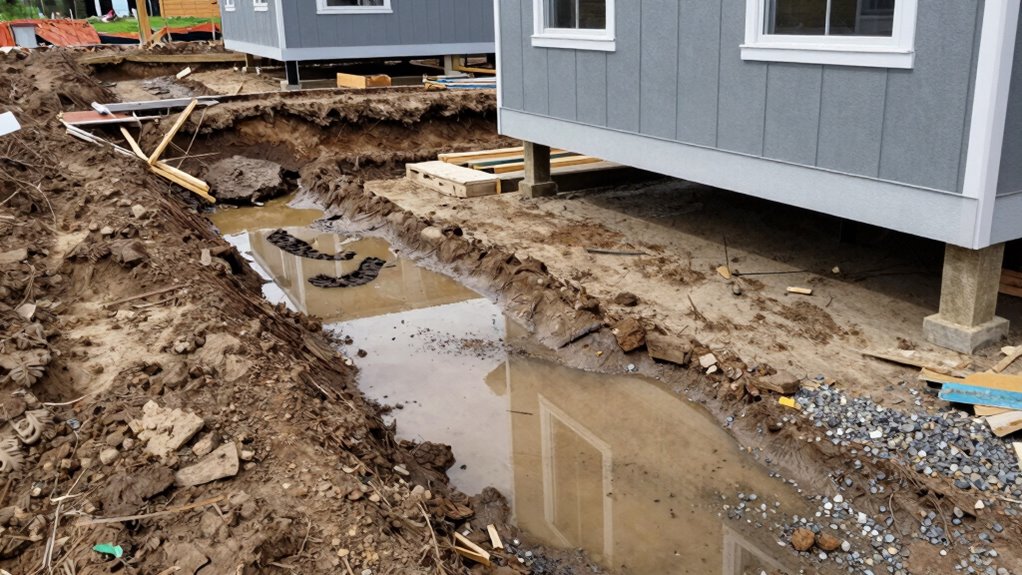
Drainage planning is equally critical. Failing to plan for proper water runoff can turn your site into a muddy mess or cause water to pool under your tiny house. Poor drainage can lead to foundation problems, mold, and rot, especially if water seeps into the structure over time. You should determine the natural flow of water on your property and design your site accordingly. This might involve installing a slight slope away from the house or adding drainage systems like swales, French drains, or gutters. These measures help direct water away from your foundation, reducing the risk of erosion and moisture damage. Additionally, understanding the importance of proper site prep can help you avoid costly repairs later on. Incorporating drainage solutions into your planning ensures that water will be effectively managed on your property.
Many people overlook the importance of drainage planning in their initial site prep, assuming that natural terrain will suffice. However, even slight miscalculations can have severe consequences. Proper site prep involves not just leveling the ground but also implementing a comprehensive drainage plan suited to your specific landscape. Without it, you risk water infiltration, which can cause long-term damage and costly repairs. Taking the time to research your area’s climate and soil type, along with understanding soil drainage capacity, can help you select the most effective solutions. Understanding the soil’s properties can guide you in choosing appropriate drainage methods, ensuring longevity and stability. Properly graded and drained sites will ensure your tiny house remains stable, dry, and safe for years to come.
In the end, rushing through foundation leveling or skipping drainage planning can undermine your entire build. These are foundational steps that protect your investment and ensure your tiny house’s longevity. Investing time and effort into accurate site prep pays off by preventing future setbacks, structural problems, and unnecessary expenses. It’s worth doing right from the start—your future self will thank you for a solid, well-prepared foundation that keeps your tiny house safe, dry, and stable for the long haul.

ZUJHPYMI 6Pcs Magnetic Small Bubble Level 10x10x29mm Mini Square Bubble Spirit Levels Leveling Tools
- Material: Acrylic with magnetic base
- Dimensions: 10x10x29mm
- Color: Fluorescent yellow-green
As an affiliate, we earn on qualifying purchases.
As an affiliate, we earn on qualifying purchases.
Frequently Asked Questions
How Do I Choose the Best Location for My Tiny House?
Choose the best location for your tiny house by starting with land surveys to understand property boundaries and topography. Conduct soil testing to guarantee the ground is stable and suitable for your foundation. Look for a spot with good sunlight, access to utilities, and minimal flooding risk. Avoid sites with heavy clay or poor drainage. By thoroughly evaluating these factors, you’ll find a safe, functional, and enjoyable place for your tiny house.
What Permits Are Required for Tiny House Site Prep?
You’ll need to check permit regulations before starting site prep, as requirements vary by location. Often, a building permit or zoning approval is necessary, and a site inspection might be required to make certain of compliance. Don’t skip this step, because failing to obtain the right permits can lead to fines or having to redo work. Contact your local planning office early to clarify what permits are needed for your tiny house site.
How Much Does Site Prep Typically Cost?
Site prep costs for your tiny house typically range from $3,000 to $10,000, depending on factors like site selection and necessary improvements. To get an accurate cost estimation, consider the terrain, soil quality, and access points. Choosing a site with easy access and stable ground can help reduce expenses. Remember, investing in proper site prep guarantees your tiny house remains secure, safe, and compliant with local regulations.
Can I Prepare the Site Myself or Should I Hire Professionals?
You can prepare the site yourself, but consider the DIY challenges involved, like leveling, drainage, and permits. If you’re inexperienced, you might face delays or costly mistakes. Hiring professionals offers benefits like expert knowledge, faster completion, and guaranteed code compliance. Weigh your skills and project scope carefully; sometimes, investing in pros saves time and money in the long run. Ultimately, choose what aligns best with your experience and timeline.
What Are Common Drainage Issues During Tiny House Site Prep?
You might think drainage issues are minor, but poor stormwater management can cause serious problems like erosion and flooding. To avoid these, guarantee proper grading and install effective erosion control measures. Neglecting drainage planning leads to water pooling around your tiny house, damaging the foundation. Address these issues early by designing a reliable drainage system—it’s essential for protecting your tiny home and maintaining a safe, stable site.
Conclusion
By steering clear of these site prep pitfalls, you’re planting the sturdy roots your tiny house needs to flourish. Think of your site as the solid foundation of a mighty oak—when prepared with care, it withstands storms and time alike. Avoid rushing, cutting corners, or overlooking details, and you’ll nurture a resilient home that stands tall amid life’s unpredictable winds. With patience and precision, your tiny house will become a steadfast anchor in your journey, not just a fleeting shelter.