

Hydrogen for tiny homes still feels experimental because many storage methods, like solid-state or compressed gas tanks, are still in development and not widely proven safe. Safety concerns, such as leaks, flammability, and proper handling, require strict protocols and ongoing research. Regulatory standards are evolving, and technology continues to improve. If you want to understand more about what’s holding hydrogen back and future developments, keep exploring the latest insights.
Key Takeaways
- Hydrogen storage solutions, like solid-state and compressed tanks, are still in development and not yet widely proven for tiny home use.
- Safety protocols and regulations for hydrogen handling are evolving, making implementation cautious and sometimes experimental.
- Hydrogen technology for tiny homes remains largely in testing phases, with limited real-world applications and long-term data.
- Potential risks such as leaks and flammability require strict safety measures, which are still being refined.
- Technological advancements are ongoing, but widespread adoption is hindered by current safety, cost, and regulatory uncertainties.
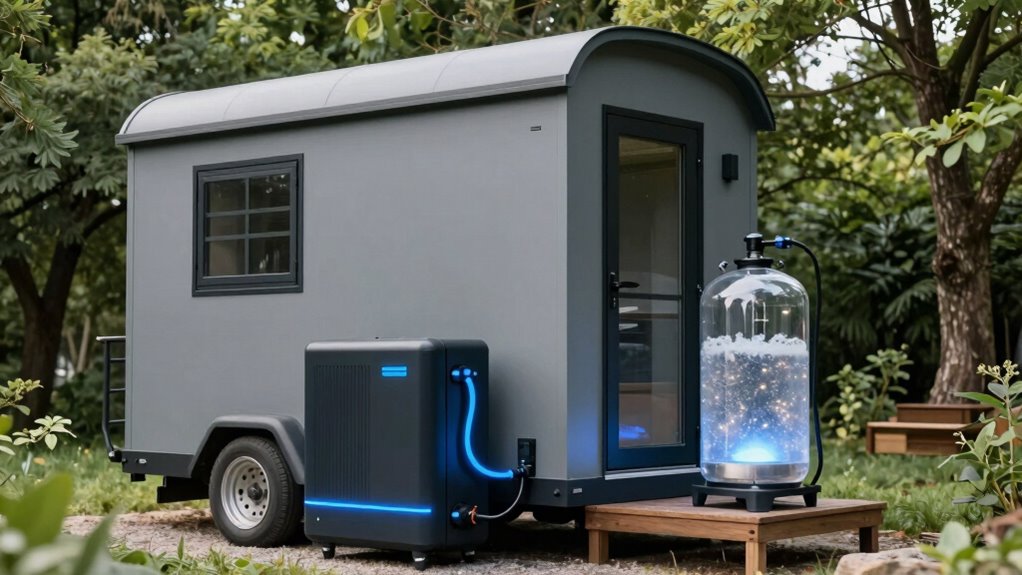
As tiny homes gain popularity for their affordability and simplicity, hydrogen emerges as a promising energy source to make them even more sustainable. You might be excited about the potential of using hydrogen because it offers a clean alternative to traditional fuels, producing only water as a byproduct. But integrating hydrogen into tiny homes isn’t just about the fuel itself; it involves understanding how to store it safely and efficiently. Renewable storage plays a vital role here. Unlike conventional fuels, hydrogen can be stored using various innovative methods, such as compressed gas tanks or solid-state storage, which aim to maximize safety and space efficiency. These systems are designed to keep hydrogen contained securely, minimizing leaks and reducing risks. However, because hydrogen is highly flammable, the storage solutions need to be carefully selected and maintained.
You’ll need to pay close attention to safety protocols when considering hydrogen for your tiny home. Safety isn’t just about installing the right equipment; it’s about understanding how to handle, store, and monitor hydrogen properly. For example, you should guarantee your storage tanks are equipped with pressure relief valves and leak detection systems. Regular inspections and maintenance are essential to prevent potential hazards. Many safety protocols also recommend proper ventilation around storage areas to disperse any accidental leaks quickly, reducing the risk of ignition. Education on hydrogen’s properties and safety measures is equally important. You should be familiar with emergency procedures, such as how to shut off the supply quickly in case of a leak or fire. Additionally, ongoing research and development are crucial to improving hydrogen storage methods, which continue to evolve to enhance safety and efficiency. Staying informed about storage safety innovations can help you make better decisions when considering hydrogen systems. It’s also vital to consider the regulatory standards governing hydrogen use to ensure compliance and safety.
While the technology is advancing rapidly, hydrogen still feels a bit experimental for widespread use in tiny homes. Manufacturers and safety regulators are working on refining storage methods and safety measures, but many of these solutions are still in development or testing phases. This can make you hesitant, especially when you consider the potential risks involved. Nevertheless, ongoing research and technological improvements are making hydrogen a more viable option. If you’re willing to stay informed and adhere strictly to safety protocols, you could be among the early adopters who help shape the future of sustainable, hydrogen-powered tiny homes. Just remember, safety always comes first, and thorough understanding and proper handling are essential before making the switch.

Cylinder Storage Rack for 8L 10L Nitron Acetylene Hydrogen Tanks – Fixed Cabinet with Protective Chain & Screws for School Laboratory Use
- Material and Finish: 32mm Steel Tubing with Powder Coating
- Adjustable Safety Chain: Customizable strap length for secure fixing
- Easy Installation: Pre-drilled holes for wall or floor mounting
As an affiliate, we earn on qualifying purchases.
As an affiliate, we earn on qualifying purchases.
Frequently Asked Questions
How Safe Is Hydrogen Storage in Tiny Homes?
Hydrogen storage in tiny homes can be safe if you follow strict safety protocols and adhere to storage regulations. You should use approved, secure containers designed for hydrogen, ensure proper ventilation, and avoid storing it near heat sources. Regular inspections and proper training are essential. While the technology is advancing, always consult local codes and experts to minimize risks and guarantee your tiny home remains a safe, efficient space for hydrogen use.
What Are the Initial Costs of Installing Hydrogen Systems?
The initial costs of installing hydrogen systems can feel like planting seeds in a new garden—both promising and uncertain. You might spend between $10,000 and $30,000, depending on system size and complexity. When considering renewable integration, these costs are higher than traditional setups but could pay off long-term. A thorough cost comparison shows hydrogen’s potential, but upfront investments still make it an experimental frontier for tiny homes.
Can Hydrogen Power All Tiny Home Appliances?
Hydrogen can power many tiny home appliances, but it depends on hydrogen infrastructure and appliance compatibility. You’ll need specialized appliances designed for hydrogen use, which are still emerging. Currently, hydrogen infrastructure isn’t widespread, so fueling options may be limited. While promising, hydrogen isn’t yet a universal solution for all tiny home appliances, requiring careful planning and investment to guarantee your appliances work safely and efficiently with hydrogen energy.
How Reliable Is Hydrogen as a Consistent Energy Source?
Hydrogen can be a reliable energy source if it’s produced renewably and stored efficiently. When generated through renewable methods like solar or wind, it offers a sustainable option. However, storage efficiency remains a challenge; hydrogen needs proper tanks and infrastructure to prevent leaks and energy loss. If these issues are addressed, hydrogen could provide a consistent, eco-friendly power supply for your tiny home.
Are There Government Incentives for Hydrogen Tiny Homes?
Like planting a seed in spring, government incentives for hydrogen tiny homes are starting to sprout. Some policies offer tax credits, grants, or rebates to encourage market adoption. These policy incentives aim to make hydrogen more affordable and accessible, helping tiny homes shift from experimental to mainstream. While incentives are growing, they’re still limited, and broader support could accelerate market adoption, making hydrogen-powered tiny homes a more common sight.
Conclusion
So, as you step into the world of tiny homes and hydrogen, remember that while it’s still in its infancy, innovation ignites incredible potential. Don’t dismiss the daring dreams of a sustainable, self-sufficient sanctuary. With curiosity and courage, you can help push progress past the preliminary phase. Embrace the evolving energy scene, and who knows? Your tiny home might just become a trailblazing demonstration of tomorrow’s transformative technology.