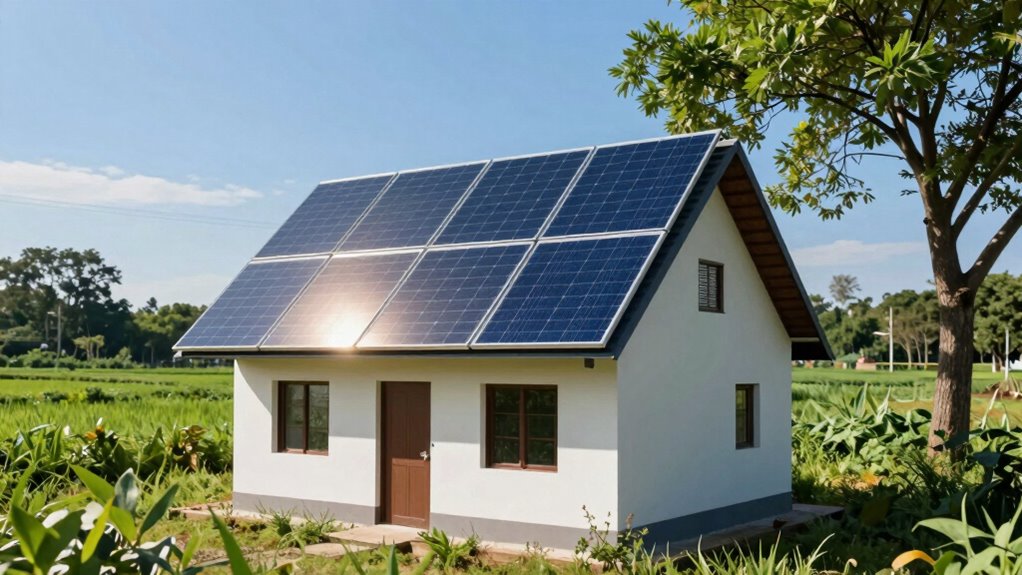
Your tiny house’s solar output depends heavily on panel angle and shading. When you position your panels at the right tilt based on your location and season, you maximize sunlight capture and boost energy production. Shadows from trees, buildings, or your house itself can cause significant drops in efficiency and even damage panels. Keeping panels clean and free from shade helps guarantee consistent power. Stick around to discover more tips for optimizing your solar setup effectively.
Key Takeaways
- Proper panel tilt maximizes sunlight absorption, boosting energy production for tiny houses.
- Shading from trees or structures significantly reduces solar efficiency and may cause hot spots.
- Regular cleaning and shade checks help maintain optimal performance of tiny house solar systems.
- Adjusting panel angles seasonally ensures maximum sunlight capture throughout the year.
- Minimizing shading and using tracking systems can significantly enhance tiny house energy output.
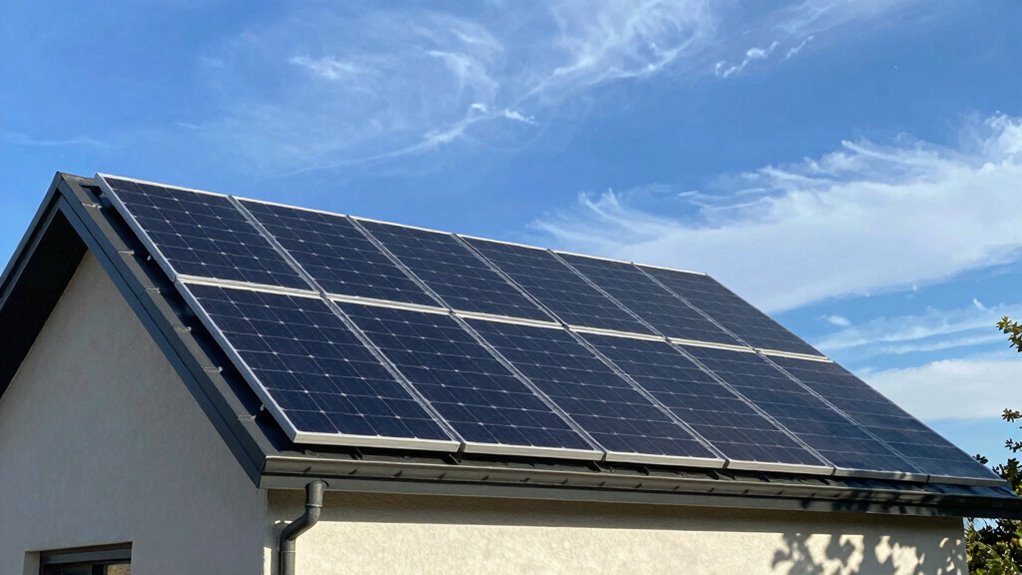
Maximizing your solar panel’s efficiency depends heavily on getting the right angle and minimizing shade. When you’re powering a tiny house, every bit of sunlight counts, so paying attention to how your panels are positioned can make a significant difference. Properly angling your solar panels ensures they catch the maximum sunlight throughout the day, which boosts energy production and reduces reliance on backup sources. You want to adjust the tilt based on your geographical location and the season; for example, in summer, a lower tilt may suffice, while winter might require a steeper angle. This precise adjustment helps your panels perform at their best, especially when considering the importance of energy storage systems that store excess power for cloudy days or nighttime use. Regularly checking for shading issues** and trimming back foliage can prevent unexpected efficiency losses. Shade is another critical factor that can dramatically reduce your solar output. Even a small shadow cast on a panel can cut its efficiency by a large percentage. Trees, nearby buildings, or even the positioning of your tiny house itself might cast shadows during certain times of the day. To prevent this, you need to regularly check for potential shading issues and trim back any overgrown foliage or reposition panels if possible. Shade not only lowers your immediate energy production but also risks damaging your panels over time if it causes uneven heating or hot spots. Maintaining your solar panels through regular solar panel maintenance routines can help identify and mitigate shading issues early. Your setup’s effectiveness also depends on how well you manage your energy storage systems. When your panels produce more electricity than you need, storing that excess in batteries ensures you have power during nights or cloudy days. However, if your panels are poorly angled or shaded, you’re not generating enough surplus energy to make storage worthwhile. Properly orienting your panels maximizes output, meaning your batteries stay charged and ready when you need them most. Efficient solar panel maintenance, including cleaning dust, debris, and checking connections, ensures your system remains in excellent condition. This ongoing care prevents performance dips caused by dirt or corrosion, which can further reduce your energy harvest. Additionally, understanding the impact of shading and how it varies throughout the year helps you better plan your panel placement and trimming schedule. Incorporating expert tips from specialists can also enhance your system’s overall efficiency and longevity. To optimize your setup, consider solar tracking systems, which can automatically adjust the panels’ angle throughout the day for maximum sunlight capture. As technology advances, automatic adjustment mechanisms are becoming more affordable, making it easier for tiny house owners to maintain optimal panel positioning. In essence, adjusting your solar panel angle and keeping shade to a minimum are crucial steps to enhance your tiny house’s energy production. These actions directly influence how much sunlight your system captures, impacting your overall energy independence**. When combined with good solar panel maintenance and effective energy storage systems, your setup becomes more resilient, reliable, and capable of powering your tiny house comfortably and sustainably.
solar panel tilt mount for tiny house
As an affiliate, we earn on qualifying purchases.
As an affiliate, we earn on qualifying purchases.
Frequently Asked Questions
How Does Local Weather Impact Solar Panel Efficiency?
Your solar panel efficiency drops with local weather changes, especially due to weather patterns and cloud coverage. Overcast skies and frequent storms reduce the sunlight reaching your panels, lowering energy production. On sunny days, you get maximum output, but persistent clouds or rain can notably decrease performance. So, understanding your area’s weather helps you optimize your tiny house’s solar setup for better energy independence and reliability.
Can Shading From Nearby Trees Be Minimized?
You can slash shading from trees dramatically by pruning branches aggressively—think of it as giving your tiny house a sun-powered makeover! Installing shade barriers is another game-changer, blocking out pesky shadows that steal your solar energy. Regular tree trimming keeps the sun shining on your panels, maximizing efficiency. With these steps, you’ll turn shady hideouts into bright, energy-guzzling powerhouses, ensuring your tiny house stays fully charged no matter the season.
What Is the Best Season for Optimal Solar Gain?
Summer is typically the best season for ideal solar gain because of increased seasonal sunlight. To maximize this, you should adjust your solar panels to the perfect tilt for summer, usually steeper than winter angles. During summer, the sun is higher in the sky, and this tilt captures more sunlight. Properly aligning your panels for seasonal sunlight ensures you get the most energy, especially during peak months.
Do Roof Materials Affect Solar Panel Placement?
Roof materials do impact solar panel placement, acting as both a foundation and a challenge. Smooth, sturdy surfaces like metal or asphalt shingles make panel installation easier and more secure, while uneven or reflective materials can complicate mounting and reduce efficiency. You must consider the roof’s material to guarantee ideal panel positioning, maximize energy output, and prevent potential damage. Choosing the right roof material streamlines installation and boosts your tiny house’s solar performance.
How Often Should Solar Panels Be Cleaned?
You should clean your solar panels about once every six months to a year, depending on your location and dirt accumulation. Regular panel maintenance helps maximize efficiency by removing dust, leaves, and bird droppings that block sunlight. Keep an eye on your system’s performance, and if you notice a dip in energy output, it might be time for a cleaning. Proper maintenance guarantees your tiny house’s solar system stays productive.
Conclusion
So, if you really want your tiny house’s solar panels to produce enough juice to power a spaceship—or at least your Netflix binges—you gotta get those angles just right and dodge the shade like a ninja. Think of it as tuning a musical instrument—mistune once, and you’re stuck with a dull, useless sound. Nail the perfect tilt and clear the shadows, and your tiny house will shine brighter than a solar-powered disco ball!






![Bukit Bintang Hicks Flat: DBKL Orders Cleanup After Viral Video Exposes Dirty Conditions [WATCH] - NST Online](https://tinyhouse43.com/wp-content/uploads/2026/08/bukit-bintang-hicks-flat-dbkl-orders-cleanup-after-viral-video-exposes-dirty-con-featured-260x140.jpg)