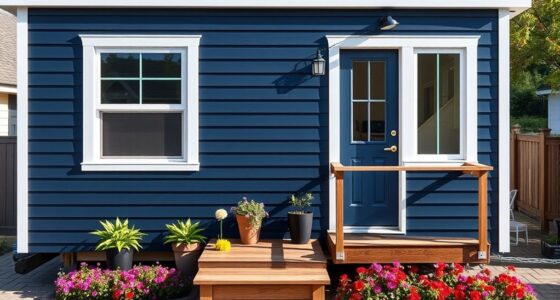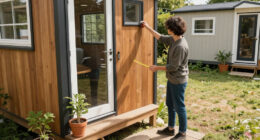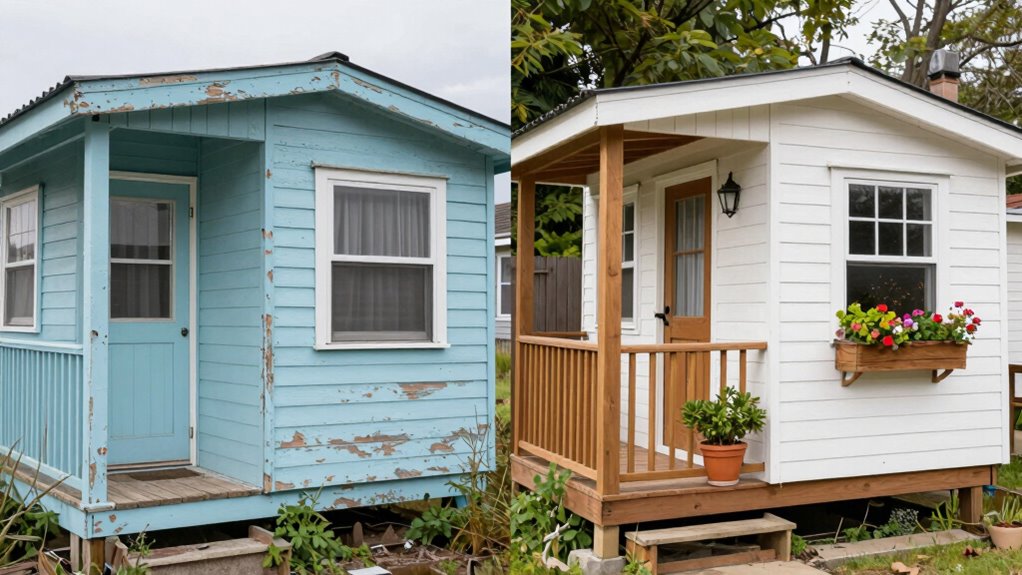
Transform your aging tiny home with eco-friendly upgrades like reclaimed wood fixtures, low-VOC paints, and recycled metal accents to boost style and sustainability. Maximize space with fold-away beds, built-in shelves, and open layouts. Improve energy efficiency by updating insulation, installing energy-efficient appliances, and adding solar panels. Enhance mobility with electric bikes or vehicles. Finish with vibrant textiles and unique lighting to create a cozy, personalized space. Keep exploring for detailed tips on making your tiny home truly modern and eco-conscious.
Key Takeaways
- Showcase transformation with eco-friendly materials, like reclaimed wood and low-VOC paints, to enhance sustainability and aesthetics.
- Highlight space-saving upgrades such as fold-away beds and built-in storage to maximize limited space.
- Demonstrate energy efficiency improvements, including upgraded insulation and energy-efficient appliances, reducing utility costs.
- Incorporate modern mobility solutions like electric bikes to complement the tiny home’s sustainable lifestyle.
- Add personalized decorative touches and creative lighting to create inviting, stylish, and functional living spaces.
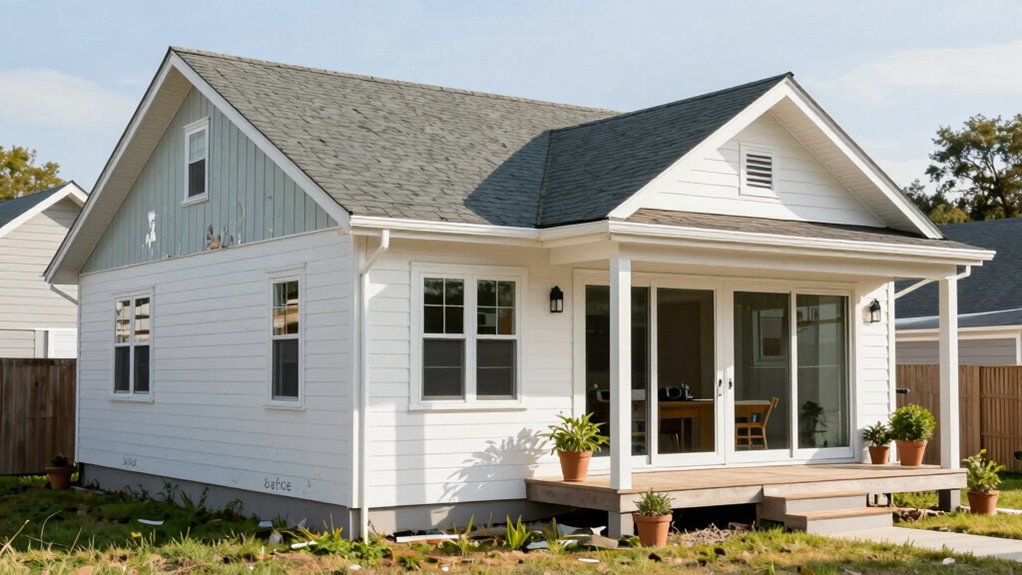
Living in a tiny home offers unique challenges and opportunities for creative renovation. As an owner of an aging tiny house, you might find that the space feels less functional or outdated over time. This is your chance to breathe new life into it with thoughtful updates that maximize every inch. One of the most effective ways to do this is by focusing on sustainable materials. Replacing old, worn-out fixtures or surfaces with eco-friendly options not only benefits the environment but also enhances your home’s aesthetic and durability. Think reclaimed wood for your furniture or countertops, low-VOC paints to improve indoor air quality, and recycled metal accents. These choices give your tiny home a modern, environmentally conscious feel and reduce long-term maintenance costs.
Transform your tiny home with sustainable materials for a stylish, eco-friendly, and durable renovation.
Space optimization becomes vital when renovating an aging tiny house. You’ll want to identify areas where space can be better utilized, whether that’s through clever storage solutions or multifunctional furniture. For example, installing fold-away beds, wall-mounted desks, or convertible tables can free up valuable floor space during the day. Built-in shelving and under-stair storage can keep clutter out of sight and make your home feel more open. When you rethink your layout, you might discover that some walls or fixtures can be removed or relocated to improve flow and usability. The goal is to make your home feel larger and more comfortable without adding square footage. Additionally, considering electric bikes or small electric vehicles can be a sustainable transportation option for tiny home dwellers seeking eco-friendly mobility. Incorporating energy-efficient appliances can further enhance your home’s sustainability and reduce utility bills. Using proper insulation and energy-efficient windows can significantly improve the home’s overall energy performance, making it more comfortable year-round. Investing in smart home technology can also help you monitor and optimize your energy use more effectively, and exploring renewable energy sources like solar panels can further reduce your carbon footprint.
Your renovation should also include updating the insulation and windows to improve energy efficiency, which is especially important in an aging tiny home. Proper insulation keeps you warm in winter and cool in summer, reducing your energy bills. Replacing old, single-pane windows with energy-efficient models boosts natural light and helps maintain a consistent indoor temperature. These improvements make your home more livable and sustainable, aligning with the overall goal of transforming an aging space into a modern, energy-conscious dwelling.
Finally, don’t forget to personalize your tiny home during the renovation process. Incorporate your style and preferences into the new design, whether that’s through vibrant textiles, creative shelving, or unique lighting. Small touches can make a big difference in how inviting your space feels. With these strategic updates—using sustainable materials, optimizing space, and adding personal flair—you’ll turn your aging tiny home into a fresh, efficient, and stylish sanctuary that meets your needs now and into the future.
reclaimed wood furniture for tiny homes
As an affiliate, we earn on qualifying purchases.
As an affiliate, we earn on qualifying purchases.
Frequently Asked Questions
How Do I Prioritize Renovation Projects in a Tiny Home?
You should start by evaluating your tiny home’s most pressing needs, like improving functionality or comfort. Prioritize projects that enhance furniture arrangement for better space utilization and add lighting enhancements to create a brighter, more inviting atmosphere. Focus on upgrades that will make daily life easier and more enjoyable, tackling the essentials first. Once those are complete, you can move on to aesthetic touches and minor updates.
What Are the Best Eco-Friendly Renovation Materials for Tiny Homes?
You should choose eco-friendly renovation materials like sustainable insulation, which reduces energy loss and lowers your carbon footprint, and recycled flooring, which repurposes materials and adds character to your tiny home. These options help you create a greener living space while maintaining comfort and style. Opting for sustainable insulation and recycled flooring not only benefits the environment but also makes your tiny home more energy-efficient and aesthetically appealing.
How Can I Maximize Storage in a Small Space Renovation?
Think of your space as a puzzle waiting to be solved. You can maximize storage by investing in custom cabinetry, which fits perfectly into every nook, and using multi-functional furniture that serves dual purposes. Opt for beds with drawers underneath or fold-away tables. These clever solutions keep clutter at bay and transform your tiny home into a well-organized haven, making every square inch work effortlessly for you.
What Permits Are Needed for Tiny Home Renovations?
You’ll need to check building codes and zoning laws before renovating your tiny home. These regulations vary by location and may require permits for structural changes, electrical work, or plumbing updates. Contact your local building department to understand specific requirements. Obtaining the necessary permits guarantees your renovation complies with safety standards and avoids legal issues, giving you peace of mind as you transform your tiny space.
How Long Does a Typical Tiny Home Renovation Take?
A tiny home renovation is like remodeling a small ship; it takes planning and patience. Typically, it lasts from a few weeks to a couple of months, depending on the scope. You’ll want to focus on furniture placement to maximize space and lighting design to brighten the room. Coordinating these elements efficiently helps speed up the process, making your tiny home feel new without endless delays.
Conclusion
With these renovation ideas, your tiny home can transform from a faded whisper of its former self to a vibrant symphony of style and function. Think of your space as a blank canvas, ready for your personal masterpiece. Embrace clever storage, fresh paint, and smart layouts to breathe new life into your aging tiny home. With a little creativity, you’ll turn small space challenges into opportunities, making your home feel as cozy and inviting as a warm hug.