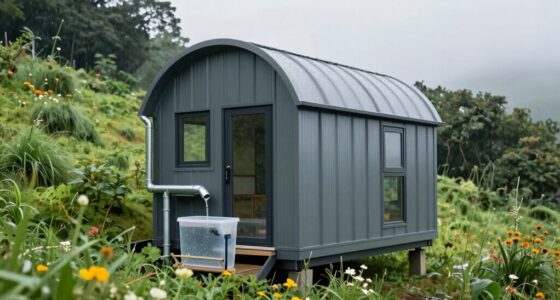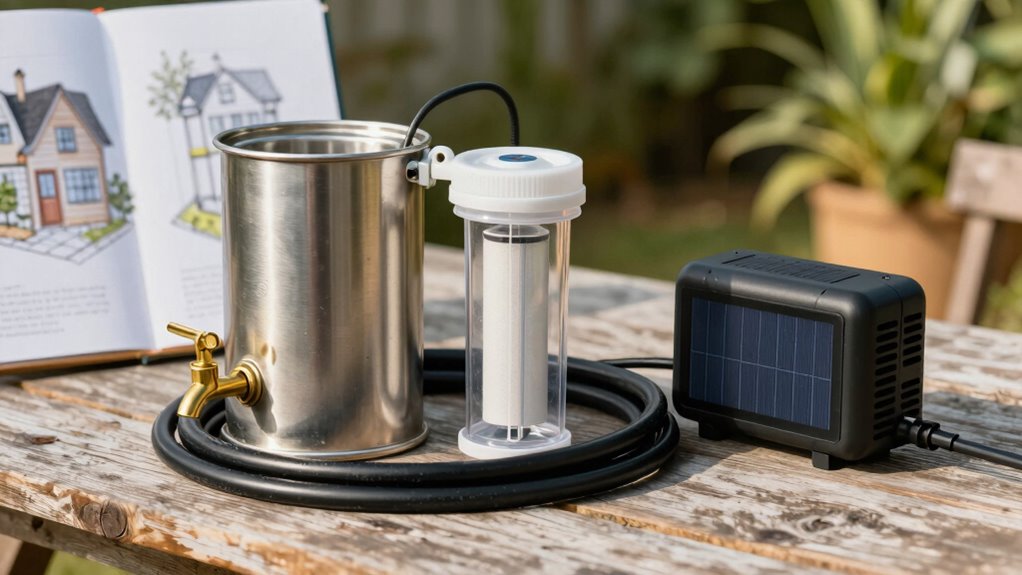

To achieve off-grid water independence for your tiny house, consider bundles that include rainwater harvesting, filtration, and maintenance components. These systems let you collect rainwater efficiently, keep it safe with filters, and guarantee easy upkeep. With a complete bundle, you’ll reduce reliance on municipal water, save money, and gain control over your water supply. Keep exploring to discover the best options and how to set up a reliable, sustainable water system tailored for tiny living.
Key Takeaways
- Off-grid water bundles typically include rainwater harvesting, filtration, and pumping components for self-sufficient water supply.
- Proper design and maintenance ensure reliable, safe water access for tiny house living.
- Bundles help maximize water collection efficiency and minimize contamination risks.
- Using these systems reduces reliance on municipal water, lowering costs and environmental impact.
- Choosing the right components enhances ease of installation, operation, and long-term sustainability.

Are you ready to free yourself from traditional water hookups and embrace true independence? If so, exploring off-grid water solutions is the first step toward making your tiny house truly self-sufficient. One of the most practical ways to achieve this is by investing in an off-grid water independence bundle that includes rainwater harvesting systems and water filtration systems. These tools work together to guarantee you have a reliable, clean water supply without relying on city infrastructure.
Rainwater harvesting is a game-changer. Instead of letting rainwater go to waste, you capture it through gutters and direct it into storage tanks. With the right setup, you can collect enough water to meet your daily needs, even during dry spells. You’ll want to make sure your collection system is designed to maximize catchment efficiency and prevent debris or pests from contaminating your stored water. Installing screens and first flush diverters can help keep your water clean from the start, making it easier to maintain. Understanding water collection systems is key to designing an efficient and reliable setup for your tiny home. Additionally, maintaining proper system maintenance ensures your setup remains effective over time.
Capture rainwater efficiently with screens and diverters to keep your stored water clean and safe.
Once you’ve collected rainwater, the next essential step is ensuring its purity. That’s where water filtration systems come into play. Even rainwater can carry contaminants, bacteria, or debris, so filtering it before use is vital for your health and safety. Modern filtration options are compact and easy to install, fitting perfectly into small spaces typical of tiny houses. You can choose from activated carbon filters, UV purifiers, or multi-stage systems that remove sediment, chemicals, and pathogens. When properly integrated into your setup, these systems provide peace of mind, knowing your water is safe for drinking, cooking, and washing.
Combining rainwater harvesting with effective filtration creates a sustainable, off-grid water solution tailored to tiny house living. You’ll have the flexibility to store water, use it efficiently, and maintain quality without relying on external sources. Plus, many bundles include pumps, filters, and accessories that simplify installation and maintenance, making the entire process straightforward even if you’re new to off-grid living. It’s important to select components that are compatible and suitable for small-scale water systems, ensuring your setup functions smoothly and reliably.
This approach not only saves money on water bills but also reduces your environmental impact by utilizing natural rainfall instead of drawing from municipal sources. It’s empowering to know that you can harvest and purify your own water, giving you peace of mind and greater control over your resources. With the right off-grid water independence bundle, your tiny house becomes a true sanctuary of self-sufficiency, free from the constraints of traditional water hookups.

Harvesting Rainwater for Your Homestead: Build Self-Sufficient and Off-Grid Systems by Bringing Rainwater to Your Homestead Quickly and Cheaply
As an affiliate, we earn on qualifying purchases.
As an affiliate, we earn on qualifying purchases.
Frequently Asked Questions
How Do Off-Grid Water Systems Handle Water Purification?
Off-grid water systems handle purification through various methods, including water filtration and purification techniques. You might use carbon filters, UV purifiers, or ceramic filters to remove contaminants and guarantee water is safe to drink. Combining these methods provides an overall approach, effectively eliminating bacteria, viruses, and sediments. By regularly maintaining these systems, you assure clean, safe water supply, making your tiny house truly independent and self-sufficient.
What Is the Maintenance Frequency for Water Independence Bundles?
You should check your rainwater harvesting system and water storage tanks monthly to guarantee everything runs smoothly. Regular maintenance involves cleaning filters, inspecting for leaks, and cleaning out debris from tanks. Think of it like giving your system a health check-up. This routine keeps your water fresh and safe, preventing blockages or contamination. Staying consistent means your off-grid water system remains reliable, ensuring you always have clean water when you need it most.
Can These Bundles Support Multiple Tiny Houses Simultaneously?
Yes, these bundles can support multiple tiny houses simultaneously, depending on your water storage capacity and pump efficiency. Larger water storage tanks guarantee there’s enough water for everyone, while a high-efficiency pump maintains steady flow and pressure. You’ll want to assess your total water needs and select a bundle with adequate storage and a reliable pump to guarantee consistent water supply for multiple tiny homes.
Are Off-Grid Water Solutions Compliant With Local Regulations?
Think of your off-grid water solution as a ship steering legal waters. Yes, these solutions can be compliant with local regulations, but you need to chart the right course. You must understand legal compliance and permitting requirements specific to your area. By researching local laws and obtaining necessary permits, you guarantee your water system sails smoothly, avoiding legal storms and keeping your tiny house voyage trouble-free.
What Is the Typical Lifespan of Off-Grid Water Components?
The typical lifespan of off-grid water components varies, but generally, water storage tanks last 10-15 years with proper maintenance. Pumps tend to be durable, lasting around 3-5 years, though high-quality models can last longer with regular upkeep. To maximize lifespan, you should regularly inspect and maintain your water storage and pump. Proper care guarantees your off-grid water system remains reliable and efficient over time.
Conclusion
So, here’s the irony: while tiny house living promises freedom from the grid, investing in off-grid water systems subtly ensnares you in a web of maintenance and self-sufficiency. You start with dreams of simplicity, only to find yourself juggling water filters, pumps, and tanks. Yet, isn’t that the true charm? In embracing independence, you’ve unwittingly chosen a lifestyle where every drop is a small rebellion—an elegant dance with nature’s unpredictable whims.