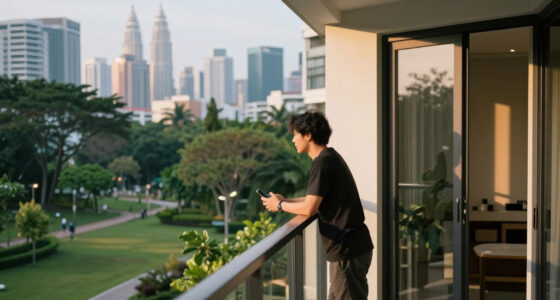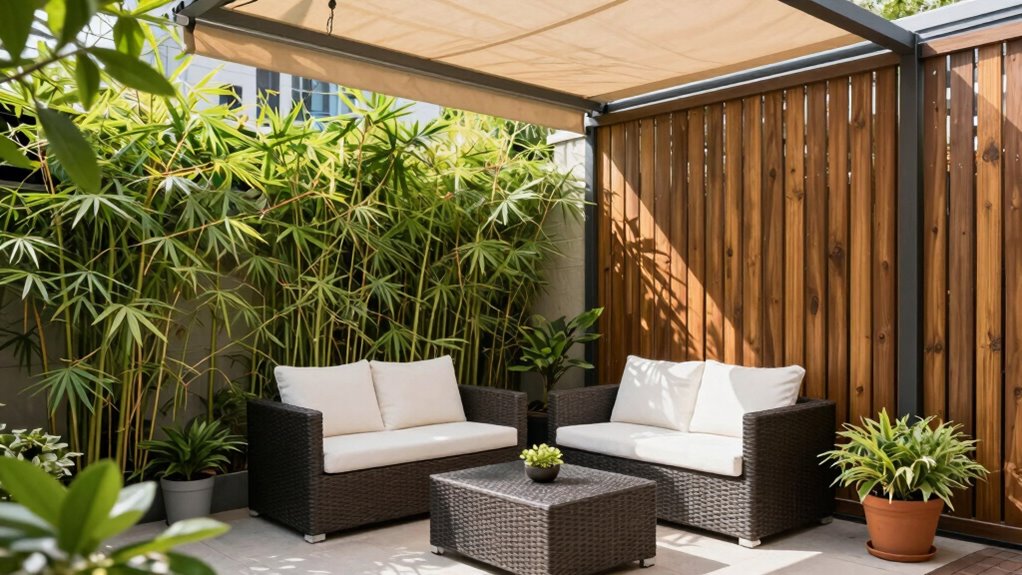

To maximize privacy and shade in small yards, try vertical elements like trellises, lattice panels, or tall planters with climbing plants to create height without clutter. Use durable materials such as composite wood, vinyl, or weather-resistant fabrics for fences, screens, and shade sails. Incorporate greenery like shrubs or fast-growing evergreen hedges along property lines for natural barriers. Combining these strategies offers a flexible, long-lasting solution to enhance your outdoor space—keep exploring for more ideas to optimize your small property.

Get compact home essentials delivered free with Prime
- Fast, free delivery on millions of items
- Prime Video, Amazon Music and more included
- Member-only deals all year
Key Takeaways
- Use vertical structures like trellises and tall planters with climbing plants to maximize privacy and shade without taking up ground space.
- Select durable, low-maintenance materials such as composite wood, vinyl, or treated metal for fences and shade structures.
- Incorporate evergreen shrubs, hedges, or bamboo along property lines for natural, year-round privacy barriers.
- Install flexible elements like retractable awnings or garden walls that serve as privacy screens and shade options.
- Opt for weather-resistant, sustainable materials that balance durability, privacy, and aesthetic appeal for long-lasting solutions.
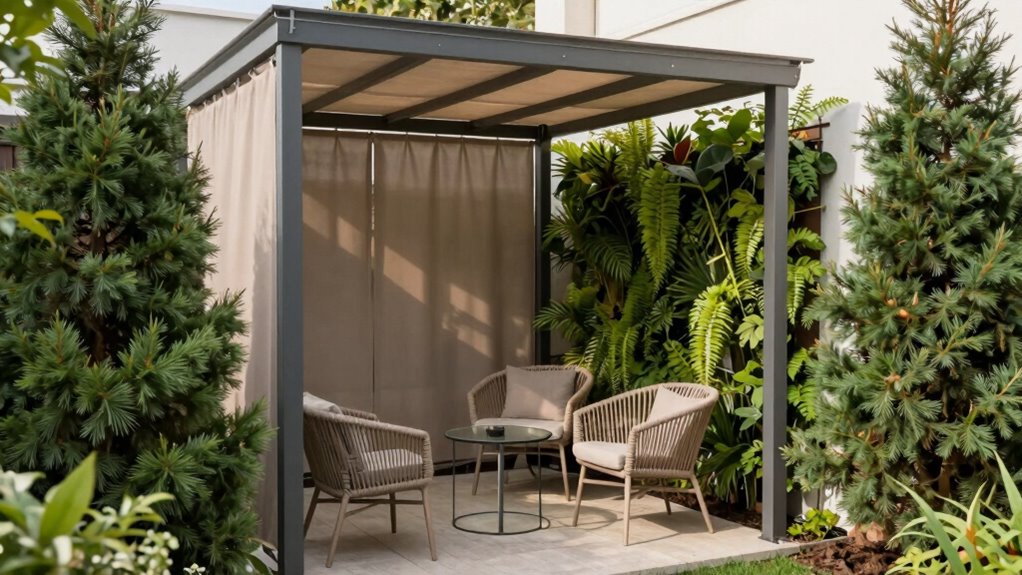
When working with a small property, finding effective privacy and shade solutions can feel challenging, but the right choices can transform your outdoor space into a private, comfortable retreat. Your goal is to maximize every inch of your yard while creating a sense of seclusion and comfort. To do that, thoughtful landscape design plays an essential role. Instead of cluttering your space with bulky structures, choose vertical elements like trellises, lattice panels, or tall planters that add height without taking up much ground area. These elements can support climbing plants, which not only enhance privacy but also add natural beauty and shade.
Material durability is key when selecting privacy screens and shade structures. You want materials that withstand the elements—sun, rain, wind—without warping, rotting, or fading quickly. For example, composite wood or vinyl fencing offers longevity and low maintenance, making them ideal for small properties where you want long-lasting solutions. Metal options like aluminum or wrought iron are sturdy and can be crafted into decorative panels that provide both privacy and style, but make certain they’re treated to resist rust. When choosing shade structures such as pergolas, shade sails, or umbrellas, opt for fabrics made of UV-resistant, weatherproof materials. These will maintain their appearance over time and provide consistent protection from the sun.
Choose durable materials like composite wood, vinyl, or treated metal for lasting privacy and shade structures.
Incorporating greenery into your landscape design not only enhances privacy but also creates a lush, inviting atmosphere. Strategically planting shrubs, hedges, or bamboo along property lines offers a natural barrier that feels organic and soft. Fast-growing varieties like privet or arborvitae can quickly establish privacy, while evergreen options ensure year-round coverage. These plants also contribute to shade, especially when layered with taller trees or climbing plants on your trellises. Choosing plants that thrive locally can help ensure their success and sustainability in your environment. Additionally, selecting plants with dense foliage can provide an extra layer of natural privacy that blends seamlessly into your landscape. Incorporating native plants can also reduce maintenance and water usage, making your landscape more sustainable.
You can also consider multi-functional elements that serve both aesthetic and practical purposes. For instance, a tall, narrow garden wall made from durable materials can act as a privacy screen and a backdrop for your garden. Installing a retractable awning or a shade sail provides flexible shading options that can be adjusted based on the sun’s position, giving you control over your outdoor comfort. Incorporating integrated landscape features can further maximize your small space by combining functionality with visual appeal. To enhance the longevity of your privacy and shade solutions, choosing weather-resistant materials is essential for durability and minimal maintenance. Remember, the key is balancing privacy, shade, and openness while choosing materials that stand the test of time. When you combine smart landscape design with durable materials, you’ll craft a small outdoor space that’s private, shaded, and perfectly suited to your lifestyle.
outdoor privacy screen lattice panels
As an affiliate, we earn on qualifying purchases.
As an affiliate, we earn on qualifying purchases.
Frequently Asked Questions
What Are the Best Low-Cost Privacy Options for Small Yards?
You can achieve low-cost privacy in your small yard by adding privacy screens or creating DIY fencing. Privacy screens, like bamboo or fabric panels, are affordable and easy to install along your existing fence or patio. Alternatively, building DIY fencing with reclaimed wood or inexpensive materials lets you customize the height and design, providing privacy without breaking the bank. Both options are effective and simple solutions for maintaining your yard’s privacy.
How Do Shade Solutions Affect Property Value?
Shade solutions can boost your property’s value by enhancing curb appeal and providing comfort, but they also raise privacy concerns if not chosen carefully. Durable shade structures, like quality pergolas or awnings, promise long-lasting appeal, making your yard more inviting and functional. Imagine a space that invites relaxation and privacy—yet, if poorly selected, it could detract from your home’s overall value. Choose wisely to maximize both style and security.
Are There Eco-Friendly Shade and Privacy Options Available?
Yes, eco-friendly shade and privacy options are available. You can choose renewable shading materials like bamboo, recycled wood, or organic fabrics, which reduce environmental impact. These sustainable options not only provide effective privacy and shade but also help you lower your carbon footprint. By opting for eco-friendly materials, you support environmental conservation while enhancing your small property’s comfort and privacy.
How Can I Maintain Privacy Without Blocking Natural Light?
Think of your space as a delicate dance between privacy and sunlight. You can maintain privacy without blocking natural light by using privacy screens with light filtering capabilities. These screens act like a gentle veil, offering seclusion while still allowing sunlight to seep through. Position them carefully to maximize privacy without casting shadows or dark spots, ensuring your small property feels open, bright, and welcoming.
What Are the Latest Trends in Small Property Shading?
You should explore the latest trends like smart technology-integrated shading solutions, which automatically adjust based on sunlight and weather. Custom designs are also popular, allowing you to tailor shades to your small property’s unique layout and style. These modern options offer convenience, energy efficiency, and aesthetic appeal, helping you optimize your space without sacrificing natural light. Embracing these trends guarantees your property stays comfortable and stylish year-round.
Conclusion
With small properties, clever privacy and shade solutions transform your space into a cozy retreat. Did you know that vertical gardens and foldable screens can increase privacy by up to 40%? By choosing multi-functional features, you maximize every inch of your yard. Focus on versatile, space-saving options to create a private, shaded oasis without sacrificing style or function. Small spaces can feel just as private and relaxing—sometimes, all it takes is a smart design touch.
Columbus Day / Indigenous Peoples' Day Picks
long weekend sales
As an affiliate, we earn on qualifying purchases.