When choosing an air purifier, understanding CADR ratings can seem confusing at first, but they’re key to selecting the right model for your space. These ratings tell you how quickly an purifier can clean specific particles like smoke or pollen, helping you make an informed decision. Yet, knowing how to interpret these numbers and match them to your needs isn’t always straightforward. Exploring this further can guarantee you get the most effective and efficient air purification.

Get compact home essentials delivered free with Prime
- Fast, free delivery on millions of items
- Prime Video, Amazon Music and more included
- Member-only deals all year
Key Takeaways
- CADR ratings measure how quickly an air purifier can filter specific particles like smoke, dust, and pollen.
- Higher CADR means faster, more effective air cleaning but must match the room size for optimal performance.
- Effective filtration depends on using true HEPA filters, which remove 99.97% of particles as small as 0.3 microns.
- Noise levels can increase with higher CADR settings; look for devices with quiet operation features for comfort.
- Combining appropriate CADR ratings, quality filters, and low noise levels ensures better indoor air quality and user satisfaction.

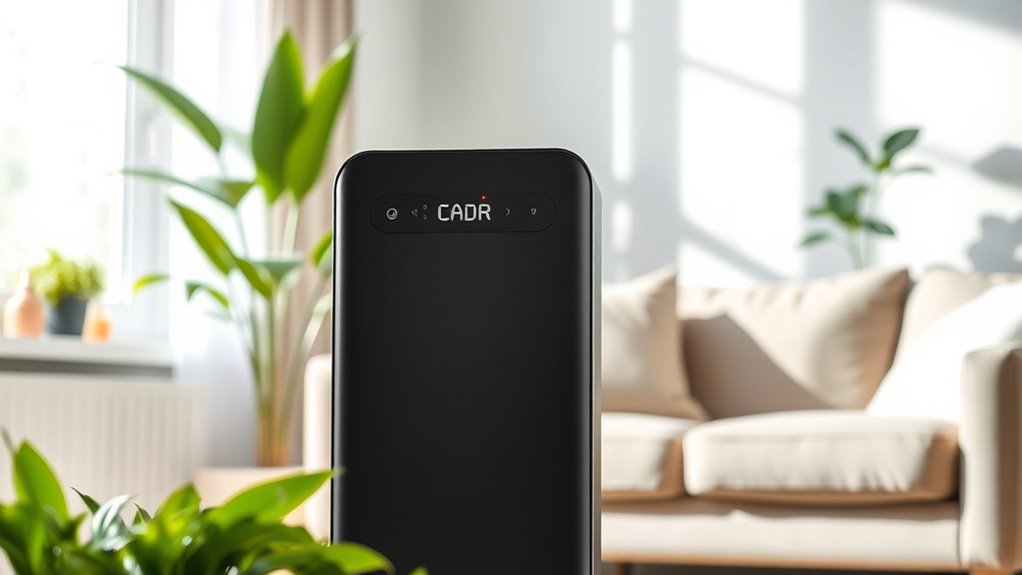
Air purifiers have become vital for maintaining clean indoor air, especially in areas with pollution, allergens, or pet dander. When choosing one, understanding CADR ratings can seem confusing, but it’s essential for making an informed decision. The Clean Air Delivery Rate, or CADR, measures how effectively an air purifier filters out specific particles, like smoke, dust, and pollen, within a set time frame. The higher the CADR, the faster and more efficiently the device cleans the air in a given space. It’s important to match the CADR rating with your room size to achieve maximum performance. For example, a high CADR in a small room might be overkill, while a low rating in a large living area won’t keep the air clean.
Choose an air purifier with the right CADR rating for your room size for optimal air cleaning.
One key factor that influences both CADR effectiveness and your overall satisfaction is the type of filter used, particularly HEPA filters. HEPA filters are renowned for capturing at least 99.97% of particles as small as 0.3 microns, including common allergens, pet dander, and even some bacteria. When evaluating air purifiers, look for models equipped with true HEPA filters, as they deliver superior filtration compared to cheaper, less effective alternatives. These filters also tend to last longer if maintained properly, providing consistent air quality over time. Additionally, understanding beneficial filtration methods can help you select the most effective device for your needs.
Another aspect to consider is noise levels. While a high CADR rating indicates powerful performance, it can sometimes come with increased noise output, especially on higher fan settings. You’ll want to find a balance where the purifier operates quietly enough for your comfort, particularly if you plan to use it in bedrooms or study areas. Many modern air purifiers are designed with noise reduction features, allowing you to enjoy cleaner air without disruptive sounds. Pay attention to decibel levels specified by manufacturers—anything below 50 dB generally remains unobtrusive during normal use.
Ultimately, selecting an air purifier involves weighing CADR ratings alongside other features like HEPA filtration and noise levels. By understanding how these elements work together, you can choose a device that not only cleans your air efficiently but also fits seamlessly into your daily life. With the right combination of power, quiet operation, and effective filtration, you’ll breathe easier knowing your indoor environment is healthier and more comfortable.
True HEPA air purifier for large rooms
As an affiliate, we earn on qualifying purchases.
As an affiliate, we earn on qualifying purchases.
Conclusion
Now that you understand CADR ratings, choosing the right air purifier becomes easier. Picture your room filled with fresh, crisp air, as if a gentle breeze has swept through, clearing away dust and smoke. When you match the right CADR with quality filters and quiet operation, you create a sanctuary of clean, breathable air. It’s a simple step toward a healthier, more comfortable home where every breath feels invigorating and pure.
Evergreen bestsellers Picks
bestsellers
As an affiliate, we earn on qualifying purchases.