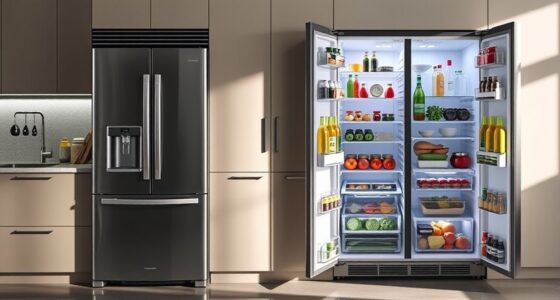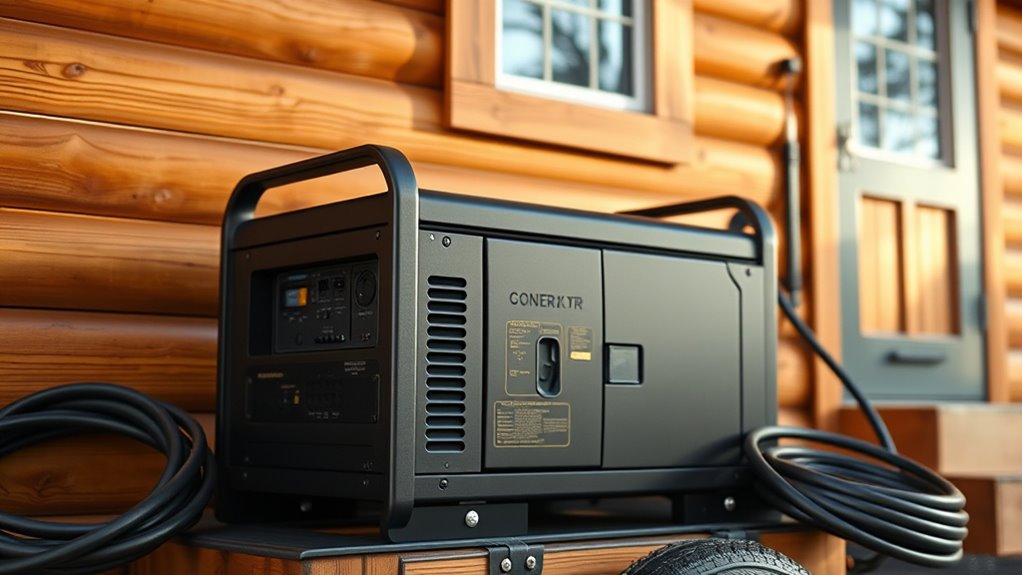

Choosing the right backup generator for your tiny house is vital to guarantee reliable power during outages without risking overloads. Proper sizing requires understanding your essential energy needs and matching them to a generator’s capacity. Getting it right can save you money, increase safety, and keep your home comfortable. But knowing how to determine the correct size can be tricky—let’s explore what factors you need to take into account.

Get compact home essentials delivered free — and shop member deals
- Fast, free delivery on millions of items
- Access to Prime Big Deal Days deals on October 6–7
- Prime Video, Amazon Music and more included
Key Takeaways
- Assess your essential appliances’ wattage to determine the minimum generator capacity needed.
- Avoid oversizing to prevent unnecessary fuel consumption and ensure efficient operation.
- Choose solar-compatible generators that integrate seamlessly with your existing renewable energy system.
- Consider your peak power demands during outages to select a generator that can handle the load.
- Ensure the generator provides sufficient runtime and fuel efficiency for reliable backup during emergencies.
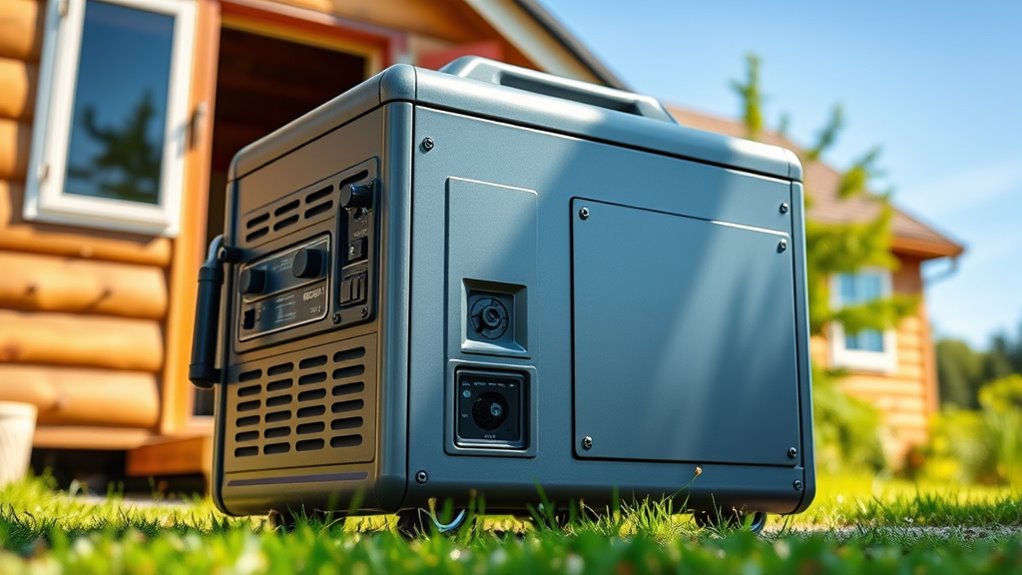
When living in a tiny house, having a reliable backup generator can be a game-changer during power outages or emergencies. You want a system that keeps your essentials running without creating unnecessary hassle or noise. Sizing your generator correctly is key to avoiding overloads or wasted energy. One of the most important factors to think about is solar compatibility. If you already have a solar power setup, you’ll want a generator that can seamlessly integrate with your existing system. This way, you can maximize the use of renewable energy and reduce your reliance on fuel, saving money and lowering your environmental impact. Solar-compatible generators usually feature outlets and controls designed to work with solar panels or battery systems, making them a smart choice for eco-conscious tiny house dwellers. Additionally, exploring best restaurants and local food options can enhance your tiny house living experience by providing convenient dining solutions nearby.
Conclusion
Just like the steady heartbeat of a trusted friend, the right-sized backup generator keeps your tiny house resilient through life’s storms. By carefully matching your power needs, you guarantee safety, comfort, and peace of mind—no matter what’s ahead. Remember, a well-chosen generator isn’t just equipment; it’s your silent guardian, standing strong like a lighthouse guiding you home in the darkest night. Prepare wisely, and let your tiny home shine bright, no matter the weather.
Fall Picks
fall essentials
As an affiliate, we earn on qualifying purchases.