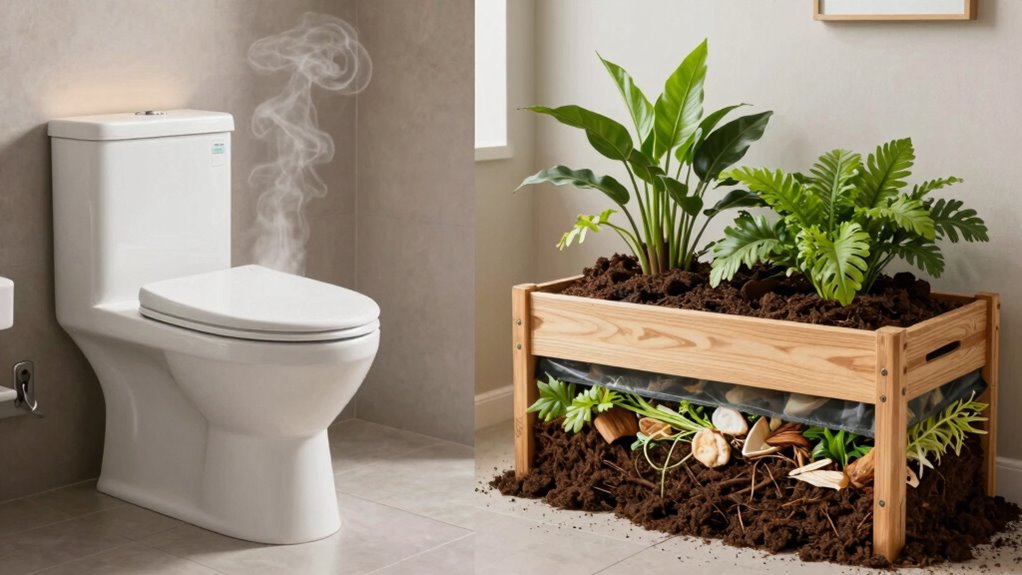
Incinerating toilets use little to no water and burn waste into ash, making them ideal for remote or water-scarce areas, while composting systems rely on organic material and biological processes, which may need more space and maintenance. Incinerators are compact, low-maintenance, and manage odors well, but composting toilets produce useful compost and can be easier to install where water access is limited. Want to explore which system fits your needs best? Keep going to find out more.
Key Takeaways
- Incinerating toilets use minimal or no water, burning waste into ash, while composting systems rely on biological decomposition.
- Incinerators have a smaller footprint and are ideal for limited spaces; composting toilets may need more room for biological processes.
- Incinerating toilets effectively eliminate odors through high-temperature burning; composting toilets require proper maintenance to control smells.
- Incinerators are low-maintenance with regular temperature checks; composting systems need careful management of microbial activity and organic materials.
- Incinerating toilets are suitable for water-scarce or remote locations, whereas composting toilets produce usable compost and are environmentally friendly.
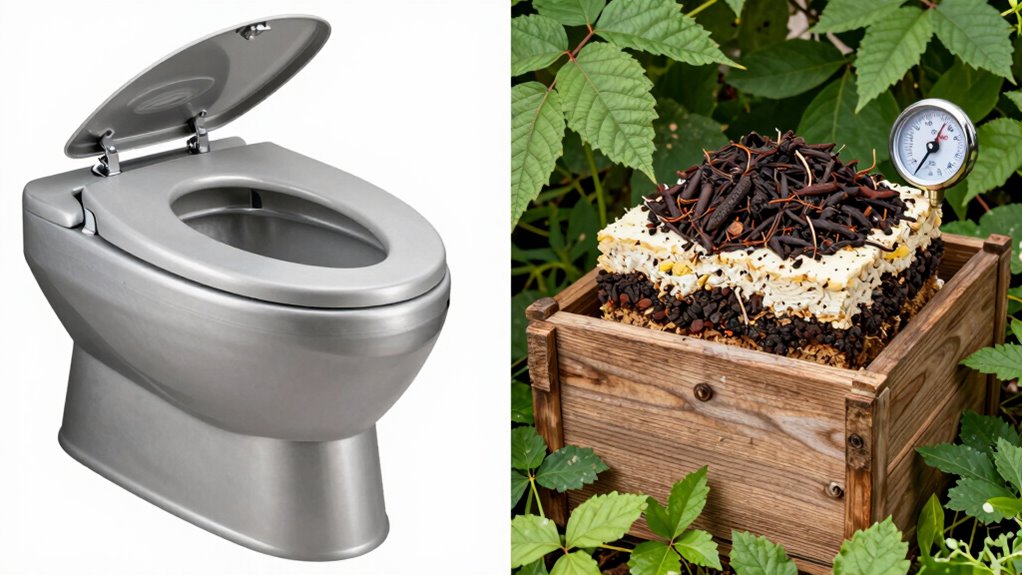
Have you ever wondered how incinerating toilets compare against composting systems? When you’re thinking about off-grid or eco-friendly waste management options, two main choices often come to mind: incinerating toilets and composting systems. Each has its strengths, especially when it comes to water conservation and odor management. Incinerating toilets use minimal or no water, making them highly efficient for conserving this essential resource. Unlike traditional flush toilets that require gallons of water per use, incinerators burn waste into ash, considerably reducing water consumption. This process makes them ideal for remote locations where water is scarce or expensive. In contrast, composting toilets also save water but typically require a small amount of water or no water at all, depending on the design. They rely on aerobic decomposition, turning waste into compost through natural biological processes. While both systems promote water conservation, incinerating toilets excel in environments where water use must be minimized to preserve resources. Additionally, incinerating toilets often have a smaller physical footprint, making them suitable for limited spaces. Proper ventilation and temperature control are crucial for effective incinerator operation, which can influence maintenance needs. Regular monitoring of the temperature inside the incinerator ensures complete combustion and reduces maintenance issues. Incorporating proper maintenance practices can extend the lifespan of incinerators and improve their efficiency.
Odor management is another key factor to consider. Incinerating toilets effectively eliminate odors because the waste is burned at high temperatures, turning it into sterile ash. This process prevents foul smells from lingering, making incinerators suitable for confined spaces or areas where odor control is a priority. Proper ventilation is essential, but once set up correctly, odors are rarely an issue. On the other hand, composting toilets can sometimes produce unpleasant smells if not maintained properly. They depend on a balanced mix of organic materials and regular maintenance to keep odors at bay. You need to manage the composting process carefully, adding carbon-rich materials like sawdust or peat moss to control moisture and microbial activity. If not maintained diligently, composting systems can emit strong odors, which may be problematic in residential or sensitive environments. Understanding the biological processes involved can help optimize maintenance and odor control. Additionally, choosing the right material balance can significantly impact odor levels and composting efficiency. Proper aeration and moisture levels are also crucial to prevent odors and promote healthy composting.
Both systems have their place depending on your needs. If water conservation and odor control are top priorities, incinerating toilets offer a clean, low-maintenance solution that minimizes water use and odors effectively. Composting toilets, however, are more environmentally friendly in terms of producing usable compost and can be easier to install where water access is limited. The choice ultimately hinges on your specific situation—space, budget, environmental goals, and maintenance capacity. Whichever system you select, understanding their differences helps you make an informed decision that aligns with your sustainability objectives and lifestyle needs.

Square Smart Bidet Toilet for Bathroom with Remote Control, Tankless Toilet with Foot Touching Lid Opening, Auto Lid Closing and Flushing, Heated Seat, Digital Display
【FOOT-SENSING FLUSH & AUTO FLUSHING】 The smart bidet toilet flushes automatically when you leave and can be activated…
As an affiliate, we earn on qualifying purchases.
As an affiliate, we earn on qualifying purchases.
Frequently Asked Questions
What Are the Initial Installation Costs for Incinerating Versus Composting Toilets?
You’ll find that incinerating toilets typically have higher initial installation costs than composting systems, mainly due to their advanced technology and power requirements. While composting toilets are more affordable upfront, they may need more maintenance over time. Incinerating models promote water conservation and offer user convenience by eliminating waste quickly. Consider your budget and preferences, balancing upfront costs against ongoing maintenance and the benefits of water savings and ease of use.
How Do Maintenance Requirements Differ Between Incinerating and Composting Systems?
You’ll find that incinerating toilets require less frequent maintenance, often needing only periodic cleaning and emptying of ash, which enhances user convenience. In contrast, composting systems demand regular maintenance, such as mixing, monitoring moisture, and removing composted material to prevent odors. While incinerating toilets focus on simple, infrequent upkeep, composting systems require more consistent attention to guarantee proper composting and a pleasant experience.
Are There Any Environmental Regulations Affecting Either Toilet Type?
Think of regulatory compliance like charting a course through a maze—you need to follow the rules to find your way. Environmental regulations and legal restrictions do impact both incinerating and composting toilets. For example, some areas restrict incinerating toilet emissions, while composting systems must meet specific compost quality standards. Staying informed about local laws guarantees you avoid penalties and operate your system sustainably, much like a map guides you through unfamiliar territory.
What Is the Typical Lifespan of Each System?
You can expect incinerating toilets to last around 10-15 years with proper maintenance, offering reliable user convenience and water conservation features. Composting systems tend to last longer, often 15-20 years, if you keep up with regular upkeep. Both systems are designed for durability, but incinerating toilets require more frequent component checks. Your choice depends on how much water conservation and user convenience you prioritize over lifespan.
How Do Odor Control Features Compare Between the Two Options?
Odor control in incinerating toilets is like a fortress—almost no smell escapes. They use advanced odor neutralization and high ventilation efficiency to keep your space fresh. Composting systems, on the other hand, rely on natural processes and ventilation, which can sometimes let odors escape if not managed well. Overall, incinerating toilets tend to offer superior odor control, making them ideal for those sensitive to smells.
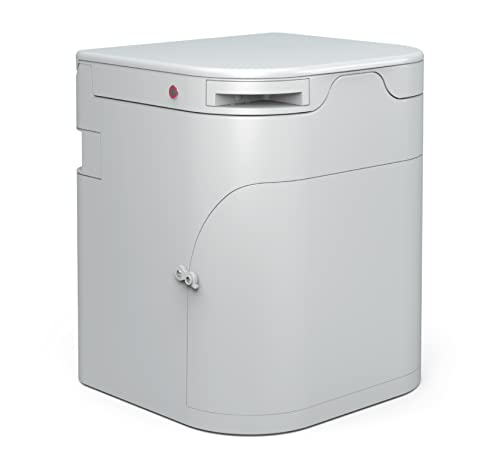
OGO Origin Composting Toilet – 12V Electric Agitator, Urine Diverting RV Toilet for Van Life, Tiny Home & Boat – 15" Compact, Odorless Off-Grid Toilet, No Black Tank
SMALLEST FOOTPRINT FOR TIGHT BUILDS (15"x16") Designed for Sprinter/Transit vans, tiny homes & boats where space is everything….
As an affiliate, we earn on qualifying purchases.
As an affiliate, we earn on qualifying purchases.
Conclusion
Ultimately, choosing between incinerating and composting toilets depends on your needs and environment. Incinerating toilets offer a hygienic, odorless solution, perfect for off-grid setups, while composting systems are eco-friendly and cost-effective for sustainable living. Remember, “a stitch in time saves nine”—being informed now helps you make the best decision for long-term comfort and environmental impact. Whichever you choose, guarantee it aligns with your lifestyle and values.

Laveo Dry Flush Toilet – Waterless, Portable, Self Contained and Easier to Use than an Incinerating or Composting Toilet. Great for Tiny Homes, Vans, Boats, Camping, RVs and Off Grid, LDPE, White
What's Included – Every Dry Flush Waterless Toilet comes with a Battery and Charger, Cable, 2 Cartridges and…
As an affiliate, we earn on qualifying purchases.
As an affiliate, we earn on qualifying purchases.

Toilet Sawdust Compost Composting 4.4 Pounds Kit with 8 Gallon Biodegradable Bags for Indoor and Outdoor Portable Toilets, All Natural Odor Control Wood Shavings for Camping Rv Off-grid Living
Complete Refill Kit – Nothing Else Needed: includes 2 bags of natural sawdust litter and 4 biodegradable 8-gallon…
As an affiliate, we earn on qualifying purchases.
As an affiliate, we earn on qualifying purchases.