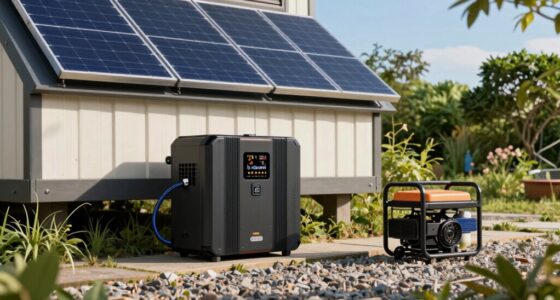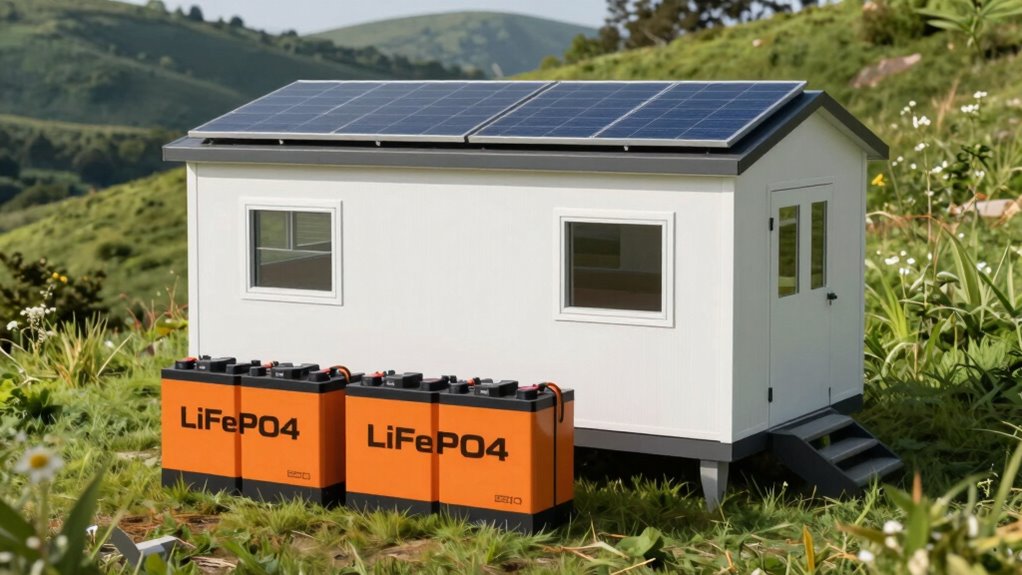

Choosing the right Lifepo4 battery for a tiny house solar system involves balancing capacity, lifespan, cost, and features. The EnergyRock 12V 280Ah stands out as the best overall pick, offering reliable performance and good value. For those prioritizing high capacity, the 12V 330Ah Deep Cycle Battery provides ample power, while the 100Ah LiFePO4 with Smart BMS is ideal for lightweight setups. The main tradeoffs involve upfront cost versus long-term durability and capacity. Continue reading for a detailed comparison to help you identify the best fit for your tiny home solar needs.

Get compact home essentials delivered free with Prime
- Fast, free delivery on millions of items
- Prime Video, Amazon Music and more included
- Member-only deals all year
Key Takeaways
- High-capacity batteries like the 330Ah models provide more stored energy but tend to cost significantly more.
- Batteries with integrated BMS and low temp protection offer better safety and longevity, especially in variable climates.
- Size and weight differences matter; compact options are easier to install but may have lower capacity.
- Bluetooth and SOC indicators are valuable features for monitoring battery health remotely.
- Premium models often include longer warranties and better thermal management, justifying higher prices for serious off-grid users.


| lifepo4 battery for tiny house solar | Voltage | Capacity | Weight | Dimensions |
|---|---|---|---|---|
| ECO-WORTHY EnergyRock 12V 280A | 12V | 280Ah | — | — |
| 12V 300Ah | 12.8V | 314Ah | 57.3 pounds | 15.16×7.6×9.84 inches |
| 12V 100Ah LiFePO4 Battery with | 12.8V | 100Ah | 24 lbs | — |
| TalentCell 12V 6Ah LiFePO4 Bat | 12.8V | 6000mAh (6Ah) | — | — |
| 12V 330Ah LiFePO4 Battery | 12V | 330Ah | 56 pounds | 7.64"D x 13.74"W x 9.84"H |
| 12V 300AH Lithium Iron Phospha | 12.8 volts | 300Ah | 55.2 pounds | 15.16"D x 7.56"W x 9.76"H |
| 51.2V 300Ah LiFePO4 Lithium Ba | 51.2V | 300Ah | 115kg (253 lbs) | — |
| Renogy 300Ah LiFePO4 Lithium B | 12V | 300Ah | 55.1 lbs | 15.12 × 7.64 × 9.96 inches |
| HumsiENK 12V 300Ah LiFePO4 Lit | 12V | 300Ah (314Ah nominal) | — | 15.1 x 9.7 x 7.6 inches |
| ECO-WORTHY 12V 314Ah LiFePO4 L | 12V | 314Ah | 60.4 lbs | 16.3" D x 8.5" W x 10.2" H |
More Details on Our Top Picks
ECO-WORTHY EnergyRock 12V 280Ah LiFePO4 Lithium Battery
The ECO-WORTHY EnergyRock 280Ah stands out for its heavy-duty metal enclosure, making it ideal for off-road, off-grid, or rougher environments where durability is critical. Its Bluetooth monitoring feature allows real-time oversight of voltage and capacity, a feature not available on the TalentCell pack, which makes this battery more suitable for those who want visibility into their system. However, its weight and multi-package delivery can complicate installation. Compared with the 12V 100Ah model, this battery offers significantly more capacity, though at the cost of increased weight. It delivers reliable performance with safety features like low-temp protection and a safety switch, making it well-suited for sustained, heavy use in tiny house setups that require robustness and safety.
Pros:- Heavy-duty metal enclosure enhances durability and safety
- Bluetooth app provides real-time system monitoring
- Built-in safety features including low-temperature protection
- Vibration and shock resistant for off-road use
Cons:- Heavy weight may require assistance during installation
- Multiple packages can delay setup
- Limited info on cycle life or warranty
Best for: Tiny house owners needing a rugged, high-capacity battery with integrated monitoring and safety features.
Not ideal for: Small or portable setups where weight and size are concerns, or users seeking simple plug-and-play systems.
- Voltage:12V
- Capacity:280Ah
- Battery Type:LiFePO4 Lithium
- Enclosure:Metal case
- Built-in BMS:200A
- Max Energy:3584Wh
- Bluetooth Monitoring:Yes
- Safety Switch:Yes
- Low-Temperature Protection:Yes
Our verdict“This battery is best suited for those prioritizing durability, safety, and real-time monitoring in a rugged tiny house environment.”
12V 300Ah (314Ah) LiFePO4 Lithium Battery with 200A BMS and Deep Cycles
Compared with the EnergyRock, the 12V 314Ah LiFePO4 offers a higher capacity and an impressive cycle life exceeding 6000 deep cycles, making it ideal for users who want longevity and frequent cycling. Its IP65 waterproof rating makes it well-suited for outdoor installations without additional enclosures. However, it’s heavier and slightly more expensive than the 100Ah models, and it’s limited strictly to energy storage, not starting applications. This battery’s robustness and protection features make it a top pick for off-grid tiny house systems where long-term durability and weather resistance are priorities. It’s less suitable for those needing lightweight or portable solutions.
Pros:- High capacity with over 6000 deep cycle life
- IP65 waterproof rating for outdoor durability
- Robust BMS for overcharge, discharge, and short circuit protection
- Relatively lightweight for its capacity
Cons:- Heavy at over 57 pounds, challenging for single-person installation
- Limited to energy storage applications, not suitable for starting engines
- Requires periodic charging if unused for extended periods
Best for: Tiny house owners seeking a high-capacity, weatherproof energy storage solution with exceptional cycle life.
Not ideal for: Users with very limited space or those who prefer lightweight, portable batteries for temporary setups.
- Voltage:12.8V
- Capacity:314Ah
- Weight:57.3 pounds
- Dimensions:15.16×7.6×9.84 inches
- Battery Type:LiFePO4
- Additional Features:IP65 waterproof, BMS protection, automatic balancing
Our verdict“Ideal for those prioritizing longevity and weather resistance in a dependable, outdoor-capable battery system.”
12V 100Ah LiFePO4 Battery with Smart BMS, 1280Wh, Deep Cycle, 10-Year Lifespan, Low Temp Protection, Lightweight
This 100Ah LiFePO4 stands out for its exceptional lifespan of over 15,000 deep cycles and a 10-year warranty, making it an excellent choice for those seeking longevity and minimal maintenance. Its smart BMS offers comprehensive safety features, similar to the higher-capacity models, but in a more compact form. Its lightweight and small size make it ideal for portable or space-constrained tiny house systems. Compared to the EnergyRock, this battery’s advanced BMS and extended lifespan provide peace of mind, though it comes with a higher initial investment. It’s best suited for owners who want a reliable, long-term power solution without adding significant weight or bulk.
Pros:- Over 15,000 deep cycles and 10-year lifespan
- Smart BMS for safety and system management
- Lightweight and compact for easy installation
- Wide temperature range for all-weather use
Cons:- Higher upfront cost compared to basic lead-acid batteries
- Limited capacity for large power demands
- Care needed to prevent over-discharge or damage
Best for: Tiny house owners looking for a compact, long-lasting, and safe battery for solar storage.
Not ideal for: High-capacity needs or applications requiring substantial power reserves in a single unit.
- Voltage:12.8V
- Capacity:100Ah
- Energy:1280Wh
- Cycle Life:15000+ deep cycles
- Temperature Range:-4°F to 140°F
- Weight:24 lbs
- Max Expandable Capacity:20.48kWh
- Discharge Current:100A
- Resistance:120 nanoohms
Our verdict“This battery is well-suited for those seeking a long-lasting, space-efficient power source with advanced safety features.”
TalentCell 12V 6Ah LiFePO4 Battery Pack, Rechargeable Lithium Iron Phosphate Battery for LED, CCTV, Router, Solar, DIY
The TalentCell 6Ah Pack is designed for small electronics, making it less suitable for large-scale tiny house solar setups like the EnergyRock or 314Ah battery. Its compact size and weight make it perfect for DIY projects or backup power for small devices, but it doesn’t provide enough capacity for significant energy storage. Its safety protections are adequate for its intended use, but it’s not a match for high-capacity systems that demand sustained power. Compared to the larger batteries, this pack offers portability and ease of handling, though it requires multiple units to match the capacity needed for a tiny house solar system.
Pros:- Long cycle life over 3000 cycles
- High capacity in a tiny, lightweight package
- Multiple safety protections included
- Easy to handle and install
Cons:- Limited capacity for large energy needs
- Requires multiple units for higher storage
- Not suitable for high current demands
Best for: DIY enthusiasts or small-scale off-grid setups needing lightweight, portable power for electronics.
Not ideal for: Main energy storage in tiny house solar systems, due to its limited capacity.
- Voltage:12.8V
- Capacity:6000mAh (6Ah)
- Energy:76.8Wh
- Cycle Life:3000+ cycles
- Protection Features:Over-charge, over-discharge, short-circuit
Our verdict“This pack is best for small electronics or backup power, not as a primary energy source for a tiny house solar system.”
12V 330Ah LiFePO4 Battery – Compact Lithium Deep Cycle Battery with 4224Wh and 200A BMS for RV, Solar, Marine
The 12V 330Ah LiFePO4 offers a substantial capacity of over 4kWh, making it suitable for larger tiny house systems where extended power autonomy is needed. Its support for parallel and series connections provides flexibility for expanding or configuring the system to meet specific voltage and capacity requirements. Compared to the 280Ah EnergyRock, this model’s higher capacity and support for system expansion make it ideal for larger or more demanding energy needs. However, its weight at 56 pounds can complicate handling, and it’s important to verify dimensions to fit your tiny house setup. It’s best suited for owners planning to scale their solar system or needing reliable long-term power.
Pros:- High capacity and energy density for long-lasting power
- Supports parallel and series connections for flexible system design
- Built-in BMS provides comprehensive protection
- Suitable for large-scale solar, RV, and marine needs
Cons:- Heavy weight at 56 pounds complicates handling
- Size verification needed before installation
- Limited info on warranty or service
Best for: Tiny house owners with space and capacity requirements for a scalable, high-energy, off-grid system.
Not ideal for: Limited space situations or those preferring lightweight or portable power units.
- Voltage:12V
- Capacity:330Ah
- Energy:4224Wh
- BMS:200A
- Weight:56 pounds
- Dimensions:7.64″D x 13.74″W x 9.84″H
- Battery Type:Lithium-Phosphate
- Terminal:M8
- Application:RV, Boat, Solar, Off-grid
Our verdict“This battery is ideal for users needing high capacity and system flexibility in a robust, scalable energy solution.”
12V 300AH Lithium Iron Phosphate Battery with Built-in 200A BMS and Low Temp Cutoff
This 12V 300Ah LiFePO4 battery stands out for its long cycle life of over 5000 cycles and built-in 200A BMS, making it a reliable choice for those prioritizing durability and safety. Compared with the larger 51.2V 300Ah model, it offers easier integration into standard tiny house systems but sacrifices higher voltage for simplicity. Its lightweight design at 55.2 pounds makes it more manageable than bulkier options like the 15.36kWh battery, though it’s still heavy for frequent portable use. The support for expansion adds flexibility, yet proper handling is essential due to its high capacity, and the price—though not specified—may be a consideration. This pick makes the most sense for tiny house owners who want a safe, expandable, and durable power source that fits into standard 12V systems.
Pros:- Long lifespan with over 5000 cycles
- High safety standards with UL testing and stable chemistry
- Lightweight and versatile for various applications
- Supports expansion for increased capacity
Cons:- Heavy for some portable applications
- Requires proper handling due to high capacity
- Price not specified
Best for: Tiny house owners needing a durable, expandable, and safe 12V system with high cycle life
Not ideal for: Buyers seeking high-voltage, large-scale storage or ultra-light portable options
- Voltage:12.8 volts
- Capacity:300Ah
- Battery Type:Lithium-Phosphate
- Weight:55.2 pounds
- Dimensions:15.16″D x 7.56″W x 9.76″H
- Additional features:Built-in 200A BMS, Low Temp Cutoff, Supports expansion
Our verdict“This battery is ideal for tiny house owners who want a reliable, safe, and expandable 12V power solution with long-term durability.”
51.2V 300Ah LiFePO4 Lithium Battery – 15.36kWh Solar & Off-Grid Power Storage
This high-capacity 15.36kWh battery is tailored for those who need substantial energy reserves, making it ideal for large tiny house setups or multiple loads. Its 51.2V configuration offers more straightforward integration with high-voltage inverters, unlike the 12V models like the Renogy 300Ah. The support for parallel expansion and long lifespan of 6000 cycles makes it suitable for systems demanding extended use without frequent replacements. However, at 115kg (253 lbs), installation and handling require assistance, and detailed dimensions are not provided, which could complicate system planning. The waterproof IP65 rating ensures durability outdoors, but it’s less portable than smaller units. This battery suits tiny house owners planning for significant energy needs and willing to handle heavier, more complex setups.
Pros:- High capacity of 15.36kWh for extended power needs
- Long lifespan of up to 6000 cycles
- IP65 waterproof and dustproof for outdoor use
- Supports parallel expansion for scaling
Cons:- Heavy weight makes handling difficult
- Limited detailed dimensions complicate installation planning
- Requires compatible high-voltage system components
Best for: Owners of large tiny house systems seeking high-capacity, outdoor-ready storage with long cycle life
Not ideal for: Buyers with limited space or those who prefer lightweight, portable batteries for frequent movement
- Voltage:51.2V
- Capacity:300Ah
- Energy:15.36kWh
- Cycle Life:6000 cycles
- Weight:115kg (253 lbs)
- Protection Rating:IP65
Our verdict“This battery is perfect for tiny house owners who need substantial, durable energy storage capable of outdoor installation but can handle the weight and complexity.”
Renogy 300Ah LiFePO4 Lithium Battery, 12V Mini Size Deep Cycle Battery (4PCS)
This 12V 300Ah LiFePO4 battery, weighing only 55.1 pounds, offers a practical balance between capacity and portability, especially compared to heavier options like the 51.2V model. Its real 3840Wh capacity and support for series and parallel configurations provide flexible system design, making it suitable for smaller or mobile tiny house applications. The Grade-A prismatic cells extend lifespan, and its BMS with low-temperature cut-off adds safety in cold climates. However, cold weather operation may be limited if the low-temp cutoff triggers, and setup for series/parallel connections requires some technical know-how. While the price isn’t specified, its compact size makes it a good choice for those who need space-saving, reliable power. This model makes the most sense for tiny house owners seeking a lightweight, versatile, and safe 12V battery that can expand as their needs grow.
Pros:- Lightweight and compact design
- High safety with comprehensive BMS protection
- Long lifespan over 5,000 cycles and 10+ years
- Supports flexible series and parallel configurations
Cons:- Requires proper setup for series/parallel configurations
- Cold weather operation may be limited
- Price not specified
Best for: Tiny house owners with limited space needing a lightweight, expandable, and safe 12V system
Not ideal for: Buyers needing high-voltage or very cold climate operation without additional setup considerations
- Voltage:12V
- Capacity:300Ah
- Storage Capacity:3840Wh
- Weight:55.1 lbs
- Dimensions:15.12 × 7.64 × 9.96 inches
- BMS:200A with Low-Temperature Cut-Off
Our verdict“This battery suits tiny house owners who need a safe, space-efficient, and expandable power source for versatile applications.”
HumsiENK 12V 300Ah LiFePO4 Lithium Battery with Bluetooth
The HumsiENK 12V 300Ah battery combines high capacity with an impressive cycle life of over 15,000 cycles at 60% DOD, surpassing most competitors like the Renogy in longevity. Its Bluetooth feature allows real-time monitoring, a significant advantage for those wanting remote oversight without extra hardware. At 59.5 pounds, it remains manageable for typical tiny house setups, although proper configuration for series or parallel expansion is necessary, and Bluetooth range is limited. Its UL 62133 certification adds a layer of safety, but the higher initial cost may deter budget-conscious buyers. Compared with the 12V 300Ah LiFePO4 options, this model emphasizes longevity and smart features but comes at a higher price point. This pick is ideal for tiny house owners who value long-term cycle life, remote monitoring, and safety in a compact format.
Pros:- Extremely high cycle life of 15,000+ cycles
- Bluetooth monitoring for real-time data
- Lightweight and easy to install
- UL safety certification
Cons:- Higher cost than similar non-smart batteries
- Bluetooth range limited to 15 meters
- Requires proper setup for expansion
Best for: Owners seeking a smart, long-lasting battery with remote monitoring capabilities
Not ideal for: Budget buyers or those who do not need Bluetooth features or long cycle life
- Voltage:12V
- Capacity:300Ah (314Ah nominal)
- Energy:4.01 kWh
- Cycle Life:15,000+ cycles
- Dimensions:15.1 x 9.7 x 7.6 inches
- BMS:200A
Our verdict“This battery is best for tiny house owners wanting long-term durability and smart remote monitoring features, even at a higher price.”
ECO-WORTHY 12V 314Ah LiFePO4 Lithium Battery with Bluetooth, SOC LEDs, Low Temp Protection, 4019Wh, 200A BMS, Deep Cycle for Off-Grid, RV, Solar, Home Backup
This 12V 314Ah battery offers a notable capacity of over 4,000Wh, making it well-suited for larger tiny house systems or extended backup needs. Features like Bluetooth monitoring, SOC LEDs, and low-temperature protection provide user-friendly management and cold-weather resilience. Compared to smaller batteries like the TalentCell, it delivers more runtime while maintaining a lightweight profile at 60.4 pounds. Its 200A BMS supports deep cycling, and the added features make it easier to manage without complex setups. However, the battery may arrive in multiple packages, and its higher cost may be prohibitive for some. It requires compatible system components for expansion but offers solid value for those needing substantial, reliable energy. This battery is perfect for tiny house owners seeking high capacity, ease of use, and cold-weather protection in a manageable size.
Pros:- High capacity of over 4,000Wh
- Bluetooth app for remote monitoring and control
- Low-temperature protection enhances cold-weather reliability
- Supports deep cycling for long-term use
Cons:- Order may arrive in multiple packages
- Higher initial cost compared to simpler batteries
- Requires compatible system for expansion
Best for: Tiny house owners needing high capacity with smart monitoring and cold-weather resilience
Not ideal for: Budget-conscious buyers or those with limited space who prefer smaller, simpler batteries
- Voltage:12V
- Capacity:314Ah
- Energy:4019.2Wh
- BMS:200A
- Dimensions:16.3″ D x 8.5″ W x 10.2″ H
- Weight:60.4 lbs
Our verdict“This battery offers a high-capacity, smart, and cold-weather-ready solution for tiny house owners who prioritize ease of management and long lifespan.”

How We Picked
The selection process focused on performance, durability, usability, and value. Priority was given to batteries with proven cycle life, robust BMS features, and positive user feedback. We also considered size and weight for tiny house applications, ensuring the options are practical for limited space. Cost was balanced against feature set to highlight both budget-friendly and premium choices. These rankings reflect a combination of technical specs, safety features, ease of installation, and long-term reliability, making it easier for tiny house owners to find a dependable power source.Factors to Consider When Choosing Lifepo4 Battery For Tiny House Solar
When selecting a Lifepo4 battery for a tiny house solar setup, understanding key factors can prevent costly mistakes. Capacity determines how long your system can run, so size your battery to meet your daily energy needs. Safety features like built-in BMS and low temp cutoff protect your investment and extend lifespan. Consider the physical size and weight, especially in tight spaces, and look for features like Bluetooth monitoring for easy maintenance. Balancing upfront costs with long-term durability is essential to avoid frequent replacements or upgrades. Lastly, compatibility with your existing solar system and future expansion plans can influence your choice.Capacity and Power Needs
Matching your battery capacity to your actual energy consumption is critical. Too small, and you’ll run out of power; too large, and you waste money and space. Calculate your daily usage and add buffer for cloudy days or increased load. For tiny homes, a 100Ah to 300Ah range often strikes a good balance, but high-capacity models like 330Ah may be necessary for larger setups or longer autonomy. Keep in mind that higher capacity batteries tend to cost more but can reduce the need for frequent recharging, making them a better long-term investment.
Safety and Battery Management
Safety features like an integrated BMS are vital for protecting your battery from overcharge, deep discharge, and temperature extremes. A reliable BMS can prevent thermal runaway and extend your battery’s lifespan, especially in variable climates typical of off-grid living. Low temp cutoffs are equally important if you experience cold winters, as lithium batteries can degrade or become unsafe at low temperatures. Always check for BMS specifications and certifications to ensure your system remains safe and efficient over its lifespan.
Physical Size and Installation
Space is often limited in tiny homes, so choosing a battery with a compact form factor can simplify installation and maintenance. Be mindful of dimensions and weight; heavier batteries may require reinforced mounting. Some models, like the Renogy 300Ah, are designed to be more space-efficient without sacrificing capacity. Proper ventilation and secure mounting are also considerations, as larger batteries generate heat and require proper handling. Size considerations should align with your current setup and future expansion plans.
Monitoring and Connectivity Features
Features like Bluetooth connectivity and SOC LEDs make it easier to monitor your battery’s health remotely. These tools allow you to track charge levels, temperature, and overall performance without opening the system. For tiny house owners, especially those new to solar, real-time data can prevent surprises and help optimize usage. However, these features often come at a premium, so weigh their benefits against the added cost. Reliable monitoring can extend your battery’s lifespan by alerting you to potential issues early.
Cost, Warranty, and Long-Term Value
While budget options might seem attractive initially, investing in a higher-quality battery can save money over time through fewer replacements and better performance. Look for batteries with generous warranties—5 to 10 years are common for quality Lifepo4 units—and check what coverage they include. Consider the total cost of ownership, including installation, maintenance, and potential upgrades. Premium models often include features like thermal management and longer cycle life, which can justify their higher price for those who rely on off-grid power continuously.
Frequently Asked Questions
How do I determine the right capacity for my tiny house solar system?
To determine the appropriate capacity, you should first calculate your daily energy consumption in watt-hours. Add a buffer of 20-30% to account for days with less sunlight or increased usage. For example, if you use 3000Wh daily, a 100Ah 12V battery provides about 1200Wh, so you might need multiple batteries or a larger capacity model like 300Ah. Consider future expansion and whether you want backup power for emergencies. Proper sizing ensures you won’t run out of power unexpectedly while avoiding unnecessary expense from oversized batteries.
Are Bluetooth or remote monitoring features worth paying extra for?
Monitoring features like Bluetooth connectivity or SOC indicators can be very valuable, especially if you want to keep tabs on your battery without physically inspecting it. They provide real-time data on charge levels, temperature, and overall health, which can prevent unexpected shutdowns and help extend battery life. For small setups where manual checks are inconvenient, these features add convenience and peace of mind. However, they usually come at a higher cost, so weigh their benefits against your budget and technical comfort level.
Can I use different brands of batteries together?
Mixing batteries from different brands or with differing specifications is generally discouraged. Variations in chemistry, BMS, and capacity can lead to uneven charging and discharge, reducing overall lifespan and risking damage. To maintain system reliability, it’s best to use identical batteries from the same manufacturer and model, especially in parallel or series configurations. If expansion is needed later, try to add identical units to ensure consistent performance and longevity.
How important is the warranty when choosing a Lifepo4 battery?
A solid warranty, typically 5 to 10 years, reflects the manufacturer’s confidence in the product’s durability and quality. It also provides peace of mind against early failures and potential defects. Longer warranties often include coverage for capacity loss and thermal issues, which are common concerns with batteries. Investing in a battery with a good warranty can save money and hassle over its lifespan, making it a key factor in your decision, especially for off-grid applications where replacements are less convenient.
Is it better to buy a ready-to-install system or build my own setup?
For those new to solar and battery systems, purchasing a ready-to-install package can simplify setup and reduce configuration errors. These systems often come with integrated BMS, mounting hardware, and safety features, making them more user-friendly. Experienced DIYers may prefer selecting individual components to customize capacity and features, potentially saving money or optimizing performance for specific needs. However, a custom setup requires more technical knowledge, proper planning, and safety precautions. Evaluate your comfort level and project scope before choosing which route to take.
Conclusion
For most tiny house owners, the EnergyRock 12V 280Ah offers a balanced mix of capacity, safety, and value, making it the best overall choice. Budget-conscious buyers or those just starting out will find the TalentCell 12V 6Ah or Renogy 300Ah suitable for smaller setups. For those seeking premium features and longer warranties, the ECO-WORTHY Bluetooth model delivers advanced monitoring and reliability. If you need maximum capacity for off-grid living, the 51.2V 300Ah system provides ample power but at a higher price point. Tailor your choice to your energy needs, budget, and experience level to ensure a reliable and efficient tiny house solar system.
As an affiliate, we earn on qualifying purchases.Halloween Picks
halloween