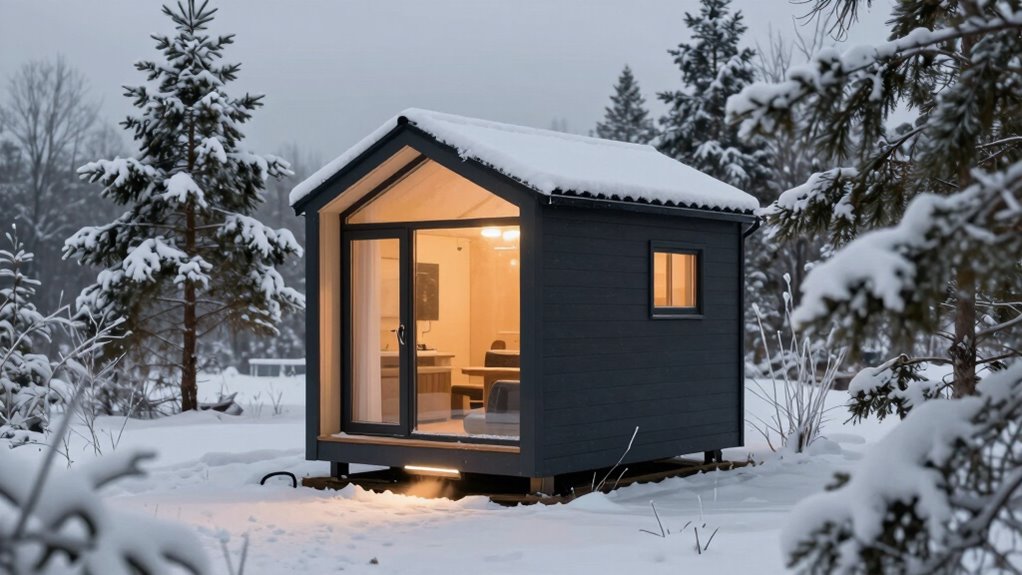

For a low ambient mini split for a tiny house, I’d start with the Daikin Aurora 9,000 BTU because its low-ambient focus makes it the clearest fit for cold-weather heating. The Cooper & Hunter 6,000 BTU stands out for smaller spaces, while the ROVSUN 9,000 BTU 23 SEER2, 115V is a notable option when efficiency and a 115-volt supply matter. The main tradeoffs are cold-weather capacity, the risk of oversizing a compact home, and the electrical and installation demands of each system. A model’s advertised heating range does not tell the whole story: capacity at your local winter temperatures matters too. Read on for how these nine options differ and which buyer each one suits.

Get compact home essentials delivered free with Prime
- Fast, free delivery on millions of items
- Prime Video, Amazon Music and more included
- Member-only deals all year
Key Takeaways
- Daikin Aurora is the clearest cold-weather specialist in this group; the other listings should not be treated as equivalent low-ambient systems without checking their temperature and capacity specifications.
- The 6,000 BTU Cooper & Hunter is the only smaller-capacity pick, giving it a potential fit advantage in a well-insulated tiny house where a 9,000 BTU system may cycle too often.
- Several ROVSUN listings overlap on capacity and features, so buyers should compare exact model numbers, voltage, efficiency, and included installation components rather than relying on the brand name alone.
- 115V models may simplify electrical planning in some tiny houses, but voltage alone does not confirm circuit compatibility; amperage, breaker requirements, and wiring still need checking.
- None of the product names alone proves suitability for severe winters; published low-temperature operating limits and heating output at the expected outdoor temperature should guide the final choice.
| ROVSUN 9000 BTU Wi-Fi Mini Split Air Conditioner and Heat Pump |  | Best for Simple Wi-Fi Control | Cooling capacity: 9,000 BTU | Recommended coverage: Up to 400 sq. ft. | Voltage: 115 V | VIEW ON AMAZON | See Our Full Breakdown |
| Daikin Aurora 9,000 BTU Low Ambient Heat Pump Mini-Split Air Conditioner |  | Best for Cold-Weather Heating | Cooling capacity: 9,000 BTU (4,400–11,200 BTU) | Heating capacity: 10,900 BTU (4,400–16,000 BTU) | Heating operating range: -13°F to 64.4°F | VIEW ON AMAZON | See Our Full Breakdown |
| Garvee 9,000 BTU Ductless Mini Split Air Conditioner and Heat Pump |  | Best for Quiet Operation | Cooling capacity: 9,000 BTU | Heating capacity: 10,000 BTU | Coverage: Up to 450 sq. ft. | VIEW ON AMAZON | See Our Full Breakdown |
| 9000 BTU Ductless Mini Split Air Conditioner and Heat Pump |  | Best for 115V Room Comfort | Cooling capacity: 9,000 BTU | Coverage area: Up to 500 sq. ft. | Voltage: 115 V | VIEW ON AMAZON | See Our Full Breakdown |
| ROVSUN 9,000 BTU Wi-Fi Mini Split Air Conditioner and Heat Pump, 23 SEER2, 115V |  | Best 115V Pick for Wide Outdoor Conditions | Cooling capacity: 9,000 BTU | Heating capacity: 10,000 BTU | Efficiency: 23 SEER (as listed) | VIEW ON AMAZON | See Our Full Breakdown |
| Cooper & Hunter 6,000 BTU 115V Wall-Mount Mini-Split Heat Pump, 21.5 SEER2 | 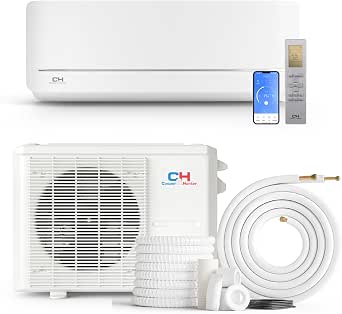 | Best Compact Fit for a Very Small Tiny House | Cooling capacity: 6,000 BTU | Voltage: 115 V | Efficiency: 21.5 SEER2 | VIEW ON AMAZON | See Our Full Breakdown |
| ROVSUN 9,000 BTU 115V Ductless Mini-Split Air Conditioner and Heat Pump |  | Best for Buyers Who Want Published Heating Capacity | Cooling capacity: 9,000 BTU | Heating capacity: 10,000 BTU | Coverage: Up to 400 sq ft | VIEW ON AMAZON | See Our Full Breakdown |
| Mountman 9,000 BTU Ductless Mini Split Air Conditioner and Heat Pump |  | Best for Simple Routine Maintenance | Cooling capacity: 9,000 BTU | Coverage area: Up to 450 sq ft | Efficiency: 19 SEER2 | VIEW ON AMAZON | See Our Full Breakdown |
| Temprium 9,000 BTU Mini Split Air Conditioner and Heat Pump, 115V | 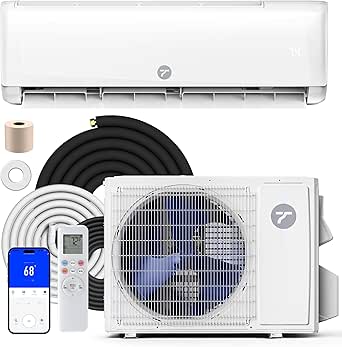 | Best Smart-Controlled 9,000 BTU Option | Cooling capacity: 9,000 BTU | Heating capacity: 9,500 BTU | Voltage: 115 V | VIEW ON AMAZON | See Our Full Breakdown |
| low ambient mini split for tiny house | Cooling capacity | Noise level | Voltage | Efficiency |
|---|---|---|---|---|
| ROVSUN 9000 BTU Wi-Fi Mini Spl | 9,000 BTU | 28 dB in mute mode | 115 V | — |
| Daikin Aurora 9,000 BTU Low Am | 9,000 BTU (4,400–11,200 BTU) | 24 dB | — | 21 SEER2, 10.2 HSPF2, 12.20 EER2 |
| Garvee 9,000 BTU Ductless Mini | 9,000 BTU | As low as 23 dB | 230 V | — |
| 9000 BTU Ductless Mini Split A | 9,000 BTU | Under 35 dB in Sleep Mode; 45 dB listed | 115 V | 19 SEER2; HSPF2 8.5 |
| ROVSUN 9,000 BTU Wi-Fi Mini Sp | 9,000 BTU | 30 dB | 115 V | 23 SEER (as listed) |
| Cooper & Hunter 6,000 BTU 115V | 6,000 BTU | 22 dB | 115 V | 21.5 SEER2 |
| ROVSUN 9,000 BTU 115V Ductless | 9,000 BTU | 28–42 dBA | 115 V | 20 SEER |
| Mountman 9,000 BTU Ductless Mi | 9,000 BTU | 26 dB | 110/120 V | 19 SEER2 |
| Temprium 9,000 BTU Mini Split | 9,000 BTU | As low as 23 dB | 115 V | 22 SEER2 |
More Details on Our Top Picks
ROVSUN 9000 BTU Wi-Fi Mini Split Air Conditioner and Heat Pump
For a tiny house with a room-sized heating and cooling load, this ROVSUN pairs 9,000 BTU capacity with 115V power, which may suit some smaller electrical setups better than the 208–230V Daikin Aurora. Its app and voice controls add convenience when the unit is mounted high, and the included 16.4-foot line kit gives installers some placement flexibility. At 28 dB in mute mode, it also has a quieter listed low setting than the second ROVSUN model’s 30 dB. The main limitation for a low-ambient roundup is that the supplied details do not specify an outdoor operating-temperature range, so I would not pick it for dependable cold-weather heating without confirming that capability. Professional installation is recommended, and an extra power cord is needed.
Pros:- Provides both heating and cooling with 9,000 BTU capacity
- 115V power supply may fit some smaller electrical setups
- App and voice control provide convenient remote operation
- Includes a 16.4-foot copper line kit and signal cord
Cons:- No outdoor low-temperature operating range is listed in the supplied specs
- Professional HVAC installation is recommended
- Requires an extra power cord
Best for: Tiny-house owners who want app and voice control, 115V power, and a supplied line kit for a modest single-zone space.
Not ideal for: Owners who rely on heat during severe cold; the provided product data does not state a low-temperature heating limit.
- Cooling capacity:9,000 BTU
- Recommended coverage:Up to 400 sq. ft.
- Voltage:115 V
- Noise level:28 dB in mute mode
- Refrigerant:R-32
- Wattage:875 W
- Controls:App, voice control, and remote
- Included installation kit:16.4-foot copper lines and signal cord
Our verdict“Choose this ROVSUN for app-controlled, 115V comfort in a small space, but verify its cold-weather heating limits before relying on it as a tiny house’s winter heat source.”
Daikin Aurora 9,000 BTU Low Ambient Heat Pump Mini-Split Air Conditioner
The Daikin Aurora is the clearest fit here for a tiny house that needs heat through serious winter weather: its listed heating range reaches -13°F, unlike the first ROVSUN model, whose supplied specs give no low-temperature limit. It also lists 10,900 BTU of heating, a 24 dB noise level, built-in Wi-Fi, and a 12-year warranty when installation is certified. That cold-weather capability makes it more compelling as a primary heat source, though the system requires 208–230V power, which may call for electrical planning in a compact off-grid or lightly provisioned home. Its 400-square-foot coverage also calls for careful sizing in very small, well-insulated builds. The warranty depends on certified installation, so this is not the pick for owners hoping to avoid professional setup.
Pros:- Heating operation is listed down to -13°F
- 10,900 BTU heating capacity with a stated output range up to 16,000 BTU
- Built-in Wi-Fi, air-purifying filter, and humidity control
- Includes an outdoor wall bracket and 15-foot installation kit
Cons:- Requires 208–230V power rather than 115V
- Warranty duration depends on certified installation
- A 9,000 BTU system may be more capacity than some exceptionally small, well-insulated tiny houses need
Best for: Tiny-house owners in cold climates who need a documented low-temperature heating range and can provide 208–230V service with certified installation.
Not ideal for: Owners with only 115V service, limited installation support, or a space whose heating load is far below this unit’s capacity.
- Cooling capacity:9,000 BTU (4,400–11,200 BTU)
- Heating capacity:10,900 BTU (4,400–16,000 BTU)
- Heating operating range:-13°F to 64.4°F
- Cooling operating range:50°F to 114.8°F
- Efficiency:21 SEER2, 10.2 HSPF2, 12.20 EER2
- Power supply:208–230V, single phase, 60 Hz
- Noise level:24 dB
- Warranty:12 years with certified installation
Our verdict“Pick the Daikin Aurora when documented heating down to -13°F matters more than 115V simplicity or a less demanding installation.”
Garvee 9,000 BTU Ductless Mini Split Air Conditioner and Heat Pump
Garvee’s strongest tiny-house case is its listed 23 dB low noise level, the quietest figure among these five products. That can matter when the indoor unit shares a compact living area with a bed or workspace. It also covers up to 450 square feet and offers six modes, including Eco and Dry, giving it more stated mode variety than the simpler 9000 BTU 115V model. The tradeoff is 230V power and a 1,100 W listed draw, so it may be a less straightforward match for a small electrical system than either ROVSUN option. The supplied information does not state a low-ambient heating limit; for winter reliability, the Daikin Aurora is the safer pick on documented specifications. Professional installation is recommended, and the two packages may arrive separately.
Pros:- Listed noise level is as low as 23 dB
- Provides 9,000 BTU cooling and 10,000 BTU heating
- Six modes include Cool, Heat, Fan, Dry, Eco, and Auto
- ETL and AHRI certifications are listed
Cons:- Requires 230V power
- No outdoor low-temperature heating limit is stated in the supplied data
- Professional installation is recommended, and the shipment may arrive in two packages
Best for: Tiny-house owners prioritizing quiet indoor operation and multiple modes who already have 230V service and can confirm the unit’s cold-weather suitability.
Not ideal for: Owners seeking clearly documented low-ambient heating, 115V compatibility, or a simpler installation and delivery process.
- Cooling capacity:9,000 BTU
- Heating capacity:10,000 BTU
- Coverage:Up to 450 sq. ft.
- Noise level:As low as 23 dB
- Voltage:230 V
- Wattage:1,100 W
- Modes:Cool, Heat, Fan, Dry, Eco, Auto
- Certifications:ETL and AHRI
Our verdict“Choose Garvee for its especially low listed noise and useful operating modes, but favor the Daikin Aurora if verified cold-weather heating is the priority.”
9000 BTU Ductless Mini Split Air Conditioner and Heat Pump
This unnamed 9,000 BTU split system offers a practical feature set for a tiny-house bedroom or main room: 115V power, heating and cooling, plus Dry, Sleep, and ECO modes. Its stated coverage reaches 500 square feet, more than the 400-square-foot claims for both ROVSUN models, although actual fit still depends on insulation, climate, and layout. A 24-hour timer and four fan speeds add scheduling and airflow choices without relying on app control. The important caveat for a low-ambient roundup is that the supplied operating-temperature range is listed as 61°F to 88°F, with no clear cold-weather heating limit; I would rank the Daikin Aurora ahead of it for winter heat. The listed noise figures also differ between Sleep Mode and the general specification, so buyers should not assume it stays below 35 dB in every setting.
Pros:- Uses 115V power and provides heating, cooling, dehumidifying, and fan modes
- Includes a 24-hour timer, four fan speeds, and remote control
- Lists 19 SEER2 efficiency and R-32 refrigerant
- Coverage is listed up to 500 square feet
Cons:- Supplied operating range does not establish a low-ambient heating capability
- General listed noise level is 45 dB despite a quieter Sleep Mode claim
- Split-system installation may require professional setup
Best for: Tiny-house owners with 115V service who want a remote-controlled unit with timer and sleep features for a bedroom or modest living space.
Not ideal for: Buyers who need documented heating in freezing outdoor conditions, or who need dependable noise figures across all operating modes.
- Cooling capacity:9,000 BTU
- Coverage area:Up to 500 sq. ft.
- Voltage:115 V
- Efficiency:19 SEER2; HSPF2 8.5
- Refrigerant:R-32
- Noise level:Under 35 dB in Sleep Mode; 45 dB listed
- Power consumption:1,000 W
- Modes:Cool, Heat, Dry, Fan, Sleep, ECO
Our verdict“Choose this model for 115V convenience and bedroom controls, not as a proven cold-climate heat pump unless the seller confirms its low-temperature heating range.”
ROVSUN 9,000 BTU Wi-Fi Mini Split Air Conditioner and Heat Pump, 23 SEER2, 115V
This ROVSUN is the more compelling of the two ROVSUN choices for buyers focused on outdoor temperature flexibility: its listed operating range extends from -13°F to 131°F, while the other ROVSUN’s supplied specs do not give a low-ambient range. It also pairs 115V power with Wi-Fi, voice control, auto-defrost, and a 16.4-foot line kit, a useful combination for compact homes where electrical capacity and remote operation both matter. Its 23 SEER rating is listed in the product data, though it is not labeled SEER2 as in the title, so I would verify the rating basis before comparing it directly with models that specify SEER2. At 30 dB, it is not as quiet on paper as the 23 dB Garvee. Professional installation is recommended, and an extra power cord is required.
Pros:- Listed operating temperature range extends from -13°F to 131°F
- 115V power supply with inverter compressor
- Wi-Fi app control and Alexa and Google Assistant compatibility
- Includes a pre-charged outdoor unit and 16.4-foot line kit
Cons:- Professional HVAC installation is recommended
- Requires an extra power cord
- Listed noise level of 30 dB is higher than Garvee’s 23 dB figure
Best for: Tiny-house owners who need 115V power, app or voice control, and a stated wide outdoor operating range for heating and cooling.
Not ideal for: Buyers who prioritize the lowest listed indoor noise or need a clearly identified SEER2 rating for direct efficiency comparisons.
- Cooling capacity:9,000 BTU
- Heating capacity:10,000 BTU
- Efficiency:23 SEER (as listed)
- Voltage:115 V
- Refrigerant:R-454B
- Noise level:30 dB
- Operating temperature range:-13°F to 131°F
- Line kit length:16.4 ft
Our verdict“Pick this ROVSUN when 115V service and its stated -13°F operating range matter more than the quieter listed operation of the Garvee.”
Cooper & Hunter 6,000 BTU 115V Wall-Mount Mini-Split Heat Pump, 21.5 SEER2
For a tiny house with a small, defined living area, this 6,000 BTU capacity is the main reason I’d rank the Cooper & Hunter ahead of the 9,000 BTU options here: it may be a better match when a larger unit would be more than the space needs. Its 115V supply can also suit some smaller electrical setups, though buyers should check the unit’s circuit requirements before planning around it. Inverter operation, app control, and a listed 22 dB noise level add everyday comfort in a compact home where indoor sounds carry. The included 16-foot line set is useful, but this is still a split system, not a quick-install appliance. Unlike the ROVSUN 9,000 BTU, it has no stated coverage figure or heating-capacity figure here, and the supplied data does not confirm low-ambient heating performance. I’d skip it for larger or open-plan homes.
Pros:- 6,000 BTU capacity may suit a smaller room better than the 9,000 BTU models in this roundup
- Listed 22 dB noise level suits compact interiors where equipment noise is close to living and sleeping areas
- Inverter operation, app control, and remote control provide flexible day-to-day adjustment
- Includes a 16-foot pre-flared, insulated copper line set and related installation components
Cons:- Requires installation of a separate outdoor condenser as a ductless split system
- Product data gives no coverage area or specific heating capacity, making sizing harder to judge
- Low-ambient heating capability is not stated in the supplied specifications
Best for: Tiny-house owners with a compact, enclosed living area who want a lower-capacity 115V heat pump and app control.
Not ideal for: Owners of larger open-plan tiny homes or anyone who needs confirmed low-ambient heating performance or a specified coverage area before buying.
- Cooling capacity:6,000 BTU
- Voltage:115 V
- Efficiency:21.5 SEER2
- Noise level:22 dB
- Refrigerant:R-454B
- Controls:App and remote control
- Included installation kit:16 ft pre-flared, insulated copper line set, communication wires, and drainage extension
- Warranty:7 years on compressor; 5 years on parts
Our verdict“Choose this Cooper & Hunter for a small, enclosed tiny-house space where 6,000 BTU and quiet operation matter more than published coverage or verified low-ambient performance.”
ROVSUN 9,000 BTU 115V Ductless Mini-Split Air Conditioner and Heat Pump
I’d put this ROVSUN on the shortlist for a tiny-house owner who wants both cooling and a clearly stated 10,000 BTU heating capacity, rather than relying on a general heat-pump description. It is rated for spaces up to 400 square feet, a more restrained coverage claim than the Mountman and Temprium models, each listed for up to 450 square feet. That can be a useful fit for a smaller cabin-style layout, but square footage alone does not establish whether it can heat a home in cold weather. The 20 SEER inverter system includes ECO, sleep, timer, turbo, and mute modes, though its stated 28–42 dBA range is higher than the Cooper & Hunter’s listed 22 dB and Temprium’s low of 23 dB. Professional installation is required, and the one-year warranty is notably short. The supplied data does not specify low-ambient operation.
Pros:- Lists both 9,000 BTU cooling and 10,000 BTU heating capacity
- 20 SEER inverter operation and multiple remote modes support flexible use
- Coverage is stated as up to 400 square feet, helping set expectations against the 450-square-foot claims of Mountman and Temprium
- Pre-charged condenser is included
Cons:- Professional split-system installation is required
- One-year warranty is short compared with the Cooper & Hunter’s stated compressor and parts coverage
- Noise is listed at 28–42 dBA, and low-ambient heating performance is not specified
Best for: Tiny-house owners with a room near the stated 400-square-foot limit who want a published heating-capacity figure and several remote operating modes.
Not ideal for: Buyers prioritizing a longer stated warranty, the quietest listed operation, or verified heating performance at low outdoor temperatures.
- Cooling capacity:9,000 BTU
- Heating capacity:10,000 BTU
- Coverage:Up to 400 sq ft
- Voltage:115 V
- Efficiency:20 SEER
- Noise level:28–42 dBA
- Refrigerant:R-32
- Warranty:1 year
Our verdict“Pick this ROVSUN if a stated 10,000 BTU heating capacity and a 400-square-foot coverage claim fit your plan, but look elsewhere if warranty length or low-temperature documentation leads your decision.”
Mountman 9,000 BTU Ductless Mini Split Air Conditioner and Heat Pump
The Mountman’s appeal is less about a standout efficiency figure and more about practical upkeep: it pairs a washable filter with self-cleaning and automatic defrost features. In a tiny house, where dust and cooking residue can build up quickly in a small shared space, easier routine care has real value. Its 9,000 BTU rating and stated coverage up to 450 square feet put it alongside the Temprium, while its 19 SEER2 efficiency is below Temprium’s 22 SEER2 and the Cooper & Hunter’s 21.5 SEER2. The listed 26 dB noise level is quiet, though not as low as the other products’ stated minimums. Four operating modes and a 24-hour remote timer cover the basics, but the supplied information does not give heating capacity or confirm low-ambient performance. I’d favor it over the ROVSUN when the maintenance features matter more than a stated heating figure.
Pros:- Washable filter and self-cleaning features support routine maintenance
- Automatic defrost is included
- Rated for spaces up to 450 square feet, matching the Temprium’s stated coverage
- Provides Cool, Heat, Dry, and Fan modes with a 24-hour remote timer
Cons:- 19 SEER2 is lower than the Temprium’s 22 SEER2 and Cooper & Hunter’s 21.5 SEER2
- Heating capacity and low-ambient performance are not stated in the supplied data
- Requires split-system installation and a separate outdoor unit
Best for: Tiny-house owners who want a washable filter, self-cleaning, and automatic defrost features in a 9,000 BTU split system.
Not ideal for: Buyers who need a documented heating-capacity number, higher stated efficiency, or confirmed low-ambient heating performance.
- Cooling capacity:9,000 BTU
- Coverage area:Up to 450 sq ft
- Efficiency:19 SEER2
- Voltage:110/120 V
- Noise level:26 dB
- Refrigerant:R32
- Modes:Cool, Heat, Dry, Fan
- Controls:Remote control
Our verdict“Choose the Mountman if easy filter care and automatic defrost matter more to you than a published heating-capacity figure or stronger efficiency specifications.”
Temprium 9,000 BTU Mini Split Air Conditioner and Heat Pump, 115V
Among these 9,000 BTU choices, the Temprium makes its strongest case with 22 SEER2 efficiency, a listed 780 W draw, and WiFi control with Alexa and Google Assistant compatibility. That combination suits a tiny-house owner who wants to adjust heating or cooling remotely and keep an eye on a unit that uses less stated wattage than the Mountman’s 2,647.53 W figure. Those wattage figures are product specifications, not a direct test of comparable energy use, so I would not treat them as a guarantee of lower bills. Its 23 dB minimum noise level is also lower than Mountman’s 26 dB and the ROVSUN’s 28–42 dBA range. Coverage is listed up to 450 square feet, but no low-ambient performance is provided, and its 9,500 BTU heating capacity is below the ROVSUN’s stated 10,000 BTU. This is a feature-rich choice, not a verified cold-climate pick.
Pros:- 22 SEER2 is the highest stated efficiency among these four products
- WiFi control works with Alexa and Google Assistant
- Listed noise level starts at 23 dB, below the Mountman and ROVSUN figures
- Provides 9,000 BTU cooling and 9,500 BTU heating for spaces up to 450 square feet
Cons:- Requires installation as a split system with a new outdoor unit
- Low-ambient heating performance is not specified
- Its stated 9,500 BTU heating capacity is below the ROVSUN’s 10,000 BTU figure
Best for: Tiny-house owners who want smart-home controls, a 115 V system, and quiet operation in a space within the stated 450-square-foot coverage.
Not ideal for: Buyers who need published low-ambient heating performance, greater stated heating capacity, or a system that avoids split-system installation.
- Cooling capacity:9,000 BTU
- Heating capacity:9,500 BTU
- Voltage:115 V
- Efficiency:22 SEER2
- Coverage:Up to 450 sq ft
- Noise level:As low as 23 dB
- Smart control:WiFi, Alexa, and Google Assistant compatible
- Certifications:ETL and AHRI
Our verdict“Choose the Temprium for smart controls, quiet operation, and strong stated efficiency, but not as a low-ambient specialist without further performance documentation.”

How We Picked
I ranked these systems around the specific demands of a tiny house that may need heat during cold outdoor conditions. The most weight went to documented low-ambient heating capability, usable capacity for a compact floor plan, electrical fit, and the clarity of the available model specifications. I also weighed practical factors such as controls, likely installation complexity, and whether a listing provides enough detail for a buyer to verify performance rather than infer it from a product name.
The Daikin Aurora leads for its explicit low-ambient positioning, while the Cooper & Hunter earns a distinct place for its 6,000 BTU capacity in smaller, efficient homes. The ROVSUN 23 SEER2 115V model receives attention for its stated efficiency and voltage, but efficiency does not replace cold-weather capacity data. The remaining 9,000 BTU listings sit lower because their names alone do not establish comparable low-temperature performance or a clear advantage for tiny-house use. Before buying any of them, I would confirm the exact model documentation, sizing, and installation requirements.
| low ambient mini split for tiny house | Refrigerant |
|---|---|
| ROVSUN 9000 BTU Wi-Fi Mini Spl | R-32 |
| Daikin Aurora 9,000 BTU Low Am | — |
| Garvee 9,000 BTU Ductless Mini | — |
| 9000 BTU Ductless Mini Split A | R-32 |
| ROVSUN 9,000 BTU Wi-Fi Mini Sp | R-454B |
| Cooper & Hunter 6,000 BTU 115V | R-454B |
| ROVSUN 9,000 BTU 115V Ductless | R-32 |
| Mountman 9,000 BTU Ductless Mi | R32 |
| Temprium 9,000 BTU Mini Split | — |
Factors to Consider When Choosing Low Ambient Mini Split For Tiny House
Choosing a mini split for a tiny house is less about picking the largest feature list and more about matching the system to the building, climate, and electrical setup. These broader checks can prevent a unit that technically fits the listing from performing poorly in daily use.
Check Heating Output at Your Winter Design Temperature
“Low ambient” can refer to different operating limits, and a unit that can run in cold weather may still produce less heat as temperatures fall. Look for a manufacturer performance table showing heating capacity at outdoor temperatures near your local winter design condition. Compare that output with a heat-loss estimate for the finished tiny house, not just the nominal BTU number. If the home depends on the mini split as its only heat source, ask an HVAC professional whether supplemental heat is needed for the coldest periods. A broad operating range without capacity figures is not enough to establish reliable winter comfort. This check matters especially when comparing the Daikin Aurora with general 9,000 BTU listings in this roundup.
Size for the Building, Not Just Its Floor Area
Tiny houses can have very different heating loads despite similar square footage. Insulation, window area, ceiling height, air leakage, orientation, and whether the home sits on wheels all affect demand. A 9,000 BTU system may suit a draftier or more exposed layout, while a tightly built small home may benefit from a lower-capacity option such as the 6,000 BTU Cooper & Hunter. Oversizing can lead to short cycling, uneven temperatures, and less effective humidity control during cooling season. Undersizing can leave the unit running hard without meeting demand. A room-by-room or whole-home heat-loss calculation is a better basis than a rule of thumb based only on square footage.
Treat Voltage as One Part of Electrical Compatibility
A 115V label can make a system appear easier to fit into a tiny-house electrical plan, but it does not guarantee that the existing supply can support it. Check the nameplate for minimum circuit ampacity and maximum overcurrent protection, then compare those figures with the panel, wiring, and other loads. A house with limited service may need load calculations before adding heating equipment, even when the unit is 115V. Also confirm whether the manufacturer requires a dedicated circuit and what disconnect or surge protection is specified. Have a qualified electrician review the plan before purchase. This avoids confusing plug or supply voltage with the complete installation requirement.
Plan Outdoor-Unit Placement and Defrost Drainage
In cold weather, the outdoor unit needs open airflow and a stable mounting point, with enough clearance for service and snow management. Tiny-house sites may have tight setbacks, elevated platforms, skirting, or exposure to drifting snow that complicates placement. During defrost, water can drain from the outdoor coil; if that water freezes beneath the unit, ice buildup can interfere with operation. Check the installation manual for mounting height, clearances, and drainage guidance before choosing a location. Avoid enclosing the condenser in a small shed or placing it where roof runoff can fall onto it. A suitable unit in a poor location can still struggle in winter.
Compare Complete Installation Requirements, Not Kit Labels
Listings may describe a system as a kit, but included line-set length, communication cable, mounting hardware, and other components can differ. Verify the precise model number and included parts, then compare them with the site layout and the manufacturer’s installation instructions. Refrigerant-line work, pressure testing, evacuation, and electrical connections require the right tools and expertise; local rules may also limit who can perform this work. A longer line run or unusual wall construction can add labor and materials even when the indoor and outdoor units are included. Ask about warranty conditions for installation and commissioning before deciding whether a low initial equipment cost is a real saving. These checks also help distinguish similar-looking listings from one another.
Decide How Much Backup Heat You Need
Even a cold-climate heat pump may need backup during extreme cold, defrost cycles, or a temporary equipment fault. In a tiny house, a modest electric heater can provide emergency warmth, but it adds electrical load and may compete with cooking or water-heating appliances. Consider whether the backup source will be available during an outage and how quickly the building loses heat. If you plan to rely on a generator, check the mini split’s starting and running electrical requirements against the generator’s capacity. A backup plan should fit the home’s service limits rather than being added after installation. Buyers in milder climates may accept a simpler plan than those who face prolonged subfreezing weather.
Frequently Asked Questions
Is the Daikin Aurora the safest choice for a tiny house in a cold climate?
It is the clearest cold-weather-oriented option in this roundup because its listing specifically identifies it as a low-ambient heat pump. That description alone does not confirm how much heat it delivers at the temperatures your site will experience. Check the model’s published capacity and operating data, then compare them with a heat-loss calculation for your house. If those figures are unavailable or do not cover your winter conditions, ask the manufacturer or a qualified installer for confirmation. Keep a backup-heat plan if the system will be your only source of warmth.
Should I choose 6,000 BTU or 9,000 BTU for a tiny house?
Neither capacity is automatically right based on square footage alone. A well-insulated, airtight small home may need less output than a drafty home with large windows, high ceilings, or strong winter exposure. The 6,000 BTU Cooper & Hunter is the lineup’s smaller-capacity option, while the other listed systems are generally 9,000 BTU. Ask for a heat-load calculation and check whether each model can modulate low enough to avoid frequent cycling. Also compare heating output during cold weather, not only nominal capacity.
Can a 115V mini split run from my tiny house’s existing electrical service?
Possibly, but the 115V label is only a starting point. The unit may require a dedicated circuit, and its current draw, breaker size, and wiring requirements need to match the electrical panel and service. Other large loads, such as an induction cooktop, water heater, or battery charger, can affect the available capacity. Have an electrician check the unit’s nameplate and calculate the home’s load before ordering. Do not assume that an existing 115V outlet or circuit is suitable for a permanently installed system.
Can I install one of these mini splits myself?
Some buyers can handle basic mounting or preparation, but a complete installation often involves refrigerant-line work, evacuation, electrical wiring, and commissioning. Requirements differ by product, local code, and warranty terms, so read the exact installation manual before deciding. A line set that is too short or a poorly placed outdoor unit can create problems that are hard to correct later. Ask installers whether they will work with the specific model and what is included in their scope. Confirm who is responsible for startup and warranty documentation before purchase.
How can I tell whether a listed mini split is truly suitable for low-ambient heating?
Look for manufacturer documentation for the exact model number, including the minimum heating operating temperature and heating capacity at several outdoor temperatures. A broad claim that a unit heats in winter does not show how much output remains in severe cold. Check whether defrost behavior and any required accessories are described in the manual. If the listing omits performance tables, request them from the seller or manufacturer rather than assuming another model in the same brand line has the same capability. For a primary heating system, get a qualified professional to compare the data with your home’s heat loss.
Conclusion
My best overall pick is the Daikin Aurora 9,000 BTU for buyers who prioritize a clearly low-ambient-focused system, provided its published cold-weather output matches the home’s heat loss. For best value, compare the ROVSUN 9,000 BTU listings by exact model, included components, and verified specifications rather than choosing on the name alone. The best premium choice is also the Daikin Aurora when documented cold-weather performance is the priority. For beginners, I’d favor the listing whose manual, electrical requirements, and installation package are clearest, then arrange professional sizing and commissioning before purchase. For a very small, well-insulated house, the Cooper & Hunter 6,000 BTU is the most specific fit in this group; for a 115V plan, compare the ROVSUN 23 SEER2 model while confirming circuit requirements. In every case, let cold-weather capacity and a heat-load calculation settle the final choice.
Fall Picks
fall essentials
As an affiliate, we earn on qualifying purchases.