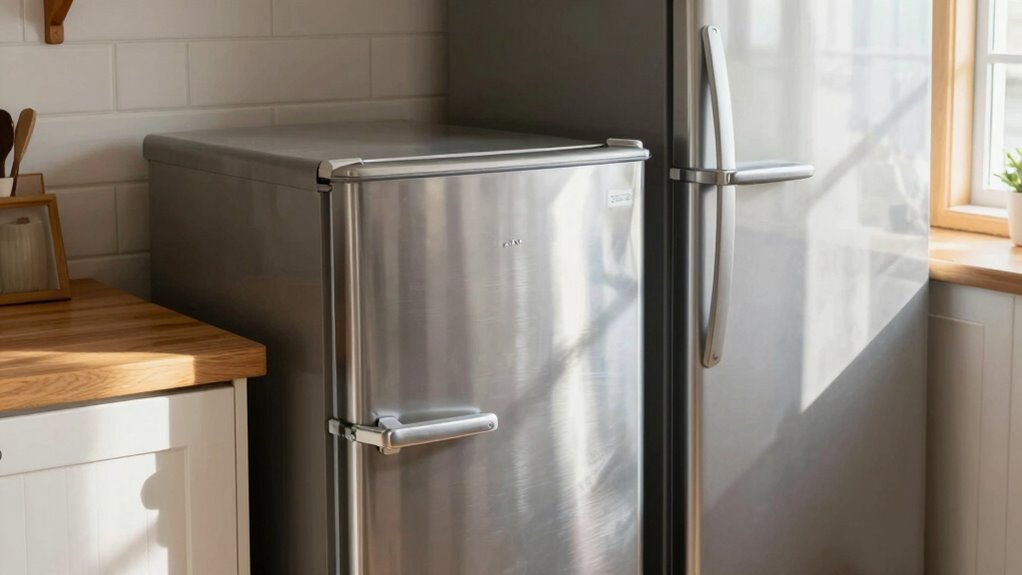

When choosing between a mini fridge and an apartment-sized one for your tiny house, consider your storage needs, space constraints, and energy efficiency. A mini fridge uses less power and fits well in tight spots for minimal food storage, while an apartment fridge offers more capacity for bulk groceries and frequent cooking. Think about your lifestyle and habits—if you’re unsure, explore more to find the best fit for your tiny home.
Key Takeaways
- Consider available space: mini fridges fit tighter spots, while apartment-sized models require dedicated kitchen areas.
- Assess storage needs: mini fridges suit minimal snacks, whereas larger models support bulk and fresh produce.
- Evaluate energy efficiency: smaller fridges typically consume less power, reducing ongoing operational costs.
- Match to lifestyle: choose mini fridges for simple, quick needs, or larger ones for frequent cooking and meal prep.
- Balance cost and sustainability: smaller units often cost less and use less energy, aligning with budget and eco-friendly goals.

Are you struggling to decide between a mini fridge and an apartment-sized fridge for your tiny house? It’s a common dilemma, and your choice hinges on understanding how each fits your lifestyle and space constraints. When it comes to energy efficiency, both options can be effective, but mini fridges tend to use less power overall. They’re designed to be compact and consume fewer resources, making them a practical choice if you’re conscious of your energy bills or aiming to minimize your carbon footprint. However, an apartment-sized fridge, while slightly larger, often incorporates advanced insulation and energy-saving features that can keep power consumption manageable. Consider how much energy your household typically uses and whether a smaller, more efficient appliance suits your needs. Additionally, storage capacity varies significantly, so assessing your typical grocery shopping habits can help determine the best fit. storage capacity is another vital factor. A mini fridge usually offers around 1.5 to 4.5 cubic feet of space, which is enough for essentials like beverages, snacks, and a few perishables. If you prefer a minimalist approach or mainly need space for drinks and quick snacks, a mini fridge might be perfect. It’s small enough to tuck into tight spots and leaves more room in your tiny house for other furniture or storage solutions. On the other hand, an apartment-sized fridge provides considerably more room—often around 10 to 18 cubic feet. This extra space lets you store a wider variety of groceries, bulk items, and fresh produce, reducing the frequency of trips to the store. If you cook frequently or prefer to stock up, the larger capacity can be a real advantage. Size and space availability in your tiny house should influence your decision. If your living area is limited, a mini fridge can maximize your usable space without sacrificing functionality. But if your tiny house has a dedicated kitchen or a larger area for appliances, an apartment-sized fridge can offer more flexibility in food storage. Think about your daily habits—do you buy in bulk or prefer fresh, small quantities? Do you want to minimize clutter or need more storage for perishable goods? Your answers will guide you toward the right choice. Ultimately, balancing energy efficiency with storage capacity ensures you select an appliance that complements your tiny house living, enhances convenience, and keeps your energy costs in check. Additionally, considering the cost of operation over time can help you make a more informed decision that aligns with your budget and sustainability goals.

Antarctic Star Compact Refrigerator, Portable Mini Fridge, Skin Care 4L Capacity/6 Cans, for Bedroom, Car, Office & Dorm, Small Cooler for Cosmetics, Beverage and Food, Black
- Compact Size: Ideal for small spaces and portability
- 4L Capacity: Stores 6 cans or small items
- Removable Shelf: Flexible storage for various items
As an affiliate, we earn on qualifying purchases.
As an affiliate, we earn on qualifying purchases.
Frequently Asked Questions
How Energy-Efficient Are Mini Fridges Compared to Apartment Fridges?
Mini fridges generally use less energy than apartment fridges, making them more energy-efficient. They have lower energy consumption because of their smaller size, which helps reduce your utility bills. When doing a cost comparison, you’ll find mini fridges cost less to operate over time. However, if you need more storage, an apartment fridge might use more energy, but it offers greater capacity for your needs.
What Are the Maintenance Requirements for Each Type of Fridge?
You’ll find that mini fridges require less maintenance, mainly needing occasional cleaning of coils and door seals, and checking for leaks that affect energy consumption. Apartment fridges might need more frequent cleaning and filter replacements. Both types are relatively quiet, but mini fridges generally produce lower noise levels, making them ideal for small spaces. Regular upkeep guarantees peak energy efficiency and minimal noise, keeping your tiny house comfortable and functional.
Can Both Fridge Types Fit Through Tiny House Doorways Easily?
They say size isn’t everything, but when it comes to tiny house doorways, appliance portability matters. Mini fridges are more likely to slip through standard doorways easily, thanks to their compact size, while apartment fridges can be a tight squeeze depending on doorway dimensions. Before buying, measure your doorways carefully and consider how easily each fridge can be maneuvered to avoid surprises during installation.
Are There Any Safety Concerns With Small Refrigeration Units?
You should be aware of safety concerns with small refrigeration units, mainly related to food safety and electrical hazards. Make sure your fridge maintains proper temperatures to prevent spoilage and foodborne illnesses. Also, check that it’s properly grounded and plugged into a suitable outlet to avoid electrical hazards. Regularly inspect cords and connections for damage. Staying vigilant helps keep your tiny house safe and your food fresh.
Which Fridge Type Offers Better Temperature Regulation?
Think of temperature regulation like a finely tuned orchestra. A mini fridge often provides more precise control, especially with adjustable thermostats, making it easier to maintain consistent temps. Color options don’t impact performance, but they let you match your decor. Noise levels vary, with mini fridges generally being quieter. If you want better temperature regulation and a quieter operation, a mini fridge might be your best bet for your tiny house.
Conclusion
Ultimately, whether you opt for a mini fridge or an apartment-sized model, envision your tiny house as a cozy, bustling haven where every inch counts. Imagine opening your chosen fridge, cool air spilling into a space that feels both efficient and inviting. The right fridge becomes more than just an appliance—it’s a quiet partner in your daily adventures, seamlessly blending into your compact sanctuary, turning everyday tasks into moments of effortless simplicity.