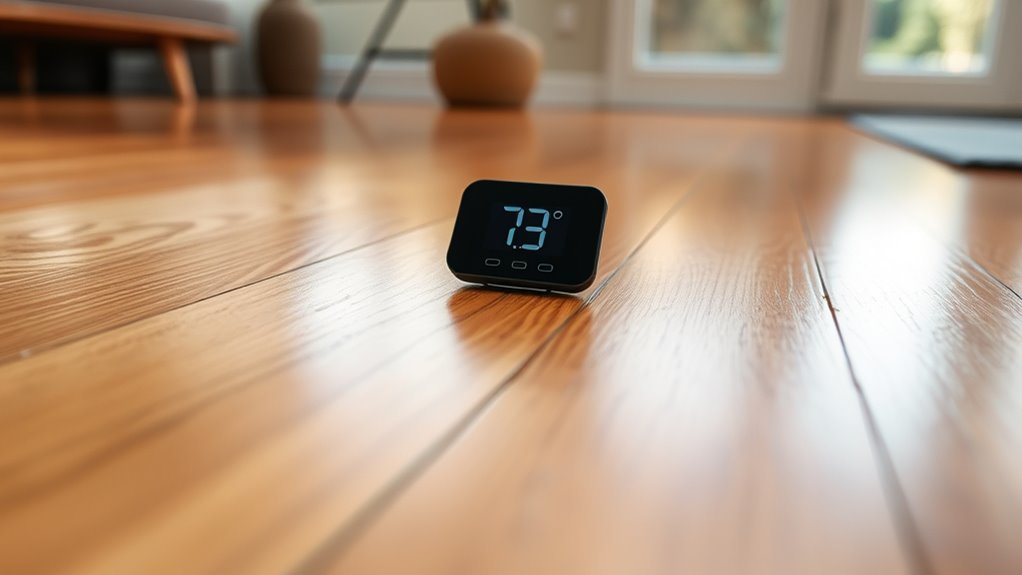

When selecting a radiant heat thermostat floor sensor, the key factors are accuracy, compatibility, and ease of installation. The Honeywell T6 Pro-1 Heat Slab Sensor Thermostat stands out as the best overall choice for reliable performance. Meanwhile, the Nuheat Element Non-programmable Floor Heating Thermostat offers excellent value for straightforward setups, and the OJ Microline Touchscreen Thermostat excels with smart features. These options reflect common tradeoffs: higher-end models often provide more precise control and smarter features but come at a higher cost, while budget options may sacrifice some usability. Continue reading for a detailed breakdown to help you find the right sensor for your radiant heat system.

Get compact home essentials delivered free — and shop member deals
- Fast, free delivery on millions of items
- Access to Prime Big Deal Days deals on October 6–7
- Prime Video, Amazon Music and more included
Key Takeaways
- Precision and sensor compatibility are vital for consistent floor temperature regulation.
- Smart features like WiFi and touchscreens add convenience but often increase cost.
- Most top-rated sensors include dual sensing to improve accuracy and safety.
- Installation complexity varies; some sensors are designed for DIY, others for professional setup.
- Price often correlates with advanced features and build quality, but simpler models can suffice for basic needs.


| radiant heat thermostat floor sensor | Voltage |
|---|---|
| Honeywell T6 Pro-1 Heat Slab S | — |
| VEVOR 7-Day Programmable Therm | — |
| Nuheat Element Non-programmabl | 120-240V |
| OJ Microline UTN4 Radiant Floo | 120/208/240V |
| 7-Day Programmable Thermostat | 120/240V |
| OJ Microline Electric Radiant | Dual (120V/240V) |
| OJ Microline Touchscreen Progr | 120V and 240V |
| Nuheat Home AC0056 Programmabl | — |
| OJ Microline UDG4 Touchscreen | 120/240V |
| Honeywell TH115-AF-GA/U Progra | 120/240V |
| Programmable Thermostat for Ho | 120/240V |
| WiFi Thermostat for Electric F | 120V/240V |
| OJ Microline UDG Programmable | 120/240V |
| LuxHeat Temperature Floor Sens | — |
More Details on Our Top Picks
Honeywell T6 Pro-1 Heat Slab Sensor Thermostat
The Honeywell T6 Pro-1 stands out for its comprehensive control over both air and floor temperature, making it an excellent choice for those who want customizable comfort. Compared to the 7-Day Programmable Thermostat for House Radiant Underfloor Heating, it offers more flexible settings, especially with vacation hold and energy-saving modes. However, its limitation to single-stage systems and lack of a backlit display might be drawbacks for some. Its easy wall mounting and LCD interface ensure straightforward setup, while the programmable features support efficient energy use. This thermostat makes the most sense for homeowners seeking reliable, adjustable control in a straightforward package, but less so for those with multi-stage systems or who need a backlit screen at night.
Pros:- Flexible control of air and floor temperature
- Programmable and vacation hold features
- Energy-saving modes reduce utility costs
- Easy to install with LCD display
Cons:- Limited to one-stage heat systems
- Requires batteries and no backlight on display
Best for: Homeowners with single-stage heating systems who want flexible, programmable control over floor and ambient temperature.
Not ideal for: Users with multi-stage or complex HVAC systems, as it only supports single-stage heating setups.
- Controller Type:Push Button
- Additional Features:T6 Pro Hydronic Series
- Uses:Boiler Temperature Control
- Control Type:Heating
- Connectivity Technology:Wi-Fi
- Display Type:LCD
- Mounting Type:Wall Mount
- Batteries:1 AAA batteries required
Our verdict“This thermostat suits those looking for a reliable, flexible control system for single-stage radiant heating setups.”
VEVOR 7-Day Programmable Thermostat for Radiant Underfloor Heating and Heat Pumps
The VEVOR 7-Day Programmable Thermostat excels in offering detailed weekly schedules, ideal for users who want fine-tuned control over their heating routines. Its support for high/low voltage systems, including heat pumps, makes it more versatile than the Nuheat Element Non-programmable Thermostat, which lacks scheduling capabilities. The backlit display and intuitive controls enhance usability, but its installation complexity may require technical skills, especially with high/low voltage wiring. The sensitive sensor ensures precise temperature regulation, making it suitable for those who prioritize energy efficiency and custom scheduling. This pick makes the most sense for tech-savvy homeowners or professionals managing multiple zones, but less so for casual users or those uncomfortable with complex wiring.
Pros:- Flexible 7-day programming for personalized schedules
- Supports high/low voltage systems including heat pumps
- Backlit LED display with intuitive controls
- Sensitive sensor for accurate temperature regulation
Cons:- Requires compatible high/low voltage wiring
- Installation may be complex for non-technical users
Best for: Owners of high/low voltage systems seeking detailed weekly programming and precise control.
Not ideal for: DIYers without electrical wiring experience, as installation can be complex and requires compatibility with existing systems.
- System Compatibility:High/low voltage, 120V/240V AC
- Temperature Range:Wide with sensitive sensor
- Display:Backlit LED
- Features:7-day programming, GFCI built-in, sleep mode
Our verdict“This thermostat is best suited for users needing detailed weekly schedules and support for high/low voltage setups.”
Nuheat Element Non-programmable Floor Heating Thermostat with Floor Sensor and GFCI
The Nuheat Element Thermostat earns its place for straightforward, safe operation on radiant floor systems, especially in bathrooms or kitchens. Its simple interface and built-in GFCI prioritize safety, making it ideal for wet areas. Unlike programmable models, it offers basic temperature control, which might be limiting for some users, but ensures easy operation without complex scheduling. Its compatibility with various flooring types and dual-voltage support make it versatile. However, its lack of scheduling and advanced features limits customization, making it less suitable for those wanting detailed control. This makes sense for homeowners prioritizing safety and simplicity over programming flexibility, but not for those seeking advanced energy management.
Pros:- Simple, intuitive interface
- Supports multiple flooring types and dual voltage
- Built-in GFCI enhances safety
- Includes energy monitoring feature
Cons:- Lacks programmable scheduling
- Limited to basic temperature control
Best for: Homeowners needing a safe, easy-to-use thermostat for radiant floors in moisture-prone spaces.
Not ideal for: Users wanting programmable features or advanced scheduling options for energy savings.
- Voltage:120-240V
- Power Capacity:120V up to 1,800W, 240V up to 3,600W
- Safety Features:Built-in GFCI
- Compatibility:Electric radiant floor heating
- Floor Types:Tile, stone, laminate, engineered wood, vinyl
- Energy Monitoring:Yes
Our verdict“This thermostat is ideal for safety-conscious users who prefer simple, reliable control in wet or tiled spaces.”
OJ Microline UTN4 Radiant Floor Heat Thermostat with Class A GFCI – 120/240V, Non-Programmable, Dual Sensing
The OJ Microline UTN4 offers a straightforward, dual-sensing approach, making it ideal for those who want precise control without complexity. Its dual sensors monitor both air and floor temperature, providing more consistent comfort than single-sensor units like the Nuheat Element. The built-in Class A GFCI adds safety, especially important in wet environments. While it’s non-programmable, its ease of installation and compatibility with multiple voltages appeal to DIYers and professionals alike. The limited customization may be a downside for users seeking detailed scheduling, but for basic control and safety, it’s a solid choice. This thermostat suits those who value safety and simplicity but not advanced programming.
Pros:- Easy to install, no programming needed
- Dual sensing for precise temperature control
- Compatible with multiple voltages
- Includes Class A GFCI for safety
Cons:- Non-programmable, limited customization
- Limited to specific flooring types for optimal performance
Best for: Homeowners or contractors seeking a dual-sensing, safe, easy-to-install thermostat without programming complexity.
Not ideal for: Users wanting detailed scheduling or advanced features for energy management.
- Voltage:120/208/240V
- Power Load:15A-1800W@120V, 3600W@240V
- Floor Sensor:10Kohm
- Ambient Temp Range:+32 to +104°F
- Floor Temp Range:+41 to +104°F
- Control Modes:Ambient with Floor protection, Floor temperature with protection, Ambient without protection
Our verdict“This device is best for those prioritizing safety, dual-sensing accuracy, and quick installation over scheduling features.”
7-Day Programmable Thermostat for House Radiant Underfloor Heating
The 7-Day Programmable Thermostat provides a user-friendly interface and flexible scheduling, making it suitable for homeowners who want energy-efficient control with minimal fuss. Its dual sensors allow for precise regulation of both air and floor temperature, comparable to the VEVOR but with a focus on household comfort. The built-in GFCI adds safety, and the LED backlit display simplifies nighttime adjustments. While it’s easy to install, it’s not an OEM product, which could raise concerns about compatibility or durability for some users. Its primary strength lies in balancing ease of use with effective energy management, but it’s less ideal for those needing advanced features or complex zone control.
Pros:- Easy to install with no professional help needed
- Energy-saving programmable schedules
- Dual sensors for precise control
- Built-in GFCI for safety
Cons:- Not an OEM-authorized product
- Limited to specific voltage ranges
Best for: Homeowners who want an easy-to-install, programmable thermostat with safety features for general radiant floor heating.
Not ideal for: Professional installers or those requiring highly customizable or multi-zone heating control.
- Voltage:120/240V
- Sensor Type:Dual (Air & Floor)
- Programmable:7-day
- Safety Feature:Built-in GFCI
- Display:LED Backlit
Our verdict“This thermostat suits users seeking straightforward, programmable control in household radiant heating systems with safety features.”
OJ Microline Electric Radiant Floor Heating Thermostat with WiFi and Touchscreen
This WiFi-enabled thermostat stands out for its modern touchscreen interface and comprehensive control features, including adaptive self-learning that can optimize energy use over time. Compared with the Nuheat AC0056, which offers simplicity, this model provides more advanced remote control and power logging, making it ideal for tech-savvy users who want detailed management. However, its 15 Amp load limit and relatively higher price could be drawbacks for those with lower power needs or tighter budgets. This pick makes the most sense for homeowners seeking a feature-rich, remotely controllable thermostat that adapts to their usage patterns.
Pros:- Intuitive 3.5-inch touchscreen interface with sleek design
- WiFi connectivity for remote monitoring and control
- Self-learning adaptive function reduces energy waste
- Compatible with multiple floor types including tile and wood
Cons:- Requires existing compatible radiant heating wiring
- Limited to 15 Amp capacity, which may restrict high-power systems
Best for: Homeowners with modern radiant heating systems who prioritize remote control and energy monitoring.
Not ideal for: DIYers on a tight budget or those with basic systems needing simple manual control.
- Model:UWG4-4999
- Voltage:Dual (120V/240V)
- Max Load:15 Amps (1800W @120V, 3600W @240V)
- Floor Limit Range:+41 to +104°F (+5 to +40°C)
- Ambient Temp Range:+32 to +104°F (0 to +40°C)
- Features:WiFi, Touchscreen, Child Lock, Vacation Mode, Power Logging, Self-Learning
Our verdict“Best suited for users wanting advanced features, remote access, and adaptive learning in their radiant floor thermostat.”
OJ Microline Touchscreen Programmable Radiant Floor Heating Thermostat 120/240V, Dual Sensing with Class A GFCI and Floor Temperature Sensor
This thermostat supports both 120V and 240V systems and includes dual sensing for air and floor, making it versatile for different setups. Its modern touchscreen and programmable features, like vacation and open-window modes, cater to users who want detailed control. Compared with the Nuheat AC0056, which emphasizes simplicity, the UDG4 offers greater customization but at the cost of a potentially more complex setup process. Its Class A GFCI enhances safety, appealing to those concerned about electrical protection. However, the lack of smart home integration and the complexity of configuration may be hurdles for some users. This thermostat fits those who need flexible, feature-rich control for electric radiant systems.
Pros:- Supports both 120V and 240V systems for broad compatibility
- Includes dual sensing for precise air and floor temperature control
- Features safety with Class A GFCI and child lock
- Detailed energy monitoring and adaptive programming
Cons:- Setup may be complicated for non-technical users
- No smart home ecosystem compatibility
Best for: Technically inclined homeowners who want dual sensing and safety features for their radiant heating system.
Not ideal for: Users seeking straightforward, plug-and-play thermostats without complex setup or safety concerns.
- Controller Type:Floor Heating Thermostat
- Voltage:120V and 240V
- Additional Features:Programmable, touch screen
- Specific Uses:Radiant Floor Heating
- Temperature Control Type:Floor Heating
- Wattage:3600 watts
Our verdict“Ideal for users who value safety, dual sensing, and extensive customization over simplicity.”
Nuheat Home AC0056 Programmable Touchscreen Thermostat for Radiant Heated Floors
The Nuheat AC0056 offers a straightforward, user-friendly interface with a high-resolution 3.5-inch touchscreen, making it accessible for most users. Its 7-day programmable schedule allows for routine adjustments, and energy monitoring helps manage costs. Compared to the OJ Microline UDG4, which supports dual sensing and more advanced safety features, the Nuheat prioritizes ease of setup and operation. Its compatibility with both 120V and 240V systems broadens installation options, but it does not include features like adaptive learning or extensive customization. This makes it a good choice for those who want reliable control without complexity. This thermostat suits homeowners seeking straightforward, effective control for electric floor heating systems.
Pros:- Simple, intuitive touchscreen operation
- Flexible 7-day programming schedule
- Energy monitoring helps reduce operation costs
- Compatible with 120V and 240V systems
Cons:- Limited to basic programmable functions
- No advanced features like adaptive learning or smart home integration
Best for: Homeowners wanting an easy-to-program, reliable thermostat for their heated floors.
Not ideal for: Power users who desire advanced customization or safety features like GFCI or dual sensing.
- Display:3.5-inch color touchscreen
- Programmable:7-day schedule
- Voltage Compatibility:120V/240V
- Includes:Extra floor heating temperature sensor
Our verdict“Best suited for users who prioritize ease of use and reliable scheduling without added complexity.”
OJ Microline UDG4 Touchscreen Programmable Heated Floor Thermostat with Class A GFCI – 120/240V Radiant Heat Thermostat – Dual Sensing – Includes Floor Sensor
The UDG4 combines safety, smart sensing, and detailed energy management in a sleek touchscreen package. Its dual sensing for air and floor temperatures allows precise control, comparable to the OJ Microline UWG4, but with added safety features like Class A GFCI. Its adaptive self-learning programming enhances energy efficiency, making it suitable for energy-conscious users. However, installation may require some technical skill, and it’s designed specifically for electric radiant systems, limiting versatility. This thermostat appeals to those who prioritize safety, detailed feedback, and adaptive control. This is ideal for homeowners wanting a combination of safety, energy savings, and modern design.
Pros:- Includes floor sensor for precise temperature control
- Energy-efficient self-learning programming
- Class A GFCI ensures electrical safety
- Modern touchscreen interface
Cons:- Installation complexity may be challenging for some
- Limited to electric radiant floor heating systems
Best for: Safety-conscious homeowners who want detailed energy reports and adaptive programming.
Not ideal for: Users seeking plug-and-play solutions or non-electric heating systems.
- Voltage:120/240V
- Amperage:15 Amps
- Wattage:1800W@120V, 3600W@240V
- Floor limit range:+41 to +104°F (+5 to +40°C)
- Includes:Floor sensor
- Features:Dual sensing, energy monitoring, safety GFCI
Our verdict“Best for users who need safety, detailed energy insights, and adaptive control in their radiant floor thermostat.”
Honeywell TH115-AF-GA/U Programmable Thermostat with Floor Sensor and GFCI
The Honeywell TH115-AF-GA/U provides a simple, 7-day programmable solution suitable for basic radiant floor heating setups. Its multiple control modes—including ambient, floor, or combined—offer flexibility for different comfort preferences. While it lacks the advanced features of digital touchscreens or energy logging found in other options, it includes essential safety features like GFCI and a simple floor sensor. Compared to more complex models like the Nuheat AC0056, this thermostat is less versatile but easier to install and operate for those on a budget. Its basic design makes it less ideal for users wanting detailed scheduling or energy management. This is a solid choice for basic control without the frills.
Pros:- Affordable price point for basic functionality
- Includes floor sensor and GFCI for safety
- Simple 7-day programming
- Durable, basic plastic construction
Cons:- Limited to line voltage applications
- No advanced programming or energy monitoring features
Best for: Budget-conscious homeowners installing radiant floor heating for basic comfort control.
Not ideal for: Users requiring detailed programming, energy reports, or smart features.
- Brand:Honeywell
- Product number:TH115-AF-GA
- Voltage:120/240V
- Control modes:Ambient, Floor, Ambient with Floor limits
- Includes:Floor sensor and GFCI
Our verdict“Best for users needing a straightforward, cost-effective thermostat for basic radiant floor heating control.”
Programmable Thermostat for House Radiant Underfloor Heating with GFCI, 120/240V, 3600W
This thermostat stands out for its support of both 120V and 240V systems, making it a flexible choice for a range of radiant floor heating setups. Its built-in GFCI enhances safety, a critical feature compared to simpler models like the OJ Microline UDG, which lack dedicated GFCI protection. The large backlit LCD simplifies operation, especially in dim environments. However, proper setup is essential to ensure GFCI functions correctly, and installation can be complex for less experienced users. Its high power capacity suits larger, whole-house systems but limits use to radiant floor heating only—no hybrid or multi-zone control. Overall, this pick is ideal for homeowners seeking a reliable, safe, and versatile thermostat, willing to handle a more involved installation process.
Pros:- Supports both 120V and 240V systems with up to 3600W capacity
- Includes built-in GFCI for enhanced electrical safety
- 7-day programmable schedule for customized comfort
- Large, easy-to-read backlit display
Cons:- Installation may be complex for novices
- Requires proper wiring and setup to ensure GFCI functions correctly
Best for: Homeowners installing or upgrading radiant floor heating systems who need a high-capacity, safety-focused thermostat with flexible voltage support
Not ideal for: DIY enthusiasts with limited electrical experience or those installing small, simple systems, due to complex setup requirements
- Voltage:120/240V
- Maximum Power:3600W
- Current:15A
- Sensor Type:Floor & Air
- GFCI:Built-in, Class A
- Display:Large LCD with backlight
- Programmability:7-day
- Warranty:5 years
Our verdict“This thermostat is best suited for households that prioritize safety and flexibility in high-power radiant floor heating systems, despite a more involved installation.”
WiFi Thermostat for Electric Floor Heating Systems, 120V/240V, Touchscreen LED Display, Programmable with Remote Control
This WiFi-enabled thermostat offers convenient remote access and smart features, making it ideal for tech-savvy users who want to control their radiant heating from anywhere. Its touchscreen interface and compatibility with Alexa and Google Assistant set it apart from simpler, non-connected models like the Honeywell T6 Pro-1, providing greater ease of use. The 15-foot floor sensor ensures reliable temperature sensing, but the need for WiFi means it depends on a stable internet connection—disruptions can hinder operation. Installation might be tricky for those unfamiliar with smart device setups. It’s best suited for homeowners who prioritize remote control and energy efficiency, and are comfortable with WiFi integration.
Pros:- Remote control via smartphone app for convenience
- Supports voice commands with Alexa and Google Assistant
- Customizable 7-day six-period schedule for energy savings
- Universal compatibility with various underfloor heating systems
Cons:- Requires a WiFi connection for remote features
- Installation can be complex for less experienced users
Best for: Tech-savvy homeowners seeking remote control and voice command capabilities for their electric floor heating
Not ideal for: Users with unreliable internet or those preferring non-smart, standalone thermostats with minimal setup
- Voltage:120V/240V
- Display:Touchscreen LED
- Connectivity:WiFi, App control
- Programming:5+1+1 / 7-day six-period
- Sensor:15 ft floor sensor
- Size:4.7×3.0 inches
Our verdict“This thermostat excels for users who want remote, voice-controlled operation to enhance comfort and energy management, accepting the dependency on WiFi.”
OJ Microline UDG Programmable Thermostat for Heated Floor with Class A GFCI, Dual Sensing, Includes Floor Sensor, 120/240V
This thermostat offers dual sensing—air and floor temperature control—which makes it suitable for both traditional and wet room applications. It includes a floor sensor with temperature limiting, providing an extra layer of safety and precision compared with single-sensing models like the Honeywell T6. Its built-in GFCI adds safety, especially in moisture-prone areas. Installation may require some technical knowledge, particularly for wiring dual sensors and configuring safety features. Its 7-day schedule and versatile sensor options make it a good fit for complex or multi-zone setups, but it’s somewhat limited by its load capacity, making it less suitable for very high-power systems. It’s ideal for those needing detailed control in wet or variable environments.
Pros:- Dual sensing for air and floor temperature control
- Includes floor sensor with temperature limiting
- Built-in Class A GFCI enhances safety in moist environments
- Customizable 7-day programming
Cons:- Installation can be complex and technical
- Limited maximum load capacity for very high-power systems
Best for: Homeowners installing in wet areas or requiring dual sensing for precise temperature control
Not ideal for: DIYers with limited electrical skills or those with small, straightforward systems due to complex installation
- Voltage:120/240V
- Max Load:15 Amps (1800W @120V, 3600W @240V)
- Floor Limit Range:+41 to +104°F
- Ambient Temp Range:+32 to +104°F
- Includes:Floor sensor, floor limiting features
- Certification:C-UL-us Listed
- Warranty:3 years
Our verdict“This thermostat is targeted at users needing precise control and safety features for wet or hybrid environments, with some installation complexity involved.”
LuxHeat Temperature Floor Sensor for Radiant Under Floor Heating, 10k ohm, 15ft Probe
The LuxHeat temperature sensor is designed to work with most radiant heating thermostats, including popular models like Honeywell and NuHeat, making it a versatile choice for existing systems. Its 15-foot flexible cable allows for easy placement in various flooring types, and its simple resistance-based measurement provides reliable temperature readings. Unlike specialized sensors that require exact placement, this sensor’s universal design offers a practical solution for many installations. However, accurate sensing depends on proper placement—incorrect positioning can lead to inaccurate readings, affecting system performance. This sensor is best for those upgrading or replacing sensors across different brands and systems, offering broad compatibility but requiring careful installation.
Pros:- Universal compatibility with many thermostats and systems
- Flexible 15-foot cable for versatile installation
- Easy to connect and durable insulation
- Affordable and straightforward to replace
Cons:- Proper placement is critical for accuracy
- Installation may involve lifting flooring in some cases
Best for: Homeowners or technicians needing a reliable, adaptable floor sensor compatible with multiple thermostat brands
Not ideal for: Users with very limited space for sensor placement or those unfamiliar with sensor installation techniques
- Sensor Type:NTC 10k ohm
- Cable Length:15 feet
- Compatibility:Most radiant systems and thermostats
- Temperature Reading:77°F/25°C at 10k ohm
Our verdict“This universal sensor offers broad compatibility and flexibility, making it ideal for system upgrades or multi-brand setups, provided installation is carefully managed.”
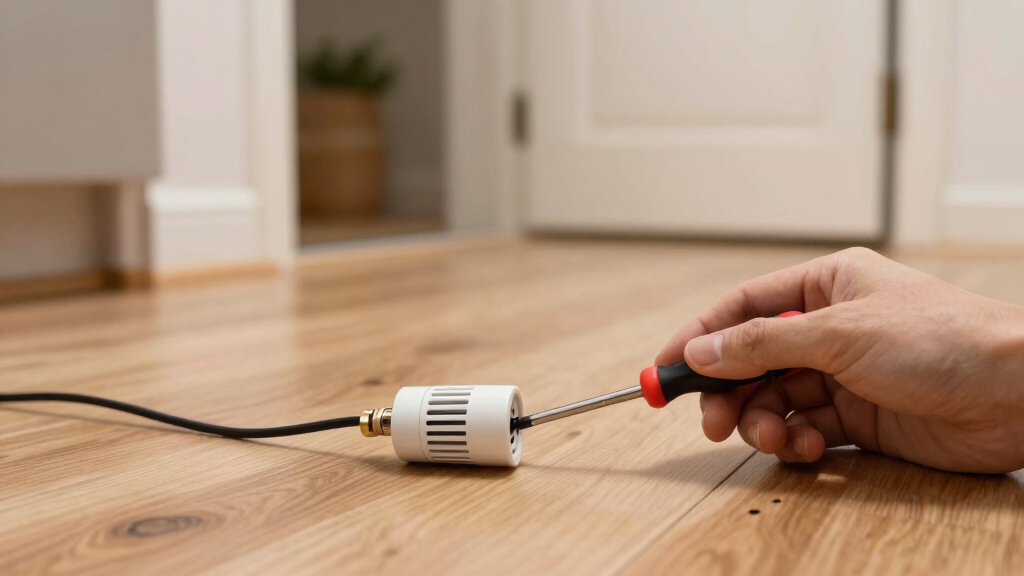
How We Picked
The products included in this roundup were evaluated based on their compatibility with various radiant heating systems, sensor accuracy, ease of installation, build quality, and feature set. We prioritized models with proven reliability, good user feedback, and safety features like GFCI protection. Cost was a factor, but only when balanced with performance and durability. The ranking reflects a combination of value, versatility, and user-friendliness, aiming to help different types of buyers—from DIY homeowners to professionals—find the best fit for their radiant heat needs.Factors to Consider When Choosing Radiant Heat Thermostat Floor Sensor
Choosing the right floor sensor for radiant heat systems involves considering several key factors. Beyond basic compatibility, elements like sensor accuracy, ease of installation, and safety features can significantly impact your system’s performance and longevity. Understanding these factors can help you avoid common pitfalls such as undersized sensors or incompatibility issues that lead to system failures. A well-chosen sensor ensures consistent heating and energy efficiency, making your investment worthwhile.Sensor Compatibility and Type
It’s essential to verify that the sensor you choose is compatible with your thermostat and heating system. Some sensors are designed specifically for certain voltage ranges or system types. Dual-sensing models, which measure both floor and air temperature, tend to offer more precise control and safety. Avoid sensors that do not match your system’s specifications, as incompatible sensors can cause inaccurate readings or even damage your setup.
Accuracy and Response Time
Sensor accuracy directly influences how well your floor maintains the desired temperature. Look for sensors with a high-quality thermistor, such as 10k ohm types, which are common for radiant heating. Faster response times help your system adjust quickly to temperature changes, preventing overheating or underheating. Investing in a more accurate sensor can save energy and improve comfort over time, especially in larger or more complex installations.
Ease of Installation and Maintenance
Ease of installation varies widely; some sensors are designed for straightforward wiring, while others require professional setup. Consider whether the sensor includes features like quick-connect terminals or pre-wired cables. Maintenance is also a factor—sensors exposed to moisture or dust need protective features or easy access for troubleshooting. DIY-friendly sensors often come with detailed instructions, but complex systems may necessitate professional installation to ensure safety and performance.
Safety Features and Durability
Safety features such as GFCI protection and robust build quality are vital for long-term reliability. Sensors exposed to moisture or frequent thermal cycling should be rated for such conditions to prevent failure. Durable materials and good sealing can extend a sensor’s lifespan, reducing the need for replacements. Prioritizing safety and durability can prevent costly repairs and ensure consistent operation over years of use.
Price and Value
While higher-priced sensors often come with advanced features like smart connectivity or enhanced accuracy, they are not always necessary for basic setups. Conversely, budget models may lack some features but still perform adequately for simple applications. Consider your specific needs, system complexity, and budget to find the best value. Sometimes, investing a little more upfront can lead to savings through better reliability and energy efficiency in the long run.
Frequently Asked Questions
Can I install a radiant heat thermostat floor sensor myself?
Many sensors are designed for easy installation and can be set up by homeowners with basic electrical knowledge. However, it’s crucial to follow manufacturer instructions carefully and ensure your system’s voltage and wiring are compatible. For complex or high-voltage systems, hiring a professional electrician may be the safer choice. Proper installation not only ensures safety but also guarantees the sensor’s accuracy and longevity.
How do I know if a sensor is compatible with my thermostat?
Compatibility depends on matching voltage ratings, sensor type (such as 10k ohm thermistors), and system specifications. Always check your thermostat’s documentation for compatible sensor models or specifications. Manufacturers typically list compatible sensors on their websites or in product manuals. If in doubt, consulting with a professional or contacting the manufacturer can prevent mismatched components and potential system issues.
What’s the benefit of dual sensing in floor sensors?
Dual sensing combines floor and air temperature measurement, providing a more comprehensive picture of the environment. This feature enhances control accuracy, reduces the risk of overheating, and improves overall safety. It also helps maintain consistent comfort levels, especially in large or multi-zone systems. Although dual sensing sensors tend to cost more, their improved precision can lead to energy savings and longer system lifespan.
Are smart sensors worth the extra cost?
Smart sensors with WiFi or touchscreen capabilities offer convenience, remote monitoring, and advanced scheduling. They are especially beneficial for those who want to control their radiant heating system via smartphone or integrate it into a smart home system. However, they come at a higher price and may require more frequent updates or troubleshooting. If automation and remote access are priorities, investing in a smart sensor can be worthwhile; otherwise, simpler models may suffice.
How often should I replace my floor sensor?
Floor sensors generally have a long lifespan, often exceeding 10 years, if installed correctly and in suitable environments. Signs that a sensor might need replacing include inaccurate temperature readings, inconsistent heating, or physical damage. Regular system checks and calibration can extend sensor life, but if performance issues persist, replacing the sensor is advisable to maintain system efficiency and safety.
Conclusion
For most homeowners seeking reliable performance, the Honeywell T6 Pro-1 Heat Slab Sensor Thermostat offers a balanced mix of accuracy, durability, and ease of use—making it a strong overall choice. Budget-conscious buyers or those with simpler setups might find the Nuheat Element Non-programmable Thermostat provides excellent value. For those wanting smart features and advanced control, the OJ Microline Touchscreen Thermostat stands out. Newbies should prioritize models with straightforward installation, while professionals may prefer sensors with dual sensing and safety features. Ultimately, your choice depends on your system’s complexity, safety needs, and budget.
Fall Picks
fall essentials
As an affiliate, we earn on qualifying purchases.