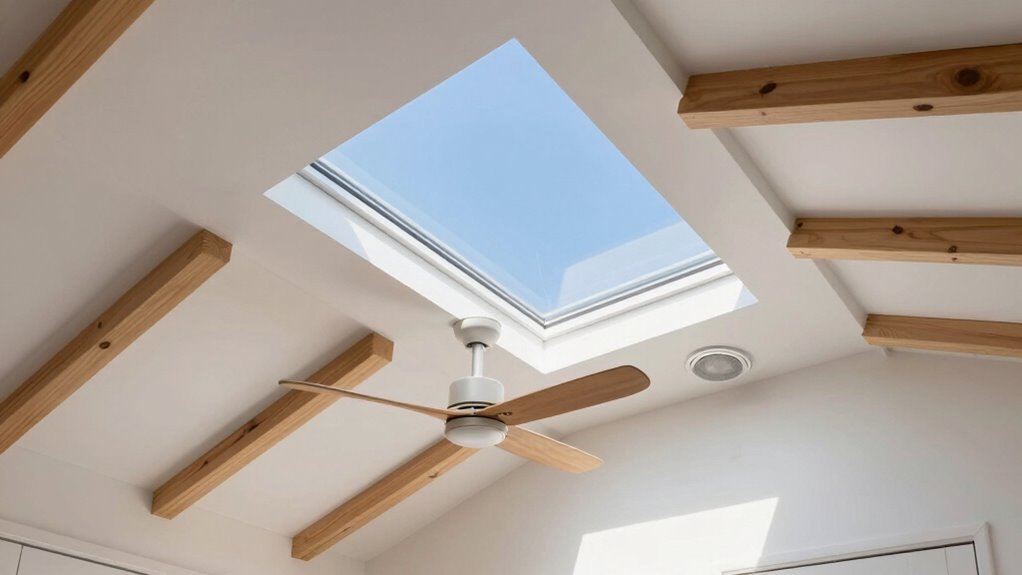

Choosing the right ventilation fan for tiny house loft applications requires balancing airflow capacity with noise levels and power consumption, as lofts are often sleeping areas with limited electrical capacity. My analysis highlights the Homewerks 50 CFM Bathroom Exhaust Fan as the best overall choice for most lofts due to its whisper-quiet DC motor and Energy Star efficiency, which prevents disturbing sleep while managing moisture. For those needing higher airflow in larger loft spaces or open-plan designs, the AC Infinity CLOUDLINE S8 offers superior static pressure and precise speed control, though it demands more installation effort. The primary tradeoff in this category is between compact, low-CFM units suitable for tight quarters and high-CFM industrial fans that move more air but may be too loud or power-hungry for a cozy living space. Continue reading for a detailed breakdown of how these ten models perform under the specific constraints of tiny house living.

Get compact home essentials delivered free — and shop member deals
- Fast, free delivery on millions of items
- Access to Prime Big Deal Days deals on October 6–7
- Prime Video, Amazon Music and more included
Key Takeaways
- DC motors consistently outperform AC motors in noise reduction and energy efficiency, making them superior for loft sleeping areas.
- Inline duct fans offer the cleanest aesthetic for tiny homes by hiding the noisy motor within wall cavities, unlike wall-mounted units.
- High-CFM shutter fans designed for barns or greenhouses often exceed the electrical load capacity of standard tiny house solar or battery systems.
- Moisture management is the primary function of loft ventilation in tiny homes, prioritizing humidity control over temperature regulation alone.
- Variable speed controllers are not optional accessories but necessary components to prevent over-ventilation and heat loss in cold climates.


| ventilation fan for tiny house loft | Voltage | Airflow capacity | Noise level | Power |
|---|---|---|---|---|
| VIVOSUN 4-Inch Metal Inline Ex | 110/120 V | 100 CFM | 30 dB | 14 W |
| Homewerks 50 CFM 1.0 Sone Bath | 120 V | 50 CFM | 1.0 sone | — |
| NHZOTUD 5-Inch Waterproof Exha | Conflicting listings: 12 V in specs and 120 V in description | Up to 230 CFM | — | — |
| AC Infinity CLOUDLINE S8 8-Inc | 12 V | — | 38 dBA in description; 39 dB in specifications | — |
| Voltset 8-Inch Wall-Mounted Ex | 110 V | 535 CFM | — | — |
| 10 Inch Shutter Exhaust Fan fo | 120 volts | 820 CFM | — | 36 watts |
| Amico 10-Inch Shutter Exhaust | 120 V | 1000 CFM | 42 dB | — |
| AC Infinity Airlift T10 Shutte | 240 V | 631 CFM | 67 dB | 50 watts |
| 720 CFM Ultra-Thin Reversible | 110 volts | 720 CFM | — | 48 watts |
| VEVOR 10-Inch Wall-Mounted Exh | 120 volts | 900 CFM | 50 dB | 45 watts |
More Details on Our Top Picks
VIVOSUN 4-Inch Metal Inline Exhaust Fan, 100 CFM
For a tiny-house loft with a short duct run and little room for bulky equipment, the VIVOSUN 4-inch inline fan is a compact, straightforward choice. Its 100 CFM rating is more ventilation than the Homewerks 50 CFM ceiling fan offers, while its small duct format can be easier to route through a tight loft assembly. The metal housing is a practical advantage in a confined utility space, and three listed speed settings give more flexibility than a single-speed wall fan.
The tradeoff is capacity: it is not in the same class as the 230 CFM NHZOTUD or the much larger AC Infinity CLOUDLINE S8, so it is better for targeted exhaust than moving air through a large loft. It also needs regular cleaning, and its blades can be damaged by obstructions. I would choose it when compact duct mounting matters more than high-volume airflow.
Pros:- Compact 4-inch format suits tight loft and duct spaces
- 100 CFM capacity exceeds the Homewerks 50 CFM fan
- Metal housing is described as corrosion-resistant
- Three listed speed settings provide more control than a single-speed fan
Cons:- Lower airflow than the NHZOTUD and AC Infinity CLOUDLINE S8
- Requires regular cleaning to maintain performance
- Blades may be damaged if obstructed
Best for: Tiny-house owners who need a compact duct-mounted fan for a small loft exhaust run and want more airflow than a 50 CFM bathroom fan.
Not ideal for: Owners trying to ventilate a large, open loft or long, restrictive duct system; its 100 CFM capacity is modest beside the larger inline and wall-mounted options.
- Fan diameter:4 inches
- Airflow capacity:100 CFM
- Speed:2930 RPM
- Noise level:30 dB
- Power:14 W
- Voltage:110/120 V
- Number of speeds:3
- Mounting type:Duct mount
Our verdict“Choose the VIVOSUN for a small, space-constrained loft exhaust run, but step up to a higher-capacity model for broader air exchange.”
Homewerks 50 CFM 1.0 Sone Bathroom Exhaust Fan – Energy Star, DC Motor
The Homewerks makes the most sense when a tiny-house loft needs gentle, quiet exhaust rather than high-volume air movement. Its 50 CFM output is suited to rooms up to 50 square feet, and the listed 1.0-sone noise level favors a sleeping loft where fan sound can be intrusive. The integrated dimmable LED also combines lighting and ventilation in one ceiling unit, unlike the VIVOSUN inline fan, which is focused on duct airflow rather than room lighting.
That quiet, integrated setup comes with clear limits. At 50 CFM and a single speed, it offers less ventilation and adjustment than the 100 CFM VIVOSUN or adjustable NHZOTUD. Its ceiling-mount format also requires a suitable opening and installation location. I would pick it for a small loft where low noise and built-in light matter more than rapid heat or humidity removal; larger or hotter spaces should use a stronger fan.
Pros:- Listed 1.0-sone operation suits a quiet sleeping loft
- 50 CFM airflow is specified for rooms up to 50 square feet
- Integrated dimmable 1000-lumen LED combines light and ventilation
- Removable, permanently lubricated motor supports service access
Cons:- Lower airflow than the VIVOSUN and NHZOTUD fans
- Single speed offers no airflow adjustment
- Ceiling mounting requires a compatible opening and installation position
Best for: Tiny-house owners with a loft up to about 50 square feet who prioritize quiet operation and want an integrated ceiling light.
Not ideal for: People needing strong exhaust for a larger loft, cooking-related heat, or fast humidity removal; its 50 CFM capacity and single speed limit flexibility.
- Airflow capacity:50 CFM
- Noise level:1.0 sone
- Wattage:8 W
- Voltage:120 V
- Mounting type:Ceiling mount
- LED light output:1000 lumens
- LED color temperature:4000K
- Material:Aluminum
Our verdict“Choose the Homewerks when quiet ventilation and built-in lighting matter more than airflow capacity or variable control.”
NHZOTUD 5-Inch Waterproof Exhaust Fan with Metal Filter
The NHZOTUD stands out for a loft that needs more airflow than a small bathroom fan but still calls for a compact unit. Its stated 230 CFM output is more than double the VIVOSUN’s 100 CFM, and a manual speed controller lets owners dial airflow back when full power is unnecessary. The 30-mesh metal filter can catch larger dust, lint, and hair before they reach the fan, a useful feature in a tiny home where loft dust can spread into living space.
Its water-resistant construction and horizontal or vertical mounting give it more placement options than the ceiling-only Homewerks. The main caution is power compatibility: the description and specification data conflict, listing 120 V in one place and 12 V in another. The plastic housing and impeller also feel less robust on paper than the VIVOSUN’s metal housing. I would verify the required supply before choosing it.
Pros:- 230 CFM stated airflow exceeds the VIVOSUN’s 100 CFM
- Manual speed controller allows airflow adjustment
- 30-mesh metal filter helps block larger debris
- Supports horizontal or vertical mounting and is described as water-resistant
Cons:- Product data conflicts on voltage, listing both 12 V and 120 V
- Plastic housing and impeller are less robust than the VIVOSUN’s metal housing
- Higher capacity may be unnecessary for a very small, quiet sleeping loft
Best for: Tiny-house owners who want adjustable airflow above 200 CFM, a removable barrier against larger debris, and flexible wall or window mounting.
Not ideal for: Buyers who cannot verify electrical compatibility or who prefer a metal fan body; the listed voltage is inconsistent and the housing is plastic.
- Fan diameter:5 inches
- Airflow capacity:Up to 230 CFM
- Speed:6000 RPM
- Voltage:Conflicting listings: 12 V in specs and 120 V in description
- Wattage:15 W
- Filter:30-mesh metal
- Mounting:Wall or window; horizontal or vertical
- Bearings:Dual ball bearings
Our verdict“Pick the NHZOTUD for adjustable, filtered ventilation only after confirming its correct power requirement.”
AC Infinity CLOUDLINE S8 8-Inch Inline Duct Fan with Speed Controller
For a tiny-house loft connected to a longer or more restrictive duct route, the CLOUDLINE S8 is the most capable inline option in this group. Its 807 CFM rating gives it far more headroom than the VIVOSUN’s 100 CFM or the NHZOTUD’s 230 CFM, while the brushless EC motor is designed for efficient, quieter operation. The wired controller provides 10 speed settings, so owners can reduce airflow and sound when maximum extraction is not needed.
That capacity can be excessive for a small loft, and the 8-inch duct size demands more installation space than the 4-inch VIVOSUN. Its listed noise figures also vary between 38 and 39 dBA, and product details conflict on speed counts despite the description specifying a 10-speed controller. I would reserve it for lofts with substantial heat buildup, long ducting, or a need to move air between zones—not a compact sleeping area needing occasional exhaust.
Pros:- 807 CFM stated airflow is the highest among the inline fans reviewed here
- Brushless EC motor is designed for quiet, efficient operation
- Wired controller offers 10 speed settings
- Designed to move air through high-resistance duct systems
Cons:- 8-inch duct size requires more installation space than the VIVOSUN
- Capacity may be excessive for a small sleeping loft
- Product data differs on noise level and speed-count details
Best for: Tiny-house builders with an 8-inch duct route, substantial loft heat or odor loads, and room for a larger inline fan and controller.
Not ideal for: Owners with a short, narrow duct run or a very small loft; its 8-inch format and high airflow can be more system than the space needs.
- Duct size:8 inches
- Airflow:807 CFM
- Noise level:38 dBA in description; 39 dB in specifications
- Motor:Brushless EC motor
- Controller:Wired, 10-speed controller
- Wattage:230 W
- Voltage:12 V
- Dimensions:8.5 x 11.9 x 9.2 inches
Our verdict“Choose the CLOUDLINE S8 when your loft needs high-capacity ducted ventilation and has room for its larger system.”
Voltset 8-Inch Wall-Mounted Exhaust Fan with Switch
The Voltset is a better fit when the tiny-house loft has an exterior wall location for direct exhaust and the goal is to move heat, smoke, humidity, or odors out without routing ductwork. Its 535 CFM airflow is well above the VIVOSUN’s 100 CFM and the Homewerks’ 50 CFM, while the included power cord and push-button switch make the controls straightforward. A backdraft damper can help limit outside air returning through the opening when the fan is off.
Unlike the AC Infinity CLOUDLINE S8, this is a wall-mounted unit rather than a duct fan, so placement depends on an appropriate exterior wall and opening. It also has only one speed; the CLOUDLINE’s controller offers much finer adjustment, and its 8-inch fan format may be too large for a tight loft wall. I would choose Voltset for direct, high-volume extraction where simple switching matters more than speed control.
Pros:- 535 CFM airflow is substantially higher than the VIVOSUN and Homewerks
- Built-in backdraft damper helps limit reverse airflow when switched off
- Power cord and push-button switch are included
- Metal housing and seven-blade design suit direct wall ventilation
Cons:- Single speed provides no airflow adjustment
- Wall mounting requires a suitable exterior wall opening
- 8-inch format may be difficult to fit in a constrained loft wall
Best for: Tiny-house owners with an accessible exterior wall who need direct exhaust for loft heat, humidity, smoke, or odors.
Not ideal for: Buyers without a suitable wall opening or those who need variable airflow; this fan is wall-mounted and has one speed.
- Fan diameter:8 inches
- Airflow capacity:535 CFM
- Wattage:60 W
- Voltage:110 V
- Speed:2800 RPM
- Number of blades:7
- Number of speeds:1
- Mounting type:Wall mount
Our verdict“Choose the Voltset for high-volume direct wall exhaust when you have a suitable opening and do not need variable speed.”
10 Inch Shutter Exhaust Fan for Greenhouse, Shed, Garage, Barn, Chicken Coop Ventilation, Wall Mount Attic Fan with Speed Controller and Power Cord, 820 CFM, Black
For a tiny-house loft that traps warm air, this fan prioritizes strong exhaust capacity over automation: its listed 820 CFM and three speed settings let you choose between steady air removal and a more forceful purge. The included power cord makes the electrical side simpler than a hardwired setup, though the wall or window opening still takes planning. Compared with the VEVOR 10-Inch Wall-Mounted Exhaust Fan, it offers slightly less stated airflow but similar variable-speed control; the Amico adds a remote and timer if you want operation without reaching the fan. The galvanized frame and aluminum blades suit utility spaces, but this is still a relatively large wall-mounted unit for a compact loft, and its listed 1700 RPM does not tell you how much noise you will hear in a sleeping area.
Pros:- Listed 820 CFM offers substantial capacity for clearing accumulated loft heat and stale air.
- Three speed settings provide a basic way to moderate airflow.
- Included power cord avoids a hardwired electrical connection.
- Galvanized steel frame and aluminum blades suit utility-area installation.
Cons:- Requires a suitably sized wall or window opening, limiting use in finished or rented tiny houses.
- No noise rating is provided, making bedroom-level sound hard to judge.
- Lacks the remote and timer offered by the Amico 10-Inch Shutter Exhaust Fan.
Best for: Tiny-house owners with a dedicated wall or window opening who want substantial exhaust airflow and simple manual speed adjustment.
Not ideal for: Loft sleepers who need a quiet, compact fan or renters who cannot cut and mount a wall or window opening.
- Airflow capacity:820 CFM
- Fan speed:1700 RPM
- Power:36 watts
- Voltage:120 volts
- Speed settings:3
- Mounting:Wall mount
- Construction:Galvanized steel frame and aluminum blades
- Power source:Electric; power cord included
Our verdict“Choose this if you have a suitable opening and want high-capacity exhaust with simple speed control, but skip it if quiet bedroom operation is the priority.”
Amico 10-Inch Shutter Exhaust Fan with Remote, 9-Speed 13W DC Motor, 1000 CFM
The Amico is the most adjustable choice here: nine speeds, a remote, and a 1–8 hour timer make it easier to clear loft heat without leaving the fan at full blast all night. Its listed 1000 CFM is the highest in this group, ahead of the 900 CFM VEVOR, while its 13W DC motor keeps the stated motor power low. That combination suits owners who want to tune airflow around changing temperatures, though the figures alone cannot predict how the fan will sound or perform in a particular loft opening. Gravity-operated louvers help limit rain, insects, dust, and backdrafts when the fan is off. The tradeoff is dependence on the remote for operation, plus the same permanent wall-opening requirement that makes all these shutter fans less convenient than an inline duct fan such as the AC Infinity CLOUDLINE S8.
Pros:- Listed 1000 CFM is the highest airflow capacity among these five wall and window fans.
- Nine speeds allow finer airflow adjustment than the three-speed 10-inch shutter fan.
- Remote and 1–8 hour timer support convenient timed ventilation.
- Gravity-operated louvers help limit weather, insects, dust, and backdrafts while off.
Cons:- Requires a wall opening and permanent wall mounting.
- Remote control is needed to operate the fan, creating a drawback if it is misplaced or unavailable.
- The high stated airflow may be more than a small loft needs at full output.
Best for: Tiny-house owners with a wall-mounted opening who want remote operation, timed shutoff, and more airflow adjustments than a basic controller provides.
Not ideal for: Buyers who want controls on the fan itself, cannot cut a wall opening, or need a ducted fan that can be placed away from the loft wall.
- Airflow capacity:1000 CFM
- Motor:13 W DC
- Fan speed:2100 RPM
- Speed settings:9
- Noise level:42 dB
- Voltage:120 V
- Controls:Remote control
- Timer:1–8 hours
- Mounting:Wall mount; plug-in installation
Our verdict“Pick the Amico if remote control and timed, fine-grained airflow adjustment matter more than having direct controls on the fan.”
AC Infinity Airlift T10 Shutter Exhaust Fan 10″ with Environment Controller
The Airlift T10 stands apart by pairing a shutter fan with temperature and humidity monitoring and app-based control. For a loft where heat and moisture vary through the day, that monitoring can make ventilation decisions less guesswork-driven than with the manual controllers on the VEVOR or the 10-inch 820 CFM fan. Its listed 631 CFM is lower than those alternatives, so I would favor it for managed, moderate exhaust rather than the fastest possible heat purge. The brushless EC motor and fixed wall installation suit an owner willing to build ventilation into the tiny house, while Wi-Fi control adds convenience for checking conditions remotely. There are significant fit checks: the supplied data lists 240 V, which may not match a typical 120 V setup, and 67 dB could be intrusive beside a sleeping loft.
Pros:- Temperature and humidity monitoring can inform when the loft needs ventilation.
- Wi-Fi app control adds remote access beyond the manual knob controls on the VEVOR.
- Brushless EC motor is specified for the unit.
- Wall-mounted shutter design provides a fixed exhaust option for a planned opening.
Cons:- Listed 240 V supply may not suit a tiny house wired for 120 V.
- Listed 631 CFM is lower than the Amico and the 820 CFM shutter fan.
- Listed 67 dB may be noticeable near a sleeping loft.
Best for: Tiny-house owners who want app access and temperature or humidity monitoring and can support the listed 240 V supply.
Not ideal for: Buyers with standard 120 V-only wiring, people seeking the highest listed airflow, or anyone placing a fan close to a quiet sleeping area.
- Airflow capacity:631 CFM
- Voltage:240 V
- Power:50 watts
- Motor:Brushless EC motor
- Noise level:67 dB
- Blade count:5
- Control:Wi-Fi app and button control
- Mounting:Fixed wall mount
Our verdict“Choose the Airlift T10 for app-based climate monitoring if its 240 V requirement and noise level fit your tiny-house setup.”
720 CFM Ultra-Thin Reversible Ventilation Fan – Stainless Steel, for Cellars, Greenhouses & Garages
This fan earns its place for two loft-specific fit and airflow needs: a thin body for limited-depth openings and reversible operation for switching between exhaust and intake. That makes it more flexible than the exhaust-only shutter models, including the VEVOR, when a tiny house needs fresh air drawn in at certain times rather than stale air pushed out. Its listed 720 CFM sits below the 820 CFM 10-inch fan and the Amico’s 1000 CFM, so it is not the strongest option for a rapid heat purge. Stainless steel construction is a practical match for damp environments, but the product data does not give a fan diameter, noise figure, or control method. I would check the opening dimensions and verify how reversal is controlled before choosing it; the thin profile saves depth, not necessarily installation effort.
Pros:- Reversible airflow supports both exhaust and intake operation.
- Ultra-thin design can fit openings with limited depth.
- Stainless steel construction suits spaces where corrosion resistance matters.
- Listed 720 CFM provides substantial airflow for a compact ventilation setup.
Cons:- Precise opening measurements are needed, and the supplied data gives no fan diameter.
- No noise rating or control details are provided.
- Listed airflow is lower than the 820 CFM 10-inch fan and the 1000 CFM Amico.
Best for: Tiny-house builders with a shallow window or wall opening who want the option to switch between exhausting loft air and drawing air in.
Not ideal for: Buyers who need a clearly specified fan size, detailed noise data, or the highest listed exhaust capacity in this group.
- Airflow capacity:720 CFM
- Power:48 watts
- Voltage:110 volts
- Power source:AC
- Airflow:Reversible; intake or exhaust
- Mounting:Window mount
- Installation:Window or wall mount
- Material:Stainless steel
Our verdict“Choose this model when a shallow opening and reversible intake-exhaust use matter more than top listed airflow or detailed control information.”
VEVOR 10-Inch Wall-Mounted Exhaust Fan with Variable Speed Controller, 900 CFM
VEVOR is the straightforward middle ground for a tiny-house loft: 900 CFM, a variable-speed knob, and automatic shutters cover the basics without the Amico’s remote-dependent controls or the Airlift T10’s app and electrical complexity. Its listed airflow falls between the 820 CFM shutter fan and the Amico’s 1000 CFM, making it a practical fit for owners who want substantial exhaust capacity but prefer local manual adjustment. Automatic shutters close when the fan is off, helping limit rain and debris at the opening. The cost of this simplicity is physical installation: it still needs a wall opening, and its listed 50 dB may be audible near a bed. Compared with the reversible stainless-steel fan, it is exhaust-only, but its stated dimensions and 10-inch diameter make opening planning more explicit.
Pros:- Listed 900 CFM offers more airflow than the 820 CFM shutter fan.
- Variable-speed knob provides direct, adjustable control.
- Automatic shutters help block rain and debris when the fan is off.
- Specified 10-inch diameter and overall dimensions aid opening planning.
Cons:- Requires wall-mounted installation and a suitable opening.
- Listed 50 dB may be noticeable near a sleeping loft.
- Exhaust-only operation lacks the intake option of the reversible stainless-steel fan.
Best for: Tiny-house owners seeking a wall-mounted exhaust fan with a manual variable-speed knob and automatic shutters, without app or remote controls.
Not ideal for: Renters, builders without a suitable wall opening, or loft sleepers who need a fan with a quieter stated noise level or reversible airflow.
- Fan diameter:10 inches
- Airflow capacity:900 CFM
- Motor:AC, 1650 RPM
- Power:45 watts
- Voltage:120 volts
- Noise level:50 dB
- Control:Variable-speed knob
- Shutters:Automatic
- Dimensions:12.8 × 12.8 × 7.09 inches
Our verdict“Choose the VEVOR if you want clearly specified, high-capacity exhaust with a simple speed knob and automatic shutters.”

How We Picked
I evaluated these ventilation options based on their suitability for the unique constraints of tiny house lofts, specifically focusing on noise levels, power draw, and installation footprint. Since lofts are typically elevated sleeping quarters, any fan producing more than 2.0 sones was heavily penalized unless it offered significant airflow benefits for non-sleeping hours. I also assessed the CFM-to-size ratio, ensuring that recommended models could effectively circulate air in spaces ranging from 80 to 150 square feet without requiring complex ducting that reduces headroom. Power consumption was another critical filter, as many tiny homes operate off-grid or on limited grid connections; models with inefficient AC motors or high standby power were ranked lower unless they provided exceptional value in raw airflow.
Beyond technical specs, I considered the versatility of control mechanisms. Units with built-in humidity sensors or remote controls received higher rankings because they allow users to automate ventilation based on actual moisture levels rather than guesswork. This approach ensures that the fan runs only when necessary, preserving energy and maintaining a comfortable indoor climate. The final ranking reflects a holistic view of how each product integrates into the daily life of a tiny house dweller, prioritizing quiet operation and energy independence alongside raw performance.
| ventilation fan for tiny house loft | Mounting |
|---|---|
| VIVOSUN 4-Inch Metal Inline Ex | — |
| Homewerks 50 CFM 1.0 Sone Bath | — |
| NHZOTUD 5-Inch Waterproof Exha | Wall or window; horizontal or vertical |
| AC Infinity CLOUDLINE S8 8-Inc | — |
| Voltset 8-Inch Wall-Mounted Ex | — |
| 10 Inch Shutter Exhaust Fan fo | Wall mount |
| Amico 10-Inch Shutter Exhaust | Wall mount; plug-in installation |
| AC Infinity Airlift T10 Shutte | Fixed wall mount |
| 720 CFM Ultra-Thin Reversible | Window mount |
| VEVOR 10-Inch Wall-Mounted Exh | — |
Factors to Consider When Choosing Ventilation Fan For Tiny House Loft
Selecting a ventilation fan for a tiny house loft is distinct from outfitting a standard bedroom or garage. The following factors address the specific physical and electrical limitations of tiny living.Noise Levels and Sleep Quality
Because lofts are often used as bedrooms, noise output is the most decisive factor in your selection. Standard bathroom fans typically operate between 0.5 and 2.0 sones, which is barely audible, while industrial shutter fans can exceed 4.0 sones, making them disruptive during sleep. I recommend prioritizing fans with DC motors, which generally run quieter and smoother than traditional AC induction motors. If you must use a higher-CFM unit for daytime cooling, look for models with variable speed controllers so you can reduce the RPMs at night. Remember that vibration noise travels through wooden loft structures, so mounting the fan on rubber grommets or isolating it from the main frame can make a noticeable difference in perceived loudness.
Power Consumption and Off-Grid Compatibility
Tiny house dwellers frequently rely on solar panels, battery banks, or limited grid connections, making power draw a critical specification. A fan running at 50 watts for eight hours consumes 0.4 kWh, which may seem small but adds up quickly against a 2-4 kWh daily budget. DC motor fans are significantly more efficient, often using 50-70% less energy than comparable AC models. Before purchasing, calculate your loft’s ventilation needs against your available power reserve. If you are off-grid, avoid high-CFM units like the 1000 CFM models unless they have efficient DC motors and are used intermittently. For continuous operation, stick to fans drawing under 15 watts.
Moisture Control and Humidity Management
In tiny homes, cooking and showering generate concentrated moisture that rises to the loft, leading to condensation and potential mold growth on cold windows. Therefore, the fan’s primary job is humidity extraction, not just air movement. Look for units with integrated humidity sensors or consider pairing your fan with a separate hygrometer-controlled switch. This automation ensures the fan runs only when relative humidity exceeds a safe threshold, typically around 60%. Without this control, you risk over-ventilating in winter, which strips heat from your home and increases heating costs. A fan that effectively exchanges air in a small volume prevents the ‘greenhouse effect’ common in insulated tiny lofts.
Installation Space and Aesthetic Integration
Loft ceilings are often sloped or low, limiting the space available for bulky fan housings. Inline duct fans are ideal here because the motor is hidden in the wall cavity or under the floor, leaving only a quiet vent grille in the living space. This approach maximizes headroom and maintains a clean aesthetic. Conversely, wall-mounted shutter fans are easier to install but protrude into the room and can feel visually intrusive in a compact space. Measure your available cavity depth carefully; some ‘low profile’ fans still require 4-6 inches of clearance behind the wall. If you lack this depth, you may need to route ducting to an exterior wall, which requires more complex planning.
Maintenance Access and Filter Cleaning
Tiny house lofts are often hard to reach, requiring ladders or tight squeezes for maintenance. Choose a fan that is easy to access for cleaning filters and blades. Dust accumulation reduces airflow and increases motor strain, so regular cleaning is mandatory. Models with removable front grilles or washable metal filters are preferable to those requiring full disassembly. If your loft is high or cramped, a fan that fails and is difficult to replace becomes a major liability. Consider the long-term accessibility of the unit before committing to a permanent installation, especially if you plan to age in place or have mobility constraints.
Frequently Asked Questions
Do I need a ventilation fan in my tiny house loft if I have large windows?
While large windows provide natural light and can be opened for cross-ventilation, they do not actively remove moisture-laden air that rises during cooking or showering. A mechanical fan ensures consistent air exchange even when windows are closed for privacy, security, or thermal retention during winter. Natural ventilation is also dependent on wind and temperature differentials, which are unpredictable. A dedicated fan provides controlled, on-demand ventilation that prevents condensation buildup on cold window surfaces, protecting your insulation and framing from mold and rot.Is it better to install an inline fan or a wall-mounted exhaust fan in a loft?
For most tiny house lofts, an inline duct fan is superior because it separates the noisy motor from the living space, resulting in a quieter environment. The motor can be mounted in a utility closet, under the floor, or in the ceiling cavity, leaving only a silent vent in the loft. Wall-mounted fans are easier to install but place the motor directly in the sleeping area, which can be disruptive. However, if your loft lacks the structural depth for ducting or you have limited access to exterior walls, a low-profile wall-mounted unit may be the only feasible option.How many CFM do I actually need for a standard tiny house loft?
For a typical loft sleeping area of 80-120 square feet, a fan rated between 50 and 80 CFM is sufficient for moisture control and air freshness. You do not need the high CFM ratings (200+) found in bathroom fans for large master baths unless you are also venting a kitchen or bathroom directly into the loft. Over-sizing the fan leads to excessive noise, energy waste, and heat loss. Focus on the quality of the air exchange and the quietness of the operation rather than raw airflow numbers.Can I use a solar-powered fan for my tiny house loft ventilation?
Direct solar-powered fans are generally unreliable for consistent ventilation because they only operate when the sun is shining, leaving your loft unventilated at night or during cloudy weather when condensation is most likely to form. It is better to use a standard, energy-efficient DC fan connected to your home’s main electrical system, which is powered by your solar array and battery bank. This allows you to run the fan on a timer or humidity sensor at any time of day. If you must go off-grid, ensure your battery capacity can support the fan’s continuous low-wattage draw.How do I prevent cold drafts from entering through the ventilation fan in winter?
To prevent cold drafts, you must use a fan with an insulated backdraft damper or install a separate insulated shutter mechanism that closes tightly when the fan is off. Standard plastic louvers often rattle or fail to seal completely, allowing cold air infiltration. Additionally, using a variable speed controller or a humidity-activated switch ensures the fan only runs when necessary, minimizing the time the damper is open. For extreme climates, consider installing a heat recovery ventilator (HRV) specifically designed for small spaces, which warms incoming air with outgoing air to reduce energy loss.Conclusion
After reviewing the current market options, my recommendations for ventilation fans for tiny house lofts depend on your specific priorities regarding noise, power, and installation complexity. The Homewerks 50 CFM Bathroom Exhaust Fan stands out as the Best Overall choice for most users due to its exceptional quietness and energy efficiency, making it ideal for sleeping areas. For those who need to manage higher humidity loads or larger loft spaces, the AC Infinity CLOUDLINE S8 is the Best Premium option, offering superior static pressure and precise control, though it requires more installation effort. If you are on a tight budget or need a simple, rugged solution for a shed-like loft, the VIVOSUN 4-Inch Inline Exhaust Fan serves as the Best Value pick, providing adequate airflow at a low cost. Beginners should start with the Homewerks model for its ease of use and low risk of noise disturbance, while off-grid enthusiasts should prioritize DC motor models like the Amico 10-Inch for their low power draw. Choose based on whether you value silence and automation or raw airflow capacity.
As an affiliate, we earn on qualifying purchases.Halloween Picks
halloween