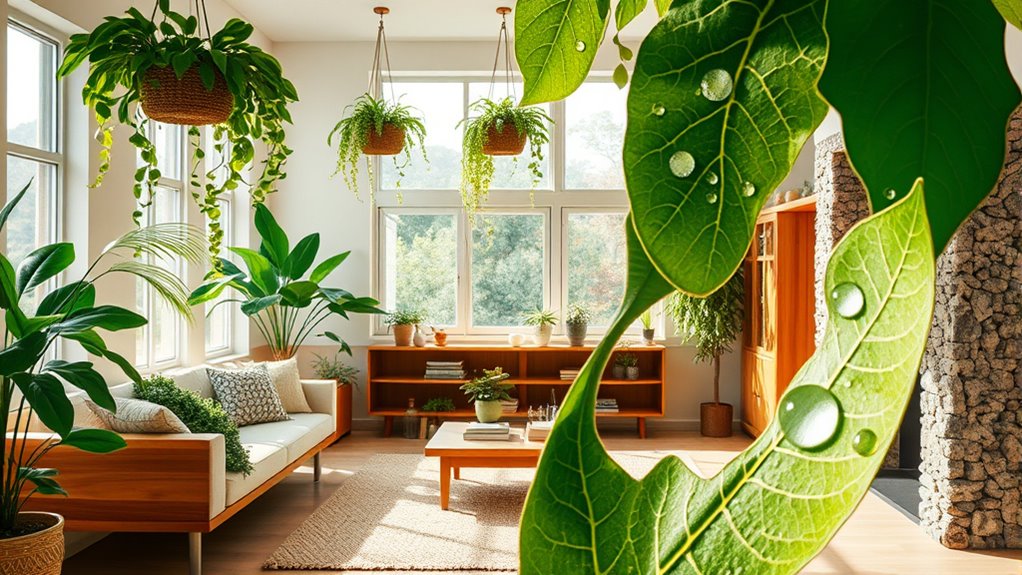

Did you know that incorporating natural elements into indoor spaces can boost productivity by up to 15%? Yet, creating a biophilic environment doesn’t have to be costly or complicated. Simple changes like adding affordable plants or maximizing natural light can make a significant difference. Curious about how to transform your space into a calming, nature-inspired haven without breaking the bank? The key lies in small, intentional updates that bring the outdoors inside—start exploring what’s possible today.
Key Takeaways
- Incorporate affordable indoor plants like succulents and pothos to add greenery without high costs.
- Maximize natural light through strategic placement near windows and use reflective surfaces to brighten spaces.
- Use inexpensive window treatments such as sheer curtains to filter sunlight and create a calming atmosphere.
- Focus on small, intentional changes like adding plants and optimizing light to enhance indoor environments affordably.
- Choose easy-care, low-maintenance plants that improve air quality and mental well-being with minimal effort.
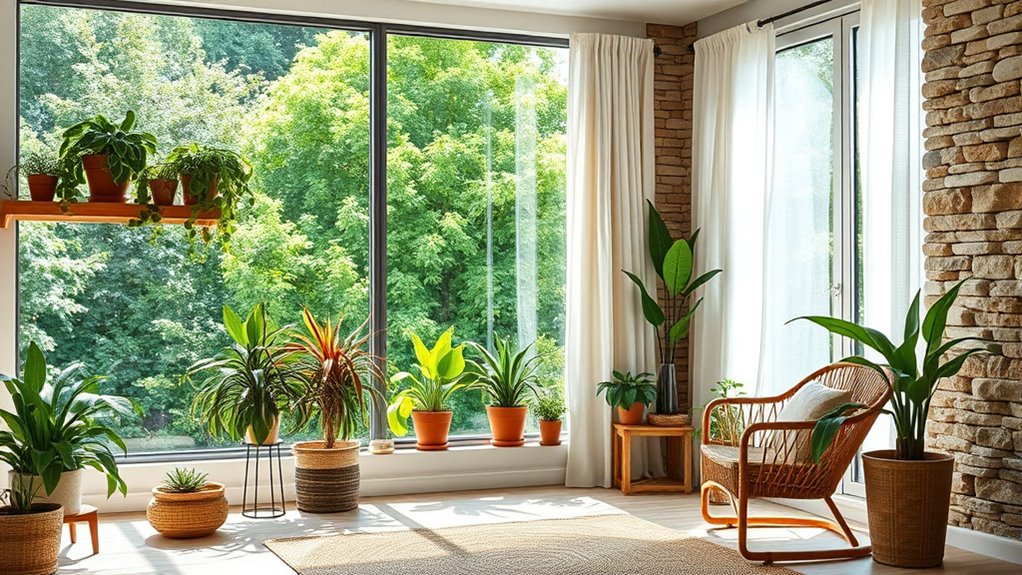
Have you ever wondered how bringing nature into your built environment can boost well-being and productivity? The good news is, you don’t need a big budget or a sprawling outdoor space to incorporate biophilic design into your daily life. Small changes can make a significant impact, and one of the simplest ways is through the strategic use of indoor plants and natural lighting. These elements not only add aesthetic value but also improve your mental health, focus, and overall comfort.
Indoor plants are a cost-effective way to introduce nature into your space. They come in various sizes and styles, so whether you’re in a tiny apartment or a large office, you can find options that work. Plants like pothos, snake plants, or succulents are easy to care for and thrive indoors, requiring minimal maintenance. They purify the air, reduce stress, and create a calming atmosphere. Placing a few plants on your desk, windowsill, or shelves invites a sense of tranquility and makes your environment feel more alive. Plus, taking care of plants gives you a small daily routine that fosters mindfulness and connection to nature.
Indoor plants are an affordable way to bring nature indoors, boost mood, and create a calming environment.
Natural lighting is another essential aspect of biophilic design that you can tap into without much expense. Whenever possible, position your workspace or living area near windows to maximize daylight exposure. Natural light not only brightens your space but also influences your circadian rhythm, improving your sleep and energy levels. If your space lacks ample windows or sunlight, consider using light-colored walls, mirrors, or reflective surfaces to bounce light around and make the room feel brighter. You can also opt for affordable sheer curtains that filter sunlight softly, creating a more inviting and cozy environment. These simple tweaks can dramatically boost your mood and focus, making your space feel more open and connected to nature.
Combining indoor plants with natural lighting creates a synergy that immerses you in a biophilic experience. The greenery benefits from sunlight, thriving and filtering the air, while the natural light highlights the plants’ vibrant colors and textures. This harmony not only elevates your interior’s aesthetic but also enhances your mental clarity and well-being. You don’t need elaborate or expensive features to embrace biophilic design—small, intentional choices like these can transform your space into a healthier, more inspiring environment. By nurturing plants and optimizing natural light, you bring the outdoors inside, fostering a sense of calm and connection that benefits your mind and body every day.
Conclusion
By adding just a few affordable plants and optimizing natural light, you can create a calming, nature-inspired space without spending much. Did you know that incorporating plants can boost productivity by up to 15%? Small changes like placing succulents or maximizing sunlight with reflective surfaces make a big difference. Embrace biophilic design to enhance your well-being and transform your environment—it’s simple, budget-friendly, and truly impactful.