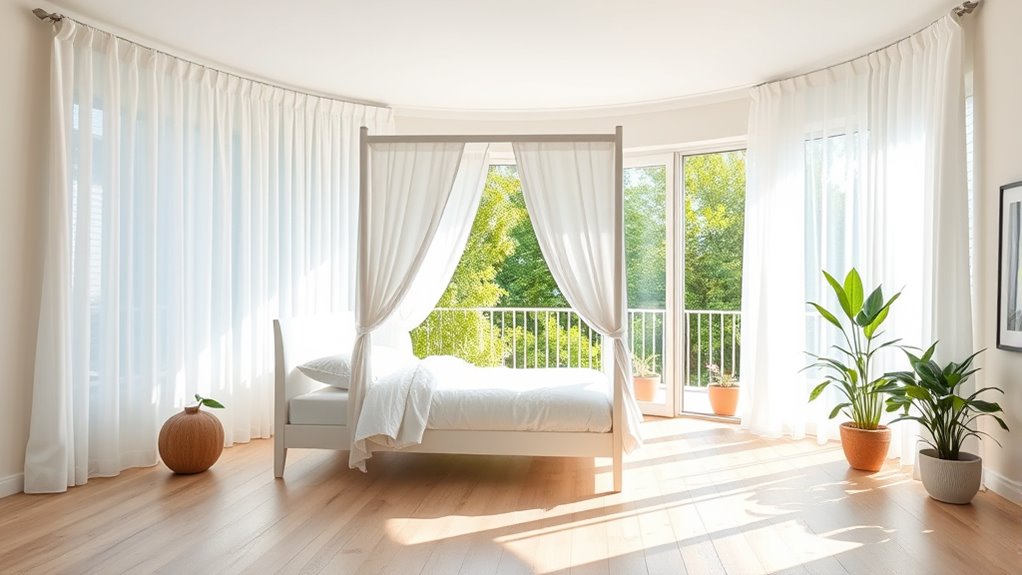

To maximize natural light and airflow in your bedroom, position windows on opposite sides for cross-ventilation and choose larger or floor-to-ceiling glass doors to flood the space with sunlight. Opt for light-colored walls and reflective surfaces to brighten the room further. Use lightweight, sheer curtains for easy control of light and air. By combining these strategies, you’ll create a bright, airy retreat—continue exploring to discover more tips for perfecting your space.
Key Takeaways
- Position windows on opposite sides of the room to promote cross-ventilation and optimal airflow.
- Use large, floor-to-ceiling windows and south-facing placements to maximize natural light entry.
- Choose light-colored walls and reflective surfaces to enhance brightness and distribute sunlight evenly.
- Opt for lightweight, sheer curtains or blinds to control light while maintaining airflow.
- Combine strategic window placement with light hues and proper treatments for a bright, airy, and comfortable bedroom.
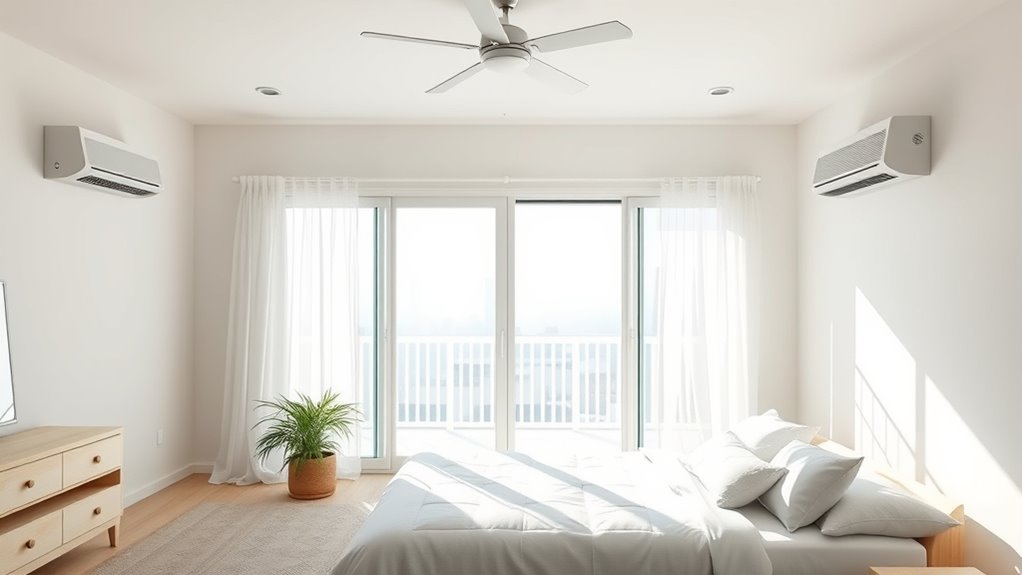
Creating a bedroom that maximizes natural light and airflow can considerably enhance your comfort and overall well-being. The key to achieving this begins with strategic window placement. When designing or renovating your bedroom, consider positioning windows on opposite sides of the room to promote cross-ventilation. This setup allows fresh air to flow freely, reducing stuffiness and maintaining a comfortable temperature. If your space permits, installing larger windows or even floor-to-ceiling glass doors can flood the room with sunlight during the day, making the space feel more open and inviting. Remember, the orientation of your windows matters too; south-facing windows tend to bring in more consistent sunlight, while east-facing windows invite morning light. Proper window placement not only boosts airflow but also ensures you get ample natural light, which can lift your mood and improve your sleep quality. Additionally, understanding the Louisiana Alimony Laws can help you plan your space to create a peaceful environment during transitional periods. Alongside window positioning, selecting the right color schemes can profoundly influence how light interacts with your space. Lighter colors like whites, creams, pastels, and soft neutrals reflect sunlight, making your bedroom feel brighter and more spacious. These hues bounce natural light around the room, reducing the need for artificial lighting during the day. Conversely, darker shades absorb light, which can make your room feel smaller and gloomier. If you prefer a cozy, intimate atmosphere, incorporate darker accents through bedding, rugs, or artwork, but keep the walls in lighter tones to maximize light reflection. The choice of color scheme also impacts airflow perception; cool, light colors tend to evoke a sense of freshness and airiness, enhancing the overall feeling of ventilation and comfort. Additionally, consider how window treatments play into your light and airflow strategy. Opt for lightweight, sheer curtains or blinds that can be easily opened to let in maximum sunlight and air. Heavy drapes, while offering privacy and insulation, can block light and impede airflow when closed. When choosing window placement and color schemes, think about how they work together to create a balanced environment. Properly positioned windows combined with reflective, light-colored walls will help you harness natural light effectively, while well-chosen window treatments will control airflow and light levels throughout the day. By paying attention to these details, you’ll craft a bedroom that feels bright, airy, and perfectly tailored to your comfort needs.
Top picks for "design bedroom maximum"
Open Amazon search results for this keyword.
As an affiliate, we earn on qualifying purchases.
Frequently Asked Questions
How Can I Prevent Noise From Neighboring Rooms?
To prevent noise from neighboring rooms, you should use soundproofing techniques like adding acoustic treatments such as rugs, curtains, and wall panels. Installing weatherstripping on doors and sealing gaps helps block sound transmission. Consider using thicker or double-layered drywall for better insulation. These methods create a barrier that absorbs and reduces noise, ensuring your bedroom remains peaceful and quiet, no matter what’s happening next door.
What Materials Improve Air Circulation in Bedrooms?
Think of your bedroom as a garden needing fresh air. Use ventilation enhancers like louvered windows or vents to boost airflow. Choose breathable fabrics such as linen or cotton for your bedding and curtains, allowing air to move freely. These materials act as the roots and leaves, promoting healthy circulation. Together, ventilation enhancers and breathable fabrics create a space where air flows effortlessly, keeping your bedroom fresh and vibrant.
How Does Ceiling Height Affect Airflow?
Higher ceilings improve airflow by allowing warm air to rise, creating natural ventilation and reducing stuffiness. You should incorporate effective ventilation strategies, such as vents or fans, to enhance airflow further. Proper ceiling insulation also helps maintain consistent temperature and prevents air from escaping, boosting overall comfort. When designing your bedroom, consider these elements to maximize airflow and guarantee a fresh, airy environment.
Can Window Placement Impact Energy Efficiency?
Yes, window placement substantially impacts energy efficiency. Proper window orientation allows you to optimize daylight, reducing the need for artificial lighting. Position windows to maximize sunlight during winter and minimize heat gain in summer. By strategically placing windows, you enhance natural airflow and insulation, lowering heating and cooling costs. Focus on south-facing windows for daylight optimization and consider shading options to improve overall energy performance in your bedroom.
What Are the Best Colors to Reflect Light?
Think of your bedroom as a mirror reflecting sunlight; light colors are your best allies. Opt for whites, creams, or light grays in your color schemes to amplify brightness. Incorporate reflective surfaces like glossy paint, mirrors, or satin finishes to bounce light around. These choices act like a beacon, making your space feel more open and airy, transforming your bedroom into a luminous sanctuary.
Conclusion
By designing your bedroom with ample light and airflow, you’re opening a window to freedom and clarity. Let the sunlight be your guiding star, illuminating your path, while fresh air acts as a gentle breeze, carrying away stagnation. When you create this space, you’re not just improving comfort—you’re inviting in energy and peace. Remember, your room becomes a sanctuary where light and air symbolize hope and renewal, breathing life into every moment you spend there.