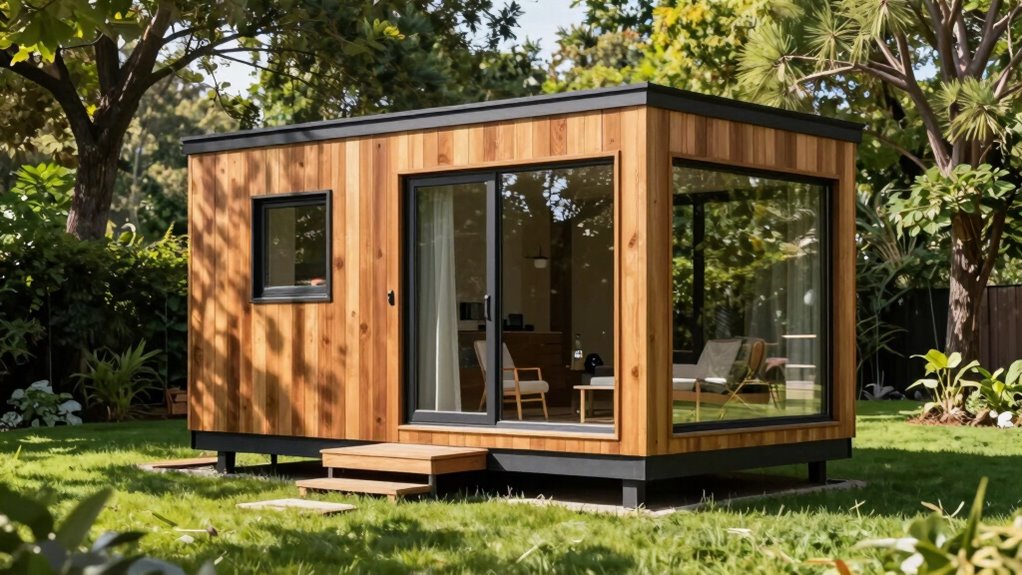

You can put a tiny house in your backyard, but it depends on your local zoning laws and building regulations. Many areas restrict accessory dwellings based on size, setbacks, or occupancy rules. You’ll need to check with city or county offices to see what’s permitted and if permits or inspections are necessary. Property taxes and utility hookups might also be affected. Continue to explore these key questions to guarantee your tiny house project is compliant and successful.

Get compact home essentials delivered free with Prime
- Fast, free delivery on millions of items
- Prime Video, Amazon Music and more included
- Member-only deals all year
Key Takeaways
- Check local zoning laws to determine if tiny houses are permitted as primary or accessory dwellings.
- Ensure compliance with building codes, permits, and safety standards for construction and utility hookups.
- Understand how adding a tiny house may affect property taxes and property valuation in your area.
- Obtain necessary permits and inspections, and verify utility connection requirements before building.
- Consider community acceptance and neighbor regulations to avoid potential conflicts or restrictions.
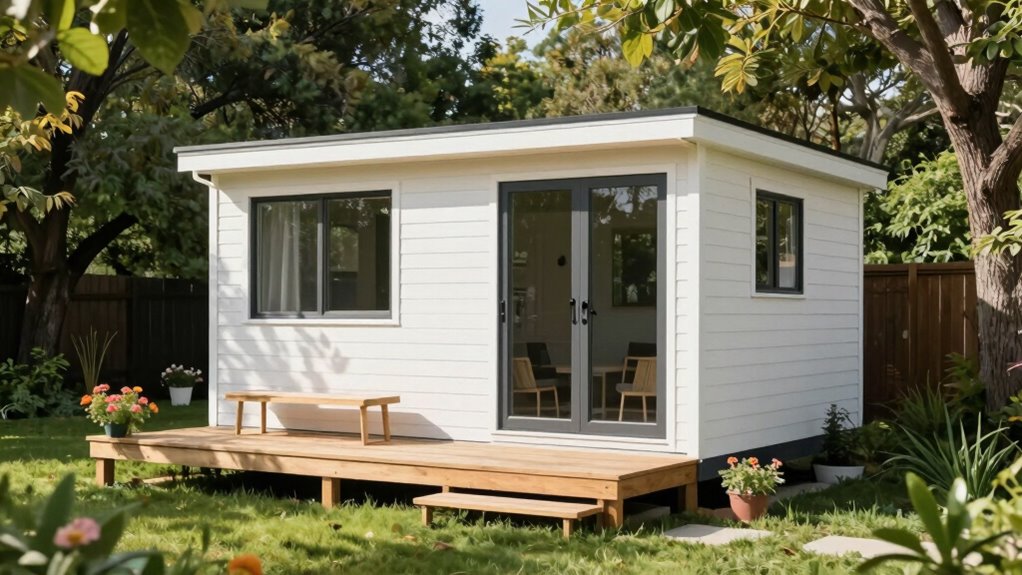
Have you ever wondered if you can legally place a tiny house in your backyard? It’s a common question among homeowners looking to maximize their space or create a new living arrangement. The answer depends on several factors, primarily local zoning regulations and property taxes. Zoning laws are designed to control land use within a community, and they often specify what structures can be built where. Some areas might have strict rules that prohibit tiny houses as primary residences or even as accessory dwellings. Others may allow them with certain conditions, such as size limits, setbacks, or occupancy rules. Before you start planning, it’s essential to check with your city or county zoning office. They can tell you if your property is zoned for an additional dwelling and what requirements you need to meet. Additionally, understanding how land use regulations are enforced can help you navigate potential restrictions more effectively. It’s also important to consider the technology and construction standards that may apply, especially if you want your tiny house to meet safety and building codes. Knowing about hormesis and herbal wellness could also inspire eco-friendly and health-conscious design choices for your tiny house. Incorporating water-saving features can further enhance the sustainability of your tiny home, as water conservation is a key consideration in many tiny house designs. Property taxes are another important aspect to bear in mind. When you add a tiny house to your backyard, it can potentially impact your property taxes. In some jurisdictions, placing a tiny house on your property might be viewed as adding a new dwelling unit, which could increase your assessed property value and, consequently, your taxes. However, this isn’t always the case. Some areas may classify tiny houses as accessory structures or guest houses, which might not substantially affect your tax bill. Still, it’s wise to consult local tax authorities or a real estate professional to understand how a tiny house could influence your property taxes in your specific location. Being aware of zoning restrictions can help you make informed decisions about your plans. Even if zoning regulations and property taxes are favorable, you’ll want to think about other practical considerations. For example, you might need building permits or inspections to verify your tiny house complies with safety standards. Some communities require septic, water, and electrical hookups, which can involve additional permits and costs. It’s also worth considering how your neighbors might feel about a tiny house in your backyard, especially if it impacts your property’s appearance or use.
As an affiliate, we earn on qualifying purchases.
Frequently Asked Questions
How Much Does a Tiny House Typically Cost?
A tiny house typically costs between $30,000 and $60,000, but prices vary based on size, interior design, and features. If you focus on sustainability practices, you might spend more upfront for eco-friendly materials and energy-efficient systems. Keep in mind that customizing your tiny house with unique interior design elements can also influence the overall cost. Planning carefully helps you balance costs with your desired style and eco-conscious goals.
Are Tiny Houses Legal in All Residential Zones?
Tiny houses aren’t legal in all residential zones because zoning restrictions and building codes vary. You need to check your local regulations, as some areas classify tiny houses as accessory dwelling units, while others restrict them entirely. Make sure your tiny house meets the required building codes for safety and habitability. Consulting local authorities or zoning offices helps you determine if you can place a tiny house in your backyard legally.
What Permits Are Needed for Backyard Tiny Houses?
They say “forewarned is forearmed,” so check with your local authorities first. You’ll likely need permits that address zoning restrictions and building codes for backyard tiny houses. Contact your city or county planning department to get specifics. You might need a building permit, and possibly a zoning variance, depending on your location. Obtaining these permits guarantees your tiny house adheres to legal standards and avoids future issues.
Can I Connect a Tiny House to Utilities Easily?
Connecting a tiny house to utilities is doable, but it requires some planning. You’ll need to set up a proper utility connection for electricity, water, and sewage. The plumbing setup can be straightforward if you work with local codes and professionals. Usually, you’ll install a septic system or connect to existing sewer lines, and hook up to the main water supply. Be prepared for permits and inspections to guarantee everything’s up to code.
How Do Tiny Houses Impact Property Value?
Tiny houses can positively impact your property value by adding unique appeal, increasing usable space, and attracting potential buyers. Their mobility allows you to relocate or sell easily, boosting flexibility. However, consider tiny house insurance and local zoning laws, as these factors influence value. Properly integrated, a tiny house can enhance your property’s charm and functionality, making it more attractive and potentially increasing its market worth over time.
Conclusion
So, while the idea of placing a tiny house in your backyard might seem straightforward, it’s essential to check local rules and regulations first. If you jump in without doing your homework, you could find yourself in hot water. Do your due diligence, and you’ll avoid any unnecessary headaches. Remember, it’s better to be safe than sorry—better to cross your T’s and dot your I’s before making the move to your dream tiny home.
Halloween Picks
halloween
As an affiliate, we earn on qualifying purchases.