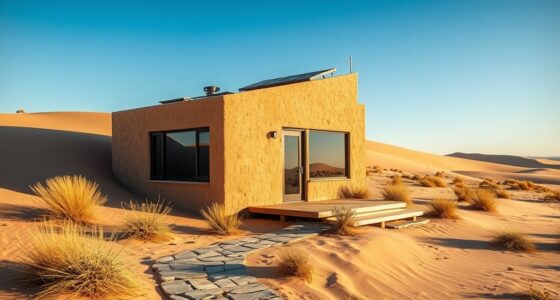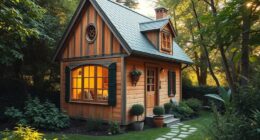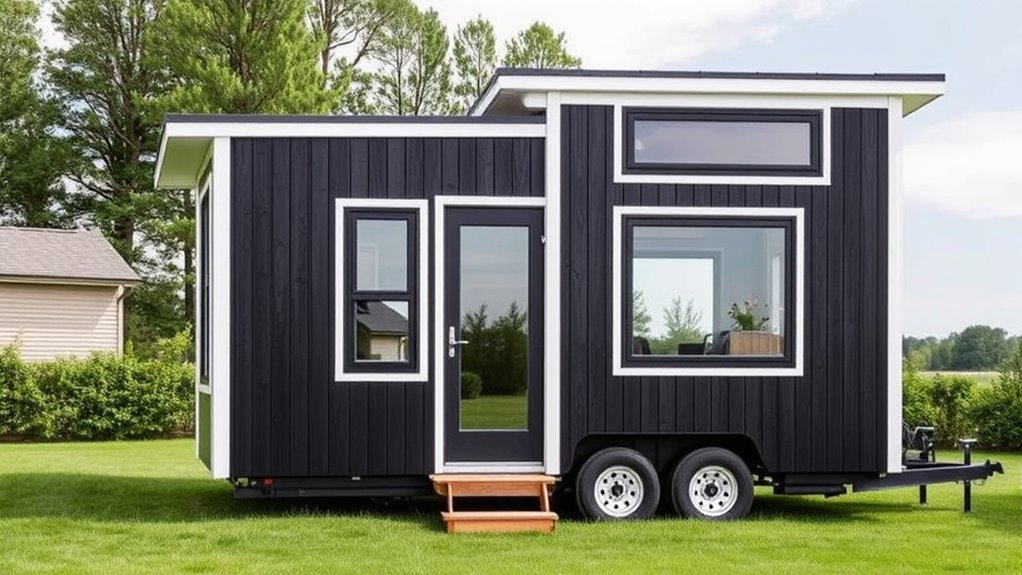
To master compact design principles for tiny houses, focus on maximizing every inch with multifunctional furniture and clever storage options. Prioritize open, airy layouts that use vertical space through wall shelves and hidden compartments. Incorporate natural light, sleek furniture, and simple decor to prevent clutter. Use space-saving solutions like fold-away tables and built-in cabinets to keep everything organized while maintaining a cozy feel. Keep exploring for more tips to optimize your small space efficiently.
Key Takeaways
- Prioritize multifunctional furniture that combines seating, sleeping, and storage to maximize limited space.
- Utilize vertical storage solutions like wall shelves and hanging organizers to free up floor area.
- Incorporate built-in and hidden storage compartments to keep clutter concealed and optimize space.
- Use natural light, mirrors, and layered lighting to create an illusion of openness and enhance visual space.
- Keep interior design simple with sleek, space-saving furniture and natural materials for a cozy, uncluttered environment.
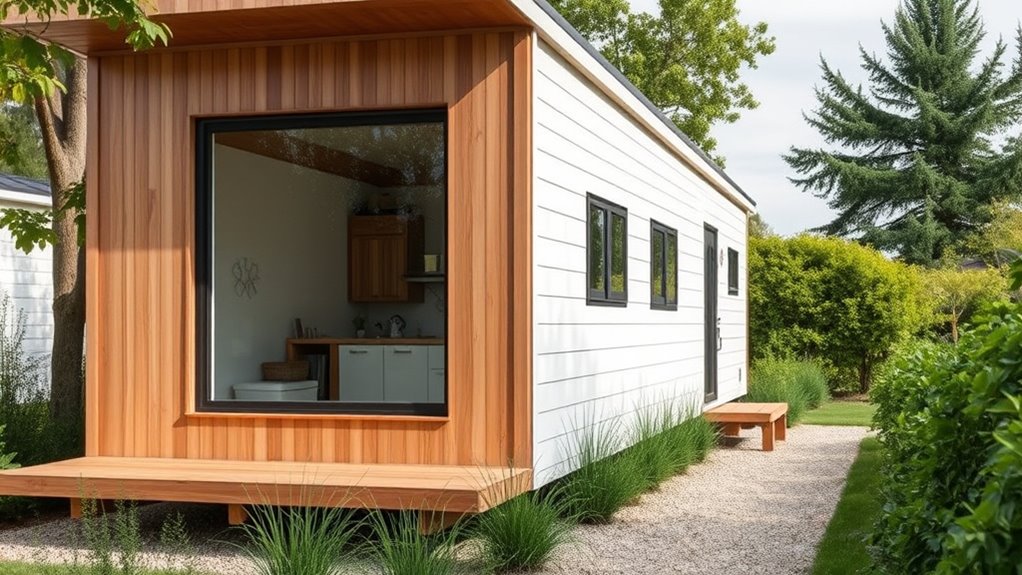
Designing compact products requires a clear focus on maximizing functionality while minimizing size. When it comes to tiny houses, this principle is even more critical because space is your most limited resource. To make the most of every square inch, you need to prioritize space optimization. This means thoughtfully selecting and arranging every element to serve multiple purposes, reducing clutter and increasing livability. One of the most effective ways to achieve this is through multifunctional furniture. Instead of separate pieces for sitting, sleeping, and storage, you opt for furniture that combines these functions seamlessly.
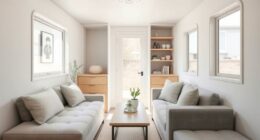
Maximize tiny house space with multifunctional furniture that combines sitting, sleeping, and storage seamlessly.
For instance, consider a sofa bed that transforms from a comfortable seating area during the day into a cozy bed at night. This single piece of furniture eliminates the need for a separate guest bed or a dedicated sleeping space, freeing up room for other uses. Similarly, fold-away tables and wall-mounted desks can be tucked away when not in use, creating open space for movement or other activities. Storage solutions should also be integrated into the design, such as built-in cabinets, under-stair compartments, or beds with underneath drawers. These choices maximize storage without taking up additional space, helping you stay organized and clutter-free.
Your goal should be to think vertically as well as horizontally. Vertical space offers opportunities for clever storage and design features that don’t encroach on your living area. Installing wall shelves or hanging organizers keeps belongings accessible without crowding your floors or surfaces. When planning your layout, consider how each piece can be multifunctional. For example, a dining table with built-in storage or a bench that doubles as a clothing rack can save precious space while maintaining practicality. Every item should have a clear purpose, and where possible, serve more than one.
Lighting plays a crucial role in making a tiny house feel larger and more open. Use strategic placement of windows, mirrors, and layered lighting to create an illusion of spaciousness. This not only enhances the aesthetic but also improves the overall functionality of your space. Keep the design simple and clutter-free, avoiding bulky furniture that can overpower the room. Instead, choose sleek, space-saving items that blend seamlessly into your environment. Incorporating natural materials like wood and linen can further enhance the cozy, open feel typical of tiny house design.
Ultimately, effective space optimization and multifunctional furniture are the cornerstone of compact design principles for tiny houses. They enable you to create a comfortable, efficient living space that feels larger than it actually is. With thoughtful planning and smart choices, you turn a small footprint into a highly functional, inviting home that maximizes every inch.
Frequently Asked Questions
How Do I Maximize Storage in a Tiny House?
To maximize storage in your tiny house, focus on smart storage solutions and space optimization. Use multi-functional furniture like beds with built-in drawers or fold-away tables. Install shelves above doorways and utilize vertical space with wall-mounted cabinets. Consider hidden compartments under stairs or seating areas. Every inch counts, so prioritize efficient organization to keep your space clutter-free and functional, making your tiny house feel more spacious and livable.
What Materials Are Best for Lightweight Construction?
Think of your tiny house as a delicate bird, needing feather-light yet strong wings to soar. Use lightweight materials like bamboo, aluminum, or engineered wood to achieve this. These materials provide durable construction without adding weight, allowing your home to remain nimble and resilient. By choosing wisely, you create a safe, cozy space that’s easy to move and built to last, giving your tiny house the strength of a mighty eagle.
How Can I Ensure Proper Ventilation in Small Spaces?
To guarantee proper ventilation in small spaces, you should incorporate effective ventilation strategies like installing exhaust fans and operable windows. Keep airflow optimized by positioning vents across from each other to promote cross-ventilation. Use ceiling fans or portable fans to enhance air circulation. Regularly open windows when weather permits, and consider adding vents or passive airflow systems to maintain fresh air and prevent moisture buildup, certifying a healthier tiny home environment.
What Are Cost-Effective Design Features for Tiny Homes?
Think of your tiny home as a blank canvas, where smart choices save you money and energy. Opt for affordable features like solar power and off-grid systems to cut utility costs. Use multi-purpose furniture and efficient insulation to maximize space and function. These cost-effective design elements turn your tiny house into a cozy, independent haven, proving that less can truly be more without breaking the bank.
How Do I Choose Multi-Functional Furniture?
To choose multi-purpose furniture, look for pieces that serve dual functions, like a sofa bed or a fold-out table. Prioritize space-saving techniques by selecting furniture that offers storage or can be easily tucked away. Measure your space carefully to make certain the furniture fits comfortably. Focus on versatility and simplicity, so your tiny house remains functional without feeling cluttered. This approach helps maximize every inch efficiently.
Conclusion
By embracing these compact design principles, you’ll create a cozy, efficient space that feels just right. Think of it as crafting a little sanctuary where every inch serves a purpose, making your home feel more inviting and personalized. Remember, sometimes less truly is more, and a well-thought-out tiny house can offer a peaceful retreat you’ll cherish. So, trust these guidelines to gently steer your design journey toward comfort and simplicity.