TL;DR

Get compact home essentials delivered free — and shop member deals
- Fast, free delivery on millions of items
- Access to Prime Big Deal Days deals on October 6–7
- Prime Video, Amazon Music and more included
Compact solar power systems combine smaller solar panels with controls, and sometimes a battery and inverter, to supply electricity in portable, off-grid, or space-limited settings. Choose one by calculating your appliances’ watt-hours and startup surges, then check actual solar conditions, usable battery capacity, and installation rules—not just the panel’s advertised watts.
A panel marked 200 watts won’t deliver 200 watts from sunrise to sunset. That mismatch between the number on the box and the energy you actually get is where many compact solar purchases go wrong.
Compact solar power systems can mean a folding panel and portable battery, a small kit for a shed, or a rooftop setup squeezed into limited space. They use smaller solar panels and related equipment to generate, store, or use electricity, but each type suits a different job.
This guide helps you sort those options, estimate what you can run, and spot the limits before you spend money. You’ll learn why watts and watt-hours are different, what a battery can—and cannot—do, and when an electrician or permit belongs in the plan.
Treat “compact” as a broad label, not a standard capacity or performance rating.
Calculate watt-hours from appliance watts and hours of use, then check inverter continuous and surge ratings.
A panel’s rated watts are not a daily-energy promise; shade, weather, angle, and season change production.
Choose battery capacity for the hours without sun, and remember conversion losses reduce usable energy.
Check local electrical and permit rules before fixed, rooftop, grid-connected, or home-battery work.
Know which kind of compact solar system fits your space
Compact solar power systems are small-scale setups that use panels and electrical equipment to supply power where space, portability, or energy demand is limited. The label has no standard size or capacity, so a pocketable power station and a fixed shed system may both qualify while doing very different jobs.
A portable power station usually combines a battery, inverter, and charging controls in one case; you connect a folding panel when sunlight is available. A small off-grid kit may instead use separate panels, a charge controller, a battery, wiring, and an inverter. Balcony and small-roof systems aim to use a tight patch of sun, but grid connections bring local utility and electrical rules into play.
Imagine you want to charge a phone and run a couple of LED lights at a weekend campsite. A portable station is easy to carry and set beside the tent. For a garden shed where you want lights and occasional tool charging, a fixed panel and protected battery may make more sense. The right setup is a toolbox: useful when you pick the tool for the job, frustrating when you expect one small box to power everything.
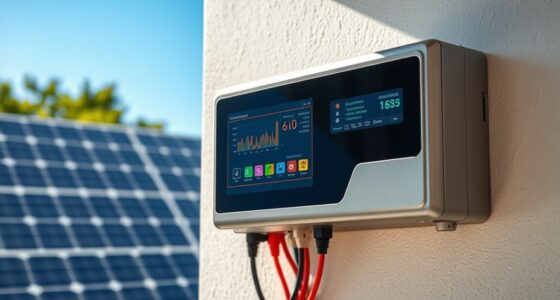
Recent models often combine LFP batteries, multiple output ports, app monitoring, and options for wall or vehicle charging. Those features can make a system more convenient, but check product specifications: charging times rely on suitable equipment and favorable conditions, and product performance varies. Ask what the system can do at your location, not just what its name promises.
compact portable solar power station
As an affiliate, we earn on qualifying purchases.
As an affiliate, we earn on qualifying purchases.
Use watts and watt-hours to predict what you can run
Watts measure power at a moment, while watt-hours measure energy used or stored over time. That distinction tells you whether a system can start an appliance and how long it may run; a panel’s wattage alone doesn’t answer either question.
For example, a 60 W laptop running for four hours uses about 240 Wh before conversion losses. A 10 W lamp used for five hours adds 50 Wh, bringing the rough total to 290 Wh. A battery labeled 1,000 Wh holds a nominal amount of energy, but not all of it may be available at the AC outlet because the inverter and system consume some energy.
Appliances also have a power ceiling. A kettle rated at 1,500 W may exceed a compact inverter’s continuous output even if the battery has plenty of capacity. A refrigerator can draw a brief startup surge above its normal running power, so check both the inverter’s continuous rating and its surge rating.
Before buying, write down each device’s watts and hours of use, then add the energy. If your shed plan includes a 20 W light for three hours and a 50 W router for six hours, that is roughly 360 Wh per day. This estimate gives you a more useful starting point than a product listing that highlights only a large battery number.
Size your panels and battery with this four-step check
Size a compact solar setup by listing your loads, checking their power limits, estimating available sunlight, and choosing storage for the hours when panels can’t help. This four-step check is more reliable than picking a kit because its advertised wattage sounds impressive.
- List each device. Record its watts and hours of daily use. A 5 W phone charger used for three hours is about 15 Wh; a 40 W laptop for five hours is about 200 Wh.
- Check startup and output limits. Find the inverter’s continuous and surge ratings, especially for motors, refrigerators, and pumps.
- Estimate solar conditions. Consider shade, panel direction, season, and local weather. Rated output is measured under test conditions, not a daily guarantee.
- Choose storage for the gap. Match battery capacity to the energy you need after sunset or during cloudy periods, allowing for losses and a reserve.
Say you need about 300 Wh a day for a laptop, lights, and phone charging at a cabin. A panel that produces enough energy on a clear summer day may not refill the battery during a short winter day under tree cover. That’s why sizing should reflect the hardest conditions you expect, or you should have another charging option.
Use a simple comparison: panel watts describe potential power, battery Wh describe stored energy, and inverter watts describe what you can run at once. All three must fit your plan.
Know what your compact system can—and can’t—power
A compact solar system can run smaller loads such as phones, laptops, lights, routers, and some medical or refrigeration devices when its battery, inverter, and solar supply match their needs. High-power heating and cooling appliances are much harder because they consume energy quickly and often need a strong inverter.
Suppose you want backup for a refrigerator during an outage. Check its energy use over a full day, not only the wattage printed on the compressor, and confirm the inverter can handle startup. A refrigerator may be workable with the right station and a charged battery, while an electric kettle or space heater can drain that same battery fast. Runtime depends on the actual appliance and operating pattern.
For a CPAP machine, check the exact model’s power draw and the planned hours of use. If you rely on a medical device, follow your clinician’s advice and keep a dependable backup plan; a small solar setup should not be your only contingency unless it has been designed and tested for that need.
A so-called solar generator is usually a battery power station that stores electricity and can recharge from panels. It does not create energy on its own. During a blackout, a portable station can power its rated outlets while charged, but ordinary grid-tied solar often shuts down for safety unless it has suitable backup equipment.
Match the system to the appliance’s power and energy needs. A large battery cannot make an undersized inverter run a high-power device.
Choose between portable panels, fixed kits, and small rooftops
Portable, fixed off-grid, and grid-connected systems solve different problems: portability, steady power in one location, and household energy production. Compare where the equipment will sit and how you plan to use the electricity before comparing prices.
| System type | Good fit | Tradeoff to check |
|---|---|---|
| Portable panel and power station | Camping, temporary work, or outage essentials | Needs sun and manual placement; capacity limits apply |
| Small fixed off-grid kit | Shed, cabin, or remote equipment | Needs secure mounting, suitable wiring, and battery care |
| Balcony or small-roof system | Limited-space electricity generation at home | Connection, mounting, permits, and utility rules vary |
At a campsite, a folding panel can follow the sun while the battery stays in the shade. At a shed, a mounted panel saves the chore of setting equipment out each visit, but its cable route and mounting need protection from weather and damage. Flexible panels can help where shape or weight matters, though buyers should compare durability, usable output, warranty, and mounting method with rigid panels.
Small systems may be worthwhile for reliable access to power or emergency backup even when they do not minimize a household bill. Compare the full cost—panels, mount, battery, wiring, and installation—with the value of electricity you can actually use. Savings depend on local electricity prices, incentives, use patterns, and the share of generation consumed on site.
Keep installation safe and your equipment working
Safe compact solar installation depends on compatible components, dry and protected connections, and compliance with local electrical rules. A portable panel still needs sensible cable handling; a permanent roof, grid, or battery installation carries much higher stakes.
For a temporary setup, follow the manufacturer’s instructions, keep connectors out of standing water, and protect cables from sharp edges, foot traffic, heat, and vehicles. Keep panels reasonably clean and inspect plugs for wear. For batteries, follow the maker’s temperature and charging guidance rather than leaving a unit in a hot car or freezing shed without checking its limits.
Permanent wiring, roof mounts, grid-tied equipment, and home battery connections may require permits, inspection, or a licensed electrician. Do not improvise a connection to household wiring or assume that a plug-in approach is allowed where you live. If work involves electrical circuits, turn off power before any permitted work and use appropriate protective equipment; hire a qualified professional for work beyond your training.
A homeowner mounting panels on a shed roof, for instance, needs to think about secure attachment, weatherproof cable entry, and the roof’s condition—not just whether the panel fits. A neat-looking installation can still fail if wind pulls at a mount or water reaches a connector. Follow local requirements and the equipment instructions from the start.
Frequently Asked Questions
How much can a compact solar system power?
It depends on the panel’s real-world production, usable battery capacity, inverter rating, and the appliances you connect. Phones, lights, and laptops are generally easier loads than heaters, kettles, and air conditioners; check both running watts and startup surges.
Will compact solar panels work on cloudy days or in winter?
Panels can produce electricity in diffuse light, but output generally falls compared with strong direct sun. Winter’s shorter days, low sun angle, shade, and local weather can reduce daily generation, so leave room for another charging source or a larger reserve if you need dependable power.
Can I run a refrigerator or CPAP machine from a portable solar system?
Often, if the battery holds enough energy for the planned runtime and the inverter can handle the appliance’s power and any startup surge. Check the exact device specifications. For a medical device, follow your clinician’s guidance and plan dependable backup power.
Can compact solar power run a home during a blackout?
A charged portable power station can supply its rated outlets. Many standard grid-tied solar systems shut down during an outage for safety, so home backup requires compatible equipment and correct installation by a qualified professional where required.
Does a solar generator make electricity without panels?
Most products sold as solar generators are battery power stations, not generators that create energy. They store electricity from solar panels, a wall outlet, or another compatible source, then supply power through their outlets.
Conclusion
Choose a compact solar system by starting with the devices you need to power, then match their watt-hours, inverter demand, and backup time to realistic sunlight at your site. A panel rating is a clue, not a promise—and a battery’s capacity is only part of the story.
Write down your loads, check the product limits, and get qualified help for permanent electrical or roof work. The best small system is the one that quietly does its job when the lights go out or the trail turns dark.
Halloween Picks
halloween
As an affiliate, we earn on qualifying purchases.