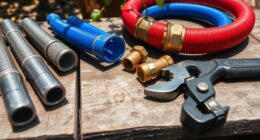
To plan costs effectively as a DIY builder, start by listing all necessary materials, then use online calculators or expert advice to estimate quantities accurately. Track every expense, compare prices regularly, and create a detailed budget with a built-in contingency of 10-15% for surprises. Staying organized, disciplined, and flexible helps keep costs in check. If you want to learn proven strategies to stay on budget and manage your project seamlessly, keep exploring these essential tips.
Key Takeaways
- Create a detailed budget upfront, listing all necessary materials and estimating costs accurately.
- Incorporate a 10-15% contingency buffer to cover unforeseen expenses.
- Track all purchases and expenses regularly to stay within budget.
- Compare prices and seek affordable, durable materials to reduce costs.
- Break the project into phases with individual cost estimates for better financial control.

Are you ready to take on a DIY project but unsure how to manage your budget? The key to successful cost planning starts with accurate material estimation. When you begin, it’s tempting to buy supplies as you go, but this approach can quickly blow your budget. Instead, take the time early on to carefully estimate the materials you’ll need. Measure twice, cut once, and list everything from lumber and nails to paint and fixtures. Use online calculators or consult with experts to get a realistic idea of quantities and costs. Having a clear picture of what’s required helps prevent unexpected expenses down the line, guaranteeing your project stays financially feasible. Additionally, understanding the benefits of eye patches can remind you to include small comfort items or wellness products in your budget if your project involves long hours of work. Once you’ve got your material estimation in check, focus on budget management. Keep track of every purchase—big or small—and compare prices regularly. Setting a detailed budget before starting allows you to allocate funds appropriately, avoiding overspending on unnecessary items. Consider creating a spreadsheet that breaks down costs for each phase of the project. This not only helps you stay organized but also highlights areas where you might cut costs if needed. For example, opting for affordable yet durable materials can save money without sacrificing quality. Remember to include a contingency buffer, typically around 10-15%, to cover unforeseen expenses that often pop up during DIY projects. Planning ahead is also essential for effective budget management. Break your project into smaller tasks and assign a cost estimate to each. This makes it easier to see where your money is going and adjust as needed. If you find one area is costing more than expected, you can shift funds from another part of the project or look for cheaper alternatives. Staying disciplined with your spending and regularly reviewing your estimates keeps you on track. It’s tempting to splurge on fancy tools or premium materials, but sticking to your plan ensures you don’t derail your budget. Finally, always keep receipts and document your expenses. This habit helps you evaluate your spending patterns and refine your estimates for future projects. Good material estimation combined with diligent budget management empowers you to complete your DIY project without financial stress. It transforms what could be an overwhelming task into a manageable, rewarding experience. When you approach your project with a clear financial plan, you gain confidence and control, making your DIY journey not just successful but also enjoyable.
Frequently Asked Questions
How Can I Estimate Unexpected Costs During My Project?
You can estimate unexpected costs by adding a contingency budget of about 10-15%, considering potential issues with material sourcing and project delays. Regularly review your project timeline and stay flexible with your plans, as delays often increase costs. Keep track of all expenses, and set aside extra funds for unforeseen expenses. Being proactive helps you manage surprises and stay within your overall budget.
What Tools Are Best for Tracking Budget and Expenses?
You should use project management tools like Excel, Google Sheets, or dedicated budgeting software to track your expenses effectively. These tools help you monitor your budget, compare estimates, and identify unexpected costs early. When selecting a contractor, consider their experience with budget management to guarantee transparency. Regularly updating your tracking tools keeps your project on course, making it easier to adjust expenses and avoid surprises down the line.
How Do I Adjust My Plan if Costs Exceed My Budget?
If your costs exceed your budget, act quickly by increasing budget flexibility and exploring cost reduction strategies. Review your expenses to identify areas where you can cut back, such as opting for more affordable materials or adjusting project scope. Reassess your priorities, and consider reworking your plan to stay within budget. Staying proactive helps you manage costs effectively and keeps your DIY project on track.
What Are Common Hidden Costs DIY Builders Overlook?
You often overlook hidden fees like permit costs and unexpected supplies. These can quickly escalate your expenses if not planned for. Don’t forget to account for permit fees, inspection costs, and potential overruns on materials or tools. Always set aside a contingency fund for unexpected expenses, so you’re not caught off guard. Being aware of these hidden costs helps you stay within budget and avoid surprises during your DIY project.
How Should I Prioritize Spending on Materials Versus Labor?
Think of your project like a recipe—you get better results with quality ingredients and careful preparation. Prioritize spending on materials with good quality, because they last longer and look better. Don’t skimp there. Invest in labor efficiency too; skilled work saves time and reduces costly mistakes. Balancing these guarantees your project is both durable and cost-effective, giving you a solid foundation for success.
Conclusion
In the world of DIY building, your budget is the compass guiding your creative voyage. With careful planning, you’ll navigate the financial seas smoothly, avoiding hidden storms and unexpected whirlpools. Think of your budget as the sturdy foundation beneath your masterpiece—strong, reliable, and ready to support your dreams. Keep your eyes on the horizon, stay flexible, and enjoy the journey. Every dollar well-spent brings you closer to turning your DIY dream into a beautiful reality.