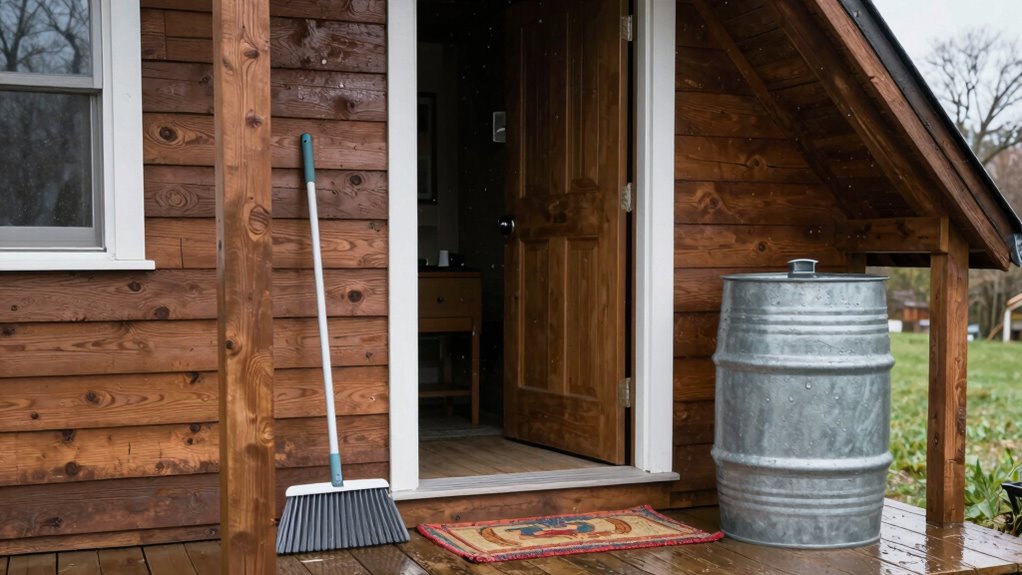

To design a tiny house entry that handles mud and weather, install weatherproof shelters like small overhangs to protect from rain and snow. Use durable, slip-resistant flooring and add raised thresholds or steps to keep water out. Organize outdoor gear with hooks, mats, and storage to prevent clutter. Enhance safety and appeal with weatherproof lighting and simple decorative touches. By combining these elements, you’ll create a practical, inviting entry—and there’s more tips to make it work even better.

Get compact home essentials delivered free with Prime
- Fast, free delivery on millions of items
- Prime Video, Amazon Music and more included
- Member-only deals all year
Key Takeaways
- Install weatherproof shelters like small overhangs to protect entry from rain, snow, and mud splashes.
- Use durable, textured flooring and raised thresholds to prevent water ingress and improve slip resistance.
- Incorporate outdoor storage solutions, such as hooks and mats, to organize gear and reduce mud tracking.
- Add weatherproof lighting to enhance safety and highlight decorative elements for visual appeal.
- Keep the design simple and functional with purpose-driven decor to maintain a welcoming and clutter-free entry.
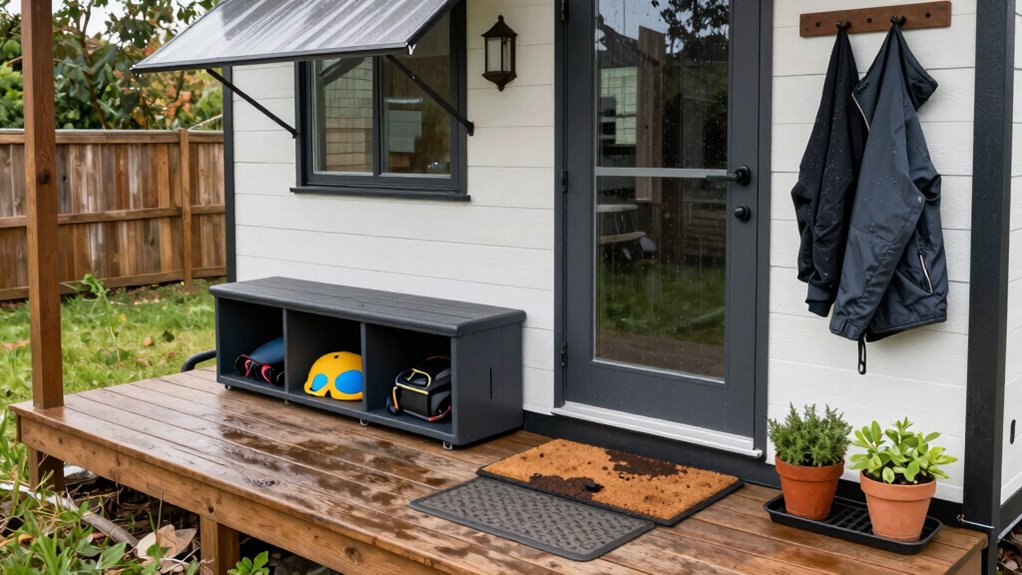
Have you ever wondered how to make the most of a tiny house entry? Your entryway is the first impression visitors get and an essential zone where functionality meets style. Since space is limited, you need to think smart about shelter options to keep mud and weather from wreaking havoc inside. Consider installing a compact, weatherproof shelter like a fold-down awning or a small overhang that offers protection without overwhelming your small footprint. These shelter options shield you and your guests from rain, snow, or mud splashes as you come and go, helping keep the interior cleaner and more organized.
Decorative elements play a key role in transforming a basic entry into a welcoming space. You can add a sturdy, attractive mat to catch dirt and moisture, but don’t stop there. Think about hanging a charming wall-mounted coat rack or hooks that make it easy to grab your jacket, umbrella, or shoes. These elements serve both functional and aesthetic purposes, making your small entry feel intentional and cozy. Keep the design simple but inviting, with small planters or decorative lanterns that add personality without cluttering the space. Remember, every inch counts, so pick items that serve a purpose while enhancing the visual appeal.
Decorative touches like planters and lanterns add personality while keeping your small entry cozy and clutter-free.
Another way to optimize your tiny house entry is by choosing the right flooring. Durable, weather-resistant flooring options like textured tile, stamped concrete, or sealed wood help prevent slips and withstand the elements. Adding a raised threshold or a small step can also help prevent water from entering your home, especially during heavy rain. To further control mud and dirt, consider installing a dedicated mudroom area with a shallow tray or a built-in bench where you can sit to remove shoes comfortably. This not only keeps mud outside but also provides a tidy spot for organizing shoes and outdoor gear.
Lighting is another essential element. Proper lighting improves safety, especially during dark mornings or evenings, and highlights your decorative elements. Use compact, weatherproof sconces or LED strip lighting around the entry to create a warm, inviting glow. Good lighting also discourages dirt and mud from being tracked inside because it makes it easier to see and clean.
In short, designing a tiny house entry that handles mud and weather efficiently involves a mix of smart shelter options, practical storage, and decorative elements that make the space welcoming and functional. Focus on protecting the entry from the elements, organizing outdoor gear, and adding visual touches that reflect your style. When you do, you’ll create an entry that’s not only practical but also charming—making every visit a pleasant experience.
weatherproof tiny house overhang
As an affiliate, we earn on qualifying purchases.
As an affiliate, we earn on qualifying purchases.
Frequently Asked Questions
What Materials Are Best for a Weather-Resistant Tiny House Entry?
You should choose weather-resistant materials like durable, sealed concrete or treated wood for your tiny house entry. Incorporate solar shading options, like awnings or overhangs, to protect from rain and sun. Use insulated doors and weatherproof flooring to keep moisture out. These materials, combined with effective insulation options, prevent mud and weather damage, ensuring your entry stays functional and comfortable regardless of the weather.
How Can I Prevent Mud From Tracking Inside?
You can prevent mud from tracking inside by placing mud mats at your tiny house entrance. These mats trap dirt and moisture before it spreads inside. Additionally, applying weatherproof coatings on nearby surfaces helps keep mud and water from seeping in. Regularly cleaning the mats and ensuring they’re sturdy and well-placed makes a noticeable difference, keeping your tiny house cleaner and more comfortable even during rainy or muddy days.
What Size Should the Entry Door Be?
Choose an entry door around 36 inches wide for easy access and enough space for interior lighting and security features. A slightly wider door improves safety and comfort, especially when bringing in bulky items. Make sure the door has sturdy locks and secure hinges for security. Incorporate good lighting around the entry to illuminate the area, making it safer and more welcoming. This setup helps manage weather, mud, and security effectively.
Are There Eco-Friendly Options for Entry Flooring?
Yes, you can choose eco-friendly entry flooring options like recycled materials or cork, which are sustainable and durable. Consider installing solar-powered lighting to illuminate your entry without increasing energy use. Recycled rubber or composite tiles are great for handling mud and weather, while also reducing environmental impact. These choices help you create an environmentally conscious entry that’s functional, stylish, and energy-efficient, perfect for a tiny house lifestyle.
How Do I Ensure Proper Drainage at the Entrance?
To guarantee proper drainage at your tiny house entrance, you should grade the landscaping drainage away from the entry, creating a slight slope for runoff. Incorporate gravel or permeable pavers to prevent pooling. Additionally, install effective entryway lighting to highlight the drainage path and discourage muddy puddles. Keep gutters clear and consider a small rainwater diverter to direct water away from the entrance, maintaining a dry and safe entryway.
Conclusion
Now that you know how to craft a tiny house entry that handles mud and weather, you’re ready to turn your porch into a resilient haven. Think of it as the welcoming handshake of your home—a sturdy barrier that greets guests and keeps the mess outside. With thoughtful design and clever choices, you’ll create a cozy, protected space that stands strong against the elements, making your tiny house feel like a warm, inviting hug every time you step inside.
Halloween Picks
halloween
As an affiliate, we earn on qualifying purchases.