
You might think creating a stunning accent wall requires a big budget or professional help, but that’s not always true. With some careful planning and the right techniques, you can achieve a sophisticated look that elevates your space without looking cheap. The key is knowing what works and what to avoid. Curious how to make your DIY project look polished and high-end? Keep going—these seven tips will show you how.
Key Takeaways
- Choose subtle, sophisticated patterns and colors that complement your room’s décor for an elegant look.
- Use high-quality materials and precise application techniques to ensure a professional, polished finish.
- Incorporate textured, metallic, or matte/satin finishes to add depth and visual interest without overwhelming.
- Measure carefully, align patterns accurately, and take your time during installation for seamless results.
- Focus on creating a tasteful focal point that enhances your space’s style without appearing cheap.

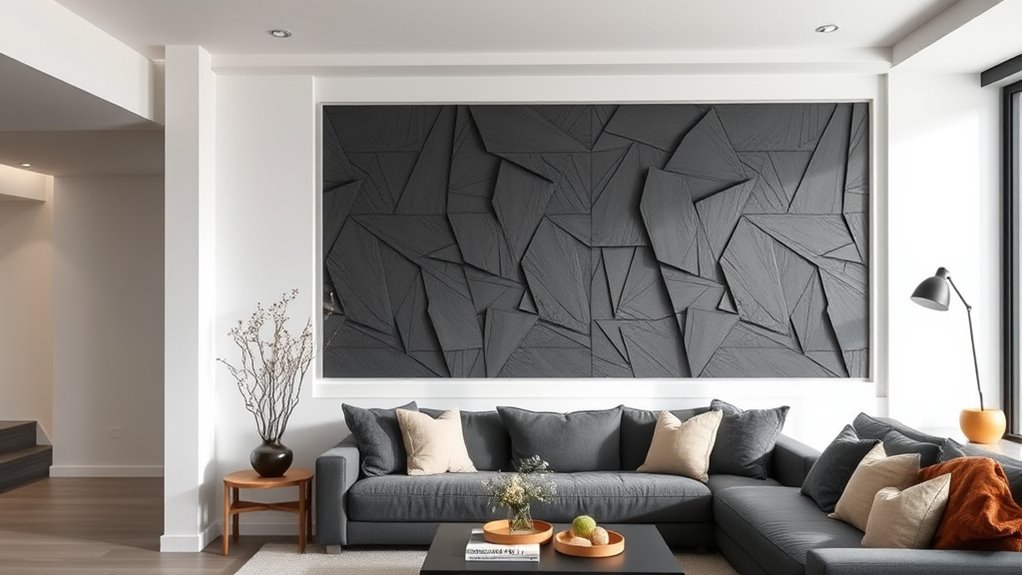
Creating a DIY accent wall is a simple yet impactful way to transform your space without a full renovation. It instantly adds personality and style, making your room feel more intentional and polished. The key to achieving a high-end look lies in selecting the right wallpaper patterns or paint color schemes. When choosing wallpaper, opt for designs that add visual interest without overwhelming the space. Subtle geometric patterns, textured florals, or modern abstract motifs can create a sophisticated focal point. Make sure the patterns you pick complement your existing décor and color palette. If you prefer painting, select a paint color scheme that contrasts well with the rest of the room, but still feels cohesive. Rich, deep hues or muted tones can lend a luxurious vibe, especially when combined with thoughtful accent details.
Transform your space with a stylish DIY accent wall using subtle patterns or rich colors.
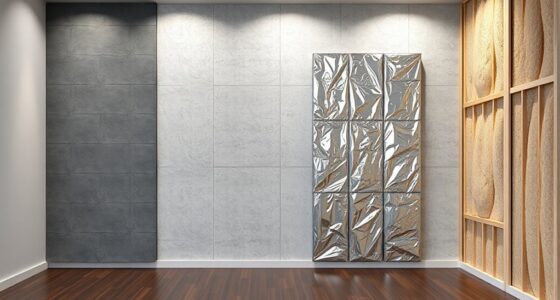
Once you’ve decided between wallpaper and paint, preparation is essential. For wallpaper, start by measuring your wall accurately to order the right amount, factoring in pattern repeats. Clean the wall thoroughly and smooth out any imperfections with spackle or filler. Use a high-quality adhesive and a wallpaper smoothing tool to avoid bubbles and wrinkles. For painted accent walls, prep the surface by cleaning it and taping off edges for clean lines. Use painter’s tape to mark boundaries and create crisp edges. Picking a high-quality primer ensures the paint adheres well and minimizes bleed-through, especially if you’re covering darker colors or textured walls. Additionally, selecting the appropriate materials can significantly impact the durability and appearance of your project.
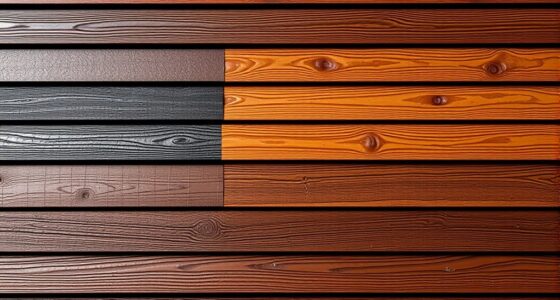
When applying wallpaper, take your time aligning the patterns carefully, especially if they feature repeats. Use a level or plumb line to keep your strips straight, and work slowly to prevent tearing or misalignment. For paint, consider using painter’s tape to create geometric designs or stripes, which can add a modern flair without complicating the process. Use high-quality brushes and rollers to get smooth, even coverage, and apply multiple coats if needed for depth and vibrancy. To elevate your DIY project, incorporate metallic or textured wallpaper, or choose a matte or satin finish for painted walls to add dimension and sophistication.
Ultimately, the success of your accent wall hinges on your attention to detail and patience. Whether you’re opting for patterned wallpaper or a carefully selected color scheme, the goal is to create a focal point that enhances your space without looking cheap. With a little effort and the right materials, you’ll achieve a stylish feature wall that looks professionally done and reflects your personal style.
Conclusion
So, next time you’re creating your accent wall, remember that patience and attention to detail make all the difference. Some say that DIY always looks ‘cheap,’ but with the right techniques and quality materials, you can prove otherwise. Think of it as an experiment—your space is the canvas, and your craftsmanship is the key. When you invest time and care, your wall won’t just look good; it’ll stand out as a true reflection of your style.