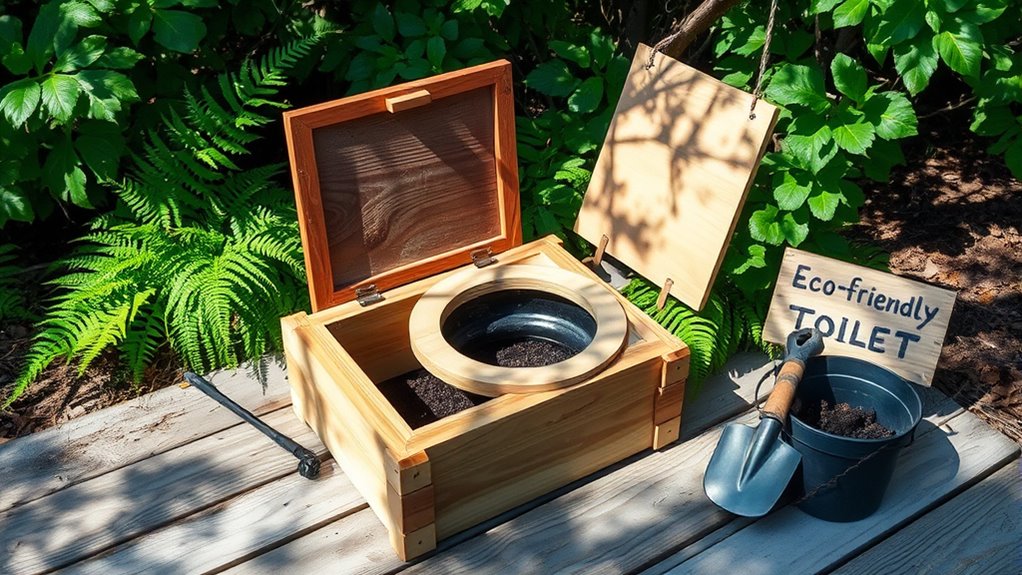

To build a DIY composting toilet, start by choosing durable materials like plastic or wood for the main chamber and designing a sturdy ventilation system with a pipe extending above the roofline to manage gases. Incorporate a toilet seat over the chamber, add composting mediums like sawdust or straw, and consider a urine diversion to reduce moisture. Guarantee easy access for maintenance and proper odor control. Keep exploring for detailed steps to create an eco-friendly, efficient system.
Key Takeaways
- Select durable, rot-resistant containers for the main compost chamber and ensure proper ventilation with a roof-exceeding vent pipe.
- Incorporate a toilet seat above the chamber, with removable access panels for easy maintenance and waste management.
- Use eco-friendly composting mediums like sawdust or coconut coir to absorb moisture and cover waste effectively.
- Implement urine diversion and moisture control systems to enhance composting efficiency and odor reduction.
- Regularly add composting material, stir waste as needed, and ensure proper airflow for optimal aerobic decomposition.
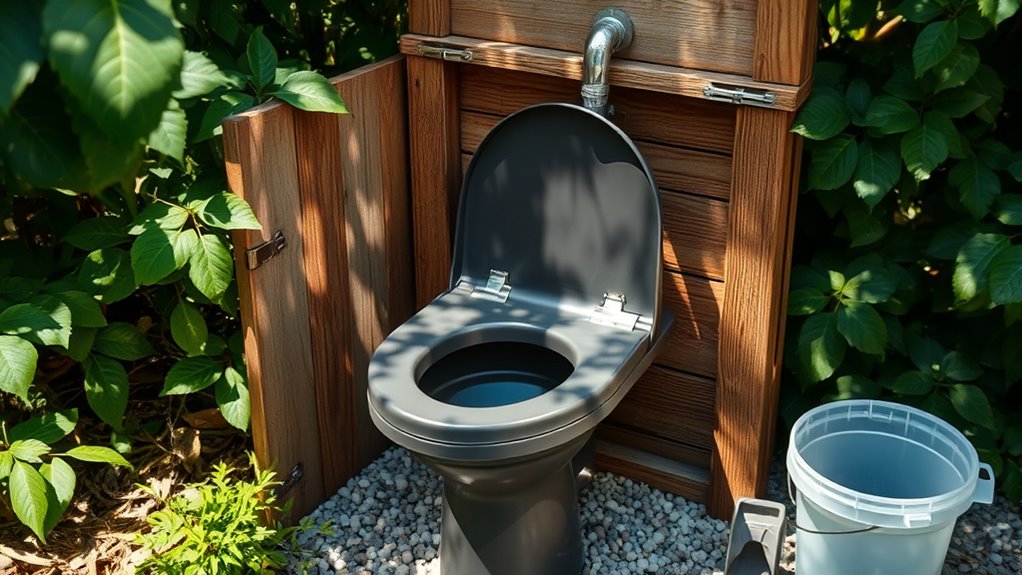
Building your own composting toilet is a practical and eco-friendly way to manage waste sustainably. When you design and construct your own unit, you take control of waste management in a way that minimizes environmental impact. DIY composting toilets are becoming increasingly popular among those seeking self-sufficiency, whether for off-grid living, cabins, or eco-conscious homes. By choosing to build your own, you guarantee the materials and methods align with eco friendly design principles, reducing reliance on chemical-treated products and septic systems that can harm the environment.
Building your own composting toilet promotes eco-friendly waste management and self-sufficiency.
The first step involves understanding how composting toilets work. They rely on aerobic decomposition, turning human waste into compost that can be safely returned to the earth. Your goal is to create a system that promotes airflow, moisture control, and ease of maintenance. You might start with a sturdy, rot-resistant container, such as a large plastic or wooden box, which will serve as your main composting chamber. Inside, you’ll want to include a composting medium like sawdust, coconut coir, or straw, which helps absorb moisture and cover waste, controlling odor and encouraging aerobic activity.
Waste management is central to designing an effective DIY composting toilet. You need to position the toilet seat above the composting chamber for convenience and ventilation. Ventilation is vital for odor control and oxygen circulation, so installing a vent pipe that extends above the roofline helps release gases safely. Additionally, incorporating a urine diversion system can markedly improve composting efficiency by reducing moisture levels, making it easier to manage the compost and prevent odors. This can be achieved with simple plumbing or a diverter attached to the seat.
You should also think about accessibility for maintenance. The system needs to be easy to access for periodic emptying, stirring, or adding fresh composting material. Including a removable lid or an access panel makes this task straightforward. When building your own composting toilet, remember to consider the environmental impact of your choices. Use sustainable, non-toxic materials whenever possible, and design for long-term durability to minimize waste and replacement needs.
Incorporating a well-planned drainage or leachate collection system can further improve waste management, preventing overflow and ensuring that liquids don’t accumulate in the compost. Additionally, researching best practices for composting, such as maintaining proper moisture levels and temperature, can enhance the efficiency and safety of your system. With thoughtful design and careful construction, your DIY composting toilet can function efficiently, odor-free, and in harmony with eco friendly principles. Not only will you reduce your ecological footprint, but you’ll also gain a reliable, cost-effective solution for sustainable waste management that fits your unique needs.
Frequently Asked Questions
How Do I Prevent Odors in My Composting Toilet?
To prevent odors in your composting toilet, you should improve airflow ventilation by installing a vent fan or vents to keep air moving. Use odor absorbing materials like sawdust, coconut coir, or peat moss after each use to trap smells. Regularly mixing the compost also helps prevent odors from building up. Keeping the toilet clean and ensuring proper ventilation will make your composting experience odor-free and more pleasant.
What Type of Composting Toilet Is Best for Small Spaces?
For small spaces, a portable design composting toilet works best because it fits compactly and is easy to move if needed. Look for models made from eco-friendly materials to minimize environmental impact. These toilets often have efficient ventilation systems to control odors and simple maintenance routines. Choosing a lightweight, space-saving unit guarantees comfort and practicality without sacrificing sustainability, making it ideal for tiny homes, RVs, or cabins.
How Often Should I Empty the Compost Chamber?
You should empty the compost chamber when it reaches about two-thirds full, which typically means every 6 to 12 months, depending on usage. Follow a regular maintenance schedule to monitor compost maturity and prevent odors. When the compost looks dark and crumbly, it’s ready for removal. Keep an eye on the process to ensure your composting toilet functions smoothly, and empty the chamber promptly to uphold hygiene and odor control.
Can I Build a Composting Toilet Underground?
Yes, you can build a composting toilet underground, but you’ll need a permeable barrier to prevent odors and moisture from seeping into the surrounding soil. *Make certain* your design includes a proper ventilation system to promote airflow and reduce smell. Proper sealing and drainage are essential, and you should check local regulations before proceeding. With these features, an underground composting toilet can be functional and environmentally friendly.
What Are the Legal Regulations for DIY Composting Toilets?
You need to check local regulations for legal compliance and permitting requirements before building a DIY composting toilet. Many areas require permits or specific standards to make certain health and safety, especially if it’s installed underground or near water sources. Contact your local health department or building authority to confirm rules. Failing to follow these regulations could lead to fines or needing to remove your composting toilet, so always verify beforehand.
Conclusion
Building your own composting toilet is simple and eco-friendly, saving you money and reducing waste. Did you know that over 2 billion people worldwide lack access to proper sanitation? By creating your own, you’re contributing to a healthier planet and better hygiene. Plus, with just a few materials and some effort, you can enjoy the benefits of sustainable living. Start your DIY project today and make a positive impact—it’s easier than you think!