
TL;DR

Get compact home essentials delivered free with Prime
- Fast, free delivery on millions of items
- Prime Video, Amazon Music and more included
- Member-only deals all year
A Hunker report describes an Instagram DIY by Annie Lynn that repurposes an old sock into a small, cylindrical pillow for holding bracelets. The project uses scissors and fabric scraps, with a box optional; cost, durability and tested performance are not reported.
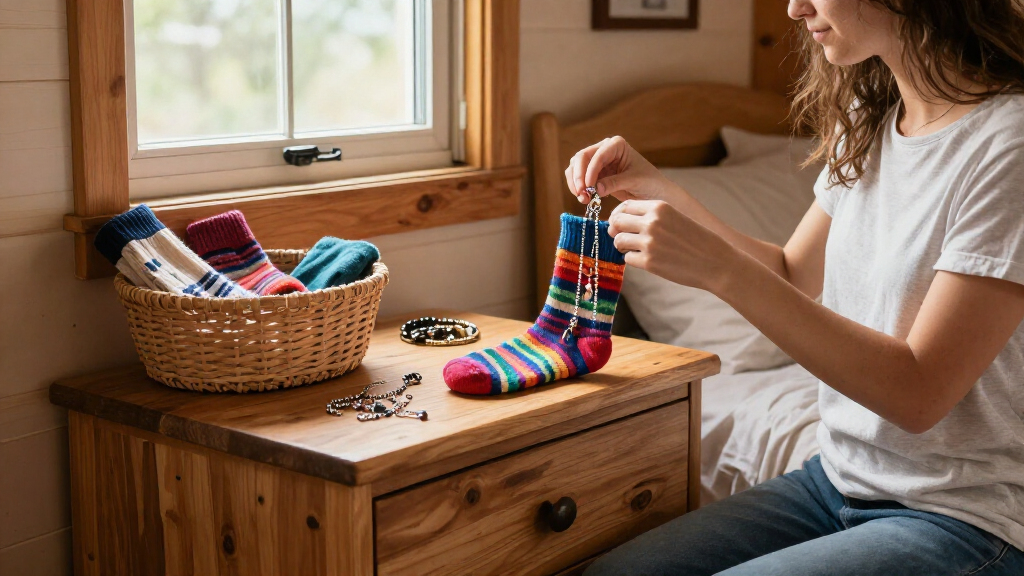
Hunker has reported on a DIY jewelry organizer demonstrated by Instagrammer Annie Lynn, who turns an old sock into a small pillow that holds bracelets. The project offers a way to reuse an unwanted sock and keep bracelets arranged side by side, rather than loose together in a dish.
The method uses a sock, scissors and scrap fabric or ribbon. Annie trims the top of the sock, makes cuts to create four fabric sections, then stuffs the sock until it forms a firm, even cylinder. The source says scrap fabric, ribbon or additional old socks can be used as filling.
To close the pillow without sewing or fabric glue, the demonstrated method ties the four cut sections together in pairs, knots them again to secure the opening, trims excess material and pushes the knot inside. Bracelets can then be placed around the cylinder. A crew-length or longer sock is recommended; ankle socks may not leave enough material. The report advises avoiding socks with holes, tears or discoloration.
Annie places the finished pillow in a small wooden box, which holds it and can conceal the knotted end. Hunker also suggests a decorated shoebox or another small cardboard box. A larger container could hold several pillows. The report mentions a Dollar Tree wooden box and acrylic paint at $1.25 each, but prices and availability can vary by location and over time.
A Small Reuse for Spare Socks
The idea addresses two everyday problems with one low-material project: unused socks and bracelets that can become crowded or tangled when stored together. Because the sock already has a tube shape, the maker does not need to measure and sew a separate pillow from scratch. For people who do not sew, the tied closure shown in the report offers an alternative, although it may look less even than a sewn finish.
The organizer is also adaptable: a box can keep the pillows together, while a sewn version can sit directly in a drawer or on a vanity. Those are practical uses described in the source, not claims that the method has been tested for long-term durability or works with every bracelet. Readers can choose whether the result suits their storage needs before putting valuable jewelry on it.
Products Worth Considering

Philips Hue Smart Light Starter Kit with Bridge and 4 White and Color A19 Bulbs

iRobot Roomba 105 Combo Robot Vacuum and Mop

Dyson Ball Animal 3 Upright Vacuum – Corded, 290 AW, De‑tangling Motorbar Cleaner Head, 3 Suction Modes
As an affiliate, we earn on qualifying purchases.
How the Sock Becomes a Pillow
The Hunker report frames the project as a way to repurpose single or unwanted socks, particularly those with colors or patterns worth keeping. The fabric’s existing tube form provides the basic shape; stuffing adds the firmness needed to hold bracelets around it. The source does not name a specific sock material or prescribe an exact amount of filling.
In Annie’s version, the cut fabric at the top acts as a tie-off rather than being discarded or stitched. Tucking the knot inside makes the end less visible, and a container can hide it further. Makers with needle-and-thread skills can instead sew the opening closed for a neater finish, according to the report.
““Ankle socks will be too short.””
— Hunker
Durability and Costs Are Unreported
The report does not provide independent testing, durability results or user feedback. It also gives no exact dimensions for the sock, pillow, box or amount of filling, so the finished size will depend on the materials used. How securely the tied closure holds under repeated use is not established.
The listed Dollar Tree prices are details from the source, not a guarantee of current prices or stock. The report does not compare the organizer’s cost with commercial jewelry storage, nor does it establish whether a particular sock fabric is suitable for every type or size of bracelet.
Choose Materials and Try the Method
The source describes no scheduled follow-up or product launch. Readers who want to try the project can start with a clean, intact crew sock, scissors and fabric scraps, then add filling until the cylinder feels firm. They can decide whether to use the tied closure or sew the end, and whether to place the pillow in a wooden, cardboard or other small box.
Before storing a full collection, makers can test the fit with a few bracelets and check that the closure stays secure. Anyone considering paint or other finishing materials should follow the product label and allow the surface to dry before placing jewelry in the box.
Key Questions
What do I need to make the sock bracelet holder?
The report lists a sock, scissors and scrap fabric or ribbon for stuffing. A wooden or cardboard box is optional.
Which socks work best?
Hunker recommends a crew sock or longer garment because it provides enough material to cut and tie closed. It says ankle socks may be too short and advises against socks with holes, rips or discoloration.
Do I have to sew the sock closed?
No. Annie’s method ties the cut fabric sections together and tucks the knot into the pillow. The report says sewing is another option for a more symmetrical finish.
Do I need a wooden box?
No. The source suggests a shoebox or another small cardboard box as alternatives, and says a sewn pillow can be placed directly in a drawer or on a vanity.
How much does the project cost?
The project reuses a sock and scraps, but the report does not calculate a total cost. Its cited Dollar Tree prices were $1.25 for a wooden box and for acrylic paint tubes; current prices and availability may differ.
Source: hunker.com