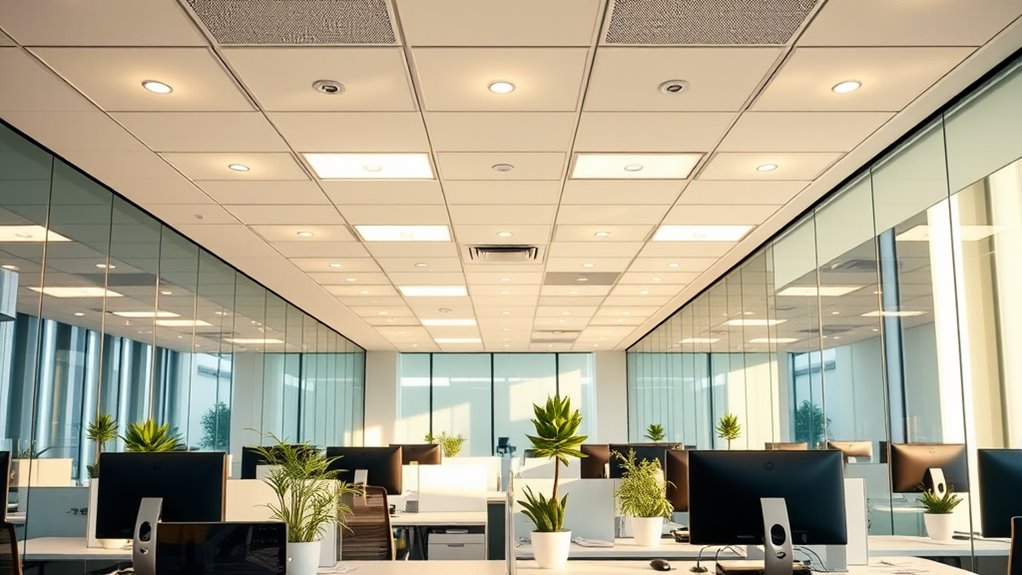

Efficient lighting, like LEDs combined with smart controls, helps you save energy by adjusting illumination based on actual needs, such as occupancy or natural light. These technologies reduce wasted power by automatically dimming or turning off when not in use. They also last longer and produce less heat, lowering cooling costs. As a result, you’ll see lower utility bills and less environmental impact. Exploring this further reveals how to maximize your energy savings with smarter lighting choices.
Key Takeaways
- Efficient lighting reduces overall energy consumption by using less power to produce the same illumination.
- LED technology provides higher energy efficiency, converting more electrical energy into visible light.
- Smart controls optimize lighting use based on occupancy, natural light, and time, minimizing waste.
- Proper lighting management extends fixture lifespan, decreasing replacement and maintenance energy costs.
- Lower energy use from efficient lighting decreases greenhouse gas emissions and environmental impact.

Lighting accounts for a substantial portion of energy consumption in homes and businesses, but switching to more efficient options can make a big difference. By adopting smart controls and LED technology, you can dramatically reduce your energy use while maintaining effective illumination. Smart controls allow you to tailor lighting to your needs, turning off lights when not in use, dimming them during certain times, or adjusting brightness based on natural light levels. This not only conserves energy but also extends the lifespan of your lighting fixtures, saving you money over time.
Smart controls and LED lighting drastically reduce energy use and extend fixture lifespan.
LED technology is at the forefront of energy-efficient lighting. Unlike traditional incandescent bulbs, LEDs consume considerably less electricity to produce the same amount of light. They convert more electrical energy into visible light, meaning you get more brightness for less power. LEDs also generate less heat, which reduces cooling costs in indoor environments. Their durability is another advantage; they last much longer than incandescent or fluorescent bulbs, reducing the frequency and cost of replacements. When combined with smart controls, LED lighting becomes even more efficient. For instance, you can set schedules or motion sensors to activate LEDs only when needed, eliminating wasteful energy use during unoccupied periods.
Implementing smart controls with LED lighting is straightforward. Many modern systems are compatible with smartphones or home automation setups, giving you convenient control from anywhere. You can program your lighting to adjust automatically based on time of day, occupancy, or ambient light conditions. This automation guarantees lights are only on when necessary and at the appropriate brightness, optimizing energy consumption. Additionally, integrating sensors with LED fixtures allows for responsive lighting that reacts to movement, further reducing unnecessary energy use. These smart systems often include energy monitoring features, so you can track your savings and identify opportunities for further efficiency improvements.
Using LED technology combined with smart controls isn’t just about saving energy; it’s also about enhancing your comfort and convenience. You gain precise control over your lighting environment, creating the perfect ambiance while minimizing waste. Over time, the financial benefits become clear—lower utility bills and reduced maintenance costs. Transitioning to this efficient lighting setup also contributes to a greener footprint, helping reduce greenhouse gas emissions associated with energy production. Incorporating energy-efficient lighting strategies can significantly reduce your overall carbon footprint and support sustainability goals. Overall, investing in smart controls and LED technology empowers you to optimize your lighting for maximum efficiency and sustainability, making your space more eco-friendly and cost-effective.
Frequently Asked Questions
What Are the Latest Innovations in Energy-Efficient Lighting Technology?
You’ll find that the latest innovations in energy-efficient lighting include smart filaments and OLED lighting. Smart filaments adapt brightness and color, reducing energy waste, while OLEDs offer thin, flexible, and highly efficient light sources. These advancements let you customize lighting while lowering energy consumption. By adopting these technologies, you can enjoy better illumination and save on electricity bills, making your space both eco-friendly and cost-effective.
How Does Lighting Efficiency Impact Overall Household Energy Costs?
You’re sitting on a goldmine when you choose energy-efficient lighting, as it directly cuts your household energy costs. By using less power, you’ll see significant energy savings and cost reductions over time. This means you get to keep more money in your pocket while helping the environment. Upgrading your lighting isn’t just a bright idea—it’s a smart move that pays off in the long run.
Can Efficient Lighting Solutions Be Integrated With Smart Home Systems?
Yes, you can easily integrate efficient lighting solutions with smart home systems. You’ll enjoy voice control capabilities and remote management, making it simple to turn lights on or off, dim, or set schedules from anywhere. These systems allow you to optimize energy use, reduce costs, and enhance convenience. With seamless integration, you get smarter control over your lighting, saving energy while maintaining comfort and flexibility in your home.
What Is the Lifespan Comparison Between LED and Traditional Bulbs?
Think of LED bulbs as wise old trees that stand tall through storms, outlasting fleeting flowers. Compared to traditional bulbs, LEDs boast remarkable durability, often lasting 25,000 to 50,000 hours, reducing replacement frequency markedly. Traditional bulbs, like seasonal blooms, fade faster, needing replacement every 1,000 hours. So, investing in LEDs means fewer replacements, saving you time and money, and enjoying consistent, long-lasting light.
Are There Government Incentives for Adopting Energy-Efficient Lighting?
Yes, you can benefit from government rebates and incentives when adopting energy-efficient lighting. Many policies and regulations encourage switching to LED and other efficient bulbs by offering financial incentives to reduce costs. These programs aim to promote sustainability and lower energy consumption, making it easier for you to upgrade your lighting. Keep an eye on local or national government websites for current rebates and policy updates to maximize your savings.
Conclusion
By switching to energy-efficient lighting, you can substantially reduce your energy consumption and lower costs. For example, a small office upgraded to LED lights saw a 40% decrease in electricity bills within six months. This simple change not only saves money but also reduces your carbon footprint. Embracing efficient lighting is a smart step toward a more sustainable future, helping you save energy while maintaining bright, effective illumination in your space.