

When it comes to building your emergency fund, the size you need depends largely on whether you own or rent your home. Homeowners often face higher costs and greater financial risks, requiring a larger reserve to cover unexpected expenses or potential foreclosure. Renters, on the other hand, generally need less, but understanding the key differences can help you determine the right amount for your situation. Want to find out what works best for you?
Key Takeaways
- Homeowners generally need a larger emergency fund (at least six months of costs) due to higher and unpredictable maintenance expenses.
- Renters typically require a smaller fund (three to four months of rent and essentials), as their financial risks are usually lower.
- Homeowners should include property taxes, insurance, and repair costs in their emergency savings calculations.
- Renters can focus primarily on rent, utilities, and healthcare emergencies when sizing their fund.
- Both groups should adjust fund size based on income stability, debt levels, and personal risk factors.
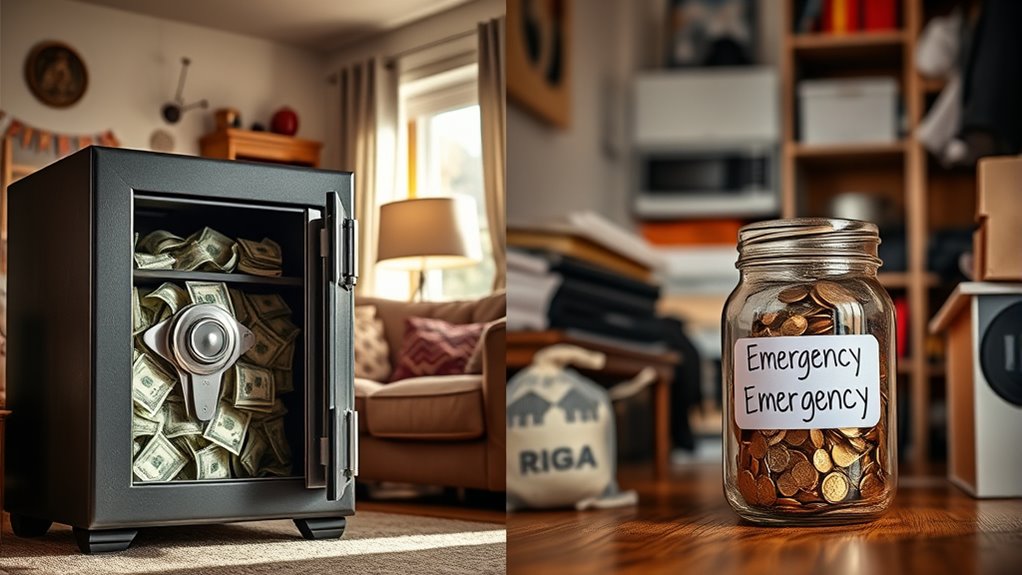
How much money should you set aside for an emergency fund? That’s a question many people ask, and the answer depends on your personal circumstances, especially whether you’re a homeowner or a renter. An emergency fund is your financial safety net, designed to cover unexpected expenses like medical bills, car repairs, or sudden income loss. To determine the right size, you need to consider potential risks and your current financial stability. Typically, financial advisors suggest saving three to six months’ worth of living expenses. But how does this differ for homeowners versus renters?
If you own a home, your emergency fund should be a little larger. Homeownership comes with higher and often unpredictable costs—maintenance, repairs, property taxes, and insurance premiums. These expenses can crop up suddenly and be quite costly, so having a robust emergency fund is vital. When deciding how much to set aside, think about your monthly costs, including mortgage payments, utilities, and insurance. It’s wise to aim for at least six months of these expenses, giving you a buffer to handle emergencies without risking foreclosure or debt accumulation. Additionally, understanding market trends and indicators can help you better prepare for potential economic shifts that might impact your financial stability.
Renters, on the other hand, generally face fewer immediate financial risks tied to their living situation. Rent payments are usually predictable and fixed, and renters are less responsible for property maintenance. However, they shouldn’t skimp on their emergency fund. Unexpected situations like job loss, medical emergencies, or urgent travel can still hit hard. For renters, a three to four months’ worth of rent and essential living expenses might suffice initially, but increasing that to cover potential healthcare costs or other emergencies is wise.
When building your emergency fund, it’s essential to think about your overall financial strategy. Investment strategies can influence how quickly you build your savings, especially if you’re diverting funds from investments into a liquid, accessible account. Meanwhile, managing debt is equally critical. If you’re carrying high-interest debt, it’s often smarter to prioritize paying that down before beefing up your emergency fund. This approach reduces your overall financial risk and interest costs, making it easier to save for unexpected events in the long run.
In the end, the size of your emergency fund should reflect your risk tolerance, stability, and specific needs as a homeowner or renter. By balancing smart debt management with strategic savings, you create a resilient financial foundation that can weather life’s surprises, whether you’re covering home repairs or replacing a lost income.
Emergency Fund & Cash Reserves Organizer: Large Print Family Finance Binder for Accounts, Cash Locations, Updates & Notes
As an affiliate, we earn on qualifying purchases.
As an affiliate, we earn on qualifying purchases.
Conclusion
Think of your emergency fund as a sturdy shield—whether you’re a homeowner or renter, it’s your safeguard against life’s sudden storms. Homeowners need a thicker armor to weather bigger tempests, while renters carry a lighter shield for smaller squalls. Building your reserve is like planting seeds—nurture it with consistent effort. When the storms come, your preparedness will be the steady anchor that keeps you grounded, no matter how fierce the winds blow.

Emergency Fire Safety Kit with StaySafe All-in-1 Portable Extinguisher, PanSafe Fire Extinguishing Sache and Signature Series Fire Blanket | Be Prepared For All Types of Fires Before They Spread
BUNDLE INCLUDES: (2) LifeSafe StaySafe Portable Fire Extinguisher Spray, (2) LifeSafe PanSafe Fire Extinguisher Sachet, and (2) Signature…
As an affiliate, we earn on qualifying purchases.
As an affiliate, we earn on qualifying purchases.

SKYDUE Budget Binder with 8pcs Zipper Envelopes,Money Organizer with 12pcs Expense Sheets & 24 Rose Gold Sticky Labels,Budget Organizer for Cash
What You Get: A6 PU leather binder cover, 8pcs cash envelopes,12pcs budget sheets & 3 sheets rose gold…
As an affiliate, we earn on qualifying purchases.
As an affiliate, we earn on qualifying purchases.

Ready America 70380 72 Hour Emergency Kit, 4-Person, 3-Day Backpack, Includes First Aid Kit, Survival Blanket, Emergency Food Portable Disaster Preparedness Go-Bag for Earthquake, Fire, Flood
Emergency kit or disaster preparedness: Stay prepared for emergency situations everywhere you go. Ready America emergency survival kits…
As an affiliate, we earn on qualifying purchases.
As an affiliate, we earn on qualifying purchases.